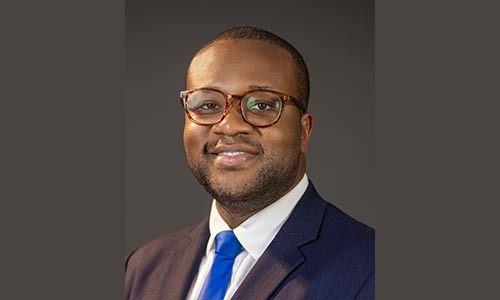
By Joshua Nwachukwu Esq[1]

In the past few months, one question I have repeatedly found myself asking whenever Nyesom Wike is in the news is: How did Wike become a Life Bencher?
And because he talks a lot, the more I hear him speak and watch his conduct, the more I find myself asking the same question: How on earth did he become not only a Bencher, but a Life Bencher?
I suspect I am not alone. Several lawyers have probably found themselves asking the same question. Apart from lawyers, even non-lawyers have wondered how Wike found his way into a body reserved for practitioners of the highest distinction in the legal profession, a body entrusted with determining whether aspiring lawyers are fit and proper to be called to the Nigerian Bar.
And perhaps they should, because the question is not simply about Nyesom Wike. It is about what the Body of Benchers represents and, more importantly, what we have allowed it to become.
Very importantly, the Body of Benchers is not another social club or beer-drinking association.
According to the Legal Practitioners Act, the Body of Benchers, is “the legal body of practitioners of the highest distinction in the legal profession, which is responsible for the formal call to the Bar of persons seeking to become legal practitioners as well as disciplining of erring lawyers.”
As stated on its website, its mission is “to uphold the integrity and excellence of the legal profession…” while it’s vision, a bit more ambitious, is to be “the beacon of legal professionalism, setting the standard for legal education, qualification, and conduct worldwide and through its commitment to excellence, integrity and justice, it seeks to inspire trust in the legal profession and contribute to a just and equitable society”
These are not modest words. They are an extraordinarily high standard.
So, against these lofty standards, one cannot help but ask: does Nyesom Wike fit into any of this, is he a practitioner of the “highest distinction”? is he a beacon of legal professionalism? does his conduct meet a standard to be set worldwide?
His numerous public outbursts and actions often suggest otherwise. At times, his conduct appears to lack the restraint, civility and refinement one would ordinarily expect from someone occupying such a distinguished position in the legal profession. It’s so bad, that just recently, Bode George said on live TV, that Wike “should be taken to a psychiatric hospital immediately”.
This is a serious statement.
Of course, Wike is a politician, and politics is not known for producing the most restrained personalities. But that cannot be a complete excuse. If anything, occupying a position of distinction within the legal profession should impose an even greater obligation to conduct oneself with dignity and restraint.
The ordinary Nigerian does not make these neat distinctions between “Wike the politician” and “Wike the lawyer.” His conduct inevitably reflects, rightly or wrongly, on the profession to which he belongs.
Of course, the title of this piece is rhetorical. We can reasonably speculate about how Wike became a Life Bencher, just as we all know that in Nigeria, many prestigious titles, like honorary degrees, traditional titles, awards and even knighthoods have increasingly become accessible not to those that really deserve it, but to those with sufficiently deep pockets and sufficient influence.
Wike is popularly known as “Mr. Projects,” and he has invested heavily in infrastructure within the Nigerian legal ecosystem, particularly in the judiciary and the Nigerian Law School (NLS).
As governor he built the Nigerian Law School in Rivers, which is arguably now the best Law school in the country, he also upgraded the facilities at the Yenogoa campus of the NLS by building two new hostels and a 1,500 capacity multi-purpose hall. Also as Governor, his commitment to ‘judicial welfare’ led him to build court rooms and he gifted Judges, special utility vehicles (SUVs) and houses and cash payments of N150 million each to judges who declined the housing offer. He also donated 500 million to the construction of the Body of Benchers Complex.
He has done similarly as minister of the FCT, apart from building houses for judges which caused serious uproar recently, he plans to construct two hostels of 300 capacities each for the Nigerian Law School in Abuja and is constructing the road linking the Body of Benchers Secretariat, Jabi District with Nile University. He also facilitated the construction of a major office annex for the Body of Benchers in Abuja,
It is therefore hardly surprising that he serves on the Projects and Infrastructure Development Committee of the Body of Benchers. By all appearances, he is a very active committee member.
With all the accolades, one may easily think the funds are his, the irony, however, is that all these “infrastructural” developments came from public money.
But there is a deeper question: can an institution that has benefited from Wike’s “generosity” still be perceived as sufficiently independent to call him to order when necessary?
Let me be clear: infrastructure development is good. It is necessary. Courts need modern facilities; the Nigerian Law School needs adequate infrastructure; nobody should argue against that.
But infrastructure is not only about buildings. There is another kind of infrastructure that is far more important: human infrastructure. And it is dangerous for any institution to forget this.
You can build magnificent courtrooms without building magnificent judges, you can construct beautiful lecture halls without producing excellent lawyers, you can renovate the Nigerian Law School without renovating the culture, ethics and values of the profession and you can build the finest infrastructure for the legal profession while simultaneously weakening the very standards that give the profession its dignity.
The Body of Benchers therefore has a responsibility that goes beyond buildings, projects and physical development.
Its most important infrastructure is the character of the people entrusted with the profession and the Body of Benchers should spend even more time asking about human infrastructure.
By asking, who are we producing? who are we admitting to the Bar? who are we holding up as examples? who are we telling young lawyers represents the pinnacle of professional achievement? And perhaps most importantly: Are the people sitting on the Body of Benchers themselves fit and proper to call aspiring lawyers to the Bar?
Because the aspiring lawyer who sits through a call-to-Bar ceremony is not merely looking at a title. Apart from even forgetting about the professional ethics, taught in the Law School, he or she is looking at the people who have been entrusted with defining what excellence in the profession looks like. And that is where the Body of Benchers must be careful.
If a young lawyer is told that the legal profession demands integrity, dignity, restraint, civility and excellence, but then sees people whose public conduct appears to contradict those values elevated to its highest circles, what exactly are we teaching?
The greatest danger is not that Wike is a Life Bencher. The greater danger is what his choice says about us, because institutions are judged not merely by the rules they publish but by the people they honour.
If the Body of Benchers is truly the body of practitioners of the “highest distinction,” then the question of who becomes a Bencher and particularly who becomes a Life Bencher cannot be reduced to influence, generosity, political connections or the ability to fund projects, however impressive and important those projects may be.
The legal profession needs more than infrastructure, it needs standards but above all, it needs Benchers who embody them.
[1] Nwachukwu is a lawyer and writer, can be reached at nwachukwujo@gmail.com
[A MUST HAVE] Evidence Act Demystified With Recent And Contemporary Cases And Materials

Available now for NGN 40,000 at ASC Publications, 10, Boyle Street, Onikan, Lagos. Beside High Court, TBS. Email publications@ayindesanni.com or WhatsApp +2347056667384. Purchase Link: https://paystack.com/buy/evidence-act-complete-annotation
______________________________________________________________________ “Enhance Legal Practice With Authoritative Reports” — Alexander Payne Offers Comprehensive Law Reports, Spanning Over A Century Of Nigerian Jurisprudence Interested buyers are encouraged to place their orders and enquiries via:
0704 444 4777, 0704 444 4999, 0818 199 9888
Website: www.alexandernigeria.com
Interested buyers are encouraged to place their orders and enquiries via:
0704 444 4777, 0704 444 4999, 0818 199 9888
Website: www.alexandernigeria.com