By Ifeoma Okeke-Korieocha

The United States announced last Monday that it has taken steps to impose visa restrictions on specific individuals in Nigeria for undermining the democratic process during the country’s 2023 elections.
In a statement, Antony Blinken, secretary of state, said these actions were specific to certain individuals and were not directed at the Nigerian people or the Government of Nigeria as a whole.
Binken stated that under Section 212(a)(3)C) of the Immigration and Nationality Act, these individuals will be subject to restrictions on visas to the US under a policy covering those believed to be responsible for, or complicit in, undermining democracy.
These individuals, he said, have been involved in intimidation of voters through threats and physical violence, the manipulation of vote results, and other activity that undermines Nigeria’s democratic process.
While several interpretations have been given to what the visa restrictions would mean for the affected individuals, travel experts have explained what the restrictions would mean for those sanctioned.
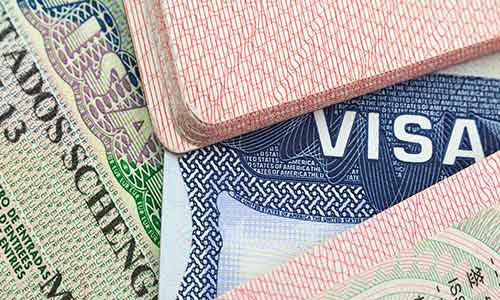
A visa is an official document or a stamp put in one’s passport, which allows the bearer to enter or leave a particular country.
A restriction on this would then mean an official rule that limits the entry of the visa holder.
Susan Akporiaye, president of the National Association of Nigeria Travel Agencies (NANTA), said those affected would be restricted from getting a visa to the US.
She said: “If the person has not got a visa before and the person wants to apply for a visa, if that person happens to be one of those that has been identified to have disrupted the elections, such person will be refused and will not be given a visa.
“In a situation where the person already has a visa, there would be restrictions on entry. The person may not be able to enter because they may probably cancel the person’s visa on arrival.”
She said if those that undermined the democratic process have been identified, their names and pictures will be circulated in all the US borders.
“This is how they do it. They will place a restriction on their entry so that at any point they try to enter the US, they will be flagged as those that have been restricted from entry,” the NANTA president said.
Seyi Adewale, chief executive officer of Mainstream Cargo Limited and a well-travelled aviation expert, said the US statement does not immediately indicate a restriction has been imposed, enforced or enforceable, even though this is the final objective.
Adewale said visa restrictions could mean the rights and privileges held by the targeted Nigerian citizens have been significantly reduced and entry into the US could go through a more rigorous vetting process. “For example, a diplomatic visa or passport can be revised downward to a normal (visiting) visa and privileges such as the working status of spouse would be withdrawn.”
Steve Iduh, a global residency and citizenship expert, told BusinessDay that when a country places visa restrictions on an individual or a group, what this means is that they won’t have access to come into that country.
Iduh said sometimes the restriction is limited to personal ground and sometimes it can be extended to official duty.
He said: “There are some individuals that the country restricts from entering the country on their individual capacity but if they become representative of a nation, that could be waived but this depends on the kind of restriction and why the country is doing that.
“There is a ban and there is a restriction. Ban means they can’t come in for a period of time but restriction means they are restricted either on individual capacity or on individual unofficial capacity.”
The US said that the decision to take steps to impose visa restrictions reflects the continued commitment of the US government to support Nigerian aspirations to strengthen democracy and the rule of law.
[A MUST HAVE] Evidence Act Demystified With Recent And Contemporary Cases And Materials

Available now for NGN 40,000 at ASC Publications, 10, Boyle Street, Onikan, Lagos. Beside High Court, TBS. Email publications@ayindesanni.com or WhatsApp +2347056667384. Purchase Link: https://paystack.com/buy/evidence-act-complete-annotation
______________________________________________________________________ “Enhance Legal Practice With Authoritative Reports” — Alexander Payne Offers Comprehensive Law Reports, Spanning Over A Century Of Nigerian Jurisprudence Interested buyers are encouraged to place their orders and enquiries via:
0704 444 4777, 0704 444 4999, 0818 199 9888
Website: www.alexandernigeria.com
Interested buyers are encouraged to place their orders and enquiries via:
0704 444 4777, 0704 444 4999, 0818 199 9888
Website: www.alexandernigeria.com