By. Pelumi Olajengbesi Esq.

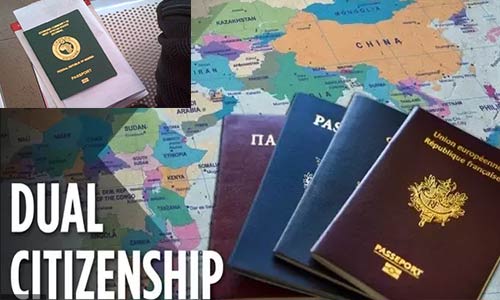
The Ondo State Elections Petition Tribunal (hereinafter referred to as The Tribunal) recently delivered a ruling, which appears to threaten not just the election of Mr. Ikengboju Gboluga (hereinafter referred to as Hon. Gboluga) but also that of the Senate-President, Mr. Ahmed Lawan and his counterpart in the Lower Federal Legislative Chamber, the Speaker of the House of Representatives Mr. Femi Gbajabiamila.
The decision has laid down a precedent, which packs novel judicial punch and would surely stir up jurisprudential examination to determine its constitutionality or lack thereof.
Before I proceed further, let it be noted that I am yet to fully read and review the full judgment; hence my position is contextually not infallible. However, the report of Punch Newspaper on the decision of the Tribunal contains an excerpt that points to the ratio decidendi for stripping Hon. Gboluga of his electoral victory and would thus form the basis of my legal elucidation on the matter.
Facts Matrix:
The Tribunal, basing its position on Section 66 of the Constitution of the Federal Republic of Nigeria, 1999, as amended (hereinafter referred to as the Constitution), ruled, inter alia, that Mr. Gboluga of the PDP had voluntarily obtained the citizenship of another country, i.e., he possessed dual citizenship, and was thus ineligible to hold public office in Nigeria. The tribunal went on to direct that his opponent in the All Progressive Congress, Mr. Albert Akintoye, who had the next highest votes, be sworn-in in his stead as member representing Okitipupa/Irele Federal Constituency, Ondo State, at the House of Representatives.
The position and ruling of the learned judges of the Tribunal sets a precedent, which if upheld is indistinguishable, thus adversely applicable, in the instance of other holders of dual citizenships who have been elected into several political positions in the country. Notable amongst those likely to be affected include Senator Ahmed Lawan and Hon. Femi Gbajabiamila.
With due respect to the tribunal judges, I would attempt to subject their ruling to the broader purpose of the law and examine the same in the light of its substance as well as its applicability. I would also attempt to prove its unconstitutionality and show why the said ruling cannot be sustained on appeal.
Citizenship Under Nigeria Law:
Chapter III of the Constitution, particularly from Sections 25-27, establishes that a person can become a citizen of Nigeria by:
1. Birth- where one or both parents are Nigerians regardless whether such a person is born in Nigeria or not.
2. Registration,
3. Naturalization- the last two means of acquiring Nigerian Citizenship are based on proof of good behavior, good intentions, desirous of same, of full age and haven sworn an Oath of Allegiance to Nigeria.
Section 28 of the Constitution, goes on to treat the issue of dual citizenship and states as follows-
(1) Subject to the other provisions of this section, a person shall forfeit forthwith his Nigerian citizenship if, not being a citizen of Nigeria by birth, he acquires or retains the citizenship or nationality of a country, other than Nigeria, of which he is not a citizen by birth.
(2) Any registration of a person as a citizen of Nigeria or the grant of a certificate of naturalization to a person who is a citizen of a country other than Nigeria at the time of such registration or grant shall, if he is not a citizen by birth of that other country, be conditional upon effective renunciation of the citizenship or nationality of that other country within a period of not more than five months from the date of such registration or grant.
For our purposes, the first limb of the provisions of Section 28 of the Constitution would serve, a paraphrase of which would be – a citizen of Nigeria by birth may peacefully enjoy dual citizenship, but a citizen of Nigeria by registration or naturalization may have to forfeit their Nigerian citizenship. Ancillary thereto, sub-section (2) of the said section, goes on to say that a non-Nigerian by birth who seeks to be a Nigerian by registration or naturalization would only be granted that right if such a person does not hold a citizenship of another country through registration or naturalization.
To illustrate, if Mr. A is a Nigerian by birth, then Mr. A may go on and hold the citizenship of another country without his Nigerian citizenship being called into question or affected. However, if Mr. A is not a Nigerian by birth, and seeks to become one by registration or naturalization, he must make sure he is not registered or naturalized as a citizen of another country other than his country of birth.
Citizenship For the Purpose of an Election:
QUALIFICATIONS
Given the case under reference, Section 65(1)(b) of the Constitution, would suffice as reproduced below-
A personal would be qualified as member of –
(b) the House of Representatives, if he is a citizen of Nigeria and has attained the age of 30.
DISQUALIFICATIONS
However, the provisions of the following section sets out grounds for the disqualification of a candidate contesting for the position of a member of the House of Representatives thus-
66. (1) No person shall be qualified for election to the Senate or the House of Representatives if: (a) subject to the provisions of Section 28 of the Constitution, he has voluntarily acquired the citizenship of a country other than Nigeria or, except in such cases as may be prescribed by the National Assembly, has made a declaration of allegiance to such a country;
Curiously, the decision of the Tribunal to disqualify Hon. Gboluga is based on Section 66 of the Constitution; making future comment on this section is sacrosanct.
When a legal provision starts with the phrase “subject to” or any other related clauses, it means that the section is to be read subject (in tandem) with the section indicated.
For the purposes of this opinion, it is clear from the above provisions that Sections 66 (1) of the Constitution as it relates to a seat in the National Assembly (House of Representatives) is subject to the provisions of Section 28 of the Constitution.
As earlier established, a Nigerian by birth – one who has a single or both parents who are Nigerians, is allowed to hold dual citizenship without encumbrances as contained above in Section 25(1) (a)-(c) of the Constitution. The only instance in which forfeiture of citizenship is allowed under the Constitution is by holders of: (i) citizenship by registration under Section 26 of the Constitution; and (ii) citizenship by naturalization, under section 27 of the Constitution.
Issues to be Determination:
Issue One:
Having regards to the entire facts of the case under reference, whether Hon. Gboluga is a Nigerian by birth?
Issue Two:
In view of issue 1 above, whether the qualifications of Hon. Gboluga can be challenged by a question of his citizenship?
Issue One:
I believe this issue treats itself succinctly as no doubt exists as to the citizenship of Hon. Gboluga as a Nigerian by birth.
Issue Two:
This issue has been treated in due course above, thus, Hon. Gboluga, being a Nigerian by birth and subject to Section 25, 65 and 66 of the Constitution, may in fact hold dual citizenship while within his rights to contest for office in any position in Nigeria provided other qualifications other than his citizenship are met.
Therefore, as a citizen by birth who by constitutional law is permitted to hold and enjoy dual citizenship, were the learned judges on all fours with the law to withdraw his electoral victory on the basis of Section 66 of the Constitution, which is itself brought subject to Section 28 of the same law? I think not.
Conclusion:
It is my considered opinion that a Nigerian by Birth can retain, and maintain dual citizenship for the purposes of seeking any elective office(s) in Nigeria till date, subject to any amendment to the Constitution or any new legislation passed by the National Assembly to the contrary.
The Tribunal erred in its final judgment as the same is clearly at variance with our extant laws. It is in itself a deprivation of the rights of Hon. Gboluga, a Nigerian to seek an elective office and hold the same peaceably when won.
Pelumi Olajengbesi Esq. is the Principal Partner at Pelumi Olajengbesi & Co. Law Corridor and the Convener of Coalition of Public Interests Lawyers and Advocates, COPA.

Get your copy today and take the first step toward financial growth:👉 https://selar.co/4f16676016
_______________________________________________________________________ ARTIFICIAL INTELLIGENCE FOR LAWYERS: A COMPREHENSIVE GUIDE
Reimagine your practice with the power of AI “...this is the only Nigerian book I know of on the topic.” — Ohio Books Ltd
Authored by Ben Ijeoma Adigwe, Esq., ACIArb (UK), LL.M, Dip. in Artificial Intelligence, Director, Delta State Ministry of Justice, Asaba, Nigeria.
Bonus:
Get a FREE eBook titled “How to Use the AI in Legalpedia and Law Pavilion” with every purchase.
ARTIFICIAL INTELLIGENCE FOR LAWYERS: A COMPREHENSIVE GUIDE
Reimagine your practice with the power of AI “...this is the only Nigerian book I know of on the topic.” — Ohio Books Ltd
Authored by Ben Ijeoma Adigwe, Esq., ACIArb (UK), LL.M, Dip. in Artificial Intelligence, Director, Delta State Ministry of Justice, Asaba, Nigeria.
Bonus:
Get a FREE eBook titled “How to Use the AI in Legalpedia and Law Pavilion” with every purchase.
How to Order: 📞 Call, Text, or WhatsApp: 08034917063 | 07055285878 📧 Email: benadigwe1@gmail.com 🌐 Website: www.benadigwe.com
Ebook Version: Access directly online at: https://selar.com/prv626
________________________________________________________________________ The Law And Practice Of Redundancy In Nigeria: A Practitioner’s Guide, Authored By A Labour & Employment Law Expert Bimbo Atilola _______________________________________________________________________
[A MUST HAVE] Evidence Act Demystified With Recent And Contemporary Cases And Materials
_______________________________________________________________________
[A MUST HAVE] Evidence Act Demystified With Recent And Contemporary Cases And Materials