In a monumental stride towards economic transformation, the Nigerian government has unveiled comprehensive tax reforms aimed at reducing inequalities, simplifying the tax regime, and promoting local industry growth.

Economic analyst and business consultant, Dr. Dominic Joshua, has championed these reforms, asserting they hold the potential to redefine Nigeria’s fiscal future and catalyze inclusive development.
The proposed reforms focus on alleviating burdens for the underserved while ensuring wealthier individuals contribute proportionately. Among the standout provisions:
Small Business Relief: Companies with an annual turnover below ₦50 million will no longer pay taxes, exempting over 90% of Nigerian enterprises.
Workers’ Tax Breaks: More than 90% of public and private sector employees will no longer pay income tax, while individuals earning less than ₦9 million annually could see their tax burdens halved.
Consumer Protection: Over 82% of goods commonly consumed by low-income households will be VAT-exempt.
VAT Redistribution: Tax revenue will now benefit states and local governments, which will receive 90% of VAT proceeds, leaving just 10% to the federal government.
These changes are coupled with the abolition of over 50 “nuisance taxes,” a move designed to alleviate the financial strain on businesses and create a more enabling economic environment. Additionally, VAT will no longer be based on company headquarters but on where goods are consumed, ensuring a fairer distribution of revenue.
The proposal also seeks to consolidate tax collection under a single agency, eliminating inefficiencies caused by overlapping authorities like Customs and other regulatory bodies. This reform aims to enhance transparency, reduce bureaucracy, and foster compliance.
Dr. Joshua draws parallels to international best practices, noting that nations like Saudi Arabia and the UAE use progressive taxation and resource allocation to foster equitable growth. “By focusing on fairness and efficiency, Nigeria is positioning itself to replicate the successes seen in these economies,” he stated.
Countries like Norway reinvest oil revenues into social welfare, balancing high taxes with robust public services. Nigeria’s reforms aim for a similar balance, ensuring the country’s wealth benefits all citizens, not just a privileged few.
While VAT rates are slated to increase incrementally—from 10% in 2025 to 15% by 2030—nearly all goods consumed by low-income earners will remain VAT-exempt. This approach balances revenue generation with protecting the purchasing power of vulnerable populations.
“These reforms represent a paradigm shift in governance,” said Dr. Joshua. “Simplifying tax processes, reducing burdens on small businesses, and prioritizing local governments will encourage investment and economic inclusion. This is not just about raising revenue; it’s about economic justice.”
If effectively implemented, these reforms could drive job creation, stimulate industrial growth, and boost Nigeria’s standing as a destination for foreign investment. They signal a commitment to fairness and sustainable development, heralding a brighter economic future for the nation.
Dr. Joshua concludes: “This is a bold and necessary step. It challenges us to envision a Nigeria where prosperity is shared, and every citizen has an opportunity to thrive.”
This comprehensive package demonstrates the government’s resolve to build a more equitable and dynamic economy, aligning fiscal policies with the aspirations of a modern, forward-looking Nigeria.
 _______________________________________________________________________
[A MUST HAVE] Evidence Act Demystified With Recent And Contemporary Cases And Materials

Available now for NGN 40,000 at ASC Publications, 10, Boyle Street, Onikan, Lagos. Beside High Court, TBS. Email publications@ayindesanni.com or WhatsApp +2347056667384. Purchase Link: https://paystack.com/buy/evidence-act-complete-annotation
______________________________________________________________________ ARTIFICIAL INTELLIGENCE FOR LAWYERS: A COMPREHENSIVE GUIDE
Reimagine your practice with the power of AI “...this is the only Nigerian book I know of on the topic.” — Ohio Books Ltd
Authored by Ben Ijeoma Adigwe, Esq., ACIArb (UK), LL.M, Dip. in Artificial Intelligence, Director, Delta State Ministry of Justice, Asaba, Nigeria.
Bonus:
Get a FREE eBook titled “How to Use the AI in Legalpedia and Law Pavilion” with every purchase.
ARTIFICIAL INTELLIGENCE FOR LAWYERS: A COMPREHENSIVE GUIDE
Reimagine your practice with the power of AI “...this is the only Nigerian book I know of on the topic.” — Ohio Books Ltd
Authored by Ben Ijeoma Adigwe, Esq., ACIArb (UK), LL.M, Dip. in Artificial Intelligence, Director, Delta State Ministry of Justice, Asaba, Nigeria.
Bonus:
Get a FREE eBook titled “How to Use the AI in Legalpedia and Law Pavilion” with every purchase.
How to Order: 📞 Call, Text, or WhatsApp: 08034917063 | 07055285878 📧 Email: benadigwe1@gmail.com 🌐 Website: www.benadigwe.com
Ebook Version: Access directly online at: https://selar.com/prv626
______________________________________________________________________ “Bridging Theory And Courtroom Practice” — Hagler Sunny Okorie, Nathaniel Ngozi Ikeocha Unveil ‘Functional’ Tort Law Book For Nigerian Legal System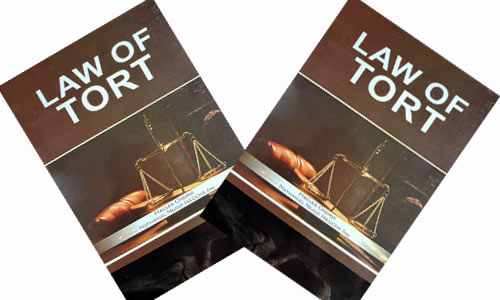 The book, titled The Law of Torts in Nigeria: A Functional Approach, authored by Professor Hagler Sunny Okorie Ph.D and Ikeocha, Nathaniel Ngozi Esq, offers law students, practitioners, and academics a comprehensive guide to understanding and applying tort law in Nigerian courts. Interested buyers can place orders via the following contact numbers: 08028636615, 08037667945, 08032253813, or +234 902 196 2209.
______________________________________________________________________
“Enhance Legal Practice With Authoritative Reports” — Alexander Payne Offers Comprehensive Law Reports, Spanning Over A Century Of Nigerian Jurisprudence
The book, titled The Law of Torts in Nigeria: A Functional Approach, authored by Professor Hagler Sunny Okorie Ph.D and Ikeocha, Nathaniel Ngozi Esq, offers law students, practitioners, and academics a comprehensive guide to understanding and applying tort law in Nigerian courts. Interested buyers can place orders via the following contact numbers: 08028636615, 08037667945, 08032253813, or +234 902 196 2209.
______________________________________________________________________
“Enhance Legal Practice With Authoritative Reports” — Alexander Payne Offers Comprehensive Law Reports, Spanning Over A Century Of Nigerian Jurisprudence
 Interested buyers are encouraged to place their orders and enquiries via:
0704 444 4777, 0704 444 4999, 0818 199 9888
Website: www.alexandernigeria.com
Interested buyers are encouraged to place their orders and enquiries via:
0704 444 4777, 0704 444 4999, 0818 199 9888
Website: www.alexandernigeria.com