*Awards N20 Million Over Altered Birthday Post Timestamp

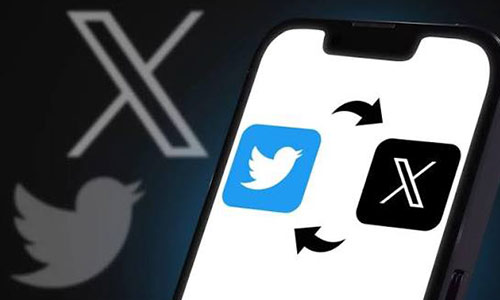
The High Court of Lagos State, Ikorodu Judicial Division, has delivered a judgment on digital privacy and platform accountability, ordering X Corp to disclose the identity of an anonymous parody account operator within 14 days or pay N50 million in general damages, and awarding N20 million against the unknown user for manipulating a student’s social media post in a manner that triggered cyberbullying, harassment, public ridicule and mental distress.
Judgment was delivered on Friday, June 5, 2026, by Hon. Justice A.F. Pokanu in Suit No. IKD/21207MFHR/2026, between Esther Agboola as Applicant and X Corp and an Unknown Person operating the X (Twitter) parody account @boutmoney112 as 1st and 2nd Respondents respectively.
How the Application Was Brought
The Applicant proceeded by Originating Motion dated January 25, 2026, brought pursuant to Order 2 Rules 2-4 of the Fundamental Rights (Enforcement Procedure) Rules 2009, Section 37 of the Constitution, Sections 24(1)(a) and (e) of the Nigeria Data Protection Act 2023, and the inherent jurisdiction of the court.
It was supported by an 18-paragraph affidavit deposed to on January 28, 2026, by the Applicant herself, with seven exhibits: her post celebrating her 25th birthday; her post celebrating her 24th birthday; a copy of the altered post; copies of the offensive posts arising from the manipulated post; a legal fees receipt; a report of a decision of a court in the Netherlands; and a copy of the NITDA Code of Practice for Interactive Computer Service Platforms and Internet Intermediaries.
Originating processes were served on both Respondents, with proof of service in the court’s file at pages 67 to 74. Neither Respondent filed any process or appeared.
What Happened
The court found from the affidavit evidence that on January 9, 2026, the Applicant, a student who operates the handle @agirlnamed_esth, posted pictures captioned “Chapter 25. Happy Birthday to me!” marking her 25th birthday.
“Subsequently the 2nd Respondent, an unknown party, operating through a parody account named @boutmoney112, accessed the Applicant’s Twitter timeline and dug up her previous year, January 2025, post, in which she celebrated her 24th birthday,” the court found.
“I find from Exhibit 3 that the 2nd Respondent altered the timestamp of the post to reflect January 2022, thereby misrepresenting the timing of the post and creating a false narrative that she had lied about her age. The said altered and manipulated post was then published on the platform, causing cyberbullying, harassment, incitement, mental distress, including public ridicule and reputational damage,” Justice Pokanu held.
Privacy Extends to Personal Data Online
The court held that the conduct violated Section 37 of the Constitution.
“I therefore find that the actions of the 2nd Respondent constitute a violation of her right to privacy under Section 37 of the Constitution of the Federal Republic of Nigeria, 1999, in that her personal information was unauthorisedly manipulated, misrepresented, and republished, without her consent, for purposes of ridicule and harassment,” Justice Pokanu held.
The court relied on Emerging Markets Telecommunication Services Ltd v. Barr Godfrey Eneye (2014) and Incorporated Trustees of Digital Rights Lawyers Initiative & Ors v. NIMC (2021), authorities establishing that constitutional privacy protection extends beyond physical spaces to personal data and online communications.
The court also observed a possible failure on the platform’s part: “The fact that the 2nd Respondent was able to access, alter, and republish the Applicant’s data, leading to significant harm, suggests a potential failure in the 1st Respondent’s duty to ensure data integrity and prevent unauthorised processing.”
“Weaponised Personal Data Against the Data Subject”
On the data protection breaches, the court was emphatic.
“Going by Section 24(1)(a) of the Nigeria Data Protection Act, 2023, personal data must be processed lawfully, fairly and in a transparent manner, thus providing the foundational principle of data protection and imposing a mandatory obligation that any processing of data must satisfy the cumulative requirements,” the court held.
“I therefore hold that the 2nd Respondent’s action was arbitrary and malicious, lacking any lawful basis recognised under the NDPA. Such conduct is inherently unfair as it weaponised personal data against the data subject and used it as a tool for harassment,” Justice Pokanu held.
The court also found a breach of Section 24(1)(e), which requires that data remain accurate and not misleading, holding that the alteration “rendered the data inaccurate and misleading.”
The Territorial Reach of the NDPA
The court conducted a careful analysis of whether the Nigeria Data Protection Act applies to a foreign-domiciled platform.
Citing Section 2(1), the court held that the actions of the 2nd Respondent “in accessing, altering, and publishing the Applicant’s posts on a digital platform constitute processing of personal data by automated means.”
On territorial scope under Section 2(2), the court found all three limbs engaged.
Under Section 2(2)(a), where the data controller or processor is domiciled, resident or operating in Nigeria: “The 1st Respondent (X/Twitter) operates in Nigeria and processes the personal data of millions of Nigerian users, including the Applicant.”
Under Section 2(2)(b), where processing occurs within Nigeria: “The manipulation and publication of the Applicant’s data occurred on a platform accessible and widely used within Nigeria.”
Under Section 2(2)(c), where the controller is not domiciled in Nigeria but processes the data of a data subject in Nigeria: “Even if the 1st Respondent’s global headquarters are outside Nigeria, its processing of the Applicant’s data, a data subject in Nigeria, brings it under the purview of the Act.”
“Therefore, the Nigeria Data Protection Act, 2023, is fully applicable to both the 1st Respondent as a data controller/processor and the actions of the 2nd Respondent,” the court concluded.
The court also held, by reference to Section 65 of the NDPA, that “the Applicant’s Twitter post which contained her image, her age, constitutes her personal data within the meaning of the section,” and cited Section 36, which grants a data subject the right to object to processing and obliges a controller to discontinue processing unless it demonstrates overriding public interest or legitimate grounds.
Balancing Anonymity Against Access to Justice
On the disclosure order, the court addressed directly the tension between a user’s anonymity and a victim’s right to a remedy, drawing on the Dutch authority placed before it.
“In Nigeria, to effectively seek redress and hold the 2nd Respondent accountable, it would be necessary to identify them. While the NDPA primarily focuses on the obligations of data controllers, a court, in exercising its inherent powers and to ensure justice, can compel a data controller (like the 1st Respondent) to disclose the identity of a user (the 2nd Respondent) where there is clear evidence of unlawful activity and significant harm,” Justice Pokanu held.
“This would involve balancing the 2nd Respondent’s right to anonymity, if any, given their unlawful conduct, against the Applicant’s right to remedy and access to justice,” the court stated.
The court added that the NITDA Code of Practice for Interactive Computer Service Platforms “aims to establish best practices which would likely include provisions for addressing harmful content and potentially facilitating identification in cases of severe abuse.”
The Findings
The court found for the Applicant on all seven grounds, holding among other things that the 2nd Respondent’s conduct directly infringed her constitutional right to privacy; that by unauthorisedly accessing, manipulating, digitally altering and republishing her personal information he interfered with her control over her private data, exposing her to public ridicule, harassment and emotional distress; that X Corp, by maintaining control over user data and platform activity logs, “has the capacity and obligation to provide information that would enable the Applicant to identify and hold the 2nd Respondent accountable”; and that the Applicant suffered mental anguish, emotional distress, harassment, reputational injury and humiliation.
The court linked the harm to human dignity, citing Incorporated Trustees of Digital Rights Lawyers Initiative v. NIMC, holding that “the mental anguish, emotional distress and reputational harm are direct consequences of the 2nd Respondent’s interference with the Applicant’s private information that are integrally linked to human dignity.”
The Orders
The court declared that the unauthorised manipulation, digital alteration, misrepresentation, republication and abusive misuse of the Applicant’s personal information violated her right to privacy under Section 37 of the Constitution.
It further declared that the alteration and manipulation of the date on her post, with intent to mislead and distort facts, is unlawful, unfair and contravenes Section 24(1)(a) of the NDPA, and that it rendered the data inaccurate and misleading, violating Section 24(1)(e).
The court ordered X Corp to file an Affidavit of Disclosure at the Registry within fourteen days of service of the Enrolled Order, stating the 2nd Respondent’s full name; contact information including email addresses, telephone numbers and registered social media accounts; means of identification; and any other data held by X Corp capable of identifying or locating the 2nd Respondent for the purposes of enforcement.
It awarded general damages of N20,000,000 against the 2nd Respondent for mental anguish, emotional distress, harassment, reputational injury and humiliation.
It awarded general damages of N50,000,000 against X Corp, payable conditionally where the company fails, omits or refuses to file the Affidavit of Disclosure.
What Was Claimed and What Was Granted
The Applicant had sought N100,000,000 against the anonymous user and N100,000,000 against X Corp conditionally, and had asked for disclosure within seven days. The court awarded N20,000,000 and N50,000,000 respectively and extended the disclosure period to fourteen days.
Why It Matters
Legal observers describe the judgment as one of the more assertive applications yet of the Nigeria Data Protection Act 2023 against a foreign-domiciled social media company, and a further step in the developing Nigerian jurisprudence treating constitutional privacy as extending to personal data shared online rather than only to the home, correspondence and telephone conversations traditionally understood to fall within Section 37.
It also signals that Nigerian courts may increasingly be prepared to compel platforms to identify anonymous users behind harassment and impersonation, in line with disclosure orders made in the Netherlands and elsewhere, one of which was placed before the court as Exhibit 6.
Because neither Respondent entered an appearance or filed any process, none of the arguments that a platform might ordinarily deploy, on jurisdiction, on the location of data, on the procedure for lawful disclosure, or on the protection of user anonymity, was tested. Whether X Corp complies with the disclosure order or moves to set aside the judgment remains to be seen.
Appearances
Dr Olumide Babalola, with M. Owodunni and H. Tofi, appeared for the Applicant. There was no legal representation for the 1st and 2nd Respondents.
Judgment was delivered on June 5, 2026, by Hon. Justice A.F. Pokanu, High Court of Lagos State, Ikorodu Judicial Division.
[A MUST HAVE] Evidence Act Demystified With Recent And Contemporary Cases And Materials

Available now for NGN 40,000 at ASC Publications, 10, Boyle Street, Onikan, Lagos. Beside High Court, TBS. Email publications@ayindesanni.com or WhatsApp +2347056667384. Purchase Link: https://paystack.com/buy/evidence-act-complete-annotation
______________________________________________________________________ “Enhance Legal Practice With Authoritative Reports” — Alexander Payne Offers Comprehensive Law Reports, Spanning Over A Century Of Nigerian Jurisprudence Interested buyers are encouraged to place their orders and enquiries via:
0704 444 4777, 0704 444 4999, 0818 199 9888
Website: www.alexandernigeria.com
Interested buyers are encouraged to place their orders and enquiries via:
0704 444 4777, 0704 444 4999, 0818 199 9888
Website: www.alexandernigeria.com