*Imposes Decade-Long Bans For Misconduct, Approves Bar Results And Clears New Universities

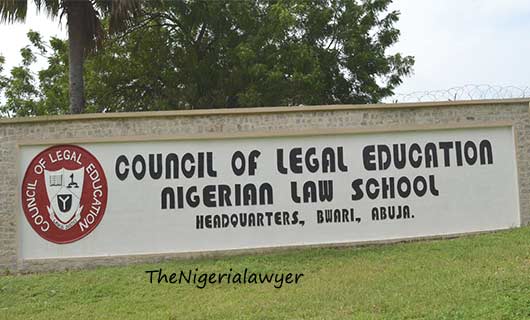
Nigeria’s Council of Legal Education has drawn a firm line against sweeping reforms to the country’s legal training system while imposing some of the most severe disciplinary sanctions in recent memory, signalling a hardening institutional stance on both policy direction and professional standards at a time of intensifying debate about the future of legal education in Africa’s most populous nation.
At its second quarter meeting held in Abuja, the Council rejected growing calls to privatise legal training and decentralise the Nigerian Law School system, approved the results of the December 2025 Bar Final Examinations, imposed bans of up to ten years on students found guilty of examination misconduct, approved accreditation outcomes for several universities, and publicly endorsed the leadership of the pioneer female Director-General of the Nigerian Law School, Dr. Olugbemisola Odusote.
The meeting was presided over by Council Chairman Chief Emeka Ngige SAN OFR, who reaffirmed the body’s commitment to maintaining centralised oversight of legal education while pursuing incremental improvements in quality and delivery.
The Council’s most consequential policy decision was its outright rejection of proposals to privatise legal training and open the Nigerian Law School system to private sector participation.
The calls for privatisation and decentralisation have grown louder in recent years, driven by concerns about the capacity of the current system to accommodate the rising number of law graduates, the quality of instruction across the Law School’s multiple campuses, recurring infrastructure and logistical challenges, and the persistent performance gaps revealed by Bar Final examination results.
Proponents of reform have argued that allowing private institutions to establish law schools, or permitting existing universities to conduct their own bar preparation programmes, would introduce competition, improve quality, and reduce the strain on the centralised system.
However, Council members dismissed these proposals, insisting that the current structure remains essential for maintaining uniform standards in the training and qualification of lawyers. The Council’s position is that a centralised system, for all its limitations, ensures that every lawyer called to the Nigerian Bar has undergone the same training, sat the same examinations, and met the same minimum standards, a uniformity that privatisation could compromise.
Chief Ngige emphasised that the Council would pursue improvements within the existing framework rather than undertaking structural changes that could introduce disparities in the quality of legal education across different institutions.
The Council approved the results of the December 2025 Bar Final Examinations, which were sat by 7,602 candidates across the Law School’s campuses.
The results reveal a performance distribution that highlights both excellence at the top and significant struggles at the lower end.
A total of 212 candidates earned First Class honours, representing 2.8 per cent of the cohort. This represents a decline from the 260 First Class results recorded in the November 2024 examination, when 7,134 candidates registered.
A total of 1,216 candidates achieved Second Class Upper Division, representing 16 per cent of the cohort. The largest category was Second Class Lower Division, with 2,961 candidates or 39 per cent falling into this grade. A total of 1,622 candidates recorded a Pass grade, representing 21.3 per cent of the cohort.
At the lower end, 314 candidates received Conditional Pass grades, meaning they passed some but not all subjects and must resit specific papers before qualifying for call to the Bar. More than 1,000 candidates failed outright, with their dream of admission to the Nigerian Bar temporarily deferred. An additional 210 candidates were absent during the examination.
The figures highlight a persistent performance gap that has raised fresh questions about the preparedness of law graduates entering the Law School and the rigour of legal training at the university level, questions that paradoxically strengthen the Council’s argument against privatisation by suggesting that even the current centralised system struggles to maintain consistent quality.
In what may prove to be the meeting’s most consequential decision for individual candidates, the Council approved sweeping sanctions against students found guilty of examination misconduct, imposing some of the harshest penalties in the institution’s recent history.
Three candidates were handed ten-year bans from both Bar Part I and Part II programmes, effectively barring them from legal education and qualification for an entire decade. The nature of the specific misconduct that warranted these maximum sanctions was not publicly detailed, but a ten-year ban represents one of the most severe penalties available to the Council short of permanent exclusion.
An additional twenty applicants were penalised for failing to disclose prior misconduct during admission processes. The Council drew a sharp and deliberate distinction between those who attempted to conceal their records and those who voluntarily disclosed them.
Candidates who concealed their misconduct histories received ten-year bans, the same maximum penalty imposed on those found guilty of the original misconduct. The message is unambiguous: the Council regards the deception involved in concealing misconduct as equally serious as the misconduct itself.
Candidates who disclosed their prior misconduct received five-year bans, a significant penalty that nonetheless reflects the Council’s recognition that voluntary disclosure, while not excusing past conduct, demonstrates the kind of candour and integrity that the legal profession demands.
The distinction between concealment and disclosure establishes an important principle: transparency will be rewarded with relative leniency, while deception will be treated with the same severity as the underlying offence.
The sanctions underscore a zero-tolerance approach to ethical breaches at the entry point of the legal profession. The Council’s position is that if candidates cannot demonstrate honesty and integrity before they are even admitted to the Bar, they cannot be trusted to uphold the ethical standards expected of legal practitioners.
The Council also approved accreditation outcomes affecting several universities seeking to offer law programmes or expand their existing ones.
Babcock University in Ogun State and Lux Mundi University in Abia State both received approval to commence academic programmes, each with an initial intake of fifty students. The modest intake figure reflects the Council’s cautious approach to new programmes, allowing institutions to demonstrate their capacity before expanding.
Crescent University secured an increase in its admission quota, suggesting the institution met the Council’s standards for quality and capacity at its current level and demonstrated readiness for expansion.
However, Christopher University was denied expansion due to what the Council described as unresolved deficiencies. The denial highlights the uneven compliance across institutions seeking to offer legal education and demonstrates that the Council’s accreditation process functions as a genuine quality control mechanism rather than a rubber stamp.
The meeting marked the first Council session for Dr. Olugbemisola Odusote in her capacity as Director-General of the Nigerian Law School, and the Council publicly endorsed her leadership.
Dr. Odusote, who made history as the first female Director-General of the Nigerian Law School, has faced scrutiny over IT infrastructure challenges, including website downtimes during the recent result release period, and has pledged reforms to modernise the institution’s digital platforms and operational processes.
The Council’s endorsement provides institutional backing for her leadership at a time when the Law School faces both operational challenges and the broader policy debates about the future of legal education.
In a further administrative move, S.A. Osamolu was confirmed as the substantive Deputy Director-General of the Nigerian Law School, completing the institution’s senior leadership structure.
The Council of Legal Education’s decisions at its second quarter meeting reflect an institution that is simultaneously resisting external pressure for structural change while tightening internal standards of conduct and performance.
The rejection of privatisation preserves the centralised model that has governed legal education in Nigeria since the establishment of the Nigerian Law School, ensuring that the Council and its institutional framework remain the sole gatekeepers to the legal profession.
The imposition of decade-long bans for misconduct and concealment sends a powerful deterrent signal to current and prospective students that ethical standards begin before qualification, not after, and that the consequences of dishonesty are severe and long-lasting.
The approval of new university programmes alongside the denial of expansion to non-compliant institutions demonstrates that the accreditation process has teeth.
And the endorsement of Dr. Odusote’s leadership provides continuity and institutional support for the Law School’s management at a time when the demands on the institution, from growing student numbers to digital infrastructure challenges to the persistent performance gaps revealed by examination results, continue to intensify.
For the more than 200,000 members of the Nigerian Bar and the thousands of law students aspiring to join their ranks, the Council’s decisions establish the parameters within which legal education will operate for the foreseeable future: centralised, strictly regulated, and increasingly intolerant of ethical breaches.
[A MUST HAVE] Evidence Act Demystified With Recent And Contemporary Cases And Materials

Available now for NGN 40,000 at ASC Publications, 10, Boyle Street, Onikan, Lagos. Beside High Court, TBS. Email publications@ayindesanni.com or WhatsApp +2347056667384. Purchase Link: https://paystack.com/buy/evidence-act-complete-annotation
______________________________________________________________________ “Enhance Legal Practice With Authoritative Reports” — Alexander Payne Offers Comprehensive Law Reports, Spanning Over A Century Of Nigerian Jurisprudence Interested buyers are encouraged to place their orders and enquiries via:
0704 444 4777, 0704 444 4999, 0818 199 9888
Website: www.alexandernigeria.com
Interested buyers are encouraged to place their orders and enquiries via:
0704 444 4777, 0704 444 4999, 0818 199 9888
Website: www.alexandernigeria.com