*Justice Department, IRS seek information about crypto exchange
*The federal agencies haven’t accused Binance of wrongdoing

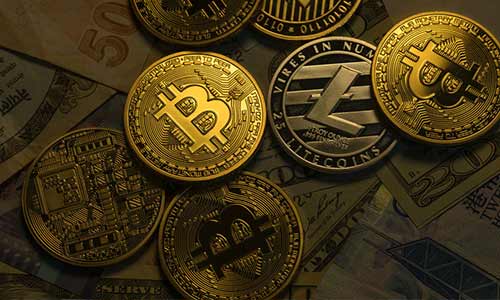
[Bloomberg] Binance Holdings Ltd. is under investigation by the Justice Department and Internal Revenue Service, ensnaring the world’s biggest cryptocurrency exchange in U.S. efforts to root out illicit activity that’s thrived in the red-hot but mostly unregulated market.
As part of the inquiry, officials who probe money laundering and tax offenses have sought information from individuals with insight into Binance’s business, according to people with knowledge of the matter who asked not to be named because the probe is confidential. Led by Changpeng Zhao, a charismatic tech executive who relishes promoting tokens on Twitter and in media interviews, Binance has leap-frogged rivals since he co-founded it in 2017.
The firm, like the industry it operates in, has succeeded largely outside the scope of government oversight. Binance is incorporated in the Cayman Islands and has an office in Singapore but says it lacks a single corporate headquarters. Chainalysis Inc., a blockchain forensics firm whose clients include U.S. federal agencies, concluded last year that among transactions that it examined, more funds tied to criminal activity flowed through Binance than any other crypto exchange.
“We take our legal obligations very seriously and engage with regulators and law enforcement in a collaborative fashion,” Binance spokeswoman Jessica Jung said in an emailed statement, while adding that the company doesn’t comment on specific matters or inquiries. “We have worked hard to build a robust compliance program that incorporates anti-money laundering principles and tools used by financial institutions to detect and address suspicious activity.”
Spokespeople for the Justice Department and IRS declined to comment.
U.S. Concerns
U.S. officials have expressed concerns that cryptocurrencies are being used to conceal illegal transactions, including theft and drug deals, and that Americans who’ve made windfalls betting on the market’s meteoric rise are evading taxes. Such worries have been a hindrance to the industry going mainstream, even as Wall Street increasingly embraces Bitcoin and other tokens amid a global investing frenzy.
This month’s cyber-attack against Colonial Pipeline Co. that’s triggered fuel shortages across the Eastern U.S. is the latest sign of what’s at stake. Colonial paid Eastern European hackers a nearly $5 million ransom in untraceable cryptocurrency within hours of the breach, Bloomberg News reported Thursday, citing two people familiar with the matter.
Bitcoin losses accelerated Thursday after Bloomberg reported the investigation into Binance.
While the Justice Department and IRS probe potential criminal violations, the specifics of what the agencies are examining couldn’t be determined, and not all inquiries lead to allegations of wrongdoing.
The officials involved include prosecutors within the Justice Department’s bank integrity unit, which probes complex cases targeting financial firms, and investigators from the U.S. Attorney’s Office in Seattle. The scrutiny by IRS agents goes back months, with their questions signaling that they’re reviewing both the conduct of Binance’s customers and its employees, another person said.
The U.S. Commodity Futures Trading Commission has also been investigating Binance over whether it permitted Americans to make illegal trades, Bloomberg reported in March. In that case, authorities have been examining whether Binance let investors buy derivatives that are linked to digital tokens. U.S. residents are barred from purchasing such products unless the firms offering them are registered with the CFTC.
Analyzing Transactions
Zhao has said Binance closely follows U.S. rules, blocks Americans from its website, and uses advanced technology to analyze transactions for signs of money laundering and other illicit activity. Last year, the firm warned that U.S. residents would have their accounts frozen if they were found to be trading, crypto trade publications have reported.
The inquiries follow a Chainalysis report on criminal transactions involving digital tokens. The firm tracked Bitcoin worth $2.8 billion that it suspects crooks moved on to trading platforms in 2019. Chainalysis determined that roughly 27%, or $756 million, wound up on Binance. Binance responded by saying it adheres to all anti-money laundering regulations in the jurisdictions in which it operates and works with partners like Chainalysis to improve its systems.
In the U.S., authorities have been cracking down on exchanges for flouting laws that are meant to prevent financial crimes, with officials citing the platforms use by terrorists and hackers. Tax violations have also been a priority, with the government recently winning a court order as it seeks to unmask U.S. clients of Kraken, a San Francisco-based exchange.
In October, federal prosecutors in Manhattan announced charges against the founders of Seychelles-based BitMEX, accusing them of violating the Bank Secrecy Act by permitting thousands of U.S. customers to trade while publicly claiming to restrict their access. The claims included failing to register as a futures merchant with the CFTC and not having adequate anti-money laundering controls. Three of the BitMex officials pleaded not guilty and a trial has been scheduled for March 2022. One remains at large.
Washington Presence
With the U.S. circling, Binance has stepped up its presence in Washington and retained a former Treasury Department official and top white-collar defense lawyers to represent it in legal cases and matters being reviewed by regulators. In March, the firm tapped former U.S. Senator Max Baucus, a Montana Democrat, to advise it on policy and government relations.
In September 2019, Binance partnered with a firm called BAM Trading Services Inc., which launched Binance.US to cater to American clients. Brian Brooks, who was a top banking regulator when he led the Office of the Comptroller of the Currency during the Trump administration, became chief executive officer of Binance.US this month.
Amid the hiring blitz, the company has popped up in U.S. cases tied to criminal activity. In February, two Florida men were charged with running an online fentanyl trafficking operation, with one of them accused of depositing the proceeds in a Binance account. That same month, the Justice Department sought the forfeiture of cryptocurrency worth $450,000 traced from ransomware attacks that hit several U.S. companies to a Binance account held by a 20-year-old Ukrainian national. The government didn’t accuse Binance of wrongdoing in either enforcement action.
Disguising Locations
Along with the CFTC, the Justice Department is likely to examine steps that Binance has taken to keep U.S. residents off its exchange. One person familiar with Binance’s operations said that prior to the establishment of Binance.US, Americans were advised to use a virtual proxy network, or VPN, to disguise their locations when seeking to access the exchange.
Jung, the Binance spokeswoman, said the exchange has never encouraged U.S. residents to use VPNs to get around its rules, as doing so would be something “that has always been contrary to our company’s principles.” In January, Zhao tweeted that Binance’s security systems block Americans even if they try to connect through one of the networks.
“We have implemented strong access controls that have been tested via external audit and are under continuous review and evaluation by Binance to ensure that the appropriate restrictions are in place and are effective,” Jung said.
[A MUST HAVE] Evidence Act Demystified With Recent And Contemporary Cases And Materials

Available now for NGN 40,000 at ASC Publications, 10, Boyle Street, Onikan, Lagos. Beside High Court, TBS. Email publications@ayindesanni.com or WhatsApp +2347056667384. Purchase Link: https://paystack.com/buy/evidence-act-complete-annotation
______________________________________________________________________ “Enhance Legal Practice With Authoritative Reports” — Alexander Payne Offers Comprehensive Law Reports, Spanning Over A Century Of Nigerian Jurisprudence Interested buyers are encouraged to place their orders and enquiries via:
0704 444 4777, 0704 444 4999, 0818 199 9888
Website: www.alexandernigeria.com
Interested buyers are encouraged to place their orders and enquiries via:
0704 444 4777, 0704 444 4999, 0818 199 9888
Website: www.alexandernigeria.com