Senior Advocate of Nigeria, Dr. Anthony Idigbe, has urged Igbo leaders and stakeholders to approach the ongoing push for Anioma State with profound reflection, restraint, and sensitivity.

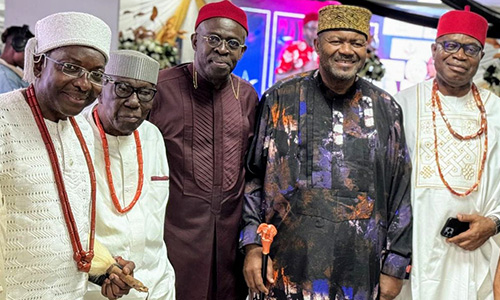
Speaking as the guest at the 2025 Annual Dinner and Award Night of the Otu Oka Iwu (Association of Igbo Lawyers) in Lagos an event chaired by Abia State Deputy Governor Ikechukwu Emetu and attended by dignitaries including the Asagba of Asaba, Obi Professor Epiphany Azinge (SAN), and Ohanaeze Ndigbo President-General Senator John Azuta-Mbata—Idigbe warned that mishandling this process risks reopening historical wounds and fostering fresh divisions within the Igbo nation.
Idigbe framed the Anioma State proposal through dual lenses, each carrying profound implications for identity and equity. On one hand, it represents a legitimate quest for liberation among the Anioma people, who have long felt culturally and politically hemmed in by surrounding influences, facing survival challenges that fuel demands for self-determination. On the other, it could serve as compensatory justice for the Southeast geopolitical zone by adding a sixth state, addressing longstanding imbalances.
Yet, he cautioned, these perspectives inevitably summon thorny questions of territory and belonging: Would Anioma’s creation expand the traditional boundaries of Igboland, or merely extend the Southeast’s reach into Anioma’s domain? “These are sensitive issues,” Idigbe emphasized, “and because they are sensitive, we have to be extremely careful.”
Central to his message was a fervent plea to eschew any rhetoric or actions that might evoke domination or annexation perceptions that could alienate rather than unite. “We must avoid the feeling that one particular Igbo has the right to control the other part of Igboland,” he asserted. Anioma’s people, he noted, seek freedom from external constraints, not a new form of bondage imposed by kin across the River Niger.
“They will fight!” he declared, highlighting how such missteps could echo past errors, like those during the creation of the former Midwest Region, where elite power struggles and misplaced priorities stunted long-term progress. Reflecting on that history, Idigbe pondered: “Maybe if we had focused on getting the capital and the premiership right… who knows whether the metropolis between Awka and Agbor would have been more established today if we had placed the larger interest above personal interest?”
Idigbe expressed alarm at how current agitations are already being co-opted by individual ambitions, with figures jockeying for positions like governors and senators, potentially sacrificing hard-won gains for elusive promises. “I am aware that people are already positioning themselves… And because of that, they are ready to throw away what we already have,” he observed, imploring a deeper reckoning: “What should be the best approach? Should we give up what we already have because we are looking for something else?”
Amid these cautions, Idigbe reaffirmed the unbreakable Igbo essence of the Anioma people, rejecting any notion of separation. “Every Anioma person is as much Igbo as any other Igbo person,” he proclaimed, unless self-denial intervenes. He rooted this unity in the enduring pillars of Igbo culture: the adoption of the language, and the profound traditions of respect for age and merit, which have woven diverse ancestries drawing from Benin, Ishan, Yoruba, Igala, Hausa, Ibibio, Urhobo, Ijaw, and beyond into a singular, expansive nation.
“What keeps us together is simple. Our main culture remains Igbo,” he said. “If you’ve adopted the culture, you are Igbo.”
In closing, Idigbe called on leaders to steward this “highly sensitive national and ethnic question” with unwavering responsibility, transcending personal agendas to safeguard collective futures. “We need to convey the right message to our people about the relationship between the Anioma people and the people of the Southeast,” he concluded, envisioning a path where caution fosters not division, but deeper solidarity.
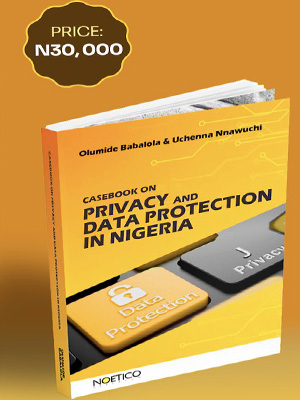 A timely new publication, Casebook on Privacy & Data Protection in Nigeria, co-authored by Olumide Babalola and Uchenna Nnawuchi, 📘Casebook on Privacy & Data Protection in Nigeria is now available on Amazon: https://a.co/d/8TmFZrd
_______________________________________________________________________
A timely new publication, Casebook on Privacy & Data Protection in Nigeria, co-authored by Olumide Babalola and Uchenna Nnawuchi, 📘Casebook on Privacy & Data Protection in Nigeria is now available on Amazon: https://a.co/d/8TmFZrd
_______________________________________________________________________
[A MUST HAVE] Evidence Act Demystified With Recent And Contemporary Cases And Materials

Available now for NGN 40,000 at ASC Publications, 10, Boyle Street, Onikan, Lagos. Beside High Court, TBS. Email publications@ayindesanni.com or WhatsApp +2347056667384. Purchase Link: https://paystack.com/buy/evidence-act-complete-annotation
______________________________________________________________________ “Artificial Intelligence for Lawyers: A Comprehensive Guide”, authored by Ben Ijeoma Adigwe Esq., ACiarb (UK), LL.M, Dip. in Artificial Intelligence, Director at the Delta State Ministry of Justice, Asaba, Nigeria. How to Order:
📞 Call, Text, or WhatsApp: 08034917063 | 07055285878
📧 Email: benadigwe1@gmail.com
🌎 Website: www.benadigwe.com
Ebook Version: Access it directly online at https://selar.com/prv626
How to Order:
📞 Call, Text, or WhatsApp: 08034917063 | 07055285878
📧 Email: benadigwe1@gmail.com
🌎 Website: www.benadigwe.com
Ebook Version: Access it directly online at https://selar.com/prv626