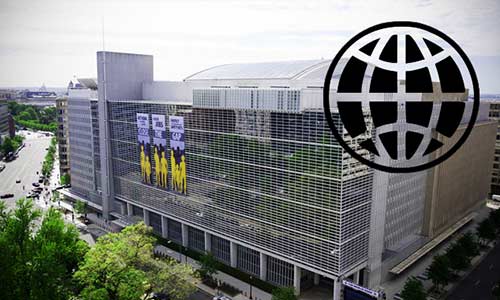
The World Bank has raised concerns over the spending priorities of Nigeria’s 36 state governments, revealing that expenditure on roads and other transport infrastructure has grown faster than investment in education, healthcare and social protection despite a sharp increase in government revenues since 2023.

The Bank warned that although states now have greater financial resources to deliver essential public services, the pattern of expenditure raises questions about whether the additional revenues are translating into improved living conditions, better education, accessible healthcare and stronger human capital development.
Gloria Joseph-Raji, Senior Economist at the World Bank, raised the concerns on Tuesday, November 3, 2026, in Abuja, during the launch of the 11th edition of BudgIT’s State of States Report, themed “From Allocation to Impact: Rethinking State Spending Priorities.”
Joseph-Raji explained that recent economic reforms had substantially improved the financial position of state governments, providing opportunities to strengthen infrastructure and improve services that directly affect citizens’ welfare.
However, she maintained that increased revenue alone could not guarantee development unless governments directed their resources towards projects and programmes capable of producing lasting improvements in people’s lives.
According to her, the economic reforms introduced since 2023, including the removal of petrol subsidy, exchange rate unification and improvements in tax administration, had increased fiscal revenues across the three tiers of government.
“Since mid-2023, exchange rate unification, petrol subsidy removal, and improvements in tax administration have expanded fiscal revenues across all tiers of government,” she said.
Joseph-Raji disclosed that states had also benefited from the Federal Government’s settlement of longstanding financial obligations and the provision of dedicated intervention funds for infrastructure and security.
She noted that improvements in internally generated revenue had further strengthened the capacity of several states to meet their financial commitments.
The World Bank representative contrasted the current financial position of state governments with the situation a few years earlier, when many struggled to pay salaries and meet other recurrent obligations.
“A few years ago, many states struggled to meet non-discretionary expenditure commitments, in particular civil service salaries. But our understanding today is that all states are meeting their salary commitments, and they have additional resources available for service delivery,” she stated.
She explained that the increase in financial resources had created opportunities for states to invest more effectively in education, healthcare, transport, agriculture, electricity and other services within their constitutional and statutory responsibilities.
Joseph-Raji noted that state governments had primary or shared responsibilities for these sectors, while also working with local governments on primary healthcare, basic education and sanitation.
She maintained that decisions concerning the allocation and management of public resources at the state level were therefore central to Nigeria’s development.
The economist referred to the World Bank’s October 2026 Nigeria Development Update, titled “Beyond the Federal Purse: How Higher Revenues Reshaped State Priorities,” which examined how rising government revenues had influenced spending patterns across the federation.
The report analysed budget implementation records from the 36 states and assessed how governments allocated additional resources following the fiscal changes introduced in 2023.
According to the findings, aggregate state revenues increased by approximately 93 per cent in real terms between 2023 and 2025, while expenditure rose by about 92 per cent over the same period.
The share of capital expenditure in states’ total spending also increased from 46 per cent to 61 per cent, reflecting greater investment in infrastructure and other development projects.
However, the World Bank observed that transport infrastructure, particularly roads, accounted for the largest increase in expenditure.
Although spending on education, healthcare and social protection also increased, the growth was slower than that recorded in economic infrastructure.
The Bank’s analysis showed that education’s share of total state expenditure declined from 14.9 per cent in 2021 to 12.1 per cent in 2025.
Healthcare spending remained broadly stable at approximately seven per cent, while social protection’s share increased from 1.4 per cent to 4.4 per cent during the same period.
The figures indicate that education and healthcare received a smaller or relatively unchanged proportion of state spending despite the substantial expansion in available resources.
Joseph-Raji expressed concern that infrastructure investments were growing faster than spending on essential social services, including in states with relatively weak human capital outcomes.
She acknowledged that many state governments had expanded transport infrastructure and reduced their debt burdens, particularly domestic debt.
However, she stressed that governments must balance investments in physical infrastructure with expenditure that improves education, healthcare and social protection.
According to her, the fundamental challenge was no longer simply how much money states received but whether public resources were being directed towards sectors that could deliver the greatest benefits.
“Allocating resources to sectors with the greatest development impact is therefore essential,” she declared.
The World Bank representative also expressed concern about the continued dependence of most state governments on allocations from the Federation Account.
She disclosed that federation transfers accounted for more than three-quarters of total revenue in all but a handful of states in 2025, despite improvements in internally generated revenue.
According to her, between 2021 and 2025, federation transfers represented approximately 73 per cent of aggregate state revenues when Lagos State, which has a comparatively large internally generated revenue base, was excluded.
She warned that the heavy dependence on federally distributed revenue left states vulnerable to fluctuations in the Federation Account, particularly where domestic revenue sources remained weak.
Joseph-Raji explained that improvements in internally generated revenue had not substantially changed the financial dependence of most state governments.
“Moreover, IGR remains narrowly based and is sufficient to cover recurrent expenditure in only two states,” she stated.
The economist maintained that strengthening internally generated revenue was necessary to sustain recent fiscal improvements and reduce the risks associated with overdependence on federal allocations.
She also urged governments to improve the administration of existing revenue sources while ensuring that revenue collection remained efficient, accountable and sustainable.
Beyond revenue generation, Joseph-Raji called for stronger public financial management systems to ensure that increased government income translated into measurable improvements in service delivery.
She identified budget credibility, cash management, commitment controls, public investment management, debt management and fiscal risk assessment as areas requiring urgent attention.
According to her, state governments must strengthen the relationship between approved budgets, actual expenditure and the outcomes of publicly funded projects.
She stressed that budgetary allocations should not be assessed solely by the amounts appropriated but also by the extent to which expenditure produced tangible improvements in the lives of citizens.
Joseph-Raji further urged states to integrate fiscal risk assessment and debt management more closely into their budgeting processes to ensure that new commitments did not undermine long-term financial sustainability.
She also called for the inclusion of donor-funded projects and activities in state budget systems.
According to her, development assistance and externally funded programmes should be consistently reflected in budget implementation reports and annual financial statements.
She explained that this would improve transparency, provide a more complete picture of government expenditure and strengthen accountability for funds administered through public institutions.
Despite the concerns, Joseph-Raji acknowledged improvements in fiscal transparency across Nigerian states.
She recalled that when BudgIT began publishing its State of States assessments, only five of Nigeria’s 36 states made their budgets publicly available.
However, she disclosed that nearly all states now publish annual budgets, quarterly budget implementation reports, audited financial statements, debt reports and other fiscal information.
The World Bank representative described the development as an important improvement in public financial disclosure and a foundation for stronger accountability.
She maintained, however, that the availability of fiscal documents must translate into better decisions about how public money is allocated and spent.
According to her, publishing budgets and financial statements is only one aspect of transparency, while the effectiveness of expenditure remains essential to determining whether citizens are receiving value from government resources.
“The effectiveness of public expenditure is essential to ensuring that higher revenues translate into better spending outcomes and into lasting improvements in the living standards of Nigerians,” she stated.
Joseph-Raji also emphasised the importance of extending fiscal transparency and accountability initiatives to local governments.
She observed that local councils were closest to communities and performed important functions in delivering basic services.
According to her, improving accountability at the local government level would strengthen the delivery of primary healthcare, basic education, sanitation and other services that directly affect households.
She consequently urged BudgIT and other development partners to extend their fiscal assessments to local government operations, building on the work already undertaken at the federal and state levels.
The economist maintained that greater scrutiny of local government finances would help citizens understand how resources were allocated and whether expenditure was addressing community needs.
The latest concerns come amid wider discussions about how the additional revenues generated by Nigeria’s economic reforms should be utilised.
In its October 2026 Nigeria Development Update, the World Bank observed that economic reforms had created greater fiscal space for state governments, enabling them to invest more in infrastructure and improve their financial positions.
However, the Bank stressed that stronger revenue performance must be accompanied by improvements in spending efficiency, public accountability and service delivery.
The report also emphasised the importance of investments in human capital, noting that education, healthcare and other essential services were necessary to support productivity, job creation and long-term economic development.
The World Bank maintained that the benefits of improved fiscal performance would depend on whether governments translated additional financial resources into projects and services that improved citizens’ welfare.
Joseph-Raji reiterated the institution’s commitment to working with the Federal Government, state governments and development partners to strengthen public expenditure management and support sustainable development.
She said the ultimate objective should be to ensure that economic growth and increased government revenues created better opportunities, improved public services and raised living standards, particularly for poor and vulnerable Nigerians.
The findings place renewed attention on the spending priorities of Nigeria’s 36 state governments, particularly the balance between infrastructure development and essential social services.
While the World Bank acknowledged the importance of road construction and other capital projects, it maintained that state governments must ensure that higher revenues also deliver corresponding improvements in education, healthcare and social protection.
The institution stressed that stronger fiscal accountability, effective budget implementation and better expenditure decisions were necessary to ensure that the benefits of increased government revenues reached the population.
[A MUST HAVE] Evidence Act Demystified With Recent And Contemporary Cases And Materials

Available now for NGN 40,000 at ASC Publications, 10, Boyle Street, Onikan, Lagos. Beside High Court, TBS. Email publications@ayindesanni.com or WhatsApp +2347056667384. Purchase Link: https://paystack.com/buy/evidence-act-complete-annotation
______________________________________________________________________ “Enhance Legal Practice With Authoritative Reports” — Alexander Payne Offers Comprehensive Law Reports, Spanning Over A Century Of Nigerian Jurisprudence Interested buyers are encouraged to place their orders and enquiries via:
0704 444 4777, 0704 444 4999, 0818 199 9888
Website: www.alexandernigeria.com