By Abdulrasheed Ibrahim

The successful military coup in Togo in 1963, the first of its kind in West Africa, served as a catalyst for soldiers in neighboring countries to contemplate similar actions. The coup d’état quickly spread like wildfire across countries such as Ghana, Nigeria, Sierra Leone, Benin Republic, Central Africa Republic, Equatorial Guinea, Liberia, Chad, Niger, and Upper Volta (now Burkina Faso), among others. Notably, a decade earlier, in 1952, Gamal Abdel Nasser, a military officer, orchestrated a coup d’état in Egypt. Could the subsequent wave of coups in Africa have been influenced by Nasser’s revolution? In my candid tribute to the late General Tunde Idiagbon, I expressed my aversion to military rule, stating:
“The rise and fall of figures like Muritala Muhammed, Thomas Sankara of Burkina Faso, and Tunde Idiagbon are among the reasons I staunchly oppose military involvement in African politics, particularly in Nigeria… History shows that the military often prevents the best and brightest from staying in power. Murtala Muhammed, for example, emerged as Nigeria’s military Head of State in 1975, initiating positive changes in Nigerian lives, only to be assassinated in a failed coup plotted by the infamous Dimka in 1976. Though Tunde Idiagbon was not the Head of State following the military toppling of the civilian regime of Alhaji Shehu Shagari on December 31, 1983, he held the position of Chief of Staff, Supreme Headquarters, under Muhammadu Buhari. Throughout his tenure, Idiagbon served as the driving force behind the military government, exerting even more influence and control than the Head of State himself… In Burkina Faso, Thomas Sankara steered his country toward greatness and righteousness in 1983, only to be overthrown and killed by his childhood friend, comrade, and Second-in-Command, Blaise Compaoré, in a bloody coup in 1987. Compaoré ruled for 27 years, managing to plunge the nation into chaos before being ousted by a popular revolt, after which he fled to the Ivory Coast…”
These instances provide substantial evidence for my stance against military involvement in politics. Historical lessons remind us of leaders like the late Eyadema of Togo, whose lengthy rule was succeeded by his own son. A similar scenario played out with Kabila senior and Kabila junior in the Congo Republic. Presently, this pattern repeats in Chad, where the son of Idris Deby assumed power following his father’s demise. These leaders, who ascended through coups d’état, persist in power despite decades at the helm. Yet, military figures are not the sole culprits; numerous African politicians and leaders cling to power after losing elections, manipulating and amending constitutions to overstay their welcome. This trend is evident across many African nations. The continent boasts leaders who fail to enhance the lives of their citizens yet strive to retain power indefinitely, alongside successors who prove worse than their deposed predecessors. Despite Africa’s abundance of untapped mineral resources, these leaders fail to exploit them for the continent’s benefit.
The recent coup d’état in Niger Republic and ECOWAS’ call for the military to step down and reinstate the ousted President Bazoum underscore a precarious situation. As long as elected African politicians fail to fulfill public expectations, military coups will persist. The populace’s celebration and alignment with the military in Niger Republic reflect their disillusionment with the deposed leader. Is ECOWAS justified in intervening so vehemently? The military in Niger enjoys support from their peers in Mali and Burkina Faso, potentially complicating ECOWAS’ intervention, especially as the military threatens the captured ousted leader’s life. Diplomacy and dialogue must prevail. Given the military’s engagement with influential figures like former Emir of Kano, Muhammad Sanusi II, it would be prudent for ECOWAS to include him in negotiations. My concern revolves around the efficacy of bodies like ECOWAS and the African Union (AU) in preventing self-perpetuating leadership manipulation. When rival factions in Sudan succumbed to power intoxication post-Omar El-Bashir, what action did the AU take? In Egypt, when military officer Abdel Fattah El-Sisi ousted democratically elected President Morsi and assumed power, he was subsequently rewarded with the AU Chairmanship.
Though there are numerous disheartening stories of Africans under military dictatorship, the current generation seems less inclined to learn from history. It’s essential to focus on Nigeria’s experience under military rule. Among us are misguided youths advocating for the return of military rule, seeking a situation akin to Niger Republic. Many of these youths were likely born after Nigeria’s return to democracy in 1999. Educating them on historical events becomes a responsibility, as ignorance of past events can’t guide informed decisions. The Nigerian military’s response to these calls for a coup has been commendable. The military authority stated, “Calls on the military to interfere in our democracy are highly unpatriotic, wicked, and an attempt to distract the Armed Forces of Nigeria from performing its constitutional responsibilities.” Given Nigeria’s history with military rule, it is unlikely that any reasonable individual would advocate for a coup d’état in the country.
Comparing the civilian regime of Alhaji Shehu Shagari, toppled ostensibly due to corruption, with the subsequent Babangida regime, one can ascertain the latter’s failure to uphold expectations. Babangida’s regime, which lasted eight years, culminated in the annulment of the June 12, 1993 election, widely regarded as Nigeria’s most free and fair. Babangida’s regime proved even worse than the one he overthrew. Similarly, Obasanjo and Buhari, both former military Heads of State, were democratically elected as Presidents, but their leadership failed to lead Nigeria to its anticipated destination.
Obasanjo’s reelection was based on the premise of trust, rooted in his earlier peaceful handover of power to a democratically elected civilian regime in 1979. Buhari’s reelection, on the other hand, rested on his past record of disciplining and fostering patriotism during his previous military rule. However, both leaders disappointed, with Buhari being labeled a “paper tiger” by Dele Sobowale, a prominent Nigerian journalist and columnist. Buhari’s vulnerability during a coup plot by Babangida and his cohort demonstrated a lack of action when needed. Babangida exploited Buhari’s absence and captured him, signaling the downfall of his regime.
Though coups d’état might not be the optimal solution for addressing governance issues, leaders must heed public aspirations and prioritize their interests over personal gains. Failure to do so leads to public dissatisfaction and potential uprisings. Providing citizens with proper welfare and a sense of belonging shields governments from unnecessary military takeovers. However, responding to misbehaving politicians with military intervention is not the solution. Given ongoing battles against groups like Boko Haram and bandits, ECOWAS’ involvement in war with the military in Niger Republic seems ill-advised. If ECOWAS craves conflict, it should engage regional terrorists first. Asking Nigeria alone to finance such a war is economic suicide.
Calls to avoid forceful intervention have echoed from various quarters, including Chief Olabode George, a seasoned politician and retired high-ranking military officer. George’s plea to Asiwaju Bola Ahmed Tinubu, the Chairman of ECOWAS, encapsulates the sentiment:
“In your recent national address, you acknowledged the considerable challenges Nigerians face and the efforts to alleviate their suffering. In today’s Nigeria, there’s a shortage of food, lack of financial means for fuel and electricity, and widespread hardship. Thus, it’s unclear how a full-scale military operation in Niger Republic would yield results. Remember that Nigeria predominantly financed ECOMOG military actions when our economy was more robust. With Mali and Burkina Faso’s potential support for Niger Republic, embarking on such a military operation is fraught with challenges… I’m a retired General, and I understand that war is arduous. I implore you not to drag Nigerians into endless warfare. Despite its mineral wealth, Niger Republic’s leadership has held the nation back for years. Over 75% of Nigeriens are poor and uneducated. In due time, if they’re dissatisfied with Tchiani [the ousted leader], they’ll address it. Let Nigeriens address their internal issues as we focus on rectifying our own circumstances at home.”
These sentiments underscore my belief in Nigerian citizens serving as invaluable advisors to their leaders. Chief George aptly identifies the issue: leaders stifling their countries despite abundant resources. This pattern repeats across Africa, where leaders disregard their populace in pursuit of power. While the British Monarchy provides a model for a constitutional monarchy, most African counterparts fail to adopt similar governance methods, resulting in their downfall. Power corrupts and intoxicates many African leaders, validating Lord Acton’s words: “All power tends to corrupt and absolute power corrupts absolutely.”
NOTE: While I welcome counterarguments to my assertions, my aim is to encourage balanced, impartial dialogue.
Contact: 08055476823, 08164683735, Email: abdulrasheedibrahim362@gmail.com
 Interested buyers are encouraged to place their orders and enquiries via:
0704 444 4777, 0704 444 4999, 0818 199 9888
Website: www.alexandernigeria.com
Interested buyers are encouraged to place their orders and enquiries via:
0704 444 4777, 0704 444 4999, 0818 199 9888
Website: www.alexandernigeria.com
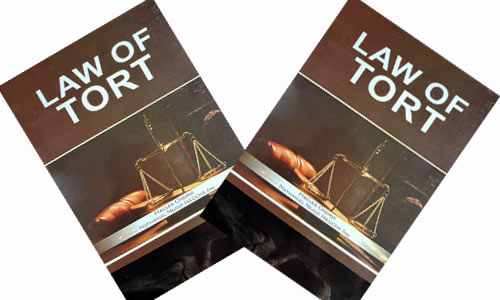 The book, titled The Law of Torts in Nigeria: A Functional Approach, authored by Professor Hagler Sunny Okorie Ph.D and Ikeocha, Nathaniel Ngozi Esq, offers law students, practitioners, and academics a comprehensive guide to understanding and applying tort law in Nigerian courts. Interested buyers can place orders via the following contact numbers: 08028636615, 08037667945, 08032253813, or +234 902 196 2209.
_______________________________________________________________________
The book, titled The Law of Torts in Nigeria: A Functional Approach, authored by Professor Hagler Sunny Okorie Ph.D and Ikeocha, Nathaniel Ngozi Esq, offers law students, practitioners, and academics a comprehensive guide to understanding and applying tort law in Nigerian courts. Interested buyers can place orders via the following contact numbers: 08028636615, 08037667945, 08032253813, or +234 902 196 2209.
_______________________________________________________________________
 ARTIFICIAL INTELLIGENCE FOR LAWYERS: A COMPREHENSIVE GUIDE
Reimagine your practice with the power of AI “...this is the only Nigerian book I know of on the topic.” — Ohio Books Ltd
Authored by Ben Ijeoma Adigwe, Esq., ACIArb (UK), LL.M, Dip. in Artificial Intelligence, Director, Delta State Ministry of Justice, Asaba, Nigeria.
Bonus:
Get a FREE eBook titled “How to Use the AI in Legalpedia and Law Pavilion” with every purchase.
ARTIFICIAL INTELLIGENCE FOR LAWYERS: A COMPREHENSIVE GUIDE
Reimagine your practice with the power of AI “...this is the only Nigerian book I know of on the topic.” — Ohio Books Ltd
Authored by Ben Ijeoma Adigwe, Esq., ACIArb (UK), LL.M, Dip. in Artificial Intelligence, Director, Delta State Ministry of Justice, Asaba, Nigeria.
Bonus:
Get a FREE eBook titled “How to Use the AI in Legalpedia and Law Pavilion” with every purchase.
How to Order: 📞 Call, Text, or WhatsApp: 08034917063 | 07055285878 📧 Email: benadigwe1@gmail.com 🌐 Website: www.benadigwe.com
Ebook Version: Access directly online at: https://selar.com/prv626
________________________________________________________________________ The Law And Practice Of Redundancy In Nigeria: A Practitioner’s Guide, Authored By A Labour & Employment Law Expert Bimbo Atilola _______________________________________________________________________
[A MUST HAVE] Evidence Act Demystified With Recent And Contemporary Cases And Materials
_______________________________________________________________________
[A MUST HAVE] Evidence Act Demystified With Recent And Contemporary Cases And Materials