The Independent National Electoral Commission (INEC) has disclosed that it received more than 4,800 claims and about 600 objections to its Preliminary Register of Voters as part of ongoing efforts to clean up the database ahead of the 2027 general elections.

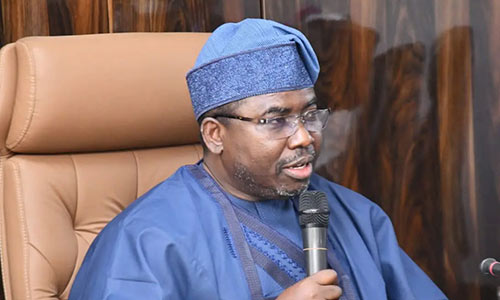
INEC Chairman, Professor Joash Amupitan, SAN, disclosed this on Friday in Abuja while receiving the Economic Community of West African States (ECOWAS) Pre-Election Fact-Finding Mission at the commission’s national headquarters.
Amupitan explained that the figures, recorded as of Thursday, comprised claims submitted at registration areas where the preliminary register was displayed and objections received through electoral officers and Resident Electoral Commissioners.
He said most of the claims concerned corrections and other minor issues, adding that the online display of the register had also helped the commission identify discrepancies requiring attention.
“The display of the register online is also confirming some of the complaints we had earlier received,” he said.
The INEC chairman assured Nigerians that the commission would address all valid claims and objections before certifying the Final Register of Voters on December 15, 2026.
He explained that the exercise was particularly important given the size of the register, which currently contains more than 103 million registered voters.
According to him, INEC is determined to eliminate discrepancies and ensure that the final register is accurate and credible ahead of the 2027 elections.
The development comes amid public concerns over irregularities identified in the preliminary register, including suspicious photographs suspected to have been generated using artificial intelligence, duplicate records and complaints from voters whose details were incorrectly captured.
INEC had earlier explained that the preliminary register remained subject to verification and cleanup before final certification.
The commission’s Director of Information and Communication Technology, Dr Lawrence Bayode, also disclosed on Friday that some registration officers had introduced irregular entries into the database, adding that the commission was working to remove them before December 15.
Beyond the cleanup exercise, Amupitan announced plans to conduct a nationwide mock accreditation exercise in November to test voter accreditation and the transmission of election results simultaneously across all states.
He said the commission had introduced an additional safeguard requiring election results to be authenticated at polling units before transmission to the INEC Election Results Viewing Portal (IReV).
“The Commission had also introduced a safeguard whereby results are authenticated at the polling unit before they go to IReV,” he stated.
The chairman explained that when he assumed office, the commission considered introducing a different technology but decided against doing so because of time constraints.
He said INEC instead focused on improving the existing system to strengthen the electoral process ahead of the next general elections.
On preparations for the polls, Amupitan disclosed that the commission had conducted readiness assessments across several geopolitical zones, including the South-West in Lagos, North-West in Kaduna, South-East in Enugu and North-East in Gombe.
He added that the commission would visit the North-Central zone the following week.
According to him, the assessments had already prompted adjustments to deployment plans, particularly in areas with difficult terrain and security challenges.
“During our meeting earlier this week, we realised that there are some areas that we needed higher deployments than we had planned because of the terrain and some of the security issues that are prevalent,” he explained.
The INEC chairman, who said he was sworn in on October 23, 2025, also highlighted the commission’s electoral experience during his first year in office.
He disclosed that INEC had conducted four major off-cycle elections and 16 by-elections during the period.
Amupitan cited the Anambra State governorship election, held two weeks after he assumed office, as an example of improved electoral administration.
He said the result was concluded and announced within one day, compared with approximately five days in 2022.
According to him, lessons from the Anambra election were subsequently applied during the Federal Capital Territory election in February, the Ekiti State governorship election in June and the Osun State governorship election on August 8, 2026.
“For us, every election provides its own lesson,” he said.
On staff welfare, Amupitan disclosed that the commission had secured approval for the Consolidated Election Management Body Salary Structure (CEMBSS).
He explained that improved welfare for electoral officials would help reduce the risk of political interference and strengthen their independence in the discharge of their responsibilities.
“If our staff are well taken care of, then the temptation from the political group will be curtailed,” he stated.
The chairman also expressed optimism about the commission’s security arrangements, citing the experience in Osun State, where he said threats and violence recorded before the election subsided following adjustments to security measures and closer monitoring of volatile areas.
“Post-election violence has drastically reduced,” he said.
Amupitan further disclosed that INEC was refining arrangements for internally displaced persons to ensure their participation in the electoral process.
According to him, the commission remained committed to ensuring inclusivity and preventing the exclusion of eligible voters.
He said the objective was to “ensure inclusivity, that no one is completely excluded.”
The INEC chairman also called for stronger cooperation with international partners, particularly in addressing electoral disinformation, improving logistics and strengthening voter education.
He said the commission sought “a hand-on-hand relationship with the international community, providing peer learning and technical exchange regarding best practices in combating sophisticated electoral disinformation, managing logistics in complex terrains, and strengthening inclusive voters’ education.”
Amupitan welcomed the deployment of ECOWAS long-term and short-term election observers, describing their independent assessments as important to the credibility of Nigeria’s electoral process.
He assured the regional body that the commission would remain impartial in the discharge of its constitutional responsibilities.
“The Independent National Electoral Commission under my watch has no candidate and no political party,” he declared.
He added that Nigeria and other African countries needed to demonstrate their capacity to conduct credible elections and manage their democratic affairs.
“We need to show clearly that we have come of age, Africa has come of age, and we are able to conduct our own affairs,” he said.
Speaking during the visit, the leader of the ECOWAS Pre-Election Fact-Finding Mission and former Vice-President of Sierra Leone, Victor Bockarie Foh, explained that the mission was deployed under regional instruments governing democracy, good governance and conflict prevention.
He said its mandate included assessing Nigeria’s preparedness for the 2027 general elections and engaging political parties, government officials, the electoral management body, civil society organisations and other stakeholders.
According to him, the mission would also gather legal documents governing the electoral process and assess the conditions under which the elections would be conducted.
Foh explained that the deployment was based on the Supplementary Protocol on Democracy and Good Governance, Article 53C of the ECOWAS Conflict Prevention Framework and the decision of the regional bloc’s heads of state to send pre-election fact-finding missions to member countries holding elections.
The mission’s co-head, Dr Abbas Chernor Bundu, a former Executive Secretary of ECOWAS and former Speaker of Sierra Leone’s Parliament, said the visit was intended to identify areas where the regional body could support INEC and other electoral stakeholders.
He said the mission sought to “gauge the state of preparedness of all the stakeholders and to see where ECOWAS Commission can be of support to INEC and all stakeholders in the process.”
The ECOWAS Commissioner for Political Affairs, Peace and Security, Ambassador Francess Piagie Alghali, was also present at the meeting.
Meanwhile, INEC disclosed that 66 petitions arising from the publication of the final lists of governorship and State Houses of Assembly candidates for the 2027 general elections were successful.
In a separate development, the commission said its Staff Multi-Purpose Cooperative Society was holding its 2026 Presidents’ Annual General Meeting in Jos, Plateau State, to discuss strategies for strengthening the society and improving members’ welfare.
[A MUST HAVE] Evidence Act Demystified With Recent And Contemporary Cases And Materials

Available now for NGN 40,000 at ASC Publications, 10, Boyle Street, Onikan, Lagos. Beside High Court, TBS. Email publications@ayindesanni.com or WhatsApp +2347056667384. Purchase Link: https://paystack.com/buy/evidence-act-complete-annotation
______________________________________________________________________ “Enhance Legal Practice With Authoritative Reports” — Alexander Payne Offers Comprehensive Law Reports, Spanning Over A Century Of Nigerian Jurisprudence Interested buyers are encouraged to place their orders and enquiries via:
0704 444 4777, 0704 444 4999, 0818 199 9888
Website: www.alexandernigeria.com