The World Health Organisation (WHO) has warned that Nigeria is not yet Ebola-free despite the evacuation of the country’s index patient and her husband to Switzerland, even as the Federal Government targets December 7, 2026, as the earliest possible date for declaring the outbreak over if no fresh infection is recorded.

The organisation, which demanded the retraction of misleading reports suggesting that Nigeria had been declared free of the disease, insisted that the absence of confirmed cases in the country did not mean that the outbreak had officially ended.
The warning came as 52 people remained under surveillance, four states intensified emergency preparedness, and African and European medicines regulators moved to accelerate vaccine development against the Bundibugyo virus.
In a clarification posted on its official X account, WHO described reports claiming that Nigeria had been declared Ebola-free as inaccurate and misleading.
“WHO has not declared Nigeria Ebola-free. Nigeria currently has no confirmed case of Ebola following the medical evacuation of the index patient to Switzerland.”
The organisation explained that, under the prescribed outbreak-closure criteria, a country must complete a 42-day countdown after the last confirmed patient tests negative twice for the virus or, as in Nigeria’s present circumstances, following the evacuation of the confirmed patient.
The period, representing twice the maximum 21-day incubation period of Ebola, must pass without any further confirmed or probable infections before the outbreak can be declared over. Heightened surveillance must continue afterwards.
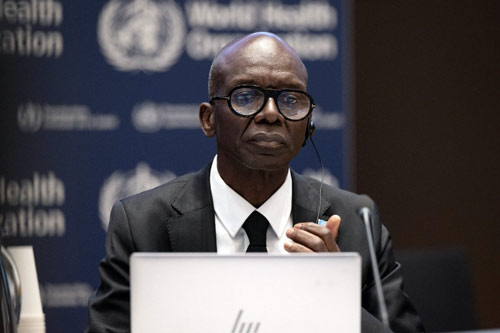
WHO’s clarification followed an earlier statement by its Regional Director for Africa, Mohamed Janabi, that Nigeria currently had no Ebola cases following the departure of the infected woman and her husband.
“With the evacuation of the patient and her husband, Nigeria currently has no Ebola cases.
“However, vigilance remains critical. Nigeria will continue the close follow-up of 52 contacts, while Switzerland will assume responsibility for the continued management of the patient and the follow-up of contact number 53, her husband,” Janabi said.
The clarification became necessary after some media platforms interpreted Janabi’s statement as an official declaration that Nigeria had overcome the outbreak.
Giving the Federal Government’s projection for ending the emergency, the Coordinating Minister of Health and Social Welfare, Professor Muhammad Ali Pate, said Nigeria could begin the process of declaring the outbreak over as early as December 7, subject to validation by the Nigeria Centre for Disease Control and Prevention and WHO.
“If no further confirmed or probable cases are detected, Nigeria could progress towards declaring this outbreak over under WHO criteria, potentially as early as 7 December 2026.”
Pate warned that the emergence of another confirmed or probable case would require a fresh countdown, stressing that surveillance, contact tracing, prompt investigation of suspected infections and strengthened preparedness across health facilities remained the government’s immediate priorities.
“Following the imported Ebola index patient’s medical evacuation from Nigeria today, 26 October, our immediate priorities remain active monitoring of all identified contacts, prompt investigation of alerts and strengthened readiness across our health facilities.”
The Minister said response teams were working with the Federal Capital Territory Administration, state health authorities and development partners to prevent community transmission.
The 42-year-old index patient, a Swiss citizen, was medically evacuated from Abuja on Monday morning alongside her husband after Nigerian medical personnel managed the acute phase of her illness and stabilised her condition.
Pate said the woman was conscious, clinically stable and communicating before her departure, with laboratory indicators showing improvement.
He, however, cautioned that clinical recovery did not necessarily mean she was no longer infectious.
“This does not mean she is not still infectious, hence the strict protocols in place,” he said.
Her husband, who accompanied her aboard the medical evacuation aircraft, had remained asymptomatic and tested negative for the virus.
The NCDC had earlier identified 53 contacts, including healthcare workers, domestic staff and the patient’s spouse. With Switzerland assuming responsibility for monitoring her husband, Nigerian health authorities will continue following up the remaining 52 contacts for 21 days from their last possible exposure.
No secondary infection had been confirmed among the identified contacts, while a suspected case reported in Rivers State on October 23 returned a negative laboratory result.
Meanwhile, the Academy of Medical Sciences of Nigeria has urged the NCDC to intensify contact tracing and complete the mandatory follow-up of all exposed persons, warning that the patient’s evacuation does not terminate the country’s public health responsibilities.
In a statement signed by its President, Osato Giwa-Osagie, alongside other officials, the academy emphasised the need for sustained monitoring of healthcare workers, domestic staff and other persons who might have been exposed.
It noted that the medical evacuation was permissible under the International Health Regulations, provided established safety procedures were followed, but cautioned that the patient’s samples remained positive as of October 25.
The academy commended Nigerian clinicians, nurses, laboratory scientists and public health personnel for stabilising the patient before her evacuation and called for adequate protection of frontline workers, improved isolation facilities and transparent public communication.
According to the NCDC, the index patient arrived in Abuja on October 3 after travelling from Uganda through Addis Ababa, developed symptoms on October 7 and subsequently sought treatment at private health facilities.
The agency was notified on October 19, while laboratory confirmation of Ebola disease caused by the Bundibugyo virus followed on October 20.
The patient’s symptoms included fever, diarrhoea, generalised body aches and sore throat, but no bleeding was recorded.
Further investigations into the source of her infection revealed a possible connection with the outbreak in Kenya.
Pate disclosed that genomic analysis conducted by the NCDC and the Institute of Genomics and Global Health at Redeemer’s University, Ede, Osun State, indicated that the virus detected in Nigeria was closely related to that identified in Kenya’s index patient.
He, however, stressed that the genetic similarity did not establish a direct transmission link or explain how the Nigerian patient became infected.
The Africa Centres for Disease Control and Prevention is also deploying a team of scientists, led by Congolese Ebola expert Jean-Jacques Muyembe, to investigate the possible source of the infection, including whether the Nigerian and Kenyan patients might have crossed paths while travelling through Uganda.
The investigation is expected to help determine whether the cases share a common source or transmission pathway.
As federal authorities sustain surveillance, state governments have intensified measures to prevent further importation and possible community transmission.
In Kebbi State, the government has strengthened the screening of travellers at Sir Ahmadu Bello International Airport, Birnin Kebbi, and land border crossings in Bagudo, Kamba and Arewa.
Permanent Secretary of the Ministry of Health, Zaki Abubakar Zaki, said passengers were being screened at designated entry and exit points to facilitate the early identification and referral of suspected cases.
He said personal protective equipment had also been supplied to general hospitals to protect frontline health workers, while public health officials were coordinating surveillance and infection-prevention activities.
In Plateau State, the government has reactivated isolation centres, strengthened disease surveillance and intensified public awareness campaigns.
Commissioner for Health, Nicholas Ba’amlong, said the state’s emergency preparedness team had been directed to assess safety arrangements at the airport and place local government areas bordering neighbouring states on heightened alert.
“We advise the people to maintain good hygiene, wash their hands regularly and avoid direct contact with the blood and body fluids of suspected infected persons,” he said.
Although Plateau had recorded no Ebola case, Ba’amlong said precautionary measures remained necessary.
Similarly, the Yobe State Government has activated its Public Health Emergency Incident Management System and placed its Emergency Operations Centre on high alert to coordinate surveillance and response across the state’s 17 local government areas.
Commissioner for Health and Human Services, Mohammed Lawan Gana, said isolation and treatment facilities had been identified across the state’s three senatorial zones, with arrangements to strengthen their capacity through medical supplies, protective equipment and training.
Disease surveillance officers have also been directed to investigate suspected infections promptly, while laboratory readiness is being strengthened through sample collection kits and collaboration with the NCDC.
“The state has no case of Ebola, but we are taking no chances,” Gana said.
In Delta State, the government has reviewed its emergency response arrangements, disease surveillance systems and available resources to strengthen preparedness across its 25 local government areas.
Commissioner for Health, Joseph Onojaeme, said the state was intensifying monitoring at entry points, healthcare facilities and communities to ensure early detection and investigation of suspected infections.
Meanwhile, growing international concern over the Bundibugyo outbreak has prompted the African Medicines Agency and the European Medicines Agency to issue joint guidance aimed at accelerating clinical trials of potential vaccines against the virus.
The agencies, following consultations with WHO, recommended that promising vaccine candidates move through clinical development without unnecessary delays while maintaining rigorous scientific evaluation and adequate protection for trial participants.
They also recommended the development of single-dose vaccines where feasible and proposed a Phase 3 platform trial using a ring-vaccination approach involving close contacts of confirmed cases.
The regulators further recommended including children and pregnant women in clinical studies once sufficient preliminary safety information had been established among adults.
However, the agencies insisted that regulatory flexibility must not compromise scientific standards or participant safety.
The development coincided with the commencement of the Tumaini Phase 2/3 vaccine trial in Bunia, Democratic Republic of the Congo, where the first participant was vaccinated on October 23.
The trial will evaluate the safety and effectiveness of multiple vaccine candidates against the Bundibugyo virus, including Ervebo, a vaccine already licensed against Ebola disease caused by the Zaire virus but whose protective effectiveness against Bundibugyo remains to be established.
No vaccine has yet been approved specifically against Bundibugyo virus disease.
For Nigeria, however, the immediate task remains the completion of contact monitoring, investigation of suspected infections and maintenance of effective surveillance at airports, land borders, healthcare facilities and communities.
Although the evacuation of the index patient has left the country without a confirmed Ebola case within its borders, WHO insists that only the successful completion of the required outbreak-closure period and validation by the relevant health authorities can establish whether transmission has been interrupted.
Until then, the December 7 target remains conditional on Nigeria recording no further confirmed or probable cases.
[A MUST HAVE] Evidence Act Demystified With Recent And Contemporary Cases And Materials

Available now for NGN 40,000 at ASC Publications, 10, Boyle Street, Onikan, Lagos. Beside High Court, TBS. Email publications@ayindesanni.com or WhatsApp +2347056667384. Purchase Link: https://paystack.com/buy/evidence-act-complete-annotation
______________________________________________________________________ “Enhance Legal Practice With Authoritative Reports” — Alexander Payne Offers Comprehensive Law Reports, Spanning Over A Century Of Nigerian Jurisprudence Interested buyers are encouraged to place their orders and enquiries via:
0704 444 4777, 0704 444 4999, 0818 199 9888
Website: www.alexandernigeria.com