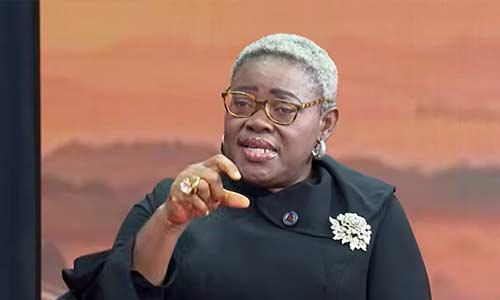
Professor Uju Agomoh, a member of the United Nations Subcommittee on Prevention of Torture, also serves as Chair of the Nigerian Bar Association’s Section on Public Interest and Development Law (NBA-SPIDEL), has called for a transparent and independent investigation into the deaths of 37 persons suspected of illegal mining while in the custody of the Nigeria Security and Civil Defence Corps (NSCDC) in Niger State, and has said the episode should serve as a wake-up call for the establishment of an oversight mechanism covering every place of detention in the country.
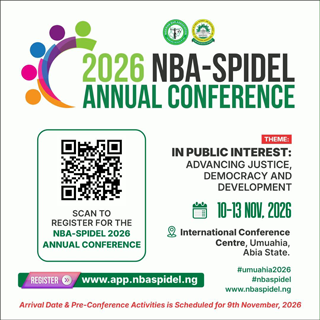

She spoke on the programme Daybreak as the committee constituted to investigate the incident prepared to be inaugurated, and following the suspension of 24 officers of the corps.
Asked what ought to have happened at the point of arrest, Professor Agomoh began by cautioning that the full facts are not yet known.
“I know that we do not know everything that actually happened. We do not know what was done and what was not done, and I believe the investigation will reveal a lot of these facts,” she said.
“But it is important to understand that there are a lot of safeguards, whether in our Constitution or in the United Nations Convention against Torture and Other Cruel, Inhuman or Degrading Treatment or Punishment, which Nigeria has signed, in addition to the Optional Protocol to that Convention.”
She said the more the matter is discussed and its context understood, the better placed the country will be to prevent a recurrence.
Professor Agomoh set out the principle that governs responsibility for persons in custody.
“We must recognise clearly that when persons are arrested and detained, a great deal of the responsibility for them falls on the State, because a person in detention cannot protect himself, even if he faces danger,” she said.
“Even if the person is ill, he cannot reach health facilities by himself. So there is a lot that the State is supposed to do.”
She noted that allegations had been made concerning the space and the requirements for detention, including how the place in which a person is held is provided, whether a holding cell or a detention facility, and questions of ventilation and available space.
“But again, as I always remind us, we do not know enough information,” she said.
She said the focus should therefore be on how sufficient information can be brought to light.
“What we need to focus on is how we can disclose enough information, and what we ought to do with regard to the preservation of evidence and how we manage the entire process. I believe that this is extremely important.”
“But everyone who was detained has rights that must be observed. There are also matters relating to the conditions of detention. And I believe the investigation should help us understand exactly what happened.”
Invited to say what she expects of the committee, given the deaths of 37 persons and the detention of 67 others in a confined space, and the competing explanations of poisoning and of suffocation from heat, Professor Agomoh first explained the basis of her expertise.
She said she serves as President of Prisoners’ Rehabilitation and Welfare Action, an organisation that has been working for 32 years, and that she is a member of the United Nations Subcommittee on Prevention of Torture representing Nigeria, a body of 25 experts drawn from around the world whose mandate is to visit all places where persons are deprived of their liberty, whether police stations or otherwise. She added that she has done a great deal of first-hand observation of such places.
Professor Agomoh grounded her assessment of the suspensions in the international standard governing custodial deaths.
“If you look at Rule 71 of the Mandela Rules, it states clearly that once a case of death in custody is discovered, a prompt investigation must be conducted, and anyone suspected of being connected to the matter must be removed from the scene,” she said.
“So in the light of that, the question of suspension from duty accords with the text of Rule 71.”
She immediately entered a caution.
“The other thing I must say is that we must be careful, because suspending a person from duty does not necessarily mean that he is guilty. You must also realise that we do not want to punish the wrong person.”
She added that where officers are found not to be culpable, “they must genuinely be returned to work.”
Professor Agomoh commended the Minister of Interior for his handling of an earlier matter, and said she expected the same approach here.
She recalled that the minister had responded to allegations concerning the Nigerian Correctional Service, and disclosed that she served as secretary of the preliminary committee constituted on that occasion.
“I must say that throughout that time, he never interfered in our work,” she said. “On that basis, I believe that this is what will happen here. But we have to ensure that all the correct steps are taken.”
The larger issue, she said, is that Nigeria does not know how many people it is holding, or where.
“When something happens, we need to realise that there are many detention facilities. There are about 19 institutions in Nigeria that have places of detention, and we do not know all the persons who are in detention at any given time.”
She said this is among the recommendations directed at Nigeria under the Universal Periodic Review, “that we should know all the places of detention, and know all the persons detained at any given time.”
“All we know is the persons who are in the correctional centres, and not the others,” she said.
“So please, let this serve as a wake-up call, to enable us establish an oversight mechanism, internally and independently, that ensures the compliance of all those detention facilities.”
Asked whether that should extend to knowing who is held in them and the condition of each facility, she agreed, adding: “Yes, and the training of staff as well, so that they are able to fulfil the safeguards that we have.”
She also urged that the victims and their families not be forgotten. “They are in pain too, so we need to take that into account as well.”
On the conduct of the investigation itself, Professor Agomoh pointed to the international standard for investigating potentially unlawful deaths.
“There are indeed the Minnesota rules, and this is part of what we included in our statement. There are 10 guiding principles that investigators need to ensure are observed,” she said.
“One of them, of course, is the question of independence. The other relates to the preservation of evidence, and matters concerning forensic evidence and all of that.”
“But I believe that if we put all of this together, we should be able to do something about this. And we should not speak only about what is happening here. We must look at what the systemic factors are. If we deal with those systemic factors, we can then prevent what might happen tomorrow.”
Asked what should follow if negligence is established against the suspended officers, she said accountability must be real.
“There are consequences for that, you know. So I believe that anyone whose involvement is established in one way or another, whether it was negligence, or an unethical act, or something deliberate, whatever the case may be, must bear the consequences.”
“Because part of what makes people continue to break the rules is not that we do not have rules. It is that there are no consequences. People can do anything and get away with it.”
“But until we say, as a people, no, this cannot happen, then we will be able to deal with it. So all of that must be taken into consideration.”
 Interested buyers are encouraged to place their orders and enquiries via:
0704 444 4777, 0704 444 4999, 0818 199 9888
Website: www.alexandernigeria.com
Interested buyers are encouraged to place their orders and enquiries via:
0704 444 4777, 0704 444 4999, 0818 199 9888
Website: www.alexandernigeria.com