The arbitral tribunal constituted under the auspices of the International Chamber of Commerce (ICC) has delivered severe findings against a former Attorney-General of the Federation and Minister of Justice, Mr. Abubakar Malami, SAN, over his handling of the Mambilla hydropower dispute, concluding that he deliberately acted against Nigeria’s interest, maintained an inappropriate relationship with the promoter of Sunrise Power and Transmission Company Limited, and participated in what the tribunal described as a corrupt deal connected with the settlement agreements at the centre of the arbitration.
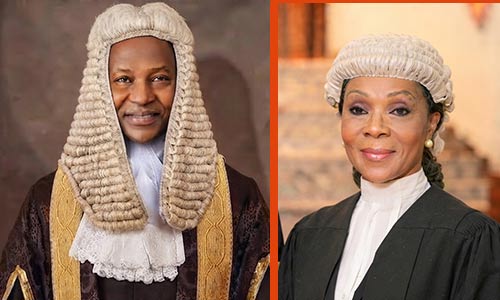
The three-member tribunal, chaired by Ms. Melanie van Leeuwen, with Mr. Simon Nesbitt, KC, and Mr. Stavros Brekoulakis as co-arbitrators, delivered its 616-page final award in Paris on 16 September 2026, dismissing Sunrise’s claims in their entirety.
In a separate but connected chapter of the same award, the tribunal rejected the explanation given by the Sunrise promoter, Mr. Leno Adesanya, for a payment of 500,000 dollars made to Mrs. Jennifer Douglas, then the wife of the former Vice-President, Mr. Atiku Abubakar, less than four months before Sunrise was purportedly awarded the Mambilla contract in 2003.
The Agreements At The Centre Of The Case
The proceedings arose from agreements signed by Mr. Malami and the then Minister of Power, Mr. Saleh Mamman, on behalf of the Federal Government in January and March 2020. Sunrise relied on those agreements to demand 400 million dollars from Nigeria, comprising a principal settlement sum of 200 million dollars and a further 200 million dollars as a default penalty, together with interest.
The tribunal rejected the claims outright. It ruled, first, that Mr. Malami and Mr. Mamman had neither the authority nor the capacity to bind the Federal Government without presidential approval. It found, secondly, that the settlement agreement and its addendum were products of corruption and therefore unenforceable as offending Nigerian public policy.
“The Words ‘Not Approved’ Leave No Room For Interpretation”
The tribunal found that the two ministers signed the January 2020 settlement agreement and the March 2020 addendum without first obtaining the approval of the late President Muhammadu Buhari or of the Federal Executive Council.
Mr. Malami subsequently wrote to the President seeking approval. On 20 April 2020, the President declined, writing that the Federal Government did not have 200 million dollars to pay Sunrise.
The former Attorney-General nevertheless returned to the President with further proposals. On 11 January 2021, he again asked for approval to conduct further negotiations with Sunrise. The President responded with the handwritten words: “Not approved.”
“The words ‘not approved’ leave no room for interpretation,” the tribunal said, describing as “remarkable” the persistence with which approval continued to be sought despite repeated refusal.
It found ultimately that no presidential approval was obtained for the agreements, whether expressly or implicitly, orally or in writing, before or after their execution, and that both men lacked actual as well as apparent authority to bind Nigeria.
“A Seemingly Substantial Deterioration”
Among the tribunal’s most damaging findings was its treatment of the renegotiation of the settlement terms shortly after the original agreement was signed on 21 January 2020.
Under that original agreement, Nigeria was to pay Sunrise 200 million dollars in a single instalment. A default would result in Sunrise being reinstated as the exclusive local content partner for the project, with interest on unpaid sums accruing at 10 per cent per annum, compounded annually.
An addendum signed on 25 March 2020 altered the arrangement substantially. Payment was split into two instalments of 100 million dollars each; failure to pay would attract an additional 200 million dollar penalty; and interest would accrue on the outstanding amount at 10 per cent per annum compounded daily rather than annually.
The tribunal described the revised terms as a “seemingly substantial deterioration” of Nigeria’s position, and said it could identify no corresponding benefit to the country.
“The Tribunal is unable to discern any upside for Nigeria in the renegotiated terms and conditions,” it said, noting that Sunrise stood to receive as much as 400 million dollars instead of 200 million dollars while Nigeria assumed significantly increased exposure.
“Not Negotiating On Behalf Of Nigeria”
From that analysis the tribunal drew its central conclusion about the former chief law officer of the Federation, who it said bore a responsibility to act solely in Nigeria’s interest but deliberately did the opposite.
“The Tribunal concludes that Attorney-General Malami has not been negotiating on behalf of Nigeria when he insisted on a change of the terms and conditions of the settlement but for Sunrise,” the award states.
It added that his deliberate conduct against Nigeria’s interests led it to conclude that he “was motivated by other incentive(s)”.
From “A Criminal Of The Highest Order” To Trusted Partner
The tribunal said it was particularly troubled by the reversal in the former Attorney-General’s assessment of Mr. Adesanya and his company.
In January 2018, Mr. Malami had described the promoter, in an email to the then President’s chief of staff, as “a criminal of the highest order” who was conspiring with previous administrations to file frivolous arbitration claims and siphon government funds. He also described him as the “number 1 enemy” of the Mambilla project.
He had earlier concluded, after reviewing the decision of the Federal Executive Council of 21 May 2003, that Sunrise had no valid basis for claiming that it had been awarded the build, operate and transfer contract, and in an April 2018 legal opinion he supported Nigeria’s decision to defend the arbitration and allow it to run its full course.
By January 2020, however, he had approved an offer of 200 million dollars to the company, and went on to sign the settlement agreement and addendum under which Nigeria’s potential liability rose to 400 million dollars plus interest.
The tribunal said his position had evolved from describing the promoter as a criminal pursuing frivolous claims to treating him as a trusted contractual partner who stood to be rewarded for blocking the project. It said it would have wished to hear how an April 2020 assessment that Sunrise had a strong legal case could be reconciled with the November 2017 position that there was no basis for the claim. Mr. Malami did not appear for cross-examination.
“Suspicious” Handwritten Instructions
The tribunal examined handwritten instructions issued shortly after the January 2020 agreement was signed, in which the former Attorney-General called for payment to be staggered, beginning with an initial 100 million dollars, and asked officials to renegotiate other aspects of the agreement.
It said no new development or change of circumstances had been identified to explain why an agreement whose “ink was barely dry” needed renegotiation, and described the actions as “suspicious” and consistent with the promoter’s testimony that a bribe had been solicited and a portion of the settlement money demanded.
Mr. Adesanya testified that he possessed audio and video recordings in which the former Attorney-General and the former Minister of Power allegedly said Nigeria would pay 100 million dollars initially and release the second 100 million dollars after he had done “what is needed”.
Despite an order of the tribunal, he refused to produce the recordings, citing fears for his safety and that of his family. The tribunal drew an adverse inference from the withholding, observing that the splitting of the settlement into two instalments of 100 million dollars corresponded precisely with his account of the alleged demand.
“Against this background, the Tribunal has no reason to doubt the veracity of Mr. Adesanya’s testimony to the effect that Attorney-General Malami solicited a bribe from Mr. Adesanya during the conversation he recorded,” the award says.
The tribunal was unable to reach a similar conclusive finding against the former Minister of Power, saying there was insufficient evidence as to his precise role.
“A Lack Of Moral Compass”
The tribunal also examined extensive WhatsApp exchanges between the former Attorney-General and the promoter at a time when Sunrise and Nigeria were opposing parties in two ICC arbitrations.
In a message sent in November 2021, the promoter asked him to disengage White & Case, Nigeria’s international lawyers, and Mr. Supo Shasore from the arbitration, and thanked him for his “recent efforts to see that we get paid”. The reply recorded in the award was: “Thank you Mr Leno.”
The tribunal described the nature and contents of the messages as “wholly inappropriate”, noting that the former Attorney-General engaged with the promoter and neither stopped him nor disavowed the contents of his messages. His response to the expression of gratitude for helping Sunrise get paid was described as “disturbing”.
The tribunal further found that the promoter supplied him with proposed letters to be issued in the name of the Federal Government and addressed to the promoter himself, one of which purported to convey presidential approval for the immediate payment of 200 million dollars, although no such approval had been given. It described that collaboration as “highly unusual”, “suspect” and indicative of an inappropriate relationship.
The evidence of their interactions, it said, presented “a disturbing picture” of two people who were supposed to represent opposing interests but instead coordinated closely.
“In the context of that inappropriate relation, the gentlemen shared a high degree of trust and, it would appear, a lack of moral compass,” the tribunal said.
It added: “Not only did Attorney-General Malami act against the best interest of Nigeria, he was actively applying his efforts to the benefit of Sunrise so ‘that we get paid.'” The tribunal said it had “no difficulty” finding that the word “we” in the exchanges referred to both men.
“Failed To Provide President Buhari With The Correct Information”
The tribunal criticised the information supplied to the President in the course of seeking approval.
In a brief dated 17 August 2020, the former Attorney-General told the President that the proposed settlement would cost Nigeria 200 million dollars and save the government 2.154 billion dollars in potential liability.
The tribunal said this was incorrect. By that date the addendum already provided for a settlement sum of 200 million dollars and an additional 200 million dollar default sanction, with interest at 10 per cent per annum compounded daily.
“Attorney-General Malami failed to provide President Buhari with the correct information,” the tribunal said, adding that he should also have qualified the claim of a 2.154 billion dollar saving by informing the President that Sunrise had not proved the damages it was claiming.
Denials Rejected
The tribunal identified instances in which it found the written evidence unreliable.
Mr. Malami denied involvement in draft settlement terms exchanged on 13 January 2020, but an email from the promoter stated that he had spoken to the Attorney-General before reinserting a clause reinstating Sunrise as local content partner in the event of default. The tribunal said this was consistent with evidence that the former Attorney-General approved a ministry memorandum containing the same clause on the same day, and it was accordingly “not convinced” by the denial.
In a footnote concerning a separate memorandum of 6 January 2020, the tribunal said the evidence of a Ministry of Justice official appeared correct while the contrary account appeared false.
“Serious Dissatisfaction” Over Refusal To Testify
Mr. Malami submitted a witness statement on Nigeria’s behalf but declined to appear for oral examination at the January 2025 hearing in Paris. Nigeria informed the tribunal that he no longer wished to testify because he was under investigation by the Economic and Financial Crimes Commission.
The tribunal noted that he was in Paris during the hearing and had accompanied the late President Buhari, his father-in-law, who appeared and gave oral evidence.
It said it was “particularly unsatisfactory” that a former chief law officer who understood the importance of cross-examination and due process should refuse to testify, accorded limited weight, if any, to his witness statement, and recorded its “serious dissatisfaction” with what it called his disregard for the administration of justice and for the tribunal.
“The Tribunal regrets that Mr. Malami refused to appear at the hearing to give evidence,” the award says, adding that it would have been interested to hear him explain how the terms he renegotiated and accepted could possibly have benefited Nigeria.
Five Red Flags
After reviewing the revised payment structure, the reversal of position, the continued attempts to secure presidential approval and the communications with the promoter, the tribunal identified five major red flags: the restructuring of the payment terms in a manner corresponding with the account of the alleged bribe demand; the severe deterioration of Nigeria’s contractual position; the unexplained change of opinion about the strength of Sunrise’s case; the persistent attempts to obtain presidential approval; and the improper coordination with the promoter.
“The Tribunal is persuaded that these red flags are indicative of a corrupt relation between Mr. Adesanya and Attorney-General Malami,” the award says.
On the balance of probabilities, the tribunal found that a corrupt agreement was reached under which the former Attorney-General was promised a share of the money Sunrise would receive, and that in return he cooperated in committing Nigeria to the settlement obligations and coordinated steps connected with the arbitrations. It noted that his signing of the addendum would have entitled Sunrise to at least 200 million dollars, or 400 million dollars in the event of default, plus interest.
It concluded that the January 2020 settlement agreement and the March 2020 addendum were “a product of corruption”, and that the two men had a common intention to use unlawful means to obtain a settlement favourable to Sunrise at Nigeria’s expense, with knowledge that the arrangement could injure Nigeria because the default provisions exposed the country to an additional 200 million dollars.
What The Tribunal Declined To Find
The tribunal expressly declined to find that any part of the additional 200 million dollar default sanction had also been promised to the former Attorney-General or the former Minister of Power, saying the absence of the withheld recordings made such a finding impossible.
Although it found evidence of an unlawful arrangement, it also rejected Nigeria’s counterclaim for damages, holding that the government failed to establish a sufficient causal connection between the conduct complained of and the financial losses it claimed.
The $500,000 Payment
In the second strand of the award, the tribunal examined a transfer of 500,000 dollars made on 30 January 2003, through China Castle Investments Limited, an offshore company controlled by Mr. Adesanya, to the Citibank account of Mrs. Jennifer Douglas in the United States. The payment was made less than four months before Sunrise was purportedly awarded the Mambilla contract.
During the arbitration, Nigeria alleged that the transfer was connected to the disputed award of the contract. Sunrise and Mr. Adesanya denied that allegation and maintained that the payment had nothing to do with the project.
Mr. Adesanya said he operated a bureau de change business through Moneyline Ventures Limited, and that the money represented dollars purchased for Mr. Atiku Abubakar with naira.
“I confirm that I made a transfer of $500,000 to the Abubakars through my company China Castle Investments Ltd in early 2003,” he said in his fourth witness statement, and he expressly acknowledged the transfer under cross-examination.
The tribunal said, however, that he produced no documents showing the underlying naira payment, the exchange rate applied, instructions from the former Vice-President or his aides, correspondence concerning the transaction, or any record establishing its commercial purpose. He said the discussions were oral and that, more than two decades later, he no longer had access to any written exchanges that might once have existed.
Neither Mr. Atiku Abubakar nor Mrs. Douglas gave evidence in the arbitration, and no witness statement or declaration from either was submitted to corroborate the foreign exchange explanation.
According to the award, Mr. Adesanya said he tried to secure the former Vice-President’s testimony but that he was reluctant to become involved in proceedings concerning former President Olusegun Obasanjo, remaining an opposition politician who did not wish to be drawn into a dispute involving the former President.
He initially suggested that confirmation that the payment was a foreign exchange transaction had come from the former Vice-President through his lawyers. Under cross-examination he said the explanation had been relayed to him by a person he identified as the former Vice-President’s medical doctor, with a later confirmation coming through lawyers. Pressed on whether the confirmation actually originated from the former Vice-President, he described that as his “logical assumption”, saying he did not believe the lawyers would have supplied the information without consulting him.
The tribunal treated the account cautiously, noting that no correspondence, telephone records or other evidence of the alleged contacts was produced.
Why Mrs. Douglas Did Not Testify
Mr. Adesanya also explained his inability to obtain evidence from Mrs. Douglas, saying at the hearing that she and the former Vice-President had gone through a difficult divorce and that she had fallen out with him because he had opposed the separation and supported the former Vice-President and another wife. “She would not even pick my call,” he was quoted as saying.
The tribunal observed that this conflicted with his fourth witness statement, in which he said he remained friends with her, having also described her as a close friend and his first girlfriend in high school.
The award additionally referred to a 2010 report of the United States Senate Permanent Subcommittee on Investigations which examined offshore transfers into her United States accounts, and which recorded that, as banks questioned the payments, she maintained that the funds came from her husband and professed little familiarity with the offshore companies that transmitted them.
The tribunal concluded that the absence of corroborating evidence, together with the inconsistencies in the testimony, meant it could not accept the explanation that the 500,000 dollars was a foreign exchange transfer.
It also found that Mr. Adesanya failed to prove that Moneyline held a bureau de change licence at the material time; although he offered during the hearing to obtain the licence from his company secretary, no copy was subsequently placed before the tribunal. The tribunal said that even proof of such a licence would not have resolved the issue, because the money was transferred by China Castle and not by Moneyline, and he accepted under cross-examination that China Castle was not licensed to conduct foreign exchange transactions and that such transactions did not fall within its stated corporate purposes.
How The Contract Came About
The tribunal examined the payment against the background of negotiations that had begun nearly two years earlier.
On 12 September 2001, Sunrise and North China Power Engineering Company met officials of the National Electric Power Authority and expressed an interest in the project. Sunrise was incorporated in Nigeria on 9 October 2001 to identify investment opportunities principally in the power sector, with Mr. Adesanya, his wife and Lenoil Holdings Limited as its initial shareholders. Six days after incorporation, the Chinese company and Lenoil Holdings met to discuss power sector projects including Mambilla.
On 18 October, Sunrise wrote separately to President Obasanjo and to the then Vice-President, informing them of its interest, with its Chinese partner, in developing the project. The Vice-President and his team met representatives of the two companies on 13 November, and according to the minutes cited by the tribunal he said the project was expected to cost about 6 billion dollars.
Sunrise and the Chinese firm submitted a proposal to the technical committee of the Federal Ministry of Power and Steel on 12 December 2001, seeking government participation in the ownership of the project on the argument that it would strengthen the confidence of its foreign partner to invest more than 4 billion dollars. The company also requested a waiver of the mandatory 500,000 dollar processing fee.
In January 2002, President Obasanjo and the then Minister of Power and Steel, Mr. Olusegun Agagu, invited Sunrise to preliminary discussions, held on 21 and 24 January. On 1 March, the minister informed the company that the project would be privately financed, that the Federal Government was considering a minority equity interest of no more than 25 per cent, and that an initial 100,000 dollar tranche of the processing fee should be placed in escrow to cover a non-refundable consultancy charge.
The Vice-President led a Federal Government delegation to China in July 2002, accompanied by the then Minister of State for Power and Steel and by Mr. Adesanya. During the trip, Nigerian officials and the Chinese companies signed a memorandum of understanding covering several power projects, including the first phase of Mambilla, then estimated to cost 4.5 billion dollars and to generate 2,600 megawatts.
In August 2002 the minister supplied Sunrise with the proposed principal terms and conditions, which the company completed and returned the following month. He later left the ministry to contest the Ondo governorship election and was succeeded by Mr. Olu Agunloye. On 9 December 2002, the ministry invited Sunrise to a meeting fixed for 15 January 2003 to agree the principal terms and conditions for executing the project.
Sunrise presented its tender to a multi-agency technical committee on 15 or 16 January, the committee comprising officials of the ministries of power, water resources and finance, together with representatives of the Debt Management Office, the Federal Inland Revenue Service and the National Electric Power Authority. It was about two weeks after that presentation, on 30 January, that China Castle transferred the 500,000 dollars.
The Committee’s Recommendation And The Disputed Letter
On 12 March 2003 the technical committee issued its report, stating that seven international construction companies had expressed interest but that only four, Tafag Nigeria Limited, Lemna International, Sunrise and Propel Consortium, submitted detailed proposals. After assessing the proposals and presentations, it recommended Sunrise on the basis of cost effectiveness, capacity to execute the work and the project’s economic implications, and said the company had offered a tariff of 2.1 United States cents per kilowatt-hour under a 40-year build, operate and transfer arrangement.
On 7 April, Mr. Agunloye wrote to President Obasanjo seeking approval to issue Sunrise a letter of comfort, to begin negotiations on the concession and the source of financing, to determine how the government’s proposed 25 per cent equity would be funded, and to appoint technical consultants. On 9 April the President wrote on the memorandum that he had no objection but directed that the matter be presented to the Federal Executive Council.
The minister submitted a memorandum to the council on 15 May, and the proposal came up at its meeting of 21 May. What happened at that meeting became a central point of dispute. President Obasanjo’s position was that the council did not approve the contract and that he ordered the memorandum withdrawn. Sunrise relied on a letter issued by the minister on 22 May 2003 as evidence that it had been awarded the project. That disputed letter became the foundation of the arbitration claim.
The Tribunal On Political Influence
Sunrise and Mr. Adesanya argued that the former Vice-President lacked the political power to influence the purported May 2003 award. The tribunal found that contention implausible, noting that he was directly involved in discussions about the project from at least 2001, hosted a meeting with Sunrise and its Chinese partner, and led the delegation to China in 2002.
The tribunal also relied on a February 2003 United States diplomatic cable describing Mr. Adesanya as an “Atiku insider” and an associate of the Vice-President. The cable recounted a late January conversation in which he reportedly told United States officials that the Vice-President had extracted major concessions from President Obasanjo during negotiations over their re-election ticket and would become the “de facto head of government” if they won.
Mr. Adesanya did not deny the substance of those comments, although he said the cable represented only an extract from a much longer conversation, and that his point was that the Vice-President should not be discounted because of his political strength in northern Nigeria.
The tribunal concluded that the former Vice-President possessed a considerable degree of power and influence in the Federal Government during the first half of 2003.
He was not, however, a party to the arbitration, did not testify before the tribunal, and was not shown to have personally directed the transfer to Mrs. Douglas’s account. The tribunal’s findings addressed whether Mr. Adesanya’s explanation for the payment was credible in the context of Sunrise’s contractual claim and Nigeria’s corruption allegations. Mr. Atiku Abubakar has consistently denied any wrongdoing in connection with the matter, and his media adviser and his senior special assistant on public communication have been contacted for comment.
The Outcome
Sunrise commenced its first arbitration against Nigeria on 10 October 2017, seeking about 2.354 billion dollars for an alleged breach of the 2003 agreement to construct a 3,050 megawatt plant in Taraba State on a build, operate and transfer basis valued at 6 billion dollars. The parties later negotiated the settlement under which Nigeria was to pay 200 million dollars, and the dispute over that settlement produced the second arbitration, in which the principal demand was 400 million dollars before interest.
In its final award the tribunal dismissed the claims and rejected the request for an order compelling Nigeria to pay the settlement sum and the default amount. It held that Mr. Adesanya was bound by the arbitration provisions in the settlement agreement and its addendum, and that it had jurisdiction over Nigeria’s counterclaim against him and the company.
It ordered Sunrise and Mr. Adesanya to reimburse Nigeria 75 per cent of its legal fees and expenses, with recoverable costs put at 11.82 million dollars, of which 2.5 million dollars is to come from funds held in escrow by the ICC and the balance of about 9.32 million dollars payable with interest. They were further ordered to reimburse 414,125 dollars in arbitration costs and to bear their own legal expenses.
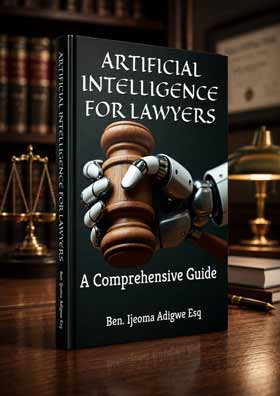 The book also examines Nigeria's legal ecosystem, focusing on the LPELR and NBA AI Guidelines. As a bonus, every purchase comes with a FREE eBook titled: How to Use the AI Features in LegalPedia and LawPavilion.
Ohio Books Ltd praises the publication, stating:
"....this is the only Nigerian book I know of on the topic."
How to Order:
📞 Call, Text, or WhatsApp: 08034917063 | 07055285878
📧 Email: benadigwe1@gmail.com
🌎 Website: www.benadigwe.com
Ebook Version: Access it directly online at https://selar.com/prv626
Authored by Ben Ijeoma Adigwe Esq., ACIarb (UK), LL.M, Dip. in Artificial Intelligence, Director at the Delta State Ministry of Justice, Asaba, Nigeria.
_______________________________________________________________________
“Enhance Legal Practice With Authoritative Reports” — Alexander Payne Offers Comprehensive Law Reports, Spanning Over A Century Of Nigerian Jurisprudence
The book also examines Nigeria's legal ecosystem, focusing on the LPELR and NBA AI Guidelines. As a bonus, every purchase comes with a FREE eBook titled: How to Use the AI Features in LegalPedia and LawPavilion.
Ohio Books Ltd praises the publication, stating:
"....this is the only Nigerian book I know of on the topic."
How to Order:
📞 Call, Text, or WhatsApp: 08034917063 | 07055285878
📧 Email: benadigwe1@gmail.com
🌎 Website: www.benadigwe.com
Ebook Version: Access it directly online at https://selar.com/prv626
Authored by Ben Ijeoma Adigwe Esq., ACIarb (UK), LL.M, Dip. in Artificial Intelligence, Director at the Delta State Ministry of Justice, Asaba, Nigeria.
_______________________________________________________________________
“Enhance Legal Practice With Authoritative Reports” — Alexander Payne Offers Comprehensive Law Reports, Spanning Over A Century Of Nigerian Jurisprudence
 Interested buyers are encouraged to place their orders and enquiries via:
0704 444 4777, 0704 444 4999, 0818 199 9888
Website: www.alexandernigeria.com
Interested buyers are encouraged to place their orders and enquiries via:
0704 444 4777, 0704 444 4999, 0818 199 9888
Website: www.alexandernigeria.com