A Doctrinal Note on Anyanwu v. Emmanuel (2025) 14 NWLR (Pt. 2006) 531 Ratio 10 (extract)


By F. C. Nwafor Esq.
1.0 Introduction
The appellate jurisdiction of the Supreme Court of Nigeria is not a matter of inherent or general power; it is conferred, and limited, by the Constitution itself. Section 233 of the 1999 Constitution is the sole source of that jurisdiction, and any change to its text necessarily changes the boundaries of what the Supreme Court may hear. The Constitution (Second Alteration) Act, 2010 made precisely such a change, and in Anyanwu v. Emmanuel (2025) 14 NWLR (Pt. 2006) 531, the Supreme Court restated, at ratio 10, the consequence of that change for appeals founded on grounds of mixed law and fact. This note examines that holding purely on its own terms: what it says, the Constitutional provisions it construes, and the legal position it establishes for an appellant seeking to move from the Court of Appeal to the Supreme Court on such grounds.
2.0 The Holding
At ratio 10, the Supreme Court held:
“…Therefore, by virtue of the extant provisions of section 6 of the Constitution of the Federal Republic of Nigeria (Second Alteration) Act, 2010 vis-à-vis section 233 of the Constitution, the Supreme Court’s power to grant leave to appeal on grounds of mixed law and facts, has been removed. That being the case, therefore, appeals on grounds of mixed law and facts are bound to terminate at the Court of Appeal. By the alterations, there is no longer section 233(3) of the Constitution which allowed leave to appeal to the Supreme Court. That is to say, by virtue of section 233(1) and (2) of the Constitution of the Federal Republic of Nigeria, 1999 as altered, the Supreme Court can only hear appeals where the ground of appeal involves questions of law. The Supreme Court no longer has jurisdiction to hear appeals where the ground of appeal involves questions of mixed law and facts. Appeals on grounds of mixed law and facts end at the Court of Appeal.”
Stripped to its essential propositions, the holding makes four connected points, each building on the one before it:
- Section 6 of the Second Alteration Act, 2010 altered section 233 of the Constitution.
- That alteration removed section 233(3), the provision under which the Supreme Court (or the Court of Appeal) could formerly grant leave to appeal in respect of grounds not covered by the as-of-right categories in section 233(2) — chiefly, grounds of fact or of mixed law and fact.
- Because the leave mechanism no longer exists, the Supreme Court’s jurisdiction to hear appeals is now confined to section 233(1) and (2): that is, to appeals where the ground raises a question of law alone (or otherwise falls within the as-of-right categories listed in subsection (2)).
- The necessary consequence is that an appeal on a ground of mixed law and fact has no Constitutional route to the Supreme Court at all; it is heard, finally, at the Court of Appeal.
3.0 The Constitutional Provisions in Play
3.1 Section 233 Before the Second Alteration
Before the 2010 alteration, section 233 distinguished two routes by which a matter could travel from the Court of Appeal to the Supreme Court. Section 233(2) listed categories of case in which an appeal lay as of right without the need for permission from any Court the principal category being an appeal in which the ground raised a question of law alone. Section 233(3) was the residual route: an appellant whose ground of appeal fell outside the as-of-right list, most commonly because it turned on a question of fact or a mixed question of law and fact, could still bring the matter to the Supreme Court, but only upon obtaining leave, either from the Court of Appeal or from the Supreme Court itself.
3.2 The Effect of Section 6 of the Second Alteration Act, 2010
Section 6 of the Constitution (Second Alteration) Act, 2010 substituted an entirely new section 233 for the Constitution. The new section retains subsections (1) and (2) the general grant of appellate jurisdiction to the Supreme Court, and the as-of-right categories but does not reproduce subsection (3) or the provisions that depended on it. The holding in ratio 10 treats this omission as deliberate and substantive: not a drafting gap to be filled by interpretation, but a clear withdrawal of the leave-based route of appeal.
3.3 The Resulting Position Under Section 233(1) and (2)
On the strength of that reading, the only avenue left open to an appellant is section 233(2): the ground of appeal must fall within one of its enumerated as-of-right categories, of which a ground raising a question of law alone is the one most commonly relied upon. A ground that is mixed; part law, part fact, such that the two cannot be cleanly separated fits within none of the as-of-right categories and, on this holding, cannot be rescued by an application for leave, because the Constitutional mechanism for granting such leave no longer exists. The appeal in respect of that ground is, in consequence, incompetent before the Supreme Court, and the decision of the Court of Appeal on it is final.
4.0 The Reasoning Structure
It is worth setting out plainly the chain of inference the holding follows, since it is this structure rather than any independent assessment of fairness or policy that does the work:
- A Constitutional Court’s jurisdiction exists only to the extent conferred by the Constitution.
- Section 233(3) was the sole textual basis for leave-based appeals to the Supreme Court.
- Section 6 of the Second Alteration Act removed section 233(3) from the Constitutional text.
- A power that has no remaining textual basis cannot be exercised, however convenient or longstanding the prior practice.
- Therefore, leave to appeal on a ground of mixed law and fact is not a power presently available to the Supreme Court, and an appeal resting on such a ground terminates at the Court of Appeal.
Each step in that chain is a proposition about Constitutional text and the limits of jurisdiction, not about the underlying merits of any particular appeal. This is significant for how the holding should be applied: it is jurisdictional in character, meaning it goes to whether the Supreme Court may hear the matter at all, and a finding that a ground is one of mixed law and fact will dispose of that ground at the threshold, before any consideration of its substance.
5.0 Practical Significance for Drafting Grounds of Appeal
The holding has direct consequences for how a notice of appeal to the Supreme Court should be framed.
- Characterisation of each ground is decisive. Whether a ground is one of law alone, fact alone, or mixed law and fact is not a matter of how counsel labels it, but of its substance. A ground that requires the Supreme Court to re-evaluate evidence, assess credibility, or draw inferences from primary facts will ordinarily be treated as one of fact or of mixed law and fact, regardless of legal language used to dress it up.
- Pure questions of law remain the secure route. Grounds that raise questions of law alone for instance, the correct interpretation of a statute or Constitutional provision, the legal effect of admitted or undisputed facts, or whether a Court applied the correct legal test fall within section 233(2) and require no leave.
- There is no fallback leave application. Because the holding treats section 233(3) as having been removed without replacement, counsel cannot, on this reasoning, cure a defective mixed ground by applying for leave in the alternative. The ground must either stand as one of law, or it does not travel to the Supreme Court at all.
- The consequence is a final decision at the Court of Appeal. Where a ground genuinely is mixed, the Court of Appeal’s determination of it is, on this holding, the end of the matter; no further appellate review on that ground is Constitutionally available.
6.0 Conclusion
Ratio 10 of Anyanwu v. Emmanuel sets out, in clear and unambiguous terms, the Constitutional consequence the Supreme Court has drawn from the deletion of section 233(3) by section 6 of the Constitution (Second Alteration) Act, 2010: the leave-based route for appeals on grounds of mixed law and fact no longer exists, the Supreme Court’s appellate jurisdiction is confined to section 233(1) and (2), and appeals on such grounds terminate at the Court of Appeal. For the practitioner, the operative lesson is one of precision in drafting: every ground of appeal intended for the Supreme Court must be capable of standing, on its own terms, as a ground of law alone, since no leave-based safety net remains available under the provision as it now reads.
Note: This language was first articulated by the Supreme Court in Shittu v. P.A.N Ltd (2018) 15 NWLR (Pt. 1642) 195, and restated in Anyanwu v. Emmanuel. In practice, this means Counsel should draft each ground of appeal to the Supreme Court as a clean question of law, separated from any factual dispute.
Authority Referred To;
- Anyanwu v. Emmanuel (2025) 14 NWLR (Pt. 2006) 531, ratio 10
- Constitution of the Federal Republic of Nigeria, 1999, section 233
- Constitution of the Federal Republic of Nigeria (Second Alteration) Act, 2010, section 6
By F. C. Nwafor Esq., Tel: 08034104389 | Email: felixnwafor@nigerianbar.ng
[A MUST HAVE] Evidence Act Demystified With Recent And Contemporary Cases And Materials

Available now for NGN 40,000 at ASC Publications, 10, Boyle Street, Onikan, Lagos. Beside High Court, TBS. Email publications@ayindesanni.com or WhatsApp +2347056667384. Purchase Link: https://paystack.com/buy/evidence-act-complete-annotation
______________________________________________________________________ “Bridging Theory And Courtroom Practice” — Hagler Sunny Okorie, Nathaniel Ngozi Ikeocha Unveil ‘Functional’ Tort Law Book For Nigerian Legal System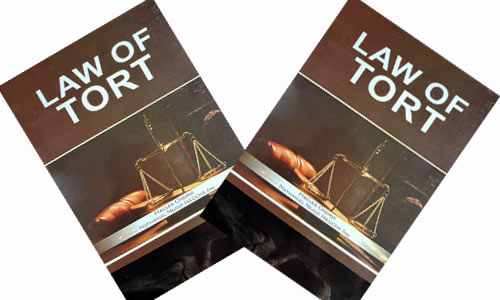 The book, titled The Law of Torts in Nigeria: A Functional Approach, authored by Professor Hagler Sunny Okorie Ph.D and Ikeocha, Nathaniel Ngozi Esq, offers law students, practitioners, and academics a comprehensive guide to understanding and applying tort law in Nigerian courts. Interested buyers can place orders via the following contact numbers: 08028636615, 08037667945, 08032253813, or +234 902 196 2209.
______________________________________________________________________
“Enhance Legal Practice With Authoritative Reports” — Alexander Payne Offers Comprehensive Law Reports, Spanning Over A Century Of Nigerian Jurisprudence
The book, titled The Law of Torts in Nigeria: A Functional Approach, authored by Professor Hagler Sunny Okorie Ph.D and Ikeocha, Nathaniel Ngozi Esq, offers law students, practitioners, and academics a comprehensive guide to understanding and applying tort law in Nigerian courts. Interested buyers can place orders via the following contact numbers: 08028636615, 08037667945, 08032253813, or +234 902 196 2209.
______________________________________________________________________
“Enhance Legal Practice With Authoritative Reports” — Alexander Payne Offers Comprehensive Law Reports, Spanning Over A Century Of Nigerian Jurisprudence
 Interested buyers are encouraged to place their orders and enquiries via:
0704 444 4777, 0704 444 4999, 0818 199 9888
Website: www.alexandernigeria.com
Interested buyers are encouraged to place their orders and enquiries via:
0704 444 4777, 0704 444 4999, 0818 199 9888
Website: www.alexandernigeria.com
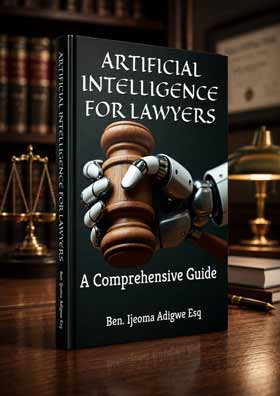 As an added bonus, every purchase comes with a FREE ebook titled: “How to use the AI in Legalpedia and Law Pavilion.”
Ohio Books Ltd praises the publication, stating:
"....this is the only Nigerian book I know of on the topic."
How to Order:
📞 Call, Text, or WhatsApp: 08034917063 | 07055285878
📧 Email: benadigwe1@gmail.com
🌎 Website: www.benadigwe.com
Ebook Version: Access it directly online at https://selar.com/prv626
Authored by Ben Ijeoma Adigwe Esq., ACiarb (UK), LL.M, Dip. in Artificial Intelligence, Director at the Delta State Ministry of Justice, Asaba, Nigeria.
As an added bonus, every purchase comes with a FREE ebook titled: “How to use the AI in Legalpedia and Law Pavilion.”
Ohio Books Ltd praises the publication, stating:
"....this is the only Nigerian book I know of on the topic."
How to Order:
📞 Call, Text, or WhatsApp: 08034917063 | 07055285878
📧 Email: benadigwe1@gmail.com
🌎 Website: www.benadigwe.com
Ebook Version: Access it directly online at https://selar.com/prv626
Authored by Ben Ijeoma Adigwe Esq., ACiarb (UK), LL.M, Dip. in Artificial Intelligence, Director at the Delta State Ministry of Justice, Asaba, Nigeria.