*Says State Agents Have Infiltrated With Court Cases And Division, But Insists He Remains Resolute About A New Nigeria

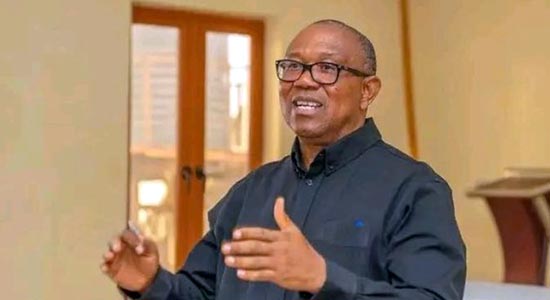
Peter Obi, the 2023 Labour Party presidential candidate and one of the most prominent figures in Nigeria’s opposition coalition, has confirmed his departure from the African Democratic Congress in an emotional statement issued on Sunday afternoon, attributing his exit to the infiltration of the party by “the same Nigerian state and its agents” that he said created the crises within the Labour Party that forced his earlier departure, and describing the ADC as now plagued by “endless court cases, internal battles, suspicion, and division.”
The statement, posted on his X page, was framed not as a political announcement but as a deeply personal reflection, written after church service with what Obi described as “a deeply reflective heart” and touching on themes of silent pain, private struggle, the cost of integrity in Nigerian public life, and his enduring faith that “a new Nigeria is possible.”
While confirming the departure that TheNigeriaLawyer had reported on Saturday, Obi was careful to absolve the ADC’s senior leadership of personal wrongdoing, stating that his decision was “not because our highly respected Chairman, Senator David Mark, treated me badly, nor because my leader and elder brother, Alhaji Atiku Abubakar, or any other respected leaders did anything personally wrong to me.”
“I will continue to respect them,” Obi added, maintaining the personal relationships even as he severs the political association.
The most significant element of Obi’s statement is his direct attribution of the ADC’s troubles to state interference rather than organic internal dysfunction.
“The same Nigerian state and its agents that created unnecessary crises and hostility within the Labour Party that forced me to leave now appear to be finding their way into the ADC, with endless court cases, internal battles, suspicion, and division, instead of focusing on deeper national problems and playing politics built more on control and exclusion than on service and nation-building,” Obi stated.
The accusation is explicit: the government is systematically destroying opposition parties from within through its agents. The Labour Party was the first target, brought down through leadership disputes, court cases, and factional warfare that Obi attributes to external manipulation rather than genuine internal disagreement. Now, the same playbook is being executed against the ADC.
The allegation aligns with what multiple opposition figures have stated in recent weeks. ADC chieftains have accused the government of “sponsoring crises in every opposition party.” Former NERC Chairman Sam Amadi warned that “the government may use INEC and the court to proscribe ADC.” The Ibadan opposition summit communiqué declared that the ruling party was attempting to “foist a one-party state on Nigeria.”
Obi’s confirmation that he is leaving because of state interference, rather than because of personal disagreements with coalition leaders, frames his departure as a strategic retreat from a compromised platform rather than a defection born of personal grievance or political ambition.
Unlike the carefully lawyered political statements that typically accompany party defections, Obi’s statement reads as a personal testimony, opening with vulnerability and introspection before arriving at the political decision.
“Many people do not truly understand the silent pains some of us carry daily — the private struggles, emotional burdens, and quiet battles we face while trying to survive and serve sincerely in difficult circumstances,” Obi stated.
“We now live in an environment that has become increasingly toxic, where the very system that should protect and create opportunities for decent living often works against the people — a society where intimidation, insecurity, endless scrutiny, and discouragement have become normal,” he added.
He described the experience of being undermined by those he considered allies: “More painful is when some of those you associate with, believing you would find understanding and solidarity among them, become part of the pressure you face. Some who publicly identify with you privately distance themselves or join in unfair criticism.”
The passage, while not naming individuals, suggests that Obi’s experience within the ADC coalition involved betrayal or at minimum a lack of solidarity from people he expected to support him, an experience that compounded the external pressures from state agents and contributed to his decision to leave.
Obi described a dynamic within the ADC coalition that will resonate with many Nigerians who have experienced similar treatment in political, professional, or social settings.
“Even within spaces where one labours sincerely, one is sometimes treated like an outsider in one’s own home. You and your team become easy targets for every failure, frustration, or misunderstanding, as though honest contribution has become a favour being tolerated rather than appreciated,” Obi stated.
The imagery of being “an outsider in one’s own home” carries particular weight in the context of the ADC coalition. Obi, who brought a massive support base, national recognition, and significant political capital to the ADC, appears to be saying that despite these contributions, he was not fully embraced within the coalition’s power structure, treated instead as someone whose presence was tolerated rather than valued.
He described the impossible position of leaving: “When you choose to leave so that those you are leaving can have peace, and you step out into the cold, you are still maligned and your character is questioned. Despite all your efforts to continue working for a better Nigeria and engaging people with sincerity and goodwill, those who do not wish you well continue to attack your character and question your intentions.”
In the most personally revealing passage of the statement, Obi shared the questions he brings to God in prayer, questions that reveal the frustration of a public figure whose values are consistently misinterpreted.
“There are moments I ask God in prayer: Why is doing the right thing often misconstrued as wrongdoing in our country? Why is integrity not valued? Why is the prudent management of resources, especially when invested in critical areas like education and healthcare, wrongly labelled as stinginess? Why are humility and obedience to the rule of law often taken to be weakness rather than discipline?” Obi stated.
The reference to “prudent management of resources” being “labelled as stinginess” addresses one of the persistent criticisms levelled against Obi by political rivals and opponents, that his fiscal conservatism as Anambra governor and his campaign promises of prudent economic management reflect miserliness rather than discipline. Obi is reframing the critique as a moral failure of the society that makes it rather than a personal flaw.
The question about humility being “taken to be weakness” speaks to the broader political culture in which aggression, domination, and the conspicuous exercise of power are valued over the quiet competence and restraint that Obi claims to represent.
Obi used the statement to redefine his political mission in terms that transcend the question of which party ticket he holds or which office he seeks.
“Let me assure all that I am not desperate to be President, Vice President, or Senate President,” Obi stated.
He then listed what he is desperate for: “I am desperate to see a society that can console a mother whose child has been kidnapped or killed while going to school or work. I am desperate to see a Nigeria where people will not live in IDP camps but in their homes. I am desperate for a country where Nigerian citizens do not go to bed hungry, not knowing where their next meal will come from.”
The litany of desperation, kidnapped children, IDP camps, hunger, connects Obi’s political project to the lived reality of millions of Nigerians who experience these conditions daily, positioning his ambition not as a desire for power but as a response to suffering he cannot ignore.
Obi’s statement is notable as much for what it omits as for what it includes.
He did not name the NDC or any other party as his next destination. While reports have consistently indicated the NDC is the likely destination, and the NDC itself has confirmed discussions and offered a presidential ticket, Obi’s statement focuses entirely on why he is leaving rather than where he is going.
He did not mention the presidential ticket or any specific political arrangement. Unlike the reports from his aides and from the NDC that describe an “unchallenged presidential ticket” being offered, Obi’s personal statement avoids any discussion of candidacy, primaries, or electoral strategy.
He did not criticise any individual by name. Despite the widely reported tensions with the Atiku faction within the ADC and the allegations that the party’s structure was “skewed in favour of an aspirant,” Obi’s statement maintains a tone of respect toward all named leaders while directing his criticism at “the Nigerian state and its agents” rather than at specific politicians.
He did not mention Kwankwaso. Despite widespread reports that the two men were planning a joint departure and a combined ticket, Obi’s statement is entirely personal, speaking only for himself and making no reference to any coordinated move with other political figures.
Obi’s explicit comparison between the ADC’s current situation and the Labour Party’s earlier collapse is the analytical foundation of his departure.
The Labour Party, which served as Obi’s platform in the 2023 presidential election and through which he won over six million votes, was subsequently consumed by a leadership crisis between Julius Abure and forces aligned with the political establishment. The party became entangled in litigation, produced competing leadership claims, and ultimately became unsuitable as a platform for Obi’s political ambitions.
Obi now describes the same pattern emerging in the ADC: external agents creating crises, endless court cases, internal battles, and an environment of suspicion and division that makes productive political action impossible.
The parallel suggests a systematic strategy rather than coincidence. If the same pattern, state-sponsored destabilisation through litigation and factional engineering, has destroyed two opposition platforms that Obi has been associated with, the implication is that the strategy is targeted not merely at parties but at the opposition project itself, and perhaps at Obi personally.
Obi concluded his statement with a declaration of resilience and a signature that has become his political trademark.
“Yet, despite everything, I remain resolute. I firmly believe that Nigeria can still become a country with competent leadership based on justice, compassion, and equal opportunity for all,” Obi stated.
“A new Nigeria is POssible,” he wrote, using the capitalised “PO” that references his initials and has become an emblem of his movement.
The sign-off signals that while the platform has changed, the mission has not. Obi may be leaving the ADC, but the political project he represents, the vision of a transformed Nigeria governed by competence rather than patronage, by service rather than self-enrichment, continues.
Obi’s confirmation of his departure triggers several immediate questions.
Where will he go? The NDC remains the most widely reported destination, with the party confirming discussions and offering a presidential ticket. However, Obi’s silence on his next platform in this statement leaves the door technically open to other options.
Will Kwankwaso follow? Kwankwaso’s own statement on Friday confirmed consultations with the NDC and PRP but stated that “no final decision has been taken.” Whether he announces his departure simultaneously or independently remains to be seen.
What happens to the ADC? The loss of Obi’s Obidient Movement, with its massive urban youth support base, would significantly diminish the ADC’s electoral appeal. The party has insisted it will field candidates regardless, but a coalition that loses one of its two most popular figures is a fundamentally different political entity.
Can the NDC absorb the influx? If Obi, Kwankwaso, and their respective movements migrate to the NDC, the party must demonstrate it has the organisational capacity, institutional stability, and legal standing to serve as a credible platform for a presidential campaign, all under the pressure of INEC deadlines and the government’s alleged strategy of sponsoring crises in opposition parties.
For Peter Obi, the man who polled over six million votes in 2023, who has now left two parties in the space of a year, and who carries what he describes as “silent pains” while pursuing a vision of a better Nigeria, the departure from the ADC is another chapter in a political journey defined by the tension between idealism and the realities of Nigerian politics.
As he wrote: “A new Nigeria is POssible.”
Whether that possibility survives the destruction of yet another political platform, and whether the next one can withstand the forces that destroyed the previous two, is the question that Obi and his millions of supporters must now confront.
[A MUST HAVE] Evidence Act Demystified With Recent And Contemporary Cases And Materials

Available now for NGN 40,000 at ASC Publications, 10, Boyle Street, Onikan, Lagos. Beside High Court, TBS. Email publications@ayindesanni.com or WhatsApp +2347056667384. Purchase Link: https://paystack.com/buy/evidence-act-complete-annotation
______________________________________________________________________ “Enhance Legal Practice With Authoritative Reports” — Alexander Payne Offers Comprehensive Law Reports, Spanning Over A Century Of Nigerian Jurisprudence Interested buyers are encouraged to place their orders and enquiries via:
0704 444 4777, 0704 444 4999, 0818 199 9888
Website: www.alexandernigeria.com
Interested buyers are encouraged to place their orders and enquiries via:
0704 444 4777, 0704 444 4999, 0818 199 9888
Website: www.alexandernigeria.com