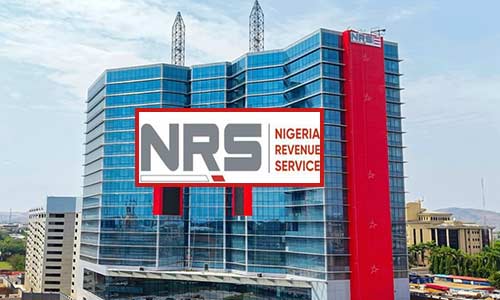
The Nigerian Revenue Service has joined the growing list of major organisations abandoning the troubled national electricity grid, securing approval to generate its own power amid persistent outages that continue to cripple businesses and government operations across the country.
According to the Nigerian Electricity Regulatory Commission’s fourth quarter 2025 report, the revenue agency obtained a captive power generation permit for a 6.08-megawatt plant at its headquarters in the Central Business District of Abuja.
This is coming after the Aso Rock Villa spent billions of naira on solar installation. The move forms part of a broader wave of self-help electricity projects as both private companies and public institutions lose confidence in the national grid.
Recall that the NRS unveiled what it described as its state-of-the-art headquarters in Abuja earlier in the week. In the fourth quarter of 2026, NERC approved 11 captive power permits, with total capacity exceeding 130 MW. Prominent recipients include Abuja Steel Mill Nigeria Limited with 50 MW and Yongxing Steel Company Limited with 45 MW in Edo State.
Others are T&D West Africa Limited Lake in Abuja (1.25 MW); Vinylon Footwear Industry Limited in Jigawa (6 MW); Nigerian Spanish Engineering Limited (6 MW); Standard Plastic Industry Nigeria Limited in Kano (7 MW); Watson’s Bakery Nigeria Limited in Kano (2.26 MW); Superior Eva Footwear Nigeria Limited in Kano (5 MW); and Wihi International Ltd along the Lagos-Ibadan Expressway (3.40 MW).
This surge in captive generation underscores the deepening crisis in Nigeria’s power sector, where the national grid remains largely unstable despite repeated promises of improvement. Many industries have long complained that frequent collapses and erratic supply force them to rely on expensive diesel generators, which inflate production costs and reduce competitiveness.
The development carries particular irony as it involves the very agency tasked with mobilising revenue for the government. By opting out of the national grid, the Nigerian Revenue Service has effectively signalled that even critical federal operations cannot depend on the central electricity infrastructure.
Beyond captive power, NERC also issued 31 mini-grid permits in the same period, adding a gross capacity of 8.37 MW.
These projects, concentrated in states such as Benue, Nasarawa, Cross River, Taraba, and Delta, reflect growing interest in decentralised solutions, especially in underserved rural and semi-urban areas.
The commission further certified additional meter service providers and issued permits to companies like Haventill Synergy Limited for metering infrastructure across several states, as efforts to address estimated billing and improve collection efficiency continue.
Analysts said the trend points to a structural shift in Nigeria’s electricity landscape following the Electricity Act 2023, which liberalised the sector and made it easier for large consumers to develop independent power facilities.
While this provides relief to those who can afford it, it raises fresh concerns about the future of the national grid, as high-value customers continue to exit, further weakening the revenue base of distribution companies.
With industrial and institutional players increasingly building parallel power systems, experts warn that ordinary Nigerians may bear the brunt of the crisis for longer, as the central grid loses both demand and investment momentum. The latest figures suggest that self-generated power is no longer an emergency measure but a strategic choice for survival in Nigeria’s power-deficient economy.
Across Nigeria, more than 250 manufacturers, tertiary institutions, and large commercial entities have either partially or fully exited the national grid to generate their own electricity. Together, they are estimated to produce about 6,500 MW — more than the grid currently supplies on average.
The Dangote Group alone generates about 1,500 MW for its operations. Industrial estates in Lagos and Ogun, shopping malls in Abuja and Port Harcourt, and high-income residential estates across major cities now rely heavily on captive power plants or hybrid solar-diesel systems.
For these entities, the cost of self-generation—though high—is considered preferable to the unpredictability of the national grid. An energy expert, Adetayo Adegbemle, argued that unless bulk consumers like manufacturers return to the grid, the sector will continue to battle a liquidity crisis.
 Interested buyers are encouraged to place their orders and enquiries via:
0704 444 4777, 0704 444 4999, 0818 199 9888
Website: www.alexandernigeria.com
Interested buyers are encouraged to place their orders and enquiries via:
0704 444 4777, 0704 444 4999, 0818 199 9888
Website: www.alexandernigeria.com

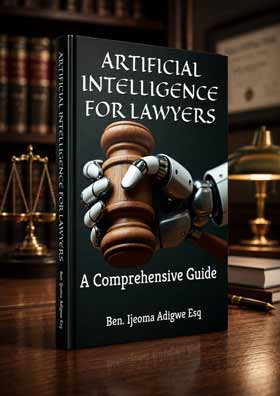 The book also examines Nigeria's legal ecosystem, focusing on the LPELR and NBA AI Guidelines. As a bonus, every purchase comes with a FREE eBook titled: How to Use the AI Features in LegalPedia and LawPavilion.
Ohio Books Ltd praises the publication, stating:
"....this is the only Nigerian book I know of on the topic."
How to Order:
📞 Call, Text, or WhatsApp: 08034917063 | 07055285878
📧 Email: benadigwe1@gmail.com
🌎 Website: www.benadigwe.com
Ebook Version: Access it directly online at https://selar.com/prv626
Authored by Ben Ijeoma Adigwe Esq., ACIarb (UK), LL.M, Dip. in Artificial Intelligence, Director at the Delta State Ministry of Justice, Asaba, Nigeria.
_______________________________________________________________________
The book also examines Nigeria's legal ecosystem, focusing on the LPELR and NBA AI Guidelines. As a bonus, every purchase comes with a FREE eBook titled: How to Use the AI Features in LegalPedia and LawPavilion.
Ohio Books Ltd praises the publication, stating:
"....this is the only Nigerian book I know of on the topic."
How to Order:
📞 Call, Text, or WhatsApp: 08034917063 | 07055285878
📧 Email: benadigwe1@gmail.com
🌎 Website: www.benadigwe.com
Ebook Version: Access it directly online at https://selar.com/prv626
Authored by Ben Ijeoma Adigwe Esq., ACIarb (UK), LL.M, Dip. in Artificial Intelligence, Director at the Delta State Ministry of Justice, Asaba, Nigeria.
_______________________________________________________________________