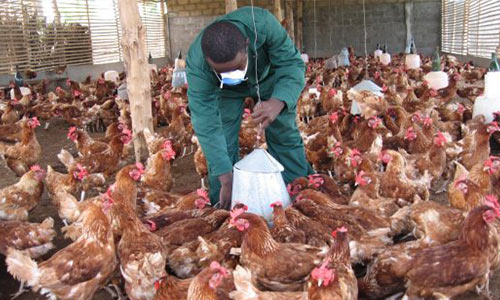
Stakeholders in the poultry industry have raised concerns that the growing circulation of fake and substandard veterinary medicines in Nigeria’s livestock sector could weaken the country’s ability to compete in regional and international agricultural markets, particularly under the African Continental Free Trade Area (AfCFTA).

They warned that unless urgent regulatory reforms are implemented to eliminate counterfeit veterinary medicinal products (VMPs), Nigeria’s poultry industry risks losing credibility in export markets where strict food safety and quality standards are required.
The stakeholders in separate interviews with Daily Independent noted that the use of ineffective medicines does not only affect farm productivity but also raises serious concerns about food safety and product quality, issues that are critical for cross-border trade.
According to them, countries participating in AfCFTA are expected to meet strict sanitary and phytosanitary standards, meaning that poultry products associated with drug residues, poor disease control, or questionable pharmaceutical use could face rejection in regional markets.
They stressed that Nigeria’s ability to fully benefit from the continental trade agreement may therefore be compromised if the circulation of substandard veterinary drugs continues unchecked.
Speaking on the economic implications for farmers, Prince Oyewumi Oyetunde, a stakeholder in the livestock sub-sector, explained that fake or ineffective veterinary medicines have severe consequences for poultry operations, both financially and operationally.
He said one of the most immediate impacts is treatment failure when drugs do not contain the required active ingredients or are poorly formulated.
“When drugs don’t work as they should because they are fake or of low quality, diseases like Newcastle disease, salmonellosis, or respiratory infections remain uncontrolled,” he said.
According to him, this often leads to increased bird mortality, reduced egg production, and slower growth rates among surviving birds.
“These conditions significantly reduce the quantity and quality of products farmers can bring to market,” he added.
Oyewunmi noted that the financial burden on farmers increases because money spent on ineffective medication is wasted, and producers are often forced to purchase additional drugs to treat the same illnesses.
He also warned that persistent treatment failures could disrupt normal farm operations, as uncontrolled disease outbreaks interfere with feeding schedules, vaccination programmes, and overall flock management.
Another concern, he said, is the risk of antimicrobial resistance, which occurs when weak or inappropriate drugs are repeatedly used.
This can make diseases harder to treat over time and force farmers to rely on more expensive alternatives, further increasing production costs.
Oyewunmi added that the problem can ultimately affect consumer trust and market access.
“If fake drugs lead to poor-quality meat or eggs, consumers may lose confidence in poultry products, which can affect sales and limit access to larger market channels,” he said.
He also noted that farms hoping to participate in regional or international markets could face rejection if their products fail to meet quality and safety standards.
For many poultry farmers, the consequences of using substandard medicines can be devastating.
Another stakeholder, Iyiola Mojeed, Chairman, Poultry Association of Nigeria (PAN), Lagos State chapter, described poultry farming as a highly sensitive business where even small errors in disease management can lead to total farm failure.
“Poultry business is very sensitive. Any mistake can cause the total closure of a farm,” he said.
Mojeed explained that when farmers unknowingly administer fake or ineffective drugs, they often experience double losses.
According to him, the first loss occurs when birds fail to recover from disease and mortality rates increase, while the second loss comes from the wasted money spent on ineffective medication.
Beyond financial damage, he said the experience can also create emotional stress for farmers who watch their investments collapse despite their efforts to maintain proper farm management.
He added that one of the biggest challenges farmers face is the difficulty in distinguishing between genuine and counterfeit veterinary drugs.
“Most farmers can hardly differentiate between fake and authentic drugs because the packaging often looks the same,” he said.
“In many cases, it is only after the drugs have been used and the birds continue to die that farmers realise they have purchased substandard products.”
Mojeed also raised concerns about individuals posing as veterinary professionals without proper training or certification.
According to him, such unqualified personnel sometimes administer drugs incorrectly, worsening disease outbreaks and increasing losses for farmers.
“These unqualified people parading themselves as veterinary doctors often cause more harm than good,” he said.
He urged the government to strengthen oversight of the importation process for veterinary medicines, warning that the system must not be compromised or politicised.
“The authorities must carefully scrutinize who is given importation certificates for veterinary drugs,” he said.
Mojeed also called on the Nigerian Veterinary Medical Association to intensify monitoring of veterinary drug outlets to ensure only approved products are sold.
Similarly, the warning formed part of discussions at a stakeholders’ roundtable convened by the Minister of Livestock Development, where the Poultry Association of Nigeria (PAN) and industry experts examined the growing threat posed by unauthorised veterinary drugs.
In his submission at the stakeholders’ roundtable, Sunday Ezeobiora, the National President of the Poultry Association of Nigeria (PAN), emphasised that the problem of unauthorised veterinary medicines is affecting the entire poultry value chain.
He said the industry, which represents billions of naira in investment and plays a vital role in Nigeria’s food security, is currently under serious pressure due to drug failures linked to counterfeit and substandard pharmaceutical products.
According to him, the issue goes beyond the marketing and use of veterinary medicines and should be addressed across the entire supply chain, including importation, local production, circulation, sales, and administration.
“The poultry industry is under siege from the proliferation of unauthorised veterinary medicinal products,” he said.
Ezeobiora noted that ineffective drugs contribute to higher mortality rates, stunted bird growth, declining egg production, and the eventual collapse of many poultry investments.
He also warned that the use of substandard medicines could result in drug residues in poultry meat and eggs, posing potential risks to public health.
To address the challenge, the PAN president called for stronger enforcement of existing regulations, including provisions in the Animal Diseases (Control) Act 2022 that prohibit the importation of veterinary pharmaceutical products without proper authorisation.
He also advocated the establishment of a functional National Veterinary Formulary that would serve as the benchmark for regulating veterinary medicines in Nigeria.
Such a framework, he explained, would ensure that both imported and locally produced veterinary drugs meet strict standards for safety, formulation, and effectiveness before reaching farmers.
Ezeobiora further stressed the need for stronger collaboration among government agencies, veterinarians, and poultry farmers to eliminate pharmaceutical quackery and improve monitoring of veterinary practices.
He added that raising awareness among farmers about the risks associated with unauthorised veterinary medicines would also play a crucial role in tackling the problem.
“The Poultry Association of Nigeria stands ready to collaborate with the government and other stakeholders to rid the livestock industry of fake veterinary medicinal products,” he said.
According to him, decisive action is necessary to protect farmers’ investments, safeguard public health, and strengthen Nigeria’s poultry sector in an increasingly competitive regional market.
[A MUST HAVE] Evidence Act Demystified With Recent And Contemporary Cases And Materials

Available now for NGN 40,000 at ASC Publications, 10, Boyle Street, Onikan, Lagos. Beside High Court, TBS. Email publications@ayindesanni.com or WhatsApp +2347056667384. Purchase Link: https://paystack.com/buy/evidence-act-complete-annotation
______________________________________________________________________ “Enhance Legal Practice With Authoritative Reports” — Alexander Payne Offers Comprehensive Law Reports, Spanning Over A Century Of Nigerian Jurisprudence Interested buyers are encouraged to place their orders and enquiries via:
0704 444 4777, 0704 444 4999, 0818 199 9888
Website: www.alexandernigeria.com
Interested buyers are encouraged to place their orders and enquiries via:
0704 444 4777, 0704 444 4999, 0818 199 9888
Website: www.alexandernigeria.com