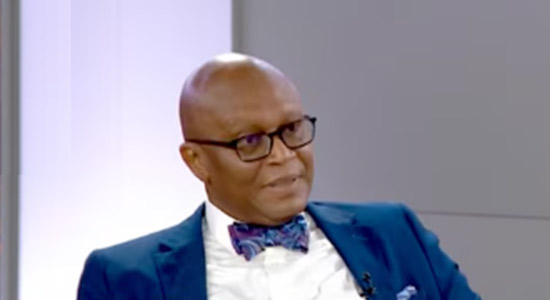
Senior Advocate of Nigeria (SAN) Ikeazor Ajovi Akaraiwe, in a compelling keynote address at the Nigerian Bar Association (NBA) Anaocha Branch’s 2nd Biennial Memorial Lecture, has called on the Supreme Court to overturn longstanding precedents rendering Chapter II of the 1999 Constitution non-justiciable, arguing that this would empower the judiciary to enforce social justice principles and pave the way for true social security in Nigeria.

Delivered on Thursday, November 27, 2025, in honour of the late Chief Charles E. N. Obegolu a legendary lawyer known for his fierce advocacy against injustice the lecture themed “Justice Delivery as a Pathway to Social Security” drew a distinguished audience including judges, fellow SANs, NBA executives, and legal luminaries. Akaraiwe, Principal Partner at Akaraiwe & Associates and a former NBA Enugu Branch Chairman, used the platform to dissect how systemic failures in justice delivery are fueling Nigeria’s escalating insecurity and economic disparities.
Akaraiwe opened with personal tributes to Chief Obegolu, whom he knew as a junior barrister. “He was very active at the NBA Enugu Branch, challenging issues, dissecting the minutes of branch meetings… He could not stand injustice. He brought the same nervous energy to litigation, and what a busy lawyer he was, practicing from court to court virtually every day,” Akaraiwe recalled. Obegolu’s most senior junior, Bart Onugbolu, later became Speaker of the Anambra House of Assembly, underscoring the late lawyer’s profound influence.
The event, organized biennially to celebrate Obegolu’s commitment to fairness and discipline, underscored the NBA’s role in fostering ethical legal practice amid national challenges.
Akaraiwe framed the theme as a call to recognize justice not just as a courtroom exercise but as the “organising principle that determines how safe citizens feel, how confident investors become, how peacefully communities co-exist, and how much trust people place in the State.” He emphasized that “when justice works, society is stable. When justice fails, society becomes vulnerable.”
Narrowing his focus to two pressing crises, Akaraiwe highlighted:
- Equitable Resource Allocation and Inclusive Policies: Social security demands “enforceable rights for all citizens,” including protections for vulnerable groups. He advocated for a “comprehensive social protection floor” through strengthened legal frameworks.
- The Insecurity Epidemic: Linking violent crimes like kidnapping, banditry, terrorism, and communal conflicts to justice system breakdowns, Akaraiwe asserted, “The unchecked rise… is not merely a policing problem. It is, at its core, a justice problem—a direct consequence of delayed trials, failed prosecutions, weak investigations, and inconsistent punishment.”
He outlined how justice fosters social harmony by promoting inclusivity, guaranteeing socioeconomic rights (e.g., nutrition, shelter, healthcare), ensuring equitable resource distribution, reducing self-help vigilantism, and rebuilding public trust in government.
A pivotal segment of the address critiqued the non-justiciability of Chapter II the Fundamental Objectives and Directive Principles of State Policy which courts have long treated as aspirational rather than enforceable. Citing landmark cases like Abacha v. Fawehinmi (2000), Odeh v. Attorney-General of the Federation (2008), and Mojekwu v. Edo State (2018), Akaraiwe noted that these rulings preserve “parliamentary supremacy” but leave citizens without legal recourse for breaches of social justice ideals.
“The non-justiciability… was once reasonable and necessary but the time has come for the Supreme Court to set aside its decisions,” he urged, proposing enforcement without awarding damages against the government to avoid fiscal burdens. As an example, he decried the “practice since 2015 of appointing heads of parastatals… from some regions and religions to the near-neglect of one or two geopolitical zones,” which violates national cohesion principles. “The court has a duty… to command government to spread out appointments to every geopolitical zone and religion.”
Invoking Chinua Achebe’s Things Fall Apart, Akaraiwe paraphrased the proverb of “Eneke the bird”: “Since the politicians are increasingly neither conscientious nor accountable, the law must reinvent itself to keep them within moral bounds. Lawyers are encouraged to bring Chapter II actions up to the Supreme Court.”
Turning to insecurity, Akaraiwe painted a stark picture of a justice system plagued by “frequent and impromptu notices of ‘court not sitting,’ persistent transfers of judges… and an acute shortage of judicial personnel.” He warned that such delays “embolden criminals,” discourage victims, erode public confidence, and cripple economic growth, driving citizens toward “self-help mechanisms vigilante justice, mob action.”
“There is a direct correlation… between the delay of justice and social instability,” he stated, adding that Nigeria’s prisons are filled with awaiting-trial inmates while “sophisticated criminals evade accountability altogether.” Referencing ongoing threats like Boko Haram/ISWAP insurgencies and what he termed a “current Christian genocide,” Akaraiwe stressed that “insecurity thrives where justice fails. Security thrives where justice is certain.”
To reposition justice as a “national security strategy,” Akaraiwe proposed urgent interventions:
- Court Capacity Building: Address understaffing and overloads, drawing parallels to efficient systems like Vancouver’s.
- Technology Integration: Adopt electronic filing, virtual hearings, AI-assisted research, and digital tracking.
- Sentencing Alternatives: Implement community service and restorative justice for minor offenses to unclog dockets.
- Police Reforms: Enhance investigative capabilities for stronger evidence and convictions.
- Integrity Safeguards: Ensure independence for police, prosecutors, and judges to combat corruption.
“Social security means that citizens feel safe in their homes, on the highways, in their businesses… without fear of harm or injustice,” he concluded.
In wrapping up, Akaraiwe reiterated that Nigeria “does not lack laws… What Nigeria lacks is strong, principled… institutions of consistent, timely, and credible justice delivery.” Honoring Obegolu as “a model for justice and social order,” he urged the legal community to commit to reforms that “stand as a beacon of order, stability, and hope.”
[A MUST HAVE] Evidence Act Demystified With Recent And Contemporary Cases And Materials

Available now for NGN 40,000 at ASC Publications, 10, Boyle Street, Onikan, Lagos. Beside High Court, TBS. Email publications@ayindesanni.com or WhatsApp +2347056667384. Purchase Link: https://paystack.com/buy/evidence-act-complete-annotation
______________________________________________________________________ “Enhance Legal Practice With Authoritative Reports” — Alexander Payne Offers Comprehensive Law Reports, Spanning Over A Century Of Nigerian Jurisprudence Interested buyers are encouraged to place their orders and enquiries via:
0704 444 4777, 0704 444 4999, 0818 199 9888
Website: www.alexandernigeria.com
Interested buyers are encouraged to place their orders and enquiries via:
0704 444 4777, 0704 444 4999, 0818 199 9888
Website: www.alexandernigeria.com