By Oludare Ogunlana

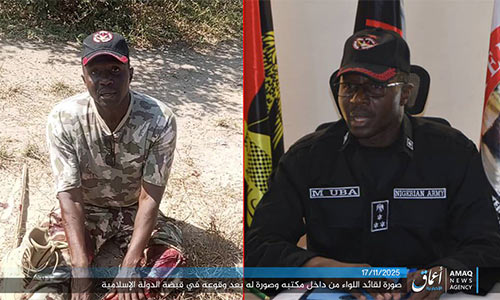
The tragic killing of Nigerian Army Brigadier General U. M. Uba during an ambush by ISWAP has shocked the nation and intensified public discussion. Among the narratives circulating online is the claim that ISWAP intercepted the General’s WhatsApp communication and location while he awaited rescue. Although emotionally compelling, this claim lacks technical credibility and does not align with the known capabilities of ISWAP.
WhatsApp uses end to end encryption designed so that only the sender and the intended recipient can read the communication. Even WhatsApp itself cannot access the content of messages. To intercept such communication, an adversary would need to compromise the device at a fundamental level using sophisticated spyware. Only a handful of nation state actors possess such tools. Pegasus, the advanced surveillance malware previously deployed by some governments, is one such example. There is no evidence that ISWAP, a non state armed group, has ever acquired or operated surveillance capabilities remotely close to Pegasus.
This reality leads to a more plausible explanation: insider threat. Operational compromise from within has long plagued counterinsurgency operations in the Lake Chad Basin. Terrorist groups rely heavily on human intelligence networks, local collaborators, informants, and compromised individuals to track troop movement and anticipate military deployments. These human driven vulnerabilities often yield more reliable results for insurgents than any attempt at decrypting modern communication platforms.
Public debate has also shifted toward blaming journalists and bloggers for publishing early reports about the ambush. This criticism is misplaced. The Nigerian military does not rely on social media chatter to inform rescue operations. Military decisions are driven by verified intelligence, reconnaissance, surveillance assets, and secure command channels. Attempting to blame the media distracts from deeper operational gaps and undermines the essential function of the press in a democratic society.
Open source intelligence, including media reporting, plays an indispensable role in modern national security. Globally, law enforcement and intelligence agencies use OSINT to monitor threats, understand extremist narratives, and support investigative processes. The value lies not in the collection itself but in how professionals analyze and contextualize the information. A responsible media landscape enhances national resilience by reducing the space for misinformation and denying terrorist groups the ability to control the narrative.
Transparency is a critical pillar of any effective counterterrorism strategy. When government institutions restrict information or communicate inconsistently, terrorists seize the opportunity to shape public perception with propaganda. A well informed public is harder to manipulate. Open communication builds trust, boosts morale, and reinforces collective resolve against violent extremism.
The death of Brigadier General Uba is a painful reminder of the sacrifices borne by our military. It also highlights the urgent need to strengthen insider threat programs, improve operational communication security, and enforce accountability mechanisms across the security architecture. Focusing on the facts rather than sensational narratives ensures that the lessons learned from this tragedy lead to meaningful reform.
Nigeria’s war against terrorism will not be won solely on the battlefield. It requires an integrated approach that combines intelligence, community engagement, transparent communication, and digital literacy. ISWAP’s propaganda attempts should not overshadow the technical realities or the broader systemic issues that demand sustained attention.
Oludare Ogunlana, Cybersecurity Professor and Principal Consultant, OGUN Security Research and Strategic Consulting LLC
[A MUST HAVE] Evidence Act Demystified With Recent And Contemporary Cases And Materials

Available now for NGN 40,000 at ASC Publications, 10, Boyle Street, Onikan, Lagos. Beside High Court, TBS. Email publications@ayindesanni.com or WhatsApp +2347056667384. Purchase Link: https://paystack.com/buy/evidence-act-complete-annotation
______________________________________________________________________ “Enhance Legal Practice With Authoritative Reports” — Alexander Payne Offers Comprehensive Law Reports, Spanning Over A Century Of Nigerian Jurisprudence Interested buyers are encouraged to place their orders and enquiries via:
0704 444 4777, 0704 444 4999, 0818 199 9888
Website: www.alexandernigeria.com
Interested buyers are encouraged to place their orders and enquiries via:
0704 444 4777, 0704 444 4999, 0818 199 9888
Website: www.alexandernigeria.com
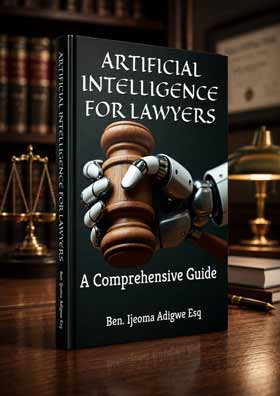 The book also examines Nigeria's legal ecosystem, focusing on the LPELR and NBA AI Guidelines. As a bonus, every purchase comes with a FREE eBook titled: How to Use the AI Features in LegalPedia and LawPavilion.
Ohio Books Ltd praises the publication, stating:
"....this is the only Nigerian book I know of on the topic."
How to Order:
📞 Call, Text, or WhatsApp: 08034917063 | 07055285878
📧 Email: benadigwe1@gmail.com
🌎 Website: www.benadigwe.com
Ebook Version: Access it directly online at https://selar.com/prv626
Authored by Ben Ijeoma Adigwe Esq., ACIarb (UK), LL.M, Dip. in Artificial Intelligence, Director at the Delta State Ministry of Justice, Asaba, Nigeria.
______________________________________________________________________
The book also examines Nigeria's legal ecosystem, focusing on the LPELR and NBA AI Guidelines. As a bonus, every purchase comes with a FREE eBook titled: How to Use the AI Features in LegalPedia and LawPavilion.
Ohio Books Ltd praises the publication, stating:
"....this is the only Nigerian book I know of on the topic."
How to Order:
📞 Call, Text, or WhatsApp: 08034917063 | 07055285878
📧 Email: benadigwe1@gmail.com
🌎 Website: www.benadigwe.com
Ebook Version: Access it directly online at https://selar.com/prv626
Authored by Ben Ijeoma Adigwe Esq., ACIarb (UK), LL.M, Dip. in Artificial Intelligence, Director at the Delta State Ministry of Justice, Asaba, Nigeria.
______________________________________________________________________