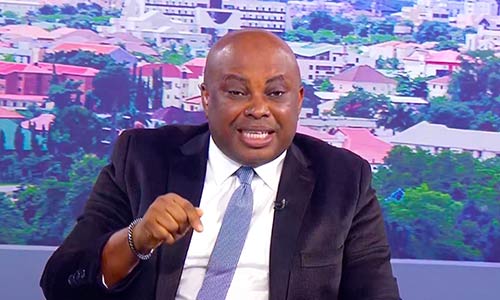
Lawyer Victor Giwa has said the controversy surrounding the leadership of the African Democratic Congress (ADC) must be determined by the party’s constitution, the circumstances under which its former National Working Committee resigned and the evidence presented before the courts, rather than political sentiments.

Giwa maintained that the central legal question was whether Nafiu Bala Gombe, who claims to be the party’s Deputy National Chairman, was bound by a collective decision of the former National Working Committee to resign and pave the way for the emergence of the leadership headed by former Senate President David Mark.
His comments came during an AIT television programme following the November 5, 2026, judgment of Justice Peter Lifu of the Federal High Court, Abuja, which reportedly nullified the emergence of Mark and other members of the party’s National Working Committee.
The judgment, delivered in a suit instituted by Gombe, also reportedly invalidated actions taken by the Mark-led leadership, including the processes that produced former Vice President Atiku Abubakar as the ADC’s presidential candidate for the 2027 general election.
The ruling has generated sharply conflicting reactions within the party, with Atiku’s campaign organisation insisting that the ADC will participate in the election, while the Gombe faction maintains that the judgment has restored its claim to the party’s leadership.
The Mark-led ADC leadership has rejected the decision as legally indefensible and announced plans to challenge it through available judicial procedures.
The party said it was awaiting the certified true copy of the judgment to determine the precise scope of the court’s orders.
Its principal objection concerns an earlier judgment delivered on July 2, 2026, by Justice Musa Liman of the same Federal High Court, which the party says affirmed the legitimacy of the Mark-led National Working Committee and directed the Independent National Electoral Commission (INEC) to recognise the leadership.
According to the ADC, one Federal High Court judge cannot sit on appeal over, review or nullify a subsisting judgment delivered by another judge of coordinate jurisdiction.
Speaking on the dispute, Giwa said the public reaction to Justice Lifu’s judgment was understandable, particularly because the ADC had become a major opposition platform ahead of the 2027 election.
However, he cautioned that the controversy should be examined on its legal merits rather than through partisan considerations.
Giwa recalled that the dispute had previously gone through proceedings before the Federal High Court, Court of Appeal and Supreme Court, including orders concerning the maintenance of the status quo.
He explained that Gombe’s case was based on his claim that he was entitled to succeed the former National Chairman, Ralph Nwosu, following his resignation, rather than have the party’s leadership transferred to a newly constituted National Working Committee.
According to Giwa, the opposing argument was that Gombe had also resigned alongside other members of the former executive, an allegation Gombe disputes.
He said resolving the disagreement required a proper examination of the decision taken by the party’s National Working Committee and the provisions of the ADC constitution.
Giwa explained that the National Working Committee was a collective organ of the party and that decisions validly taken by it could bind its members, including those who did not personally attend the relevant meeting.
He argued that if the committee collectively resolved to resign and Gombe was a member of that body, he could not simply disregard the resolution on the ground that he had not individually resigned.
According to the lawyer, such circumstances could affect Gombe’s legal standing to challenge the leadership transition.
However, Giwa distinguished that situation from one in which the former National Chairman resigned in his individual capacity and subsequently attempted to compel other officials to follow him.
He said that, in the second situation, Gombe’s denial of resignation would raise an issue that could properly be contested before a court.
During the programme, the presenter referred to the ADC’s 99th National Executive Committee meeting held on July 29, 2025, at which the resignation of the Nwosu-led National Working Committee was said to have been adopted.
Responding, Giwa said that if the National Working Committee had validly resolved to dissolve itself and its members subsequently gave effect to that resolution, the collective decision would be important in determining the dispute.
“If that is done, then that is beautiful,” he said.
He likened the process to a board of directors deciding collectively to dissolve itself, with individual members thereafter taking the necessary steps to implement the resolution.
Nevertheless, Giwa stressed that the court would also have to examine whether the process complied with the ADC constitution, particularly any provisions governing succession to vacant offices.
He explained that even where a collective resolution existed, its legal effect must be assessed against the party’s constitutional requirements.
Turning to the conflicting Federal High Court judgments, Giwa questioned whether the Mark-led ADC had placed Justice Liman’s earlier decision before Justice Lifu during the proceedings.
He said that if the party believed the dispute had already been determined by another court of coordinate jurisdiction, its lawyers could have raised the issue through an appropriate preliminary objection.
According to him, the argument could have prevented the court from reconsidering a matter that had already been finally determined, subject to the applicable legal requirements.
However, Giwa acknowledged that he did not have sufficient information to establish what documents or arguments were actually presented before Justice Lifu.
He added that the ADC could still seek to rely on the earlier judgment during an appeal, subject to obtaining the necessary permission where additional material was required.
Asked why the courts appeared unable to settle the resignation controversy, Giwa said judicial officers were required to determine cases based on the claims, pleadings and evidence presented by the parties.
“The court will not create its case,” he stated.
“The court is not Father Christmas,” he added, explaining that judges could not go outside the parties’ pleadings to construct arguments on their behalf.
Giwa cautioned against automatically blaming judges whenever a court delivered a politically controversial decision.
He suggested that political parties should also examine whether their lawyers had properly presented the relevant facts and legal arguments.
According to him, lawyers who were personally involved in a party’s political activities could sometimes allow emotions to affect their handling of litigation, making independent legal advice particularly important.
He urged the ADC to focus on the constitutional issues surrounding the resignation of its former leadership rather than engage in political arguments.
Giwa maintained that if the former National Working Committee had collectively resolved to resign, a member bound by that resolution might be prevented from subsequently challenging its effect.
However, he stressed that if the party’s constitution provided a different succession procedure, the court would be required to consider and apply the relevant provisions.
He said the circumstances surrounding Gombe’s participation in the alleged resignation process would remain important in determining whether his claim could succeed.
Meanwhile, the spokesman of the ADC Presidential Campaign Council, Kola Ologbondiyan, rejected Justice Lifu’s judgment and maintained that the party would challenge the ruling.
Ologbondiyan said the ADC intended to appeal the decision and seek a stay of its effect.
He criticised the judgment, arguing that it conflicted with the earlier decision of Justice Liman recognising the Mark-led National Working Committee.
According to him, the existence of two decisions by courts of coordinate jurisdiction raised serious questions that should be addressed by the appellate courts.
He also made allegations questioning Justice Lifu’s handling of the party’s leadership dispute and suggested that political interests were behind the controversy. Those allegations were his claims and were not established during the programme.
Ologbondiyan insisted that the ADC would not abandon its preparations for the 2027 general election because of the judgment.
He maintained that the party’s presidential candidate, Atiku Abubakar, had substantial political support across the country and that the leadership controversy would not stop its campaign activities.
The campaign spokesman referred to the turnout at the party’s campaign events in Sokoto and Kebbi as evidence of its strength.
He also argued that Atiku’s political experience and nationwide relationships placed him in a strong position to contest the presidency.
“One thing I want to assure you is that the ADC will be on the ballot,” Ologbondiyan declared.
“There is no way, in one strike, that you just chased hundreds of candidates out of a race,” he added.
Asked what would happen if the Court of Appeal and Supreme Court upheld Justice Lifu’s judgment, Ologbondiyan expressed confidence that the appellate courts would not sustain the ruling.
He maintained that the ADC would continue to defend the validity of the processes that produced its current leadership and candidates.
Ologbondiyan also rejected suggestions that the party had mishandled the transition from the Nwosu-led executive to the Mark-led leadership.
According to him, members of the former executive resigned, including Gombe, and the party subsequently followed the relevant processes in constituting its new leadership.
He insisted that Justice Liman’s judgment recognising the Mark-led leadership remained central to the controversy.
The campaign spokesman questioned how another judgment of the same Federal High Court could invalidate a leadership arrangement that had previously received judicial recognition.
He maintained that the conflict between the two judgments required the intervention of a superior court.
On INEC’s expected response to the ruling, Ologbondiyan argued that the electoral commission’s interpretation could not resolve the conflict between the judgments.
He said the legal position would ultimately have to be settled through the appellate process.
However, the spokesman for Gombe’s faction, Bala Sani, rejected the arguments advanced by the Mark-led leadership and insisted that Justice Lifu’s judgment was consistent with the ADC constitution and applicable electoral laws.
Sani, who said he attended the proceedings, maintained that the dispute began when Mark and other political figures sought to join the ADC as a platform for the 2027 general election.
He said Gombe’s faction had not opposed their admission into the party but objected to the procedure through which the existing leadership was replaced.
According to him, Nwosu publicly resigned as National Chairman on July 2, 2025, and immediately announced Mark as his successor without following the party’s constitutional provisions.
Sani maintained that Nwosu had resigned in his personal capacity, not pursuant to a collective decision of the National Working Committee.
He argued that the subsequent meeting held on July 29, 2025, was an attempt to address the procedural defects surrounding the leadership transition.
The spokesman also disputed the validity of the waivers allegedly granted to Mark and other incoming members.
According to him, Article 93 of the ADC constitution provided for waivers relating to elective public offices, including the presidency, governorship and legislative positions, but not appointments to the party’s internal leadership.
He maintained that Article 94 required persons seeking national or zonal leadership positions to have been members of the party for at least two years and to have fulfilled their financial membership obligations.
Sani argued that the leadership transition was therefore inconsistent with the party’s constitution.
Addressing the argument that disputes concerning internal party leadership were not justiciable, he maintained that courts could intervene where a political party failed to comply with its own constitution and infringed the rights of members.
He also disputed the Mark faction’s account of earlier Supreme Court proceedings, saying the issues previously considered concerned jurisdiction and internal party affairs rather than a final determination of the resignation dispute.
According to him, the November 5 judgment established the legal position of Gombe’s faction.
Sani insisted that his group intended to approach INEC and participate in the 2027 elections.
“We are the original owners of the party,” he declared.
He maintained that Gombe was the legitimate National Chairman of the ADC following the judgment and that members of the faction were entitled to pursue their political activities.
Asked about allegations that the ruling All Progressives Congress (APC) was sponsoring Gombe’s leadership challenge to weaken the opposition, Sani denied receiving financial assistance from the ruling party.
“The fact is the APC is not bankrolling us. Nobody is giving us money to fight our fight,” he stated.
He maintained that the faction had pursued the litigation because its members believed their rights under the ADC constitution had been violated.
The spokesman also expressed confidence that the faction would participate in the 2027 election and emerge victorious.
The conflicting positions have left the ADC facing uncertainty over its leadership and the legal consequences of Justice Lifu’s judgment for its preparations for the next general election.
While the Mark-led faction insists that an earlier Federal High Court judgment validated its leadership and that the latest ruling will be overturned on appeal, Gombe’s supporters maintain that the court has affirmed their constitutional claims.
Giwa, however, maintained that the legal outcome would depend on the validity and effect of the former National Working Committee’s resignation, the provisions of the ADC constitution and the arguments properly presented before the courts.
[A MUST HAVE] Evidence Act Demystified With Recent And Contemporary Cases And Materials

Available now for NGN 40,000 at ASC Publications, 10, Boyle Street, Onikan, Lagos. Beside High Court, TBS. Email publications@ayindesanni.com or WhatsApp +2347056667384. Purchase Link: https://paystack.com/buy/evidence-act-complete-annotation
______________________________________________________________________ “Enhance Legal Practice With Authoritative Reports” — Alexander Payne Offers Comprehensive Law Reports, Spanning Over A Century Of Nigerian Jurisprudence Interested buyers are encouraged to place their orders and enquiries via:
0704 444 4777, 0704 444 4999, 0818 199 9888
Website: www.alexandernigeria.com
“A Comprehensive Guide To Evidence Law” — Releases Second Edition In Three Volumes, Covering 4,051 Cases
For enquiries and orders, contact: 08035526491 Email: jerryamadisilk@gmail.com
 Prof. Jerry Amadi’s Evidence Law, Second Edition (2026), contains 3,314 pages in three volumes, covering the Evidence Act 2011, its 2023 amendment, and 4,051 Nigerian and English cases.