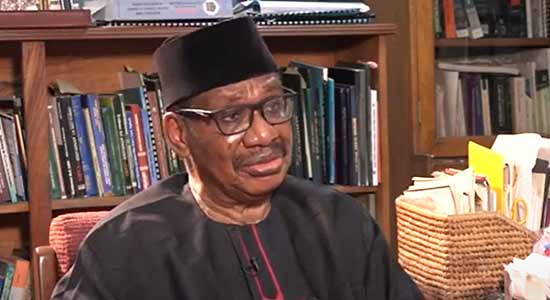
Constitutional lawyer Professor Itse Sagay has sharply criticized advocates for creating additional states in Nigeria, branding them as “selfish and not sincere” in a move he says would further strain the nation’s depleted finances, according to a report by New Telegraph Nigeria.

“I have always maintained that we don’t need more states in the country. For what? My reading of these incessant calls is that some people are doing so because they want to control their areas and gain more access to the treasury,” Sagay told New Telegraph Nigeria. this week. He warned that new states would mostly prove unviable, becoming “a drain on the resources of the viable ones,” exacerbating Nigeria’s economic challenges rather than alleviating them.
The controversy erupted following reports that the Joint Committee on the Review of the 1999 Constitution, co-chaired by Deputy Senate President Senator Jibrin Barau and Deputy Speaker of the House of Representatives Hon. Benjamin Kalu, has greenlit just six out of 55 requests for new states. The decision has ignited fierce debate over the plan’s feasibility, its potential to disrupt socio-political balance, and its economic ripple effects, should it gain legislative approval.
Proponents argue it could foster grassroots development and equity, particularly in underrepresented regions like the Southeast. Critics, however, decry it as political opportunism, urging focus on restructuring existing states for true federalism.
The Olubadan of Ibadanland, Oba Rashidi Ladoja, hailed the potential creation of Ibadan State from Oyo State as “long overdue,” emphasizing its economic viability. Speaking through his media aide, Mr. Adesola Oloko, the monarch noted that Ibadan and Ibarapa together encompass 14 local governments and generate over 50% of Oyo State’s internally generated revenue. “The infrastructural development necessary for the take-off of Ibadan State is intact,” Oloko quoted Ladoja as saying. He added that while agitations for states are legitimate, they must meet criteria like economic sustainability, and Ibadan clearly does.
Echoing this sentiment, the Olota of Ota, Oba Abdulkabir Adeyemi Obalanlege (Arusa 1), welcomed the broader push, arguing it would accelerate rural development and address marginalization in areas like Ogun West. “Our votes are more than all four local governments [in Yewa], and sometimes our votes will double. It’s like we are being marginalized,” he said, calling for more local governments in Awori land. On Ibadan specifically, Obalanlege affirmed: “It is obviously long overdue… on merit, Ibadan State should come on board to further boost development in the South West.”
Opposition voices largely urged caution. The African Democratic Congress (ADC), through National Publicity Secretary Mallam Bolaji Abdullahi, stressed that state creation must prioritize viability over political equity. “Most of the existing states can barely survive without federal allocation. One can make the equity argument in support of an additional state for the Southeast, but for the others, it is difficult to justify,” Abdullahi said.
The pan-Yoruba group Afenifere, via National Publicity Secretary Prince Justice Faloye, rejected the idea outright, advocating devolution of powers instead. “Creating more feeding-bottle states that have to solely depend on federal allocations is a political solution without economic empowerment, mere political gerrymandering,” Faloye stated. He called for constitutional restructuring to empower states toward fiscal federalism.
The New Nigeria Peoples Party (NNPP) labeled the timing “ludicrous,” with Publicity Secretary Mr. Ladipo Johnson arguing: “How many of the existing ones are truly viable? We should be working towards making the states viable, efficient, and weaned as much as possible from the umbilical cord of the Federal Government.” The party implored the National Assembly to prioritize the federation’s well-being.
Not all reactions were negative. Chief Goddy Uwazurike, former President of the Igbo socio-cultural group Aka Ikenga, endorsed the move as aligning with the 2014 National Conference resolutions, where he championed equal state distribution across zones. He highlighted the need to elevate the Southeast to six states for parity with others, noting: “The aim was to have 9 states per zone.” Uwazurike touted benefits like rural development, job creation, and boosted human development indices, reminding that “32 of the state capitals today were rustic and rural before May 27, 1967.”
As the National Assembly deliberates, the debate underscores Nigeria’s enduring tensions between unity and equity. With the economy reeling from inflation and debt, stakeholders warn that hasty expansions could deepen fiscal woes or, if done right, unlock untapped potential in the world’s most populous Black nation. The committee’s final recommendations remain under wraps, but the chorus of voices signals a pivotal moment for constitutional reform.
[A MUST HAVE] Evidence Act Demystified With Recent And Contemporary Cases And Materials

Available now for NGN 40,000 at ASC Publications, 10, Boyle Street, Onikan, Lagos. Beside High Court, TBS. Email publications@ayindesanni.com or WhatsApp +2347056667384. Purchase Link: https://paystack.com/buy/evidence-act-complete-annotation
______________________________________________________________________ “Enhance Legal Practice With Authoritative Reports” — Alexander Payne Offers Comprehensive Law Reports, Spanning Over A Century Of Nigerian Jurisprudence Interested buyers are encouraged to place their orders and enquiries via:
0704 444 4777, 0704 444 4999, 0818 199 9888
Website: www.alexandernigeria.com