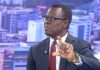
Renowned human rights lawyer and Senior Advocate of Nigeria (SAN), Femi Falana, has called for sweeping reforms to the Independent National Electoral Commission (INEC) and the broader electoral framework, emphasizing transparency, independence, and inclusivity. Speaking on Channels Television’s Politics Today programme on Wednesday, Falana critiqued the recent Senate confirmation of Professor Joash Amupitan as INEC Chairman on October 16, urging a shift toward public advertisement of such positions to insulate the commission from political interference.

Falana, drawing from the 2008 Justice Mohammed Uwais Electoral Reform Panel recommendations many of which remain unimplemented proposed a merit-based selection process modeled after successful systems in African nations like Lesotho and Botswana. “What other countries in Africa have done is to put in place a mechanism whereby vacant positions in the electoral bodies are advertised,” he said. Under this model, credible candidates described as “men and women of character and integrity” would apply publicly. The public could then object to unqualified nominees on moral or other grounds, followed by shortlisting.
The Uwais Panel specifically recommended that the National Judicial Council (NJC) scrutinize applicants and forward the top three candidates to the President, who would submit them to the National Assembly for final selection. “The president will simply take the names to the National Assembly for the legislators to choose from the list,” Falana explained. “This goes a long way to make the body free from control.” He noted that Lesotho had recently published such an advertisement, underscoring the practicality of the approach.
To further bolster INEC’s autonomy, Falana advocated making the commission’s budget a first-line charge, freeing it from executive dependencies that often lead to “bribe-spread money to carry out its activities.” He also highlighted concerns over INEC staff affiliations with political parties, calling for stricter insulation from government control and funding influences.
Falana delved into ongoing National Assembly efforts to amend the Electoral Act, particularly the proposed shift in the burden of proof for election petitions. Currently, petitioners bear the onerous task of proving irregularities without easy access to electoral materials, witnesses, or data a system that has historically shielded fraudulent outcomes.
Referencing the notoriously flawed 2003 and 2007 elections under former President Umaru Yar’Adua (who admitted his 2007 victory was “highly flawed”), Falana argued for reversal: INEC should prove its declarations were fair and conducted in substantial compliance with the law.
“In other words, you conducted an election and you have declared that the election was fair and free come and prove to the court that that was what happened,” he stated. This change, he said, would empower victims of electoral malfeasance, including National Assembly members themselves, to more effectively challenge results. Falana expressed optimism that both houses would collaborate, given their shared experiences.
He also pushed for resolving all election petitions before the inauguration of winners, preventing challenged candidates from assuming office and abusing power to intimidate witnesses or tamper with proceedings. “A situation whereby those whose elections are being challenged are allowed to assume powers… whereby witnesses are scared and they won’t be able to go,” he lamented, noting Nigeria’s protracted timelines—up to 180 days or six months—are an outlier in Africa, where disputes often conclude in one or two weeks. With INEC holding all materials, he argued, faster resolutions are feasible.
To enable this, Falana stressed the need for mandatory electronic systems: voting, result computation, accreditation, and transmission. The courts had previously deemed electronic transmission optional, but “the National Assembly has a duty to make it compulsory,” he insisted. Without these, credible elections remain elusive.
Finally, he renewed calls for an Electoral Offences Commission, as recommended by the Uwais Panel, to prosecute offenders arrested before, during, or after polls—ending the cycle where police-filed cases fizzle out. “Once these issues are addressed frankly and honestly in the interest of the country, we must be able to join other nations,” Falana concluded on this front.
Addressing diaspora disenfranchisement, Falana strongly supported amending the Electoral Act to allow Nigerians abroad to vote at embassies, citing their economic contributions. “Today, remittances from citizens abroad are higher, sometimes, than the money we make from oil and gas,” he said. “If they are remitting millions of dollars, which go a long way to improve the economy, they also have a right to demand that they be allowed to participate in electing the leaders of the country.” Echoing the American principle of “no taxation without representation,” he noted that at least 28 African countries already permit this. Nigeria’s own ECOWAS Court ruled in 2008 that excluding diaspora voters constitutes discrimination, yet the federal government has dragged its feet on legislation.
Falana extended this inclusivity to early voting for essential workers—police, correctional officers, hospital staff, and election officials—who often miss polls due to duties. “This is what other countries do. You allow them at least a week or two to cast their votes before the general election,” he proposed, aligning it with broader efforts to boost participation.
Responding to calls from figures like Mr. Lanihun for a brand-new constitution rather than amendments, Falana was pragmatic but skeptical. Since 1999, he observed, the political class has pursued “partial and regular amendments” to the 1999 Constitution while resisting wholesale replacement, as they remain “very comfortable under it.” A full overhaul, he warned, would require a “revolution in Nigeria” to establish a new legal order—unlikely without seismic change.
Instead, he highlighted incremental progress through amendments and judicial interventions that have devolved powers from the center. The 2023 amendments, for instance, moved electricity, railways, and correctional services from the exclusive legislative list to the concurrent list, empowering states. Yet, implementation lags: no state has built its own correctional centers despite handling 95% of prisoners, and electricity reforms have barely advanced beyond Lagos.
Supreme Court rulings have further decentralized authority, such as declaring land use (via local government consent) and physical planning state matters, stripping federal overreach. “All these judgments have not altered the political equation,” Falana acknowledged, but they have made states “very, very powerful.”
For true impact, he urged focus on Chapter Two’s socio-economic rights education, health, and welfare which courts have deemed non-justiciable, though he disagrees. Through legislative pressure, the National Assembly has enacted enabling laws: free basic and secondary education; the National Health Act (2014) and National Health Insurance Authority Act (2022), mandating universal coverage (with the President directing insurance for civil servants); and the National Social Investment Programme Act for cash transfers and school feeding. “The National Assembly has a duty… to fund programs in the interest of the Nigerian people,” Falana said. “For me, these are the amendments the majority of Nigerians are asking for.”
Falana’s interventions come amid active National Assembly debates on electoral and constitutional bills, including those sponsored by Senator Sani Musa (on diaspora voting) and others enhancing INEC independence.
[A MUST HAVE] Evidence Act Demystified With Recent And Contemporary Cases And Materials

Available now for NGN 40,000 at ASC Publications, 10, Boyle Street, Onikan, Lagos. Beside High Court, TBS. Email publications@ayindesanni.com or WhatsApp +2347056667384. Purchase Link: https://paystack.com/buy/evidence-act-complete-annotation
______________________________________________________________________ “Enhance Legal Practice With Authoritative Reports” — Alexander Payne Offers Comprehensive Law Reports, Spanning Over A Century Of Nigerian Jurisprudence Interested buyers are encouraged to place their orders and enquiries via:
0704 444 4777, 0704 444 4999, 0818 199 9888
Website: www.alexandernigeria.com