By Gobir Habeeb Bolaji, Esq.
On July 24, 2025, the Federal High Court sitting in Abuja delivered a landmark judgment in Reiz Continental Hotel Ltd v. Audiovisual Rights Society of Nigeria (AVRS), holding that the hotel’s transmission of audiovisual content via Pay-TV services within its premises constituted a “public performance” under the Copyright Act 2022. As a result, the court ruled that the hotel was required to obtain a separate licence from AVRS, a registered collective management organisation (CMO) and lawful assignee of the relevant works.
The decision has since reignited the debate around what qualifies as “public performance,” especially in commercial contexts like hospitality. But beyond the core issue, the judgment also raises deeper questions: To what extent can a trade association like the Hotel Owners Forum Abuja (HOFA) bind its members to licensing agreements? Does subscribing to Pay-TV services that lawfully distribute content eliminate the need for additional licensing? And how do admissions by a plaintiff during affidavit proceedings impact the burden of proof in copyright claims?
This article critically examines the court’s reasoning and the implications for copyright enforcement in Nigeria. It explores the legal framework under the Copyright Act 2022, evaluates how the judgment compares to established practices in jurisdictions like the United States, and considers whether AVRS’s dual status as both assignee and CMO may signal a shift in how enforcement rights are being exercised
Legal Framework and Court’s Reasoning
The court anchored its decision on Sections 11(b), (c), (f) and 36(1)(a) and (g) of the Copyright Act 2022. Section 36(1)(g) in particular provides that:
A person infringes copyright where they perform or cause to be performed, for purposes of trade or business, any work in which copyright subsists.
Justice Egwuatu held that Reiz Hotel’s transmission of audiovisual content through television sets in guest rooms and other areas of the hotel amounted to a public performance and thus required a separate copyright licence from AVRS.
AVRS, as a collective management organisation duly approved under Section 88 of the Act, was affirmed to possess the exclusive right to issue such licences on behalf of audiovisual content creators and rightsholders. The court dismissed Reiz’s defence that it was merely receiving content via a subscription to licensed broadcasters and was not itself engaged in any commercial exploitation of the content.
Dissecting the Judgment: Five Areas of Concern
- Agency and Collective Licensing: Was HOFA’s Agreement Binding?
An important part of the court’s reasoning in the judgment was that the Hotel Owners Forum Abuja (HOFA), to which the Plaintiff belonged, had negotiated and signed a collective licensing agreement with AVRS. The court held that since HOFA acted as the disclosed agent of its members, Reiz Hotel could not disown its obligations under that agreement.
Although this position aligns with agency law, but for me, it raises some iimportant questions about the scope of HOFA’s authority. Did HOFA have actual or ostensible authority to bind all its members? Could a member hotel opt out or contest the terms individually? These questions were not fully explored in the judgment. In future disputes, courts may need to determine whether such collective agreements require active ratification by each member or whether mere membership constitutes implied consent. This distinction has real implications for how hotels engage with associations and the enforceability of collective copyright licences.
- Admissions in Affidavit: How the Plaintiff Undermined Her Own Defence
While going through the Judgment, one thing i observed was that, the Plaintiff’s affidavit played a significant role in the court’s reasoning. They admitted to using television sets within the hotel premises to broadcast Pay-TV content, and that these areas were open to the public. They also admitted to receiving a demand letter from AVRS and making partial payment. These admissions weakened the Plaintiff’s core defence that it had not engaged in any infringing activity.
I personally think the lesson here is that, admissions in affidavits carry evidential weight. Where a party acknowledges facts that amount to use of protected works, the court may not require detailed proof of specific infringed content. This put Reiz Hotel at a disadvantage and made it easier for the court to infer that a licence was required for continued use.
But I’m also seeing this from another perspective particularly from the angle of public and private view dichotomy. The concept of public performance is not always straightforward. In this particular case, the Court took the view that hotel guests constitute the public, and that content shown in hotel rooms is a form of commercial performance. But a closer inspection reveals a different context.
A hotel is not a cinema or an event venue. Its guests consume content privately, usually in their rooms, and not in a setting open to the general public. There is a significant distinction between direct monetisation of copyrighted content and the incidental benefit offered as part of hospitality services. The latter is an enhancement, not a product in itself.
Moreover, hotels do not separately charge guests to view audiovisual content. There is no admission fee or ticketing scheme for movies. The use of Pay-TV is part of a bundled offering akin to utilities or housekeeping.
- AVRS as Both Assignee and CMO
One important but often overlooked point in the court’s reasoning is that AVRS didn’t approach this case only as a Collective Management Organisation (CMO). It was also acting as a lawful assignee of copyright in specific audiovisual works. The court accepted Exhibit AV2 as proof that AVRS had acquired actual copyright ownership rights, not just management authority.
This dual status matters. Section 37 of the Copyright Act 2022 expressly empowers an assignee to enforce copyright in the same manner as the original owner. So, unlike CMOs that merely administer rights on behalf of creators, AVRS in this case had a direct proprietary interest, which strengthened its legal standing. It meant AVRS wasn’t just licensing the works, it could enforce those rights in its own name.
This has a very broader implications. Are more Nigerian CMOs now securing assignments of copyright in addition to their mandate as rights administrators? If so, this strategy could significantly reshape enforcement. That’s a matter for another time.
- Failure to Dispute Infringement on the Merits
Although the Plaintiff challenged AVRS’s authority and argued that it was not the broadcaster or producer of the content, it notably did not deny that it used audiovisual works on its premises. Nor did it challenge the existence of copyright in those works or argue that such use was exempt. This created a factual vacuum that the Defendant filled with evidence of assignment and licensing rights. It also meant that the Plaintiff’s case hinged entirely on technical objections, such as lack of identification of specific works or lack of direct ownership, rather than any denial of use or reliance on statutory defences. Highlighting this makes clear why the court found it easy to rule that a licence was required.
- The Court’s Silence on the Role of the Pay-TV Provider
Perhaps the most notable omission in the court’s reasoning is that it did not evaluate whether the Pay-TV provider (e.g., DSTV) had already obtained performance rights that would cover commercial use. The Plaintiff argued that it simply rebroadcast lawfully subscribed content, but the court did not examine whether such subscriptions include public performance rights, or whether liability should fall on the content distributor.
Now with this silence, the question is; should AVRS have pursued the broadcaster instead of the end-user? In jurisdictions like the U.S., this is precisely how the licensing chain works. Broadcasters enter blanket agreements with CMOs, and commercial subscribers are automatically covered. Let’s examine how it works in United States a bit
Comparative Jurisdiction: United States as a Case Study
The United States Copyright Act, codified under 17 U.S.C. § 101, adopts a broad definition of public performance, which includes the transmission of a work to the public by means of any device or process. Specifically, the law considers it a public performance when a copyrighted work is:
“…transmitted or otherwise communicated to the public, by means of any device or process, whether the members of the public capable of receiving the performance or display receive it in the same place or in separate places and at the same or at different times.”
This statutory language captures hotel broadcasts of audiovisual content in guest rooms, common areas, and conference facilities as public performances. Consequently, the U.S. legal system recognizes that hotels are generally liable for transmitting copyrighted material to multiple viewers within a commercial establishment.
However, the practical enforcement model in the U.S. significantly differs from the Nigerian approach in one important respect: licensing responsibility is typically shifted upstream to the broadcaster or aggregator, not the hotel.
In practice, U.S. content service providers such as DIRECTV, DISH Network, Comcast, and others offer commercial subscription packages specifically tailored for hospitality and institutional clients. These packages are designed to include performance rights, and the providers negotiate blanket licences with collective management organisations (CMOs) like:
- ASCAP (American Society of Composers, Authors and Publishers),
- BMI (Broadcast Music, Inc.),
- SESAC, and others.
These licensing arrangements ensure that hotels, when subscribing to the proper commercial-use plans, are automatically covered for public performance purposes. As a result, the hotel does not need to engage in separate negotiations with each rights holder or CMO for every type of audiovisual content shown on its premises.
Where liability arises is in cases where hotels use residential or personal-use packages improperly for commercial purposes, thereby bypassing the intended licensing chain. In such cases, courts may impose liability directly on the hotel for circumventing commercial-use licensing models.
- The Path Forward for Nigeria: Harmonisation and Clarity
The Nigerian court’s decision in AVRS v. Reiz Continental Hotel Ltd is arguably consistent with the letter of the Copyright Act 2022. However, its practical effect, if left unchecked by regulatory guidance, could lead to confusion and a disincentive for lawful content consumption in the hospitality sector. To ensure fairness and reduce future disputes, the follow are proposed:
- There is a pressing need for tripartite licensing agreements between collective management organisations (CMOs) like AVRS, licensed Pay-TV providers (such as MultiChoice Nigeria), and industry associations like the Hotel Owners Forum Abuja (HOFA) or the Federation of Tourism Associations of Nigeria (FTAN). These agreements would create a structure for blanket licensing, where hotels that subscribe to commercial-use Pay-TV packages are automatically covered for public performance rights.
- Regulatory authorities such as the Nigerian Copyright Commission (NCC) should issue statutory guidelines clarifying the scope of ‘public performance’ in commercial environments. The Copyright Act’s broad language, particularly in Section 36, does not sufficiently distinguish between direct commercial exploitation (like paid screenings) and incidental or passive use (like in-room television viewing by hotel guests). Clear definitions of what constitutes a “public” audience, along with a framework for determining when liability attaches to the content distributor (e.g., the Pay-TV provider) versus the end user (e.g., the hotel), would reduce uncertainty and enable both rightsholders and users to engage with the law more predictably.
- Licensing transparency must be improved. Many businesses currently lack access to essential information such as fee structures, standard licensing terms, eligibility for exemptions, or dispute resolution procedures. CMOs should be required to publish clear, accessible information about their licensing rates, coverage, and contact points. In turn, the NCC could establish an independent mediation or ombudsman service to handle licensing disputes. This would reduce reliance on costly litigation, particularly for small- and medium-sized businesses that may already be operating on thin margins.
- Nigerian copyright regulators should formally recognize ‘incidental use’ as a category deserving flexible treatment under the law. This refers to scenarios where copyrighted content is used not as a core offering, but merely to enhance a service, such as showing cable news in a hotel lobby or entertainment channels in guest rooms. In many jurisdictions, such use cases are treated separately from commercial performances, with reduced rates or exemptions to account for their limited commercial value. United State is a good example. Recognizing incidental use within Nigeria’s copyright framework would help distinguish it from overt commercial exploitation.
Conclusion
The AVRS judgment might be legally sound, but it exposes a serious gap in how copyright is enforced in Nigeria. If businesses that already pay for content through licensed platforms still have to pay again, we risk creating a system that feels unfair and unsustainable. What we need now is balance clearer rules, shared responsibility between CMOs and broadcasters, and a licensing structure that protects creators without punishing end-users for lawful use.
About the Author
Habeeb Gobir, Esq. is a Nigerian lawyer and intellectual property consultant with a focus on emerging technologies, Web3 regulation, and the creative economy. He advises tech startups, content creators, and blockchain projects on IP protection, digital compliance, and policy strategy. He can be reached at habeebgobir2@gmail.com and 08108527278
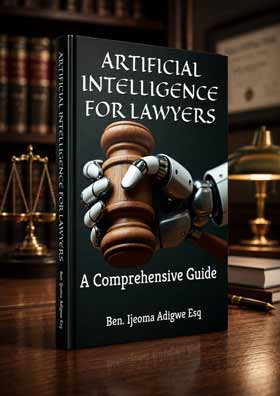 The book also examines Nigeria's legal ecosystem, focusing on the LPELR and NBA AI Guidelines. As a bonus, every purchase comes with a FREE eBook titled: How to Use the AI Features in LegalPedia and LawPavilion.
Ohio Books Ltd praises the publication, stating:
"....this is the only Nigerian book I know of on the topic."
How to Order:
📞 Call, Text, or WhatsApp: 08034917063 | 07055285878
📧 Email: benadigwe1@gmail.com
🌎 Website: www.benadigwe.com
Ebook Version: Access it directly online at https://selar.com/prv626
Authored by Ben Ijeoma Adigwe Esq., ACIarb (UK), LL.M, Dip. in Artificial Intelligence, Director at the Delta State Ministry of Justice, Asaba, Nigeria.
______________________________________________________________________
[A MUST HAVE] Evidence Act Demystified With Recent And Contemporary Cases And Materials
The book also examines Nigeria's legal ecosystem, focusing on the LPELR and NBA AI Guidelines. As a bonus, every purchase comes with a FREE eBook titled: How to Use the AI Features in LegalPedia and LawPavilion.
Ohio Books Ltd praises the publication, stating:
"....this is the only Nigerian book I know of on the topic."
How to Order:
📞 Call, Text, or WhatsApp: 08034917063 | 07055285878
📧 Email: benadigwe1@gmail.com
🌎 Website: www.benadigwe.com
Ebook Version: Access it directly online at https://selar.com/prv626
Authored by Ben Ijeoma Adigwe Esq., ACIarb (UK), LL.M, Dip. in Artificial Intelligence, Director at the Delta State Ministry of Justice, Asaba, Nigeria.
______________________________________________________________________
[A MUST HAVE] Evidence Act Demystified With Recent And Contemporary Cases And Materials

 Interested buyers are encouraged to place their orders and enquiries via:
0704 444 4777, 0704 444 4999, 0818 199 9888
Website: www.alexandernigeria.com
Interested buyers are encouraged to place their orders and enquiries via:
0704 444 4777, 0704 444 4999, 0818 199 9888
Website: www.alexandernigeria.com