By Soliu Kamaludeen
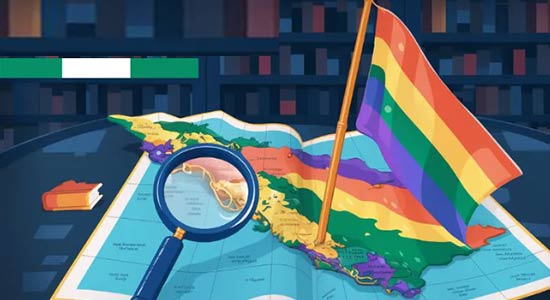
A few days ago, there was a pressing outcry over the Samoa Agreement as being a step towards adopting the LGBTQ (Lesbian, Gay, Bisexual, Transgender, Queer) policy, recently signed by the Federal Government as part of its effort to strengthen international relationships and to generate international aid and economic stimulus. In the opinion of this essayist, it is a reasonable gesture if properly supervised.
However, understanding what the Samoa Agreement stands for and outlining its history of enactment is contingent on understanding its philosophies and policies and better appreciating the politics that underlie it.
By way of preface, the Samoa Agreement is a new legal framework for EU relations with 79 African, Caribbean, and Pacific countries, including 48 African countries, 16 countries from the Caribbean, and 15 Pacific countries. It is a treaty with an emphasis on gender equity, inclusivity, and pluralism, the agreement covers six priority areas aimed at boosting joint commitments to human rights, democracy, and good governance and supporting the achievement of the Sustainable Development Goals of the UN Agenda 2030. This agreement is said to be an extension of the previous legal frameworks, the Lomé Convention and the Cotonou Agreement, which were signed in 1975 and 2000, respectively.
However, it is important to inspect with suspicion the relevant provisions of the Samoa Agreement in line with the local legislation to see whether it actually portrays the popular belief as being a subtle strategy of integrating LGBTQ ideas into African countries, especially Nigeria, which is known to vehemently condemn and even criminalize the idea.
The most relevant and controversial section of the Agreement is Article 2(5), which expressly provides: “The Parties shall systematically promote a GENDER PERSPECTIVE and ensure that GENDER EQUALITY is mainstreamed across all policies.” There are also other relevant sections, such as Articles 9, 10, and 66 of the same Agreement under the Africa Regional Protocol.
In my opinion, while the article does not explicitly mention LGBTQ+, the phrases “gender perspective” and “gender equality” can be interpreted to include gender identity, gender expression, and sexual orientation, which are terms for promoting LGBTQ+. The principle of gender equality encompasses equal rights and opportunities for all individuals, regardless of their gender identity or expression, including those who identify as LGBTQ+.
However, it is important to note that the article’s language is not explicitly inclusive of LGBTQ+ individuals. Some might argue that the language is more focused on gender equality between men and women, rather than explicitly including LGBTQ+ individuals. Hence, to ensure explicit inclusion, more specific language would be necessary, such as “gender identity,” “sexual orientation,” or “LGBTQ+ rights.” But does this mean the section is not open to maneuvers, especially when the basic literal interpretation rule favors both legal renditions?
Moreover, the treaty has been criticized for lacking a glossary of terms and definitions, which can lead to confusion and ambiguity in the implementation and evaluation of the agreement. This can result in divergent interpretations and conflicts regarding the application of certain provisions, creating a loophole for the LGBTQ lobby that undermines fundamental African societal values.
However, it is important to note that there is a subsisting law popularly known as the Same-Sex Marriage (Prohibition) Act 2013, a legal framework within the Nigerian legal system that partly prohibits the idea of LGBTQ in Section 1, and Section 5 stipulates a 14-year imprisonment for anyone who engages in a same-sex marriage. But, as of the time of writing this article, this essayist is not aware of any express law(s) regulating transgender individuals.
Furthermore, it is equally imperative point to address the method of transporting an international treaty to Nigeria and the status of such a treaty and municipal law, especially an Act of the National Assembly, to see the potential of the Samoa Agreement in Nigeria’s jurisdiction.
Section 12(1) of the Constitution of the Federal Republic of Nigeria provides that for any international treaty to have binding force in Nigeria, it has to be domesticated by ratification of the National Assembly. Where the treaty is domesticated, its international flavor makes it a law that is superior to other Acts of the National Assembly. This is the position of the Supreme Court in the case of Oshevire v. British Caledonian Airways [1990] 7 NWLR Part 163, 519-520, and the popular case of Abacha v. Fawehinmi [2000] 6 NWLR Part 660. By this provision and the court’s decision, does that mean the Samoa Agreement, when domesticated, will be superior in status to the Same-Sex Marriage (Prohibition) Act and, as such, create a leeway for LGBTQ maneuvering? Well, the situation of things will determine as time goes by; however, this is unlikely to materialize in the Nigerian legal system.
As noted earlier, the uncertainty and vagueness in the wordings that suggest the integration of LGBTQ are worth assessing with concise suspicion of Western or any Western ideas geared toward African countries. In this essayist’s opinion, the popular uproar is worth considering the antecedent of indirect rule of colonialism, the latest effluxion of the neo-colonialism movement, and other vicious policies that were introduced to Nigeria, like the SAP, which mostly turned unfavorably against the Nigerian economy.
The popular criticisms should be welcomed to reiterate and reaffirm the continuous resentment of Nigerians toward any anti-religion or anti-cultural policies so that the leaders can be awakened to stand against them, yet should not be politicized by whatever means.
__________________________________
Kamaludeen Soliu Arisekola (K-Excel) is a final-year pupil of law at Bayero University, Kano. He is a vibrant student who has a keen interest in Islamic Banking Law, Tech Law, Constitutional Law, and Legal Profession Branding and Promotion. He can be reached via: kamaludeenarekola1997@gmail.com.
 The book also examines Nigeria's legal ecosystem, focusing on the LPELR and NBA AI Guidelines. As a bonus, every purchase comes with a FREE eBook titled: How to Use the AI Features in LegalPedia and LawPavilion.
Ohio Books Ltd praises the publication, stating:
"....this is the only Nigerian book I know of on the topic."
How to Order:
📞 Call, Text, or WhatsApp: 08034917063 | 07055285878
📧 Email: benadigwe1@gmail.com
🌎 Website: www.benadigwe.com
Ebook Version: Access it directly online at https://selar.com/prv626
Authored by Ben Ijeoma Adigwe Esq., ACIarb (UK), LL.M, Dip. in Artificial Intelligence, Director at the Delta State Ministry of Justice, Asaba, Nigeria.
_______________________________________________________________________
“Enhance Legal Practice With Authoritative Reports” — Alexander Payne Offers Comprehensive Law Reports, Spanning Over A Century Of Nigerian Jurisprudence
The book also examines Nigeria's legal ecosystem, focusing on the LPELR and NBA AI Guidelines. As a bonus, every purchase comes with a FREE eBook titled: How to Use the AI Features in LegalPedia and LawPavilion.
Ohio Books Ltd praises the publication, stating:
"....this is the only Nigerian book I know of on the topic."
How to Order:
📞 Call, Text, or WhatsApp: 08034917063 | 07055285878
📧 Email: benadigwe1@gmail.com
🌎 Website: www.benadigwe.com
Ebook Version: Access it directly online at https://selar.com/prv626
Authored by Ben Ijeoma Adigwe Esq., ACIarb (UK), LL.M, Dip. in Artificial Intelligence, Director at the Delta State Ministry of Justice, Asaba, Nigeria.
_______________________________________________________________________
“Enhance Legal Practice With Authoritative Reports” — Alexander Payne Offers Comprehensive Law Reports, Spanning Over A Century Of Nigerian Jurisprudence
 Interested buyers are encouraged to place their orders and enquiries via:
0704 444 4777, 0704 444 4999, 0818 199 9888
Website: www.alexandernigeria.com
Interested buyers are encouraged to place their orders and enquiries via:
0704 444 4777, 0704 444 4999, 0818 199 9888
Website: www.alexandernigeria.com