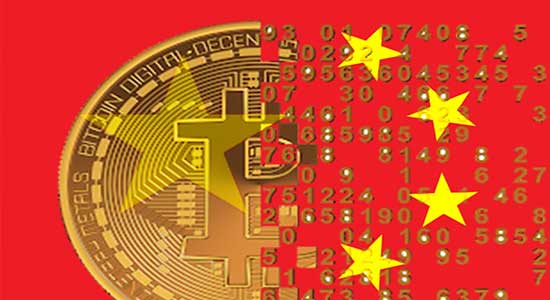
With cyber yuan, the Chinese government has reportedly created a digital currency controlled by its central bank.

With credit cards and payment apps, money dealings are already some sort of virtual. But now, China is turning legal tender itself into computer code, The Wall Street Journal (WSJ) reported on Tuesday.
By design, the digital yuan will negate one of bitcoin’s major draws: anonymity for the user, it added.
Central banks across the world, including the People’s Bank of China (PBOC), are looking at developing digital currencies that could play a role in making domestic and international payments faster and cheaper for both large-scale and consumer transactions.
The PBOC had been working on its digital yuan programme since 2014, shortly after bitcoin gained attention in the country.
How does it work?
From a user perspective, it is rather like China’s existing commercial digital payment methods, like Alipay and We Chat Pay: users download digital wallets in which they can store their funds, and which generate a QR code that can be scanned by payment terminals in shops.
The digital yuan is designed to replace cash in circulation, such as coins and bank notes, not money deposited long-term in bank accounts.
Commercial banks will have a role in distributing the digital currency to users, and to do so they must deposit exactly the same amount of their reserves with the PBOC as the digital yuan they distribute.
Unlike cryptocurrencies like bitcoin, the digital yuan will not use blockchain, distributed ledger technology which allows transactions to be validated without the need for banks.
What effect will it have?
Widespread use of the digital yuan may give Chinese policy makers greater visibility into how money flows around China’s economy.
This would help them track any illicit flows of funds and it would also allow them to experiment by targeting monetary policy interventions on specific economic classes, regions or other groups.
In extreme economic circumstances, it would also allow them to have negative interest rates for cash.
China has a long-standing aim of internationalising its currency, and in time, the digital yuan may help with this initiative, making it easier to encourage users in other countries to use the yuan.
A digital dollar too?
US Treasury secretary Janet Yellen signaled the Joe Biden administration supports research into the viability of a digital dollar, a shift from the lack of enthusiasm shown for the concept under her predecessor, Steven Mnuchin.
“It makes sense for central banks to be looking at” issuing sovereign digital currencies, Yellen said at a virtual conference hosted by the New York Times in February this year.
Over the months, many countries have experimented with digital currencies, data availabke with the Bank for International Settlements showed. For instance, Sweden has conducted real-world trials of a digital krona, and the Bahamas made a digital currency, the Sand Dollar, available to all citizens.
(With inputs from agencies)
[A MUST HAVE] Evidence Act Demystified With Recent And Contemporary Cases And Materials

Available now for NGN 40,000 at ASC Publications, 10, Boyle Street, Onikan, Lagos. Beside High Court, TBS. Email publications@ayindesanni.com or WhatsApp +2347056667384. Purchase Link: https://paystack.com/buy/evidence-act-complete-annotation
______________________________________________________________________ “Enhance Legal Practice With Authoritative Reports” — Alexander Payne Offers Comprehensive Law Reports, Spanning Over A Century Of Nigerian Jurisprudence Interested buyers are encouraged to place their orders and enquiries via:
0704 444 4777, 0704 444 4999, 0818 199 9888
Website: www.alexandernigeria.com
Interested buyers are encouraged to place their orders and enquiries via:
0704 444 4777, 0704 444 4999, 0818 199 9888
Website: www.alexandernigeria.com