An old man dies, leaving behind two sons. In his will, he orders his sons to race with their horses, and the one with the slower horse would receive his inheritance. The two sons race, but since they are both holding their horses back, they go to a wise man and ask him what they should do. After that, the brothers race again — this time at full speed. What did the wise man tell them?

On July 31, 2019, history was made in Plateau State, as the state joined a dozen plus states practicing the Alternative Dispute Resolution mechanism using the Multi-door Courthouse concept. To those that attended, it was the beginning of great things. I cannot but wish the state, its government, judiciary, and the peaceful people the very best in this stride.
This achievement comes at a time when the nation itself is at odds, sitting on the precipice, with conflicts in many colours, and with the clock tenderly poised at 11:59. It is important that all avenues be explored at solving our multidimensional problems.
Last year in Lagos, the Lagos Multi-Door Courthouse resolved a 30-year dispute between two brothers. Look up that riddle again and you would appreciate the resolution of this particular 30-year-old litigation.
Nigeria is a highly litigious society. In Lagos State alone, over 30,000 new civil cases are filed, and a typical court case now takes between two and 20 years to conclude. A 2012 review of commercial cases before the courts in Lagos found that it took an average of 583 days to resolve a case in the court of first instance each year. Plateau State, like many states of the federation, is not any different.
Really, what is this Multi-Door Courthouse concept? The name “Multi-Door” comes from the multi-door courthouse concept, which envisions one courthouse with multiple dispute resolution doors or programmes. The multi-door courthouse is an innovative institution that routes incoming court cases to the most appropriate methods of dispute resolution, which saves time and money for both the courts and the participants or litigants.
Professor Frank Sander’s concept of Comprehensive Justice Centre is rooted in the idea of a courthouse, which provides several labelled doors, each representing a dispute resolution mechanism in addition to the existing window and labelled door called litigation. The rationale for the idea is that, from time immemorial, ADR mechanisms had proved to be more efficient and speedy in dispensing justice among disputants. Therefore, according to Prof. Sander, the idea of a comprehensive justice centre would offer access to justice for the citizenry and disputes would be resolved in different ways, even within the established courts.
In Nigeria, the founder of the Negotiation and Conflict Management Group (NCMG), Kehinde Aina, was a commercial lawyer who was frustrated by the number of cases stuck in the system that were unresolved after a decade or more. In a bid for change, Aina adapted for Nigeria a model drawn up by Prof. Frank Sander at Harvard University. Not just imply a courthouse but a dispute resolution centre, where the grievant would first be channelled through a screening clerk who would then direct him to the process (or sequence of processes) most appropriate to his type of case.
Aina convinced the Lagos State executive and judiciary of the merits of the MDC scheme. He consulted with the Nigerian Bar Association, local corporations and communities to ascertain their needs. Working with the Lagos High Court, Aina piloted Sander’s comprehensive justice centre.
When it opened in June 2002, the Lagos MDC (LMDC) became the first court-connected ADR centre in Africa. Its mission was to provide timely cost-effective and user-friendly access to justice. During the initial three years, Aina managed the operations of the courthouse, demonstrating his commitment to the new institution and to promoting ADR.
Complementing, rather than seeking to replace the formal legal system, the LMDC has improved access to justice in Lagos State. More significantly, by diversifying the dispute resolution options available to the people of Lagos, and familiarising lawyers and the public to their advantages, the LMDC has eroded a long-standing national bias towards litigation.
Fourteen Nigerian states and the Federal Capital Territory (Abuja) have replicated the model, showcasing the efficacy of dispute resolution mechanisms that resonate with local culture and practice. Plateau has just joined, and despite the gloom in national politics, the crawling economy, and wear and tear of systems and the battering that the legal profession seems to be taking, we are marching on.
Let me end this short take by adding another riddle. A farmer needs to take a fox, a chicken, and a sack of grain across a river. The only way across the river is by a small boat, which can only hold the farmer and one of the three items. Left unsupervised, the chicken would eat the grain, and the fox would eat the chicken. However, the fox won’t try to eat the grain, and neither the fox nor the chicken would wander off. How does the farmer get everything across the river?
While I am not very good at praise-singing, this is one praise that I will sing. Many thanks to the Governor of Plateau State, Simon Bako Lalong, Justice Yakubu Gyang Dakwak, the state’s Chief Justice, and also the Attorney-General of Plateau State, Chrysantus Ahmadu; the acting registrar of the state judiciary, Ladi Madaki, and Segun Ogunyannwo, the humble guru at the Chartered Mediators and Conciliators. Thank you to Akin Omoware, and the German-led development agency, GIZ. And to retired but not tired Justice Senlong and his council members, state NBA chair, judges, and my humble self, the task before this team is enormous but not impossible.
The answer to my first riddle is that after they switch horses, whoever wins the race would get the inheritance because they still technically own the losing (that is, slower) horse.
For the second riddle, the farmer must follow these steps: 1. Take the chicken across the river; 2. Come back with an empty boat; 3. Take the grain across the river; 4. Bring the chicken back; 5. Take the fox across the river; 6. Come back with an empty boat; 7. Take the chicken across the river.
Nigeria is a great nation. We can and would get there. While I remain a cautious optimist in the possibilities encapsulated in this nation, it is important that steps be taken like the farmer, and the father and his two sons. We must seek alternatives. We must look at other doors. We cannot keep doing things the same old ways and be expectant of getting to the next level. To Plateau, to Nigeria, to Nigeria’s judiciary, so maligned in recent times., while hope is an opium, we cannot give up, as we wait to see our greatness unfold.
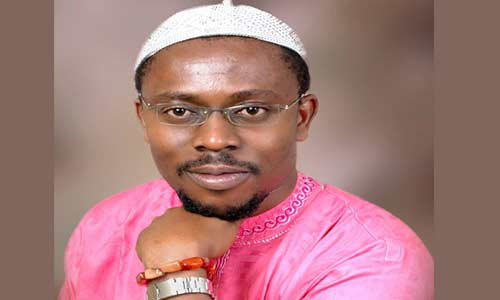
•Prince Dickson, PhD, is a development and media professional
[A MUST HAVE] Evidence Act Demystified With Recent And Contemporary Cases And Materials

Available now for NGN 40,000 at ASC Publications, 10, Boyle Street, Onikan, Lagos. Beside High Court, TBS. Email publications@ayindesanni.com or WhatsApp +2347056667384. Purchase Link: https://paystack.com/buy/evidence-act-complete-annotation
______________________________________________________________________ “Enhance Legal Practice With Authoritative Reports” — Alexander Payne Offers Comprehensive Law Reports, Spanning Over A Century Of Nigerian Jurisprudence Interested buyers are encouraged to place their orders and enquiries via:
0704 444 4777, 0704 444 4999, 0818 199 9888
Website: www.alexandernigeria.com
Interested buyers are encouraged to place their orders and enquiries via:
0704 444 4777, 0704 444 4999, 0818 199 9888
Website: www.alexandernigeria.com