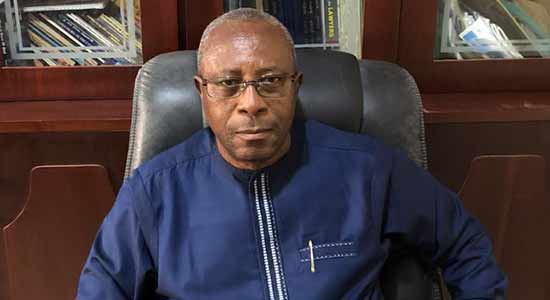
By Ivor Takor, mni Esq

The Federal Republic of Nigeria 1999 Constitution as amended, has made it mandatory for elections to be held every four years to elect the President, Vice President and members of the National Assembly as well as Governors, Deputy Governors and members of State Houses of Assemblies. The question is in whose interest are the elections held? Is it in the interest of those who will be elected hold political offices or in the public interest?
Elections make a fundamental contribution to democratic governance. Because direct democracy, a form of government in which political decisions are made directly by the entire body of citizens is impractical in modern society, democratic government must be conducted through representatives. Elections enable voters to select leaders and hold them accountable for their performance in office.
Accountability can be undermined when elected leaders do not care whether they are elected or when, for historical or other reasons, one party or coalition is so dominant that there is effectively no choice for voters among alternative candidates, parties, or policies. Nevertheless, the possibility of controlling leaders by requiring them to submit to regular and periodic elections helps to solve the problem of succession in leadership and thus contributes to the continuation of democracy.
Moreover, where the electoral process is competitive and forces candidates or parties to expose their records and future intentions to popular scrutiny, elections serve as forums for the discussion of public issues and facilitate the expression public opinion. Elections thus provide political education for citizens and ensure the responsiveness of democratic governance to the will of the people. They also serve to legitimize the acts of those who wield power, a function that is performed to some extent even by elections that are non competitive. That is exactly, what the Federal Republic of Nigeria 1999 Constitution (as amended) intends to achieve.
Democratic representation is intimately tied up with elections, to such an extent that politicians are commonly referred to as representatives simply because they have been elected. An election is simply a device for filling public offices by reference to popular preferences. That being said, electoral systems are widely divergent, some being seen as more democratic or representative than others. It is difficult, for instance to argue that on-competitive elections, in which only a single candidate is placed before the electorate, can be regarded as democratic, since there is no electoral choice and opportunity to remove office holders.
There are problems in seeing elections as the basis of representation. An election is only representative if it’s results can be interpreted as granting popular authority. In other words an election must have a meaning. The most common way of imposing meaning upon an election result is to interpret it as providing a “mandate” for the wining candidate or party. The idea of a mandate to rule is however, hopelessly vague.
The doctrine of mandate is based upon a highly questionable model of electoral behaviour. Specifically, it portrays voters as rational creatures, whose political preferences are determined by issues and policy proposals. In reality, there is abundant evidence to suggest that many voters are poorly informed about political issues and possess little knowledge of the content of manifestos of political candidates and parties.
To a large extent especially in developing countries including Nigeria, voters are influenced by ‘irrational’ factors, such as the personalities of party leaders, the image of parties, or habitual allegiances formed through social and material conditioning. Indeed, modern electoral campaigns fought largely on television and social media have strengthened such tendencies by focusing upon personalities rather than policies, and upon images and paternalism rather than issues. In no way therefore, can a vote for a party be interpreted as an endorsement of its manifesto’s contents or any other set of policies.
When more voters in an election oppose the elected government than support it, it seems frankly absurd to claim that it enjoys a mandate from the people. On the other hand, proportional systems, which tend to lead to the formation of coalition government, also get in the way of mandate democracy.
All notions of democracy are based, to some degree, upon the idea that government can and does act in the public interest, common and collective interest of the society. One may then asked if there exists an electoral or constitutional mechanism through which the public interest can in practice be defined. In attempting to answer this question, Anthony Downs believes that a system of open and competitive elections serves to guarantee democratic rule because it places government in the hands of the party whose philosophy, values and policies correspond most closely to the preferences of the largest group of voters.
Moreover, democratic competition creates a powerful incentive for the emergence for a policy consensus, in that parties will be encouraged to shift their policies towards the ‘Centre ground’, in the hope of appealing to the largest possible number of electors. In a democracy, electoral competition ensures that government pays regular attention to the preferences of at least a majority of the enfranchised population. This indeed may serve as at least a rough approximation of public interest.
One obvious problem in democracy is that no constitutional or elective mechanism may be able to reliably give expression to the collective or public interest. Democratic politics operate on the assumption that voters only have a single preference because traditional electoral systems offer them a single vote.
During the campaigns that preceded the just concluded 2023 Presidential elections, the four main presidential candidates in the election, threw up four different policy options through which they intended to bring changes to the current state of the political, economic and social life of Nigerian citizens as well as citizens of other countries residing in Nigeria.
In this wide rage of policy options that were available, it is reasonable to assume that voters had a scale of favored options which could be indicated through a preferential voting pattern. This suggest that when voters are able to express a number of preferences it may be impossible to establish which option genuinely enjoys public support. Take for instance, the recent presidential election in which Tinubu of APC scored 8,794,726 votes, Atiku of PDP received 6,984,520, Obi of LP 6,101,533 and Kwakwanso of NNPP got 1,496,687. In this situation, one may not be wrong to argue that none of them and their party represents the public interest because none received an overall majority votes, though Tinubu was declared as obviously meeting the constitutional requirements to be declared the winner of the election more than all the other candidates. No nobody would have put it better than the president, then President-elect himself, when he received his certificate of return as president-elect. He said, “I know many did not vote for me. And you are disappointed that your candidate is not where I now stand”
It may be correct to state that since election results cannot speak for themselves, politicians who use the term ‘public interest’ always impose their own meaning upon it. All references to the public interest are therefore, to some extent, arbitrary. Nevertheless, this latitude is not limited because the Constitution makes provision for calling politicians every four years to account at the next election. For this point of view, the democratic process may simply be a means of reducing this arbitrary element of ensuring that politicians who claim to rule on behalf of the people or speak for the public must ultimately be judged by the public.
However, when a group of politicians have perfect the act of entrenching themselves in the polity of a nation, to the extent where majority of the citizenry no longer see them as ruling or speaking in their interest, then as elections approaches, you begin to hear different political slogans, all referring to change. Even members of the same political ruling class will be talking of change all in attempts aimed at appealing to the electorates for votes. This was the case with the just concluded elections.
Some youths during the 2023 elections, with some voting for the first time, teamed up with other reformed minded Nigerians to use their permanent voters cards (PVCs) to begin the process of taking back their country through the retirement of some old politicians. The reforms towards a new and better Nigeria of their dream. It is becoming obvious that this will be taken a step further or concluded during the 2027 general elections. Majority of the youths and the young at heart, who for good reasons were disappointed, thought it should have been a revolution. However, it’s better it is a reform than a revolution for the reasons below.
The question we have to address is whether the changes we are all clamoring for has to come through reforms or revolution. I will lean on Andrew Heywood, who in his book Political Ideas and Concept, said that to advocate reform is to prefer evolutionary change to revolutionary change. He opined that reform as a process of evolutionary change has a number of advantages over revolution.
In the first place, by bringing about change within continuity, reform can be brought about peacefully and without disrupting social cohesion. Even when the cumulative effect of reform amounts to fundamental change, because it is brought about in a peace meal fashion, bit by bit, and over an extended period, it is more likely to be accepted, even to those who are at first unsympathetic. By contrast, revolution reflects an attempt to forcibly impose change on society. As such, it dramatically Polaris’s opinions and deepens division, and is often accompanied by violence, which may be regarded as morally unacceptable.
A second argument in favour of reform is that it is prepared to build upon what already exist, rather than simply discard it. In this way, reform appeals to a pragmatic style of politics in which policy is dictated more by practical circumstances than by abstract theories. To break away completely with the past by bringing about revolutionary change is, in effect, to enter unknown territory without a reliable map for guidance.
Thirdly, reform is an incremental process, it advances by a series of relatively small steps. Modern welfare states, for example , have not been constructed overnight; they are developed over a period of time through reforms which progressively extend to social security system, expand health and education provision and so forth. The virtue of incrementalism is that it proceeds through a process of ‘trial and error’.
As reforms are introduced their impact can be assessed and adjustments can be made through a further set of reforms. If progress is founded upon a belief in rationalism, reform is simply a way of bringing about progress through on-going experimentation and observation. Evolutionary change is therefore a means of expanding and refining human knowledge. To rely upon reform rather than revolution is to ensure that our desire to change Nigeria does not outstrip our knowledge about how it works.
The case for revolution, by stark contrast, is that reform is a little more than a sham. In effect, reform serves to perpetuate that which it appears to condemn. This has been the analysis of generations of revolutionary socialists, who have seen reformism not so much as means of achieving social progress but as a prop of capitalist system. According to Heywood, In the view of revolutionaries like Luxembourg and Lenin, reformism should be condemned on two counts. First, it misses the target: it addresses superficial problems but never fundamental ones. They argue that exploitation and oppression are rooted in the institutions of private property and thus in the capitalist system.
The cosmetic capitalist reform system that have been carried out in the country over the years are those that have served to reconcile the working masses to their exploitation, persuading them that their society is just and fair. In that sense, perhaps reforms that have been carried out in the country have a conservative character: it serves to bring about change but within establish social-economic framework that benefits only the predatory political ruling class and their class partners in business, to the detriment of the proletariat. Perhaps it is this type of reform, that produces a line of thought that clearly has an appeal that extends well beyond socialism, and has led to the emergence of revolutionary forms of doctrines in the country such as anarchism, nationalism and feminism.
I produce here the reactions of the three foremost presidential candidates in the 2023 elections to the Independent National Electoral Commission (INEC) declared results of the presidential election.
The President, then president-elect, Ahmed Bola Tinubu, while receiving his certificate of return from the Chairman of INEC, said among other things that “very soon, this nation shall witness a young person standing before you holding this great symbol of democracy and national leadership. We shall see a woman standing before you, holding this certificate as its owner”. What the President declared was that he is the anchor person of the relay team of leaders we have decided to rest or retire irrespective of political affiliation.
The presidential candidate of the Labour Party Peter Obi, who is seen especially by some youths as the arrow head of a movement for a new Nigeria, in his own reaction to the declared results, said among other things that “However, let me humbly and most respectfully appeal to all Nigerians to remain peaceful, law-abiding and conduct themselves in a most responsible manner. Please be assured that for Datti and I, and indeed for all of us, this is not the end, but the beginning of the journey to birth a new Nigeria”
In his own reaction, the presidential candidate of the PDP Atiku Abubakar, said the following among others. “I thank Nigerian people who trooped out in their millions to perform their civic duty this past Saturday. The patriotism of Nigerians is heartwarming and affirms my oft-repeated statement that we are brothers and sisters born from the womb of one mother Nigeria.” “I hope and pray Nigerians will someday summon the courage to defend democracy. That is the only way we can move away from being the world headquarters for extreme poverty.”
The time to begin the reform of Nigeria electoral process is now. The question is who will start it. The Executive or the Legislative arms of governments? I have my doubts. The ball I think is in the court of members of the civil society. Civil society acts as a forum for people with common goals and interest to further develop democratic ideals, which in turn can lead to a more democratic state. Membership of these kinds of associations serves as a source of information which reduces the barriers to collective action.
 _______________________________________________________________________
[A MUST HAVE] Evidence Act Demystified With Recent And Contemporary Cases And Materials

Available now for NGN 40,000 at ASC Publications, 10, Boyle Street, Onikan, Lagos. Beside High Court, TBS. Email publications@ayindesanni.com or WhatsApp +2347056667384. Purchase Link: https://paystack.com/buy/evidence-act-complete-annotation
______________________________________________________________________ ARTIFICIAL INTELLIGENCE FOR LAWYERS: A COMPREHENSIVE GUIDE
Reimagine your practice with the power of AI “...this is the only Nigerian book I know of on the topic.” — Ohio Books Ltd
Authored by Ben Ijeoma Adigwe, Esq., ACIArb (UK), LL.M, Dip. in Artificial Intelligence, Director, Delta State Ministry of Justice, Asaba, Nigeria.
Bonus:
Get a FREE eBook titled “How to Use the AI in Legalpedia and Law Pavilion” with every purchase.
ARTIFICIAL INTELLIGENCE FOR LAWYERS: A COMPREHENSIVE GUIDE
Reimagine your practice with the power of AI “...this is the only Nigerian book I know of on the topic.” — Ohio Books Ltd
Authored by Ben Ijeoma Adigwe, Esq., ACIArb (UK), LL.M, Dip. in Artificial Intelligence, Director, Delta State Ministry of Justice, Asaba, Nigeria.
Bonus:
Get a FREE eBook titled “How to Use the AI in Legalpedia and Law Pavilion” with every purchase.
How to Order: 📞 Call, Text, or WhatsApp: 08034917063 | 07055285878 📧 Email: benadigwe1@gmail.com 🌐 Website: www.benadigwe.com
Ebook Version: Access directly online at: https://selar.com/prv626
______________________________________________________________________ “Bridging Theory And Courtroom Practice” — Hagler Sunny Okorie, Nathaniel Ngozi Ikeocha Unveil ‘Functional’ Tort Law Book For Nigerian Legal System The book, titled The Law of Torts in Nigeria: A Functional Approach, authored by Professor Hagler Sunny Okorie Ph.D and Ikeocha, Nathaniel Ngozi Esq, offers law students, practitioners, and academics a comprehensive guide to understanding and applying tort law in Nigerian courts. Interested buyers can place orders via the following contact numbers: 08028636615, 08037667945, 08032253813, or +234 902 196 2209.
______________________________________________________________________
“Enhance Legal Practice With Authoritative Reports” — Alexander Payne Offers Comprehensive Law Reports, Spanning Over A Century Of Nigerian Jurisprudence
The book, titled The Law of Torts in Nigeria: A Functional Approach, authored by Professor Hagler Sunny Okorie Ph.D and Ikeocha, Nathaniel Ngozi Esq, offers law students, practitioners, and academics a comprehensive guide to understanding and applying tort law in Nigerian courts. Interested buyers can place orders via the following contact numbers: 08028636615, 08037667945, 08032253813, or +234 902 196 2209.
______________________________________________________________________
“Enhance Legal Practice With Authoritative Reports” — Alexander Payne Offers Comprehensive Law Reports, Spanning Over A Century Of Nigerian Jurisprudence
 Interested buyers are encouraged to place their orders and enquiries via:
0704 444 4777, 0704 444 4999, 0818 199 9888
Website: www.alexandernigeria.com
Interested buyers are encouraged to place their orders and enquiries via:
0704 444 4777, 0704 444 4999, 0818 199 9888
Website: www.alexandernigeria.com