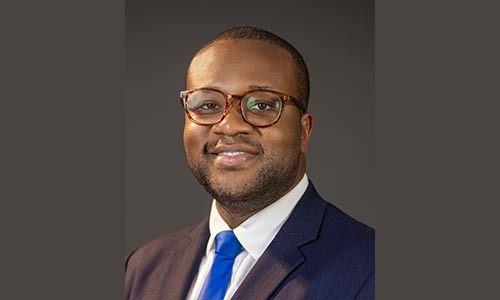
By Joshua Nwachukwu[1]

The presidency of President Bola Tinubu has certainly not been silent. With a retinue of four spokesmen operating under different titles, it is clear that silence is not exactly their preferred mode of communication as they are paid with public funds to fight the public’s battles.
Like Rottweilers when released, they seem to spring into action whenever criticism of the President surfaces, whether the criticism is constructive, legitimate or otherwise. At times, one gets the impression that they believe they are more Nigerian than the rest of us.
Recently, we saw the force of that machinery when Temitayo Ajayi, Sunday Dare and Daniel Bwala, all Christians, came out strongly against John Cardinal Onaiyekan for expressing a position shared by a significant number of Nigerians.
Which makes the silence that has greeted the recent statements of Sheikh Sani Yahaya Jingir, more puzzling, particularly when these statements touch directly on Nigeria’s religious diversity, security of lives and national unity.
Sheikh Sani Yahaya Jingir is not an obscure figure, whose words can simply be dismissed as the ranting of an anonymous cleric. He is the National Chairman of the Council of Ulama of Jama’atu Izalatil Bid’ah Wa’iqamatis Sunnah. At a mass wedding in Kano recently, attended by several APC governors, Jingir advocated the continuation of a Muslim-Muslim presidential ticket and urged Muslims to vote to demonstrate their numerical strength. He also described Nigeria as a Muslim country.
At his comment, the Governors present were seen laughing and clapping.
This should concern us.
Let me be clear: Sheikh Yahaya has every right to support a Muslim-Muslim ticket. Earlier this year in February, he openly reaffirmed his support for the Tinubu-Shettima Muslim-Muslim ticket for 2027, saying that JIBWIS had voted for the ticket in 2023 and warning that changing the arrangement could cost the President clerical support.
There is nothing inherently undemocratic about it and he is not being condemned for holding or expressing his political preference.
But there is a significant difference between advocating for a political ticket and making statements that appear to exclude, diminish or threaten the place of fellow citizens because of their faith.
Statements such as: “Let us show the World that the infidels are lying that they outnumber us”, “show the infidels their limit”, “Nigeria is a Muslim Country.” “If you don’t want to accept a Muslim-Muslim Ticket, you should leave Nigeria because it belongs to us.” “We must make sure the Muslim-Muslim Ticket continues to succeed so that our dominance will remain sustained” are deeply troubling and should be condemned.
This rhetoric has no place in a constitutionally secular, religiously plural and multi-faith country like Nigeria. Nigeria does not belong to Muslims. It does not belong to Christians. It does not belong to atheists or animists. It belongs to Nigerians, regardless of their faith.
And this is not merely a matter of political rhetoric. Words matter, particularly when they come from influential religious figures speaking to large audiences. Language that frames fellow citizens as “infidels,” questions their belonging, or speaks of religious “dominance” risks deepening precisely the divisions that any responsible leadership should be working to prevent.
In a bit to deflect, Lere Olayinka shared a dictionary meaning of infidel and argued, in essence, that we are all infidels. Such simplistic reduction to rely only on the literal meaning of a word will not fly as it neglects the fact that words do not exist in a vacuum. Context matters.
In Nigeria, religiously charged references to “infidels” cannot be divorced from the history of jihadist and Islamist rhetoric, particularly in a country that has experienced violent conflicts in which religious identity has been weaponised
What, really, is the difference between telling Nigerians who reject a Muslim-Muslim ticket to leave their own country and the xenophobic rhetoric some South Africans have directed at other Africans? Yet this same government, which loudly condemned South Africa and threatened sanctions over such xenophobia, has said nothing about a Nigerian cleric telling other Nigerians to leave Nigeria, rather it has suddenly discovered the virtues of silence.
Luckily. there have been backlash from respected Nigerians including several Muslims, and the National Human Rights Commission. Rather than apologise and withdraw his statement, Sheikh Yahaya has doubled down, he said “I won’t apologise, I have zero regrets about the things I said and I will still continue saying this anywhere. Anybody that doesn’t like it can say what they want but I don’t care”.
If one could excuse his first comment as an honest mistake or misrepresentation, his doubling down is a confirmation that he believes what he said and he has dared anyone who objects to do their worst.
Ordinarily, one would expect the Presidency to have something to say about this, given how badly it wants to convince the world that Nigeria enjoys peaceful religious coexistence and should be removed from its designation as a “Country of Particular Concern” (CPC).
But its silence is, if anything, another reason we might deserve that designation or worse, one of “particular grave concern.” The irony is hard to miss: even as Mallam Nuhu Ribadu was in Washington holding a second round of talks to address Nigeria’s CPC status, a prominent cleric back home was reinforcing the very perception the government claims to be fighting.
When Cardinal Onaiyekan expressed an opinion, the government’s defenders quickly mobilised. But when a prominent Muslim cleric makes statements that appear to question the place and belonging of other Nigerians, the same machinery suddenly develops laryngitis. The Presidency should not give the impression that it “fears” one over the other.
The Presidency’s silence isn’t consent per se, it’s political calculation. The President’s wife is herself Christian; surely she isn’t an “infidel.” But challenging Jingir carries a cost: it risks alienating his followers and their votes, hence their silence is golden.
For this administration, it seems, everything is reduced to politics. Little wonder the President said “all is fair in politics.” But power obtained at any cost is worth asking about, if people are sacrificed to seize it, who is left to govern?
The issue is whether anyone Christian or Muslim, cleric or politician, government official or private citizen, APC member or not, should be allowed to suggest that other Nigerians are “infidels,” that Nigeria belongs to one religious group, or that citizens who disagree with a particular political arrangement should leave the country.
If the Presidency believes in national unity, then it should say so consistently.
If inflammatory religious rhetoric is wrong, it is wrong regardless of who utters it and since the Presidency has four spokesmen, surely one of them can find the words. The real question is whether any of them can muster the courage to “correct” Sheik Yahaya Jingir.
[1] Nwachukwu is a lawyer and writer, can be reached at nwachukwujo@gmail.com
[A MUST HAVE] Evidence Act Demystified With Recent And Contemporary Cases And Materials

Available now for NGN 40,000 at ASC Publications, 10, Boyle Street, Onikan, Lagos. Beside High Court, TBS. Email publications@ayindesanni.com or WhatsApp +2347056667384. Purchase Link: https://paystack.com/buy/evidence-act-complete-annotation
______________________________________________________________________ “Enhance Legal Practice With Authoritative Reports” — Alexander Payne Offers Comprehensive Law Reports, Spanning Over A Century Of Nigerian Jurisprudence Interested buyers are encouraged to place their orders and enquiries via:
0704 444 4777, 0704 444 4999, 0818 199 9888
Website: www.alexandernigeria.com
Interested buyers are encouraged to place their orders and enquiries via:
0704 444 4777, 0704 444 4999, 0818 199 9888
Website: www.alexandernigeria.com