
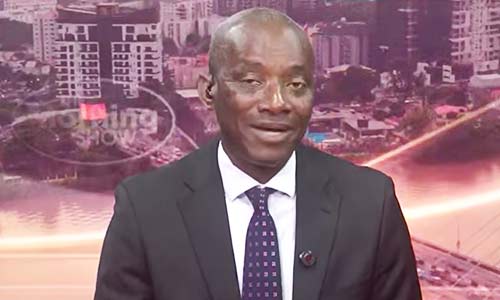
The Director of the Abuja School of Social and Political Thought, Dr. Sam Amadi, has questioned the political management capabilities of the Nigeria Democratic Congress (NDC) presidential candidate, Peter Obi, saying that although the former Anambra State Governor may lack the skills required to manage a typical Nigerian political organisation, the departure of prominent figures from the Obidient Movement is not necessarily the result of fundamental disagreements with him.

Amadi maintained that some political associates who have left Obi’s camp were motivated by personal grievances, career ambitions, financial expectations and opportunities they believed were unavailable within his political structure.
Speaking on ARISE Television’s Prime Time alongside journalist Donu Kogbara and policy strategist Malam Baba Yusuf, Amadi said there was a “deep dissonance” between Obi’s political approach and the realities of Nigerian politics, particularly in managing the expectations of political associates and supporters.
The discussion followed the departure of Dr. Yunusa Tanko, one of Obi’s prominent political allies, who resigned as his political adviser for northern Nigeria and subsequently assumed a senior campaign position with the Social Democratic Party (SDP).
Tanko, who had played a prominent role in the Obidient Movement during the 2023 presidential election, reportedly expressed dissatisfaction with his treatment within Obi’s camp, citing what he considered a betrayal of trust and loyalty.
Although he expressed appreciation for the opportunity to serve Obi, Tanko reportedly maintained that he had been made to feel unwanted by the political structure.
The development prompted questions about whether his departure was merely a personal disagreement or evidence of wider organisational problems within Obi’s political movement.
Asked whether Tanko’s exit could weaken Obi’s political network in northern Nigeria or expose the loosely organised nature of the Obidient Movement, Amadi said the latter explanation was more convincing.
“I think it’s the last point,” he responded.
Amadi explained that he had known Tanko for many years, recalling their association during the formation of the National Conscience Party alongside the late human rights lawyer Gani Fawehinmi and musician Fela Anikulapo Kuti.
He maintained that Obi’s approach to politics differed considerably from the expectations of many individuals operating within Nigeria’s political system.
“Peter Obi represents a different kind of position,” he said, adding that “Everything about him is often exaggerated.”
According to Amadi, the Nigerian political environment is unstable, and politicians frequently change affiliations because of personal interests, disagreements and opportunities available elsewhere.
He disclosed that some individuals who had left Obi’s political camp had personally approached him to discuss their grievances.
“First, Nigeria has a political market that’s unstable. Most of these guys who left have come to me and I talked to them and they bring issues of grievance,” he stated.
Drawing from his experience working with political leaders, including former Senate President Ken Nnamani, former President Goodluck Jonathan and Ojo Maduekwe, Amadi maintained that political disagreements and movements between political groups were not unusual.
He argued that some former associates expected benefits and opportunities that Obi’s political approach was unable to accommodate.
“Secondly, they also want some things Peter can offer. That’s a deep dissonance between Peter and Nigerian politics. People forget that,” he said.
Amadi subsequently questioned Obi’s ability to manage the demands of a conventional Nigerian political organisation.
“Peter is not capable. Peter cannot run a typical Nigerian political organisation. He knows that. Again, Peter is a minimalist. But in his business, if he can just sneak through this, he doesn’t have to open the whole place,” he stated.
The political analyst explained that Obi’s minimalist approach could create difficulties when dealing with political associates who expected positions, financial support, recognition or other forms of reward for their loyalty.
When the presenter suggested that political leaders should at least appreciate those who had worked for them, Amadi argued that expressions of gratitude alone might not satisfy the expectations of some political associates.
He referred to Tanko’s account of his departure, quoting him as saying, “I didn’t leave. They exited me.”
Amadi also alleged that Tanko’s son was denied a ticket in the NDC because of the influence of Obi’s running mate, Rabiu Kwankwaso, within the relevant political structure.
According to him, Tanko may also have expected to become Director-General of Obi’s presidential campaign.
He further claimed that although Tanko was assigned supporters, the position of global coordinator was taken away from him.
These claims were presented by Amadi during the discussion and were not independently established in the information provided.
Despite the circumstances surrounding the departure, Amadi commended Tanko for leaving without publicly attacking Obi or creating further conflict within the political movement.
“It’s smart of him to have gone to the other side without breaking the house,” he said.
He acknowledged that Obi’s political management skills might not be adequate for the demands of Nigerian politics but cautioned against concluding that the former governor was incapable of building or maintaining productive working relationships.
“So the point I’m saying is that yes, Peter Obi’s political management capabilities may not be sufficiently good enough to manage Nigerian politics,” he stated.
Amadi pointed to Obi’s tenure as Governor of Anambra State, arguing that some individuals who worked with him during that period had remained loyal.
He specifically mentioned Oseloka Obaze as an example of a political associate who had maintained a relationship with Obi.
According to Amadi, Obi assembled capable individuals during his governorship, and some continued to support him.
He consequently argued that the departure of some Obidient Movement figures should not be interpreted as proof that every individual who worked with Obi eventually became dissatisfied.
Turning to the motivations of those who had left, Amadi suggested that not all prominent participants in the Obidient Movement were necessarily committed to its underlying political objectives.
He maintained that some individuals joined the movement because they saw an opportunity to advance their personal or political interests.
“Most of the guys who got on this are not our comrades. They’re not people who had a commitment. They are activists. They saw a big show and they went there. You were a vehicle via which they were going to get to a destination,” he stated.
Amadi disclosed that one former associate had told him about an offer involving a salary and a vehicle.
He said he advised the individual to consider the opportunity because Obi was unlikely to provide the same financial benefits.
According to him, the decision of some political associates to leave was therefore connected to their economic circumstances and professional ambitions rather than disagreements with Obi’s political principles.
“So many of these guys are not leaving because they see a fundamental disagreement with Peter Obi. It’s also because of the career path, the strategic advantage they want to get,” he argued.
Amadi further questioned why departures from Obi’s camp attracted considerable attention when other political leaders had also lost prominent associates.
He cited former Vice President Atiku Abubakar’s loss of Reno Omokri as an example.
“So it’s unfortunate. But again, the point I’m making is that Atiku lost Reno Omokri. People didn’t say Atiku was bad. So Peter loses somebody and it becomes a major issue,” he stated.
However, journalist Donu Kogbara expressed concern that the growing number of departures from Obi’s political camp could indicate problems with his leadership style and relationship with close associates.
Kogbara said she was particularly saddened by Tanko’s decision to join the SDP because of the loyalty he had previously demonstrated towards Obi.
“I feel really sad about Tanko’s departure because he was a loyalist. I’ve interviewed him and I had tears in my eyes when I saw him pledging his allegiance to the SDP, though I have some respect for Prince Adewole Adebayo. So that’s not my issue,” she stated.
Kogbara argued that Tanko’s decision to join the SDP, rather than a party she considered capable of offering greater financial opportunities, suggested that his departure might have been influenced by personal principles.
She observed that he could potentially have received greater benefits by joining the ruling All Progressives Congress (APC) or the ADC.
“I’m pretty sure that if he had gone to APC, he would have gotten a lot more, or ADC,” she said.
The journalist consequently urged Obi to reflect on why individuals who had worked closely with him continued to leave his political structure, particularly with the next presidential election approaching.
“Peter Obi needs to sit down,” she said.
“We all need moments of reflection in our lives. He needs to sit down and ask himself, why am I hemorrhaging support from time to time like this so close to the election, people who’ve been with me for a long time?”
Kogbara maintained that Tanko was not the only prominent figure to leave Obi’s camp, although his departure had attracted considerable attention.
“Tanko is not the only one, he’s just the most high profile. Peter Obi needs to concentrate on team building,” she stated.
She also expressed concern that Obi appeared to spend considerable time attending public engagements rather than strengthening relationships within his political organisation.
According to her, the NDC presidential candidate needed to devote more attention to reassuring, motivating and appreciating those working for him.
She criticised what she described as Obi’s frequent attendance at parties, weddings and donation events, arguing that organisational development should receive greater attention.
Kogbara further alleged that some individuals surrounding Obi, including members of his protocol team, had antagonised people who could be valuable to his political organisation.
She clarified that she was not suggesting that everyone working with Obi was problematic but maintained that he needed to be more careful about those he allowed to influence his relationships with political associates.
She urged him to demonstrate stronger leadership by making his supporters and political lieutenants feel valued.
“You’re a leader, so please lead. Lead, and make people feel wanted, and make sure it’s not just about you. You are representing an entire generation who have high hopes,” Kogbara stated.
Also contributing to the discussion, policy strategist Malam Baba Yusuf described Tanko’s departure as a development with possible implications for Obi’s chances in the 2027 presidential election.
Yusuf argued that the timing of the resignation raised questions about the organisational cohesion of Obi’s political camp and its ability to sustain support ahead of the polls.
He maintained that the exit of a prominent political ally who had played an important role in building Obi’s support base in northern Nigeria deserved serious consideration.
“I know the Obidients will not like to hear this, but this is the moment of truth,” Yusuf declared.
The political strategist identified several other figures who had previously been associated with Obi but subsequently moved to different political parties.
He mentioned Professor Chris Nwokobia, who joined the SDP; Kenneth Okonkwo, who moved to the ADC; and Isaac Balami, who joined the APC.
Yusuf described Okonkwo as having been a strong defender of Obi, while Balami was identified as a prominent figure in the 2023 presidential campaign.
He also referred to Valentine Ozigbo and Obi’s former running mate, Dr. Datti Baba-Ahmed, while discussing changes within the political structure.
“The list goes on,” he stated.
According to Yusuf, a political leader who had previously enjoyed considerable public support should be able to translate that momentum into an organised political structure characterised by discipline, cohesion and effective mobilisation.
He argued that the ability to manage political associates and maintain organisational stability was an important indicator of the leadership qualities required to govern a diverse country such as Nigeria.
Yusuf maintained that the issue was particularly relevant to Obi’s efforts to build political confidence in northern Nigeria.
He acknowledged Tanko’s contributions to Obi’s political activities in the region, noting that the former adviser had travelled extensively to mobilise support.
According to him, Tanko had addressed communities in Hausa and other languages in an effort to persuade voters to support Obi.
Yusuf argued that the departure of such an individual could affect the political network he had helped to establish.
Nevertheless, he praised Tanko for the manner in which he left Obi’s camp.
“Now they saw him going quietly. And by the way, kudos to Dr. Tanko in the way and manner he left, an outstanding gentleman, no insult, no disrespect, and he went on his way,” he stated.
Yusuf urged Obi to examine the circumstances surrounding the departure and consider whether changes were necessary in how he managed political relationships.
He maintained that emotional intelligence, competence and the ability to manage people from different backgrounds were important qualities for anyone seeking to become President of Nigeria.
According to him, a prospective president’s ability to manage a politically and socially diverse country could be assessed partly through the manner in which he managed individuals within his immediate political structure.
He consequently described Tanko’s departure as a warning that Obi should not ignore.
The discussion highlighted differing explanations for the departure of prominent figures from the Obidient Movement.
While Amadi maintained that some former associates were motivated by personal ambitions, financial expectations and career opportunities rather than fundamental disagreements with Obi, Kogbara and Yusuf placed greater emphasis on the need for the presidential candidate to improve his political organisation, leadership approach and relationships with supporters.
All three commentators raised concerns about aspects of Obi’s political management, although Amadi cautioned against interpreting every departure as evidence of a leadership failure.
The panel’s observations followed Tanko’s departure from Obi’s camp to the SDP, a development that has renewed debate over the cohesion of the Obidient Movement and its preparedness for the 2027 presidential election.
[A MUST HAVE] Evidence Act Demystified With Recent And Contemporary Cases And Materials
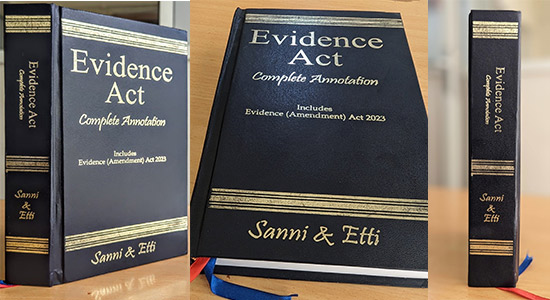
Available now for NGN 40,000 at ASC Publications, 10, Boyle Street, Onikan, Lagos. Beside High Court, TBS. Email publications@ayindesanni.com or WhatsApp +2347056667384. Purchase Link: https://paystack.com/buy/evidence-act-complete-annotation
______________________________________________________________________ “Enhance Legal Practice With Authoritative Reports” — Alexander Payne Offers Comprehensive Law Reports, Spanning Over A Century Of Nigerian Jurisprudence Interested buyers are encouraged to place their orders and enquiries via:
0704 444 4777, 0704 444 4999, 0818 199 9888
Website: www.alexandernigeria.com
“A Comprehensive Guide To Evidence Law” — Releases Second Edition In Three Volumes, Covering 4,051 Cases
For enquiries and orders, contact: 08035526491 Email: jerryamadisilk@gmail.com
 Prof. Jerry Amadi’s Evidence Law, Second Edition (2026), contains 3,314 pages in three volumes, covering the Evidence Act 2011, its 2023 amendment, and 4,051 Nigerian and English cases.