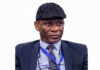
In his most recent interview, in August 2017, the following quote was attributed to him, in response to a question about media trials – “Our attitude to media trial is that we will ‘media try’. We will try them in the media; the money they stole is not anonymous so they cannot be anonymous. If we say so much has been looted, we must name the person who looted it.” The interviewer’s question had referred to Professor Sagay’s professional background and the constitutional presumption of innocence. When reminded again, Professor Sagay is reported to have answered, “Let them sue for defamation.” … [and prove themselves innocent], that sentence might conclude. Professor Sagay’s committee has also purported to hand sentencing guidelines to the judiciary, on matters of corruption. The extent to which the judiciary has followed the guidelines is unclear but it smacks of a certain something when an advisory body of the executive looks to fetter the independence of the judiciary in this way. He has been quoted as advocating the suspension of the constitution to enable the President properly fight corruption as well as punishments for lawyers who “frustrate” corruption trials. For lawyers to whom the words and thoughts of Professor Sagay were quoted as authoritative on more than a few topics in their days as students, it has been hard to reconcile the academic with the political appointee. Corruption is quite clearly a massive problem for the government. Many might argue that it was one of the main reasons the previous administration lost the elections to the current one. But, surely, what the President was looking for when he appointed a law professor of such pedigree was advice on working better within the current legal framework and charting the path to plugging the gaps that exist? Or was it a total abrogation of the legal order? But corruption is killing us, many might argue, fervently, and we need to think outside the box to kill it. Time and history have shown however, that the true test of whether or not such presidential super-powers are appropriate is if people would be just as happy for the next office holder, who we like much less, to wield those same powers. See how Americans suddenly disapprove of executive orders under President Trump but much less so under President Obama, for example. It was President Obama who said that Africa needs strong institutions, not strong men. For some reason though, many Africans seem to be hung up on the idea of a benevolent dictator being the answer to the African country’s problems. Professor Sagay’s current thesis seems to be that only with the suspension of civil liberties and extra-constitutional empowerment of President Buhari that corruption can be dealt with. Well, at least while he was healthy. His recent poor health has shown the danger in making any one-man emperor. And even if he was healthy and could somehow be President without real term limits like, say, President Kagame in Rwanda, no President lives forever. As my friend Andy Obuoforibo pointed out online recently, give the African ‘benevolent’ dictator enough time and you will end up with a Museveni or Mugabe. Perhaps it’s only the ones whose names begin with the letters M and U. Be that as it may, institutions outlive people and it is probably for its contribution (or lack thereof) to the corruption-fighting institutions of the state, that Professor Sagay and his Committee will be remembered. He is quoted in the same August 2017 interview as saying the Committee has facilitated several training exercises for judiciary staff, as well as those of the EFCC and the ICPC. However, within this broader framework, there exists, for example, the team that sought to prosecute the Senate President with 3 ineffectual witnesses. As President Buhari himself would tell Professor Sagay, even with a military panel constituted under autocratic decree, in the absence of useful evidence, sometimes you need 3 bites at the apple to secure a conviction. In other words, there’s a lot more work to be done before we consider dispensing with Bentham, Kant and Montesquieu’s philosophies in our country’s jurisprudence. guardian.]]>


Get your copy today and take the first step toward financial growth:👉 https://selar.co/4f16676016
_______________________________________________________________________ ARTIFICIAL INTELLIGENCE FOR LAWYERS: A COMPREHENSIVE GUIDE
Reimagine your practice with the power of AI “...this is the only Nigerian book I know of on the topic.” — Ohio Books Ltd
Authored by Ben Ijeoma Adigwe, Esq., ACIArb (UK), LL.M, Dip. in Artificial Intelligence, Director, Delta State Ministry of Justice, Asaba, Nigeria.
Bonus:
Get a FREE eBook titled “How to Use the AI in Legalpedia and Law Pavilion” with every purchase.
ARTIFICIAL INTELLIGENCE FOR LAWYERS: A COMPREHENSIVE GUIDE
Reimagine your practice with the power of AI “...this is the only Nigerian book I know of on the topic.” — Ohio Books Ltd
Authored by Ben Ijeoma Adigwe, Esq., ACIArb (UK), LL.M, Dip. in Artificial Intelligence, Director, Delta State Ministry of Justice, Asaba, Nigeria.
Bonus:
Get a FREE eBook titled “How to Use the AI in Legalpedia and Law Pavilion” with every purchase.
How to Order: 📞 Call, Text, or WhatsApp: 08034917063 | 07055285878 📧 Email: benadigwe1@gmail.com 🌐 Website: www.benadigwe.com
Ebook Version: Access directly online at: https://selar.com/prv626
________________________________________________________________________ The Law And Practice Of Redundancy In Nigeria: A Practitioner’s Guide, Authored By A Labour & Employment Law Expert Bimbo Atilola _______________________________________________________________________
[A MUST HAVE] Evidence Act Demystified With Recent And Contemporary Cases And Materials
_______________________________________________________________________
[A MUST HAVE] Evidence Act Demystified With Recent And Contemporary Cases And Materials