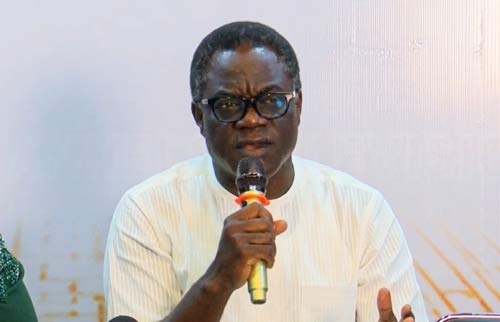
The Independent National Electoral Commission (INEC) has blamed some of its registration officers for introducing suspected artificial intelligence-generated photographs and other irregularities into the preliminary register of voters ahead of the 2027 general elections, assuring Nigerians that the affected records will be removed before the final register is released on December 15, 2026.

INEC’s Director of Information and Communication Technology, Dr Lawrence Bayode, disclosed this on Friday, October 30, 2026, during an interview on Arise Television, where he addressed growing concerns about the credibility of the voters’ register, the increase in registered voters to more than 103 million and the commission’s deployment of artificial intelligence in electoral administration.
Bayode explained that preliminary investigations had established that some registration officers across the country used their authorised access to INEC’s database to introduce questionable entries, including suspected AI-generated photographs and images resulting from improper registration procedures.
He said the commission had identified how the irregularities entered the system but had yet to establish why the officers involved carried out the actions.
“We have registration officers on the field, and these registration officers, they have login details to log into the system,” Bayode said.
“So what we have found out is that some of these registration officers, not all of them now, some of them across the states nationwide, they’ve done different things to bring these irregularities onto the register.”
The ICT director explained that the irregularities were detected through INEC’s Automated Biometric Identification System (ABIS), which examines registration records and identifies questionable entries requiring further scrutiny.
According to him, the commission had already begun identifying and removing problematic records before publishing the preliminary register, although the cleanup exercise was still ongoing.
Bayode clarified that not all the suspicious photographs were generated using artificial intelligence, as some resulted from poor registration practices.
“Some of these pictures are AI-generated, some of them not AI-generated, but very bad registration. And this thing got into the register by the registration officers, because they have access to register people,” he stated.
He maintained that the commission had established the manner in which some of the irregularities occurred.
“When the ABIS was run on the system, we saw these people. We know what they did. We know how they did it. But honestly, I don’t know why,” Bayode added.
His disclosure followed widespread criticism of INEC after suspicious photographs and other irregularities were identified in the preliminary register published on the commission’s website on October 26.
Screenshots circulating on social media showed voter records, particularly in parts of Edo State, containing photographs suspected to have been artificially generated.
Other complaints included alleged duplicate entries, incorrect personal information and reports from registered voters who could not locate their names or details in the online register.
The controversy raised questions about the commission’s internal verification procedures and its ability to prevent questionable records from entering the national voters’ database.
During the interview, Bayode was confronted with concerns raised by the Policy and Legal Advocacy Centre (PLAC) about the credibility of the register and the apparent increase in registered voters from approximately 93 million during the 2023 general elections to more than 103 million ahead of the 2027 polls.
Responding, he explained that the increase resulted from the Continuous Voter Registration exercise and subsequent additions to the existing database.
According to him, INEC used a register containing more than 93 million voters for the 2023 general elections and subsequently conducted additional registration exercises, including those associated with off-cycle elections.
He said approximately 11 million additional registrations were recorded during the Continuous Voter Registration exercise for the 2027 general elections.
However, some of the new records were removed following biometric verification and the identification of irregularities.
“For the preliminary register, we have added 9 million plus to the 93 million that was used for the 2023 general election, and that was how the Commission arrived at the 103 million plus register, preliminary, for the 2027 general election,” Bayode explained.
He maintained that the increase was therefore attributable to additional registrations rather than an unexplained alteration of the existing register.
The ICT director also addressed concerns about INEC’s preparedness for the elections, particularly its ability to manage technological challenges and prevent irregularities.
“I can assure you and Nigerians that all is well,” he said, adding that the commission was working to deploy technology in support of the electoral process.
Bayode acknowledged that the preliminary register contained irregularities but insisted that the purpose of the ongoing verification and cleanup process was to ensure that such entries did not remain in the final certified register.
He explained that INEC had displayed the preliminary register at registration areas nationwide between October 9 and 15, 2026, allowing members of the public to inspect their records and raise objections.
According to him, the same preliminary register was subsequently uploaded to the commission’s website on October 26 for further public scrutiny.
Bayode thanked Nigerians and other stakeholders who had examined the register and drawn attention to suspicious records.
He explained that complaints received during the physical display included incorrect addresses, names and gender information.
The commission, he said, was also examining complaints from voters who had transferred their registration details but could not find their information in the published register.
Bayode assured Nigerians that the issues identified during the physical and online inspection exercises would be addressed before the final register was released.
“All this will be addressed before the final register is released on the 15th,” he said.
He added that the commission was reviewing complaints submitted by members of the public and making the necessary corrections to its database.
According to him, the final register scheduled for publication on December 15, 2026, would reflect the outcome of the verification and cleanup exercise.
The ICT director assured Nigerians that the commission intended to remove the AI-generated photographs and other irregular entries identified in the preliminary register before certification.
His explanation was consistent with an earlier statement issued by INEC on October 27 through its National Commissioner and Chairman of the Information and Voter Education Committee, Mohammed Haruna.
In that statement, the commission clarified that the online register was a preliminary document and did not represent the final certified list of eligible voters.
INEC explained that the register was undergoing verification, adjudication and cleanup, adding that suspicious photographs had already been flagged for examination.
The commission also indicated that it was investigating the circumstances surrounding the questionable images, including possible technical and procedural lapses.
However, Bayode’s latest disclosure specifically identified the activities of some registration officers as a source of the irregularities.
He did not disclose the identities of the officers involved, the number of affected records or whether disciplinary or criminal proceedings had commenced against any personnel.
The interview also addressed concerns about INEC’s use of artificial intelligence and whether the technology had been deployed in the voter registration process.
Bayode denied that the commission had deployed artificial intelligence for voter registration, distinguishing its official technological systems from the suspected AI-generated images introduced into the database.
He explained that INEC’s current use of artificial intelligence was restricted to areas considered to present relatively low risks to the electoral process.
According to him, these include logistics management and chatbots designed to respond to public inquiries.
“We have not deployed AI on this, our voter registration,” Bayode stated.
He explained that the commission was exploring the use of AI-powered tools to improve the movement of electoral materials and facilitate access to information.
“What we are even doing now is deploying a low-risk AI to support our process, like in logistics. We are deploying chatbots where people can ask questions and the AI will respond to them,” he said.
Bayode added that the commission was also considering how artificial intelligence could assist in coordinating the movement of electoral materials between locations.
He maintained that the applications being considered were intended to support administrative efficiency rather than directly determine electoral outcomes.
The ICT director was also questioned about the existence of a formal policy governing INEC’s deployment of artificial intelligence.
Responding, he said the commission had an AI policy document and indicated that it was available on INEC’s website.
He promised to share the document after the television programme, explaining that he was unable to retrieve it immediately on his mobile phone.
The interviewers stressed the importance of making the commission’s technology policies available to political parties and other stakeholders before deploying new systems.
The discussion comes amid broader concerns about the use of artificial intelligence in Nigeria’s electoral process.
A House of Representatives candidate, Barrister El-Shadai Ikeh, has also approached the Federal High Court in Lagos, seeking orders restraining INEC from using artificial intelligence in the verification and collation of election results and compelling the commission to publish its AI governance framework.
The litigation reflects growing demands for transparency regarding the role of emerging technologies in electoral administration.
The controversy surrounding the voters’ register has also attracted reactions from political figures and civil society organisations.
Former Kano State Governor Rabiu Musa Kwankwaso raised concerns about the alleged inclusion of AI-generated photographs in the register, while Senator Seriake Dickson called for an investigation into the irregularities.
A Kwankwasiyya-affiliated support group, Kwankwasiyya Amana X, also criticised the development, describing the suspicious entries as evidence of weaknesses in registration, verification and data-integrity procedures.
The group demanded an explanation of the scale and causes of the irregularities, accountability for any established failures and a credible register before final certification.
The concerns have placed renewed attention on the safeguards governing access to INEC’s registration database and the supervision of personnel responsible for capturing voter information.
Although the presence of suspicious photographs in a preliminary register does not establish that fraudulent votes have been cast, the irregularities have raised questions about the effectiveness of internal controls and the reliability of registration records.
INEC’s disclosure that some of its own officers introduced questionable entries has further intensified scrutiny of the commission’s procedures.
Bayode’s explanation also leaves several questions unanswered, including the number of officers involved, their possible motives, the extent of the affected records and whether sanctions will follow the commission’s investigation.
Nevertheless, the ICT director maintained that the commission was addressing the irregularities and would complete the necessary corrections before releasing the final register.
With December 15, 2026, fixed for the publication of the final voters’ register, attention will now focus on whether INEC can remove the suspicious records, resolve outstanding voter complaints and demonstrate that its verification procedures are sufficient to protect the integrity of the register ahead of the 2027 general elections.
[A MUST HAVE] Evidence Act Demystified With Recent And Contemporary Cases And Materials

Available now for NGN 40,000 at ASC Publications, 10, Boyle Street, Onikan, Lagos. Beside High Court, TBS. Email publications@ayindesanni.com or WhatsApp +2347056667384. Purchase Link: https://paystack.com/buy/evidence-act-complete-annotation
______________________________________________________________________ “Enhance Legal Practice With Authoritative Reports” — Alexander Payne Offers Comprehensive Law Reports, Spanning Over A Century Of Nigerian Jurisprudence Interested buyers are encouraged to place their orders and enquiries via:
0704 444 4777, 0704 444 4999, 0818 199 9888
Website: www.alexandernigeria.com