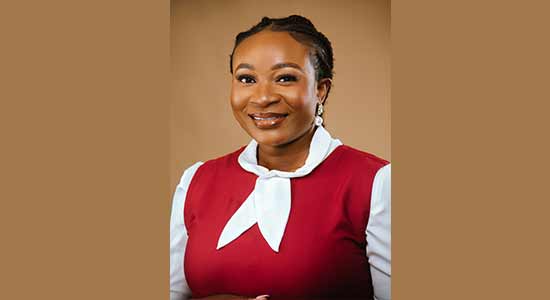
By Oluwafunke Adeoye

Behind the walls of Keffi Correctional Centre, where the bitter scent of captivity lingered,
I met Blessing Ogah—a quiet middle aged lady who was referred to me for legal support by the welfare officer of the prison. Blessing’s tale began with a heart-wrenching loss: the death of her 7-month-old baby.
The realization that she had infected her poor baby with the disease that killed him pierced her soul. Blessing’s anguish was not the HIV ranging inside her. I saw a woman who had longed for a child for 9 years, broken, by the deceit of a husband harboring a secret—a clandestine battle against the same virus that now ravaged her body.
With fury coursing through her veins, Blessing confronted the betrayal, unleashing a tempest of emotions upon her unsuspecting husband who had been secretly using anti-retroviral drugs for about 3 years. In the wake of her righteous fury, fate intervened with a heavy hand, casting her into the confines of a prison cell.
Like Blessing Ogah, a considerable number of incarcerated women have also experienced victimization, shaped by intersecting factors such as race, ethnicity, socioeconomic status, or gender identity. They have a history of trauma, including experiences of physical, sexual, or emotional abuse which has profound and long-lasting effects on their mental health, well-being, and life choices.
In many climes, and especially in the Nigerian context, victims of crimes face barriers to accessing justice. When the crime is linked to Sexual and Gender Based Violence, the barriers are usually exarcebated by societal stigma, limited access to support services, a further decline in their socio-economic status, silencing their voices whilst perpetuating cycles of trauma and exclusion.
Failure to adequately attend to the needs of victims not only erodes confidence in our justice institutions and also contributes to the predictably increasing incidence of criminal activity amoung women. World Prison Brief reports that, since 2000, the number of female prisoners has increased significantly faster than that of male prisoners even though the number of incarcerated women across the world is low compared to the men.The proportion of men incarcerated is about 22%, compared to a nearly 60% increase in the number of women and girls. In prison, these women are not only silence, but also unseen.
The theme “Inspire Inclusion” for International Women’s Day suggests a focus on promoting and encouraging the active involvement, participation, and recognition of all women, regardless of their background, identity, or circumstances. The UN theme “Invest in women, Accelerate Progress” is actionable.
For victims of crimes, this means investing in a justice and social development system that prioritizes and protects all the rights of victims of a crime.
For incarcerated women, it means ensuring that their voices are heard, and their experiences are acknowledged within the broader conversation about women’s rights and empowerment.
It calls for efforts to break down barriers, challenge stereotypes, and create opportunities for all women, including those who are often marginalized or forgotten, to fully participate and thrive in society.
To do this in Nigeria, we must implement already existing policies that support alternatives to incarcerations, such as diversion programs, restorative justice initiatives, and community-based interventions as provided for in the Nigerian Correctional Service Act and Bangkok rules.
Across the world, we must consider the enactment or implementation of policy changes that address the root causes of women’s involvement in the criminal justice system, including poverty, prior victimization and gender-based violence. Criminal justice officers must understand trauma-informed care and facilities must be equipped to provide appropriate mental health services and support. Resources must be invested to expand access to support services for all justice-impacted women.
Finally, we must recognize the intersecting identities and experiences of incarcerated women, including race, ethnicity, gender identity, and socioeconomic status. Centering intersectionality in advocacy and policymaking ensures that solutions are inclusive and address the unique needs and challenges faced by these diverse groups of women.
By Oluwafunke Adeoye
Executive Director, Hope Behind Bars Africa
Commonwealth Scholar, University of Oxford
[A MUST HAVE] Evidence Act Demystified With Recent And Contemporary Cases And Materials

Available now for NGN 40,000 at ASC Publications, 10, Boyle Street, Onikan, Lagos. Beside High Court, TBS. Email publications@ayindesanni.com or WhatsApp +2347056667384. Purchase Link: https://paystack.com/buy/evidence-act-complete-annotation
______________________________________________________________________ “Enhance Legal Practice With Authoritative Reports” — Alexander Payne Offers Comprehensive Law Reports, Spanning Over A Century Of Nigerian Jurisprudence Interested buyers are encouraged to place their orders and enquiries via:
0704 444 4777, 0704 444 4999, 0818 199 9888
Website: www.alexandernigeria.com
Interested buyers are encouraged to place their orders and enquiries via:
0704 444 4777, 0704 444 4999, 0818 199 9888
Website: www.alexandernigeria.com
 The book also examines Nigeria's legal ecosystem, focusing on the LPELR and NBA AI Guidelines. As a bonus, every purchase comes with a FREE eBook titled: How to Use the AI Features in LegalPedia and LawPavilion.
Ohio Books Ltd praises the publication, stating:
"....this is the only Nigerian book I know of on the topic."
How to Order:
📞 Call, Text, or WhatsApp: 08034917063 | 07055285878
📧 Email: benadigwe1@gmail.com
🌎 Website: www.benadigwe.com
Ebook Version: Access it directly online at https://selar.com/prv626
Authored by Ben Ijeoma Adigwe Esq., ACIarb (UK), LL.M, Dip. in Artificial Intelligence, Director at the Delta State Ministry of Justice, Asaba, Nigeria.
______________________________________________________________________
The book also examines Nigeria's legal ecosystem, focusing on the LPELR and NBA AI Guidelines. As a bonus, every purchase comes with a FREE eBook titled: How to Use the AI Features in LegalPedia and LawPavilion.
Ohio Books Ltd praises the publication, stating:
"....this is the only Nigerian book I know of on the topic."
How to Order:
📞 Call, Text, or WhatsApp: 08034917063 | 07055285878
📧 Email: benadigwe1@gmail.com
🌎 Website: www.benadigwe.com
Ebook Version: Access it directly online at https://selar.com/prv626
Authored by Ben Ijeoma Adigwe Esq., ACIarb (UK), LL.M, Dip. in Artificial Intelligence, Director at the Delta State Ministry of Justice, Asaba, Nigeria.
______________________________________________________________________