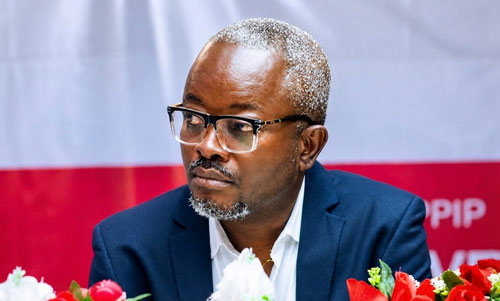
By Ik Ogbonna, PhD

The title “Professor” is primarily an academic rank conferred through appointment or promotion by a university or other institution legally authorised to make academic appointments.
In most university systems, becoming a Professor reflects sustained achievement in areas such as:
- Teaching and academic experience;
- Research and scholarly publications;
- Contribution to knowledge;
- Professional or disciplinary expertise;
- Academic leadership and service; and
- Other requirements established by the institution and the relevant discipline, including community service.
A person ordinarily attains the rank of Professor through the established processes of the university. These may involve assessments and recommendations at the departmental, faculty, university and external assessment levels before the appointment or promotion is approved.
HOW MANY TYPES OF PROFESSORS ARE THERE?
There is no single worldwide classification of professorial titles. Universities and countries use different systems, and some titles describe academic rank while others describe the nature or status of an appointment.
Substantive Academic Ranks
In many university systems, the academic career structure broadly includes:
- Assistant Lecturer/Assistant Professor – Generally an early or intermediate academic rank, depending on the country’s system.
- Senior Lecturer – A more senior academic position associated with greater teaching, research and service experience.
- Reader/Associate Professor – A senior academic rank immediately below Professor in many systems.
- Full Professor – The highest substantive academic rank in the conventional university hierarchy.
In Nigeria, the commonly recognised progression is broadly:
Graduate Assistant → Assistant Lecturer → Lecturer II → Lecturer I → Senior Lecturer → Reader/Associate Professor → Professor
The exact titles, requirements and promotion procedures may differ from one university to another.
Other Professorial Titles
Universities also use a number of other professorial designations. These do not necessarily represent separate academic ranks.
- Emeritus Professor – Usually a title given to a retired professor in recognition of distinguished academic service.
- Visiting Professor – A professor or distinguished academic appointed by a university for a specified period, often to teach, conduct research or contribute to academic programmes.
- Adjunct Professor – Usually a part-time or non-standard academic appointment, often involving teaching, research or professional engagement.
- Honorary Professor – A title conferred on a distinguished individual in accordance with a university’s regulations. It does not necessarily mean that the person has attained the substantive academic rank of Professor through the normal promotion process.
- Clinical Professor – A title commonly used in medicine and related disciplines for senior professionals who have significant teaching, clinical and academic responsibilities.
Distinguished, Endowed and Research Professorships
Some universities also create special professorial designations such as:
- Distinguished Professor;
- Research Professor;
- Endowed Professor;
- Chair Professor; and
- Professor of Practice.
These titles may recognise exceptional achievement, be attached to an endowed position, reflect a particular area of research, or describe the nature of a person’s professional engagement with the university.
They should not automatically be interpreted as separate ranks above or below Full Professor. Their meaning depends largely on the regulations of the institution that confers them.
CAN SOMEONE WITHOUT A PhD BE A PROFESSOR?
This question requires some qualification.
A PhD or an equivalent terminal qualification is normally expected for substantive professorial appointments in many academic disciplines, including within the Nigerian university system. However, the precise requirements are determined by the regulations of the relevant university and, where applicable, national regulatory or professional standards.
There may be exceptions or alternative qualification pathways in particular disciplines. Professional qualifications and extensive scholarly or professional accomplishments may, for example, be relevant in fields such as medicine and other professionally regulated areas. Universities may also make special appointments based on exceptional professional or scholarly achievement.
It is therefore too broad to say that a person can never legitimately hold a professorial title without a PhD. At the same time, the absence of a PhD should not be presented as evidence that someone automatically qualifies for professorship.
The key consideration is the basis of the appointment or designation and whether it was properly conferred under the applicable institutional rules.
PROFESSORS OF PRACTICE, HONORARY PROFESSORS
A person without a PhD may, depending on a university’s regulations, be appointed or recognised as an Honorary Professor, Visiting Professor, Adjunct Professor, Professor of Practice or given another special professorial designation.
Such titles, however, should be distinguished from the substantive academic rank of Professor.
For instance, being named a Professor of Practice or an Honorary Professor does not necessarily mean that the individual has gone through the normal academic career and promotion process leading to the substantive rank of Professor.
THE IMPORTANCE OF ACCURATE USE OF THE TITLE
A person should not present himself as a Professor of a particular university if they have neither been appointed to that rank nor formally recognised by the institution under its applicable rules.
Where the title is honorary, visiting, adjunct, emeritus or otherwise special, it is often appropriate to make the nature of the appointment clear, particularly in formal academic, professional or public communication.
This distinction helps protect the integrity of academic titles and prevents confusion between substantive academic rank and other forms of affiliation or recognition.
CONCLUSION
The title Professor is primarily an institutional academic designation. It is not simply a description of someone’s educational qualification, professional success or level of public recognition.
A PhD is normally an important requirement for substantive professorial appointments, but having a PhD does not, by itself, make someone a Professor. Conversely, the absence of a PhD does not, in every institutional context, make it impossible for a person to hold a professorial title.
Ultimately, the legitimacy of the title depends on the appointment, promotion or formal designation conferred by a recognised institution under its applicable rules.
Understanding this distinction is important because universities use several professorial titles for different purposes, and not every person described as a “Professor” necessarily holds the same type of appointment or academic status.
Ik Ogbonna, PhD, a former University Administrator, is a University Lecturer and PR Practitioner.
[A MUST HAVE] Evidence Act Demystified With Recent And Contemporary Cases And Materials

Available now for NGN 40,000 at ASC Publications, 10, Boyle Street, Onikan, Lagos. Beside High Court, TBS. Email publications@ayindesanni.com or WhatsApp +2347056667384. Purchase Link: https://paystack.com/buy/evidence-act-complete-annotation
______________________________________________________________________ “Enhance Legal Practice With Authoritative Reports” — Alexander Payne Offers Comprehensive Law Reports, Spanning Over A Century Of Nigerian Jurisprudence Interested buyers are encouraged to place their orders and enquiries via:
0704 444 4777, 0704 444 4999, 0818 199 9888
Website: www.alexandernigeria.com
Interested buyers are encouraged to place their orders and enquiries via:
0704 444 4777, 0704 444 4999, 0818 199 9888
Website: www.alexandernigeria.com