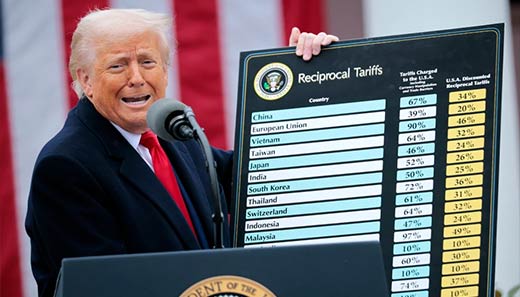
U.S. President Donald Trump on Wednesday enacted a series of sweeping tariffs, labeling the day as “Liberation Day.” The tariffs are part of a new policy of “reciprocal tariffs,” where the United States will impose duties equal to approximately half of what other countries charge on American goods.

Nigeria is among the nations affected by the new U.S. trade policy. Under the plan, Nigerian exports will now face a 14% tariff when entering the U.S., a response to the 27% tariff that Nigeria currently imposes on U.S. goods.
Trade between the two countries remains significant. In the past year, Nigeria exported goods worth N931 billion to the U.S., with crude oil making up the bulk of these exports. During the same period, Nigeria imported N1.05 trillion worth of American goods.
Presenting a chart to his audience, Trump illustrated the disparities in global tariff structures. He pointed out that China imposes a 67% tariff on U.S. goods, prompting the U.S. to set a 34% tariff on Chinese exports. Other countries facing new tariffs include:
- European Union – 20%
- Vietnam – 46%
- Taiwan – 32%
- Japan – 24%
- India – 26%
- South Korea – 25%
- Thailand – 36%
- Cambodia – 49%
Trump signed two executive orders at the event. The first closes what he called the “de minimis loophole” on China, which previously allowed Chinese companies to export cheap goods to the U.S. without paying taxes or import duties.
The second executive order enforces the new reciprocal tariff system, including a 25% tariff on all imported cars and tariffs ranging from 10% to 49% on all other imported goods.
Trump claimed these tariffs would generate “$6 trillion in investments.” However, economic experts caution that tariffs are ultimately paid by American businesses and consumers, potentially making this one of the largest tax hikes in U.S. history.
Beyond Nigeria, several African nations will also be affected. The U.S. has included Ghana, Ethiopia, and Mauritius in its list of tariff adjustments.
- Mauritius, which currently imposes an 80% tariff on U.S. goods, will face a 40% reciprocal tariff.
- Ghana and Ethiopia, which charge 17% and 10% tariffs respectively, will now see the U.S. impose matching 10% tariffs on their exports.
Other affected African countries include:
- Algeria – 59% tariff on U.S. goods; 30% U.S. reciprocal tariff
- Namibia – 42% vs. 21%
- Lesotho – 99% vs. 50%
- Kenya – 10% vs. 10%
These adjustments could have serious implications for African economies, many of which depend on trade preferences under agreements like the African Growth and Opportunity Act (AGOA). If the new tariffs remain in place, they could increase costs for African exporters and reduce their competitiveness in the U.S. market.
For Nigeria and other nations looking to diversify their export base beyond crude oil, this development serves as both a challenge and a wake-up call. Without renegotiating trade agreements or adjusting their own tariff policies, many African countries could face restricted access to the world’s largest consumer market—or risk paying higher costs to remain in it.
The European Union is expected to respond to the tariffs soon, with European Commission President Ursula von der Leyen set to issue an official statement. As global trade dynamics shift, African nations must prepare for potential economic shocks while exploring new trade partnerships and strategies.
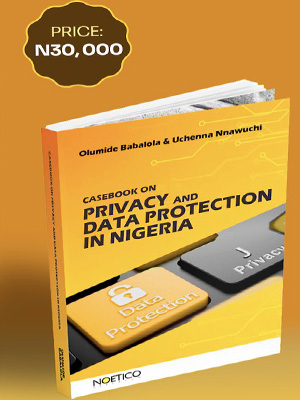 A timely new publication, Casebook on Privacy & Data Protection in Nigeria, co-authored by Olumide Babalola and Uchenna Nnawuchi,📘Casebook on Privacy & Data Protection in Nigeria is now available on Amazon:https://a.co/d/8TmFZrd
______________________________________________________________________
[A MUST HAVE] Evidence Act Demystified With Recent And Contemporary Cases And Materials
A timely new publication, Casebook on Privacy & Data Protection in Nigeria, co-authored by Olumide Babalola and Uchenna Nnawuchi,📘Casebook on Privacy & Data Protection in Nigeria is now available on Amazon:https://a.co/d/8TmFZrd
______________________________________________________________________
[A MUST HAVE] Evidence Act Demystified With Recent And Contemporary Cases And Materials

 How to Order:
📞 Call, Text, or WhatsApp: 08034917063 | 07055285878
📧 Email: benadigwe1@gmail.com
🌎 Website: www.benadigwe.com
Ebook Version: Access it directly online at https://selar.com/prv626
_____________________________________________________________________
How to Order:
📞 Call, Text, or WhatsApp: 08034917063 | 07055285878
📧 Email: benadigwe1@gmail.com
🌎 Website: www.benadigwe.com
Ebook Version: Access it directly online at https://selar.com/prv626
_____________________________________________________________________