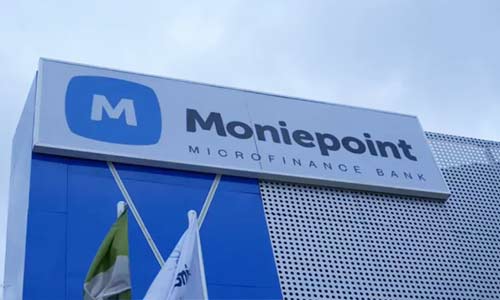
A Lagos-based pharmacy employee, Nwafor Joshua Abba, has filed a N225 million lawsuit against Moniepoint Microfinance Bank Limited at the Lagos State High Court, alleging that the fintech company surreptitiously captured his photograph inside his workplace without his knowledge or consent, published it on its corporate website as a promotional testimonial creating the false impression that he endorsed its products, and when he complained through lawyers, contacted his employer who summoned him and compelled him under threat of dismissal to sign a retroactive consent form, which he repudiated in writing the following day.

The suit, marked LD/14617GCMW/2025 and filed through Afrilaw Attorneys, seeks N200 million in general and aggravated damages, N10 million for breach of fundamental rights and corporate deceit, N10 million in exemplary damages, and N5 million in litigation costs, along with declarations that the publication was unlawful, orders for immediate removal of the image, a public apology, and a perpetual injunction restraining Moniepoint from further use of the claimant’s image and personal data.
The case represents one of the most detailed tests of Nigeria’s data protection framework since the enactment of the Nigeria Data Protection Act 2023, raising questions about corporate practices in the use of individuals’ images for commercial purposes, the validity of consent obtained under duress, and the obligations of data controllers when confronted with demands for removal of unlawfully published personal data.
According to the Statement of Claim, Abba was employed at Bodycare Pharmacy and Store Limited when, sometime in April 2025, Moniepoint “without the knowledge, consent, or authority of the Claimant, surreptitiously captured the Claimant’s image and proceeded to publish and deploy same on its official corporate website for the purpose of promoting its products and services.”
The image was prominently featured on Moniepoint’s website at a URL under the “testimonial” section of a page promoting the company’s case studies for family businesses, alongside commercial promotional text that stated: “From in-person to online payments, we’re helping businesses seamlessly accept and disburse payments via our POS terminals and web payment gateway — Monnify. Our services improved the experience at Betterlife restaurant, and is doing the same for other family-owned businesses like — GIG Group, BoxMall and Monty Suites.”
In the publication, Abba is depicted standing inside a pharmacy, holding a Moniepoint POS terminal, “thereby creating the false and misleading impression that he is affiliated with, or endorses, the Defendant, its products, and services,” the claim states.
The image was further reproduced and distributed through a downloadable PDF document hosted on the same corporate website, with the claimant’s image appearing on page 9, “thereby amplifying the unauthorised and unlawful usage.”
Abba’s statement of claim is emphatic about the absence of any connection between himself and the defendant.
He states “categorically” that he has never at any time had any relationship, contract, or agreement with Moniepoint, has never given any testimonial for the company’s products or services, and has never granted consent, licence, or authority for his image to be captured, published, or used for commercial purposes.
The denial is comprehensive. There was no customer relationship, no endorsement arrangement, no modelling agreement, and no verbal or written permission of any kind. The photograph was taken without his knowledge, published without his consent, and used to promote a company he had no connection with, creating an entirely fabricated commercial testimonial.
Upon discovering the unauthorised publication, Abba retained Afrilaw Attorneys, who wrote a formal demand letter dated April 25, 2025, calling for the immediate removal of his image from all platforms, a public apology, and payment of N200 million as full and fair compensation.
The demand letter gave Moniepoint seven days to comply.
According to the claim, “the Defendant failed, refused, and/or neglected to comply with the said demands within the stipulated 7 days or at all.”
What happened next, according to the claim, transformed the case from a straightforward unauthorised image use dispute into an allegation of corporate coercion that significantly aggravates Moniepoint’s potential liability.
“Instead of complying, the Defendant contacted the Claimant’s employer, Bodycare Pharmacy and Store Ltd, which summoned the Claimant and compelled him, under threat of losing his job, to sign a purported ‘consent form’ after the publication had already occurred,” the claim states.
The allegation describes a scenario where Moniepoint, having received a legal demand from the individual whose image it had used without consent, bypassed the individual and his lawyers and instead went to his employer, leveraging the employment relationship to pressure the employee into signing a retroactive consent that would legitimise the already-published image.
Abba’s claim provides detailed grounds for why the consent form he signed should be treated as void.
“The Claimant avers that his purported consent to the said letter was not voluntary but was obtained under duress,” the claim states.
He describes the specific pressures he faced: “At the material time, he had dependants who relied entirely on his employment for survival, and he was expressly threatened that he would be summarily dismissed, labelled insubordinate, and blacklisted from future opportunities unless he signed the document immediately.”
“He was financially vulnerable, had no alternative source of livelihood, and was acutely aware that losing the job would plunge his family into severe hardship,” the claim adds.
The claim further states that “the said threats, coupled with his economic dependence on the employment, the psychological pressure exerted by the Defendant’s officers, and the denial of any opportunity to seek independent legal advice or reflect on the contents of the letter, overbore his free will.”
“He signed the letter solely out of fear of imminent job loss and its devastating impact on his family, and would not have signed it but for the duress, intimidation, and undue influence exerted upon him,” Abba states.
The claim discloses that Abba took immediate steps to repudiate the coerced consent.
“The Claimant’s supposed ‘consent’ was not freely given, was coerced, and in any event was after-the-fact. The Claimant repudiated and withdrew it in writing the next day,” the claim states.
The revocation letter and its acknowledgment are among the documents the claimant intends to rely upon at trial, establishing a paper trail that shows the consent was given under pressure and withdrawn at the earliest opportunity, within 24 hours, when the immediate threat of dismissal was no longer being applied.
Under the Nigeria Data Protection Act 2023, consent for the processing of personal data must be freely given, specific, informed, and unambiguous. Consent obtained through threats of employment termination, without opportunity for legal advice, and revoked the following day fails every element of the statutory standard.
The claim describes a pattern of sustained non-engagement by Moniepoint across seven months.
After the initial demand letter of April 25, 2025, the claimant’s solicitors issued a follow-up letter on May 14, 2025, restating the demands and highlighting that “the coercive conduct through his employer was an aggravating factor increasing the Defendant’s liability.”
On the same day, the solicitors served a Memorandum of Claim pursuant to the Lagos State High Court Rules, notifying Moniepoint of the claimant’s intention to commence legal proceedings.
On May 29, 2025, a final reminder was sent, granting a further grace period expiring June 6, 2025, and warning that legal proceedings would commence and “the matter may also be taken to the public domain.”
“The Defendant ignored all correspondences, took no steps to retract the unlawful publication, and failed to make amends,” the claim states.
The claimant captured dated screenshots of the infringing content on six separate occasions, May 17, 19, 20, 22, 28, and 30, 2025, establishing that the image remained publicly accessible and continued to be used for commercial promotion throughout the entire period despite the demands for removal.
“The Defendant’s continued silence and inaction constitute a wilful disregard for the Claimant’s rights and a conscious choice to perpetuate the unlawful conduct,” the claim states.
As of the date of filing, “the infringing image remains accessible online and continues to cause him reputational injury, emotional distress, and constitutes ongoing unauthorised commercial gain to the Defendant.”
The claimant seeks nine specific reliefs.
A declaration that the publication and use of his image without consent is unlawful and violates his right to privacy and statutory data protection rights.
An order compelling Moniepoint to immediately remove all instances of his image from its website, promotional materials, and databases.
An order directing Moniepoint to issue a public apology, published prominently on the same platform where the infringing image appeared and in at least two national daily newspapers.
A perpetual injunction restraining Moniepoint from further using, keeping, publishing, processing, storing, or controlling the claimant’s image and personal data.
N200 million in general and aggravated damages for unauthorized commercial exploitation and infringement of data and privacy rights.
N10 million for breach of fundamental rights, deliberate misrepresentation, and corporate deceit.
N10 million in exemplary damages “to punish the Defendant and deter similar future infractions.”
N5 million in litigation costs.
Post-judgment interest of 15 per cent on the damages awarded from the date of judgment until final liquidation.
The total claim of N225 million, if awarded in full, would represent one of the largest data protection damages awards in Nigerian legal history and would establish a powerful deterrent against the unauthorised use of individuals’ images for corporate promotion.
The claim invokes multiple legal foundations.
Under the Nigeria Data Protection Act 2023, data controllers are required to obtain the consent of data subjects before processing their personal data, including their images. The Act imposes specific requirements for what constitutes valid consent, including that it must be freely given, specific, informed, and unambiguous. Processing personal data without valid consent constitutes a breach of the Act.
Under the Constitution of the Federal Republic of Nigeria, the claimant invokes his fundamental rights to privacy and dignity of the human person, arguing that the unauthorised use of his image for commercial purposes violates these constitutionally guaranteed rights.
The claim also invokes principles of tort law, alleging that the unauthorised publication constitutes an actionable wrong for which damages, including aggravated and exemplary damages, are recoverable.
The Moniepoint case, if it proceeds to trial and produces a judgment, could establish important precedents in several areas of Nigerian data protection law.
On the question of surreptitious image capture, a finding that photographing a person in their workplace without their knowledge for subsequent commercial use violates the Data Protection Act would put companies on notice that images used in marketing materials must be obtained with explicit, documented consent.
On the question of retroactive consent under duress, a finding that consent obtained after publication, through pressure applied via an employer, is void would establish that the data protection framework’s consent requirements cannot be satisfied through coercive after-the-fact formalities.
On the question of damages for data protection breaches, an award anywhere near the N225 million claimed would establish that violations of data protection rights carry significant financial consequences, transforming what some companies may view as a minor compliance issue into a major financial risk.
On the question of corporate accountability, the allegation that Moniepoint went through the claimant’s employer to obtain coerced consent, rather than engaging with his lawyers who had sent a demand letter, raises questions about corporate data protection culture and whether companies view individuals’ privacy rights as genuine obligations or as obstacles to be circumvented through power imbalances.
When the suit is served, Moniepoint will need to address several factual and legal questions.
Was the photograph taken with consent? If so, what form did that consent take and when was it obtained?
Was the image published with authorisation? If so, whose authorisation and on what basis?
Why was the claimant’s employer contacted after a demand letter was received from the claimant’s lawyers? What instructions were given to the employer regarding the consent form?
Was the consent form presented to the claimant after the image was already published? If so, how can it constitute valid prior consent under the Data Protection Act?
Why was the image not removed after the demand letter, the follow-up letter, the Memorandum of Claim, and the final reminder were all received and ignored?
These questions go to the heart of whether Moniepoint’s conduct was inadvertent or, as the claimant alleges, “calculated, deliberate, and sustained.”
For Nigeria’s rapidly growing fintech industry, the Moniepoint case serves as a cautionary tale about the legal risks of using individuals’ images for corporate promotion without proper consent protocols.
In an era of social media marketing, content creation, and digital advertising, companies routinely use photographs and testimonials to promote their products. The temptation to use real images of real people in real business settings, which convey authenticity that staged photographs cannot, is understandable. But the legal obligation to obtain genuine, informed, freely given consent before doing so is not optional.
The Nigeria Data Protection Act 2023 established a framework that gives individuals control over their personal data, including their images. Companies that ignore this framework, whether through inadvertence, convenience, or the calculated belief that most individuals will not pursue legal remedies, do so at their own risk.
As the Moniepoint case demonstrates, when an individual does pursue those remedies, the financial, reputational, and legal consequences can be substantial.
The suit has been filed. Moniepoint must respond within 42 days. And the Lagos High Court will determine whether a pharmacy employee’s image was stolen, exploited, and defended through coercion, or whether, as Moniepoint may argue, the matter is not as the claimant presents it.
For now, the image reportedly remains online. The claimant’s damages continue to accrue. And a N225 million question awaits its answer.
 Interested buyers are encouraged to place their orders and enquiries via:
0704 444 4777, 0704 444 4999, 0818 199 9888
Website: www.alexandernigeria.com
Interested buyers are encouraged to place their orders and enquiries via:
0704 444 4777, 0704 444 4999, 0818 199 9888
Website: www.alexandernigeria.com
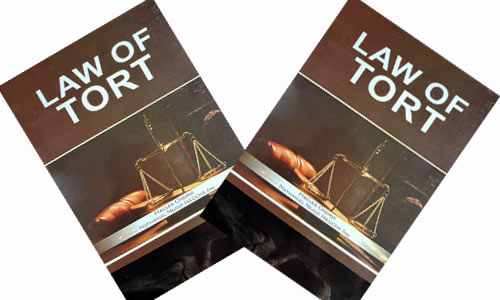 The book, titled The Law of Torts in Nigeria: A Functional Approach, authored by Professor Hagler Sunny Okorie Ph.D and Ikeocha, Nathaniel Ngozi Esq, offers law students, practitioners, and academics a comprehensive guide to understanding and applying tort law in Nigerian courts. Interested buyers can place orders via the following contact numbers: 08028636615, 08037667945, 08032253813, or +234 902 196 2209.
_______________________________________________________________________
The book, titled The Law of Torts in Nigeria: A Functional Approach, authored by Professor Hagler Sunny Okorie Ph.D and Ikeocha, Nathaniel Ngozi Esq, offers law students, practitioners, and academics a comprehensive guide to understanding and applying tort law in Nigerian courts. Interested buyers can place orders via the following contact numbers: 08028636615, 08037667945, 08032253813, or +234 902 196 2209.
_______________________________________________________________________
 ARTIFICIAL INTELLIGENCE FOR LAWYERS: A COMPREHENSIVE GUIDE
Reimagine your practice with the power of AI “...this is the only Nigerian book I know of on the topic.” — Ohio Books Ltd
Authored by Ben Ijeoma Adigwe, Esq., ACIArb (UK), LL.M, Dip. in Artificial Intelligence, Director, Delta State Ministry of Justice, Asaba, Nigeria.
Bonus:
Get a FREE eBook titled “How to Use the AI in Legalpedia and Law Pavilion” with every purchase.
ARTIFICIAL INTELLIGENCE FOR LAWYERS: A COMPREHENSIVE GUIDE
Reimagine your practice with the power of AI “...this is the only Nigerian book I know of on the topic.” — Ohio Books Ltd
Authored by Ben Ijeoma Adigwe, Esq., ACIArb (UK), LL.M, Dip. in Artificial Intelligence, Director, Delta State Ministry of Justice, Asaba, Nigeria.
Bonus:
Get a FREE eBook titled “How to Use the AI in Legalpedia and Law Pavilion” with every purchase.
How to Order: 📞 Call, Text, or WhatsApp: 08034917063 | 07055285878 📧 Email: benadigwe1@gmail.com 🌐 Website: www.benadigwe.com
Ebook Version: Access directly online at: https://selar.com/prv626
________________________________________________________________________ [A MUST HAVE] Evidence Act Demystified With Recent And Contemporary Cases And Materials