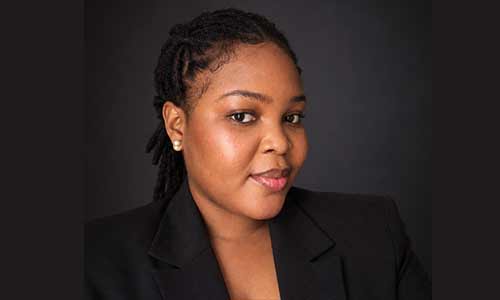
By Oluwaleye Adedoyin Grace

Perhaps Nigeria does not need another pair of glasses; perhaps it needs a closer look at the lives of its people.
When President Bola Ahmed Tinubu suggested that Nigerians who could not see the progress of his administration might need “Jigi-Bola” eyeglasses, and the First Lady, Oluremi Tinubu, later echoed a similar sentiment, the remarks raised a question worth considering beyond political disagreement. What if some Nigerians can see the roads, acknowledge the government’s efforts and recognise its achievements, yet still struggle to afford food, pay rent or plan a future? Could the problem be not an inability to see progress, but the difficulty of feeling that progress in their everyday lives?
Beyond Economic Statistics, the Cost of Being an Ordinary Nigerian
Economic growth is important, but its significance to the ordinary citizen lies partly in what it makes possible. A growing economy should create opportunities for people to earn a living, provide for their families and plan their futures. Yet, for many Nigerians, the struggle to afford basic necessities remains a defining feature of everyday life.
The World Bank’s October 2025 Nigeria Development Update acknowledged improvements in economic growth, government revenue and external balances, while warning that these gains had yet to translate into substantial improvements in people’s living standards. It also reported that the cost of a basic food basket had risen fivefold between 2019 and 2024, placing particular pressure on poorer households.
There are encouraging signs in the more recent figures. Nigeria’s headline inflation rate declined to 14.63 per cent in September 2026, compared with 20.98 per cent a year earlier, according to the National Bureau of Statistics. Nevertheless, food inflation remained at 19.59 per cent. A declining inflation rate means that prices are rising more slowly; it does not necessarily mean that the food, transport and other necessities that became expensive are now affordable again.
Consider the worker who receives a monthly salary but must first calculate the cost of transportation, food, rent, electricity and other household expenses. Consider the parent whose income must stretch across school fees, medical bills and feeding the family. For such households, the question is not simply whether the economy is growing, but whether their earnings can meet their needs without forcing them to sacrifice something essential.
This is the distinction that deserves greater attention in our national conversation. Economic reforms may be necessary, and their benefits may take time to reach households. But the hardship experienced during that transition also matters. The success of economic policy must ultimately be reflected not only in improved national indicators, but also in the ability of ordinary Nigerians to live with greater security, dignity and hope.
The Faces Behind the Figures
Poverty is not merely a figure in an economic report. It is a human experience, reflected in the opportunities people lose, the necessities they struggle to afford and the dreams they are forced to postpone.
Consider the Almajiri child on the streets of Zaria, moving between strangers in search of food. UNICEF reported in September 2025 that Nigeria had more than 11 million out-of-school children, including millions of Almajiri boys who, in some circumstances, are forced to beg to survive. These are not merely children missing classrooms; they are children whose opportunities to build a different future may be slipping away.
Consider the family seeking shelter beneath a bridge in Ikeja, Lagos, or the mother hawking gala and soft drinks along a busy road in Benin City, Edo State. Imagine a father who works throughout the day but still has to choose which household expense can wait. These examples reflect the realities of housing insecurity and financial hardship that deserve closer attention. For such families, development is not an abstract economic concept. It is the ability to eat adequately, sleep somewhere safe, educate their children and live without the constant fear of what tomorrow may bring.
The hardship also reaches people whose struggles are less visible. Some graduates remain unable to secure decent employment; some workers find that their earnings cannot adequately cover their expenses; and some young Nigerians postpone marriage or parenthood because they fear the financial responsibilities involved. These experiences differ, and not every young person makes such decisions for economic reasons. Nevertheless, financial insecurity can make even ordinary aspirations seem difficult to attain.
The UNICEF Nigeria Annual Report 2025 further illustrates the scale of the challenge facing children. It reports that 54 per cent of Nigerian children experience multidimensional poverty, while 10.2 million children are out of school. These figures represent more than economic deprivation. They raise questions about access to education, healthcare, nutrition and the opportunities children need to develop their potential.
A country cannot address these challenges merely by counting its achievements. It must also examine the lives of those still waiting to experience their benefits. The Almajiri child, the struggling trader, the unemployed graduate and the family without secure shelter are reminders that national progress must ultimately include improvements in human welfare. Their circumstances deserve attention not as political talking points, but as urgent concerns in the future of Nigeria.
When Economic Hardship Begins to Affect People’s Dreams
One of the saddest consequences of economic hardship is that it can force people to reconsider dreams they once believed were within reach.
For many young Nigerians, growing up comes with familiar aspirations: completing an education, securing meaningful employment, becoming financially independent, getting married, raising children and providing a better life for their families than the one they experienced. These are ordinary hopes, not extravagant demands. Yet when the cost of living rises faster than a person’s ability to earn, even these milestones can begin to feel like privileges reserved for the financially secure.
Consider the young graduate who has spent years studying, only to discover that obtaining a degree does not automatically translate into a decent job. Consider the young man who wants to marry but worries about paying rent, feeding a family and meeting the responsibilities that marriage brings. Consider the young woman who hopes to have children but wonders whether she can afford their healthcare, education and basic needs. Their circumstances are not identical, and economic hardship is not the only reason people postpone marriage or parenthood. But financial insecurity can make decisions about the future considerably more difficult.
Research supports the concern that economic opportunity weighs heavily on young Nigerians. In a June 2025 publication, Afrobarometer reported that almost one-quarter of Nigerian youths surveyed said they were unemployed and looking for work. The study also found that the cost of living and job creation were among the leading concerns young people wanted their government to address. These findings do not describe every young Nigerian, but they reveal the importance of economic security to the generation expected to shape the country’s future.
There is something deeply troubling about a society in which young people begin to measure their readiness for adulthood primarily by whether they can survive financially. Economic responsibility is important, and no one should be encouraged to enter marriage or parenthood without considering the demands involved. The concern, however, is when people who are willing to work and build meaningful lives find that the path towards doing so appears increasingly uncertain.
A nation’s future depends partly on what its young people can imagine for themselves. When aspirations repeatedly collide with financial insecurity, the consequences may extend beyond individual disappointment to delayed family formation, migration in search of opportunity and a growing sense that a better life may be easier to find elsewhere.
The Nigeria I dream of is not one in which every citizen is guaranteed wealth or an effortless life. It is one in which hard work has a reasonable chance of producing stability, education opens doors to opportunity, and young people can make important life decisions with hope rather than fear. Progress should not mean that Nigerians must abandon their dreams to accommodate the cost of living. It should mean creating conditions in which those dreams have a fair chance of becoming reality.
What Does the Constitution Promise the Ordinary Nigerian?
As a law graduate, I find it difficult to discuss Nigeria’s economic hardship without considering the constitutional principles that define the purpose of government. The question is not simply whether the economy is growing, but whether the welfare of the people remains central to the decisions made in their name.
Section 14(2)(b) of the Constitution of the Federal Republic of Nigeria 1999 declares that the security and welfare of the people shall be the primary purpose of government. Section 16 further sets out economic objectives, including promoting national prosperity and managing the economy to secure the maximum welfare, freedom and happiness of every citizen on the basis of social justice and equality of opportunity. These provisions establish an important constitutional vision: government should serve the people, and economic policy should ultimately contribute to their welfare.
However, legal accuracy requires an important qualification. Sections 14 and 16 fall within Chapter II of the Constitution, which contains the Fundamental Objectives and Directive Principles of State Policy. Under section 6(6)(c), the courts’ judicial powers generally do not extend to determining whether an act or omission conforms to Chapter II, except where the Constitution or applicable legislation provides otherwise. Consequently, the provisions do not automatically give every Nigerian a directly enforceable claim simply because the cost of living is high or their income is insufficient.
This limitation does not make the constitutional principles meaningless. They remain important standards against which public policy, legislative choices and government priorities can be evaluated. Nor does it mean that every issue affecting welfare is beyond legal protection; particular circumstances may engage enforceable fundamental rights or specific statutory obligations. The distinction is between recognizing the constitutional importance of citizens’ welfare and assuming that every failure to achieve it automatically amounts to a legally actionable violation.
Ultimately, the Constitution provides a framework for governance, but its promise must also be reflected in the quality of life citizens experience. When families struggle to afford food, children remain outside school and workers cannot meet basic expenses, these realities deserve serious public attention. The question is not whether government can eliminate every hardship overnight. It is whether its policies are producing measurable improvements, whether vulnerable citizens are adequately considered, and whether public institutions remain responsive to the people they exist to serve.
For me, the Nigeria I dream of is one in which constitutional commitments to welfare are more than words on paper. They should inform the choices made about public spending, education, healthcare, employment, housing and social protection. The true value of governance is not measured solely by what government announces or constructs, but also by whether its people have a fairer opportunity to live with dignity.
The 2027 Election: Beyond Promises, Projects and Political Arguments
As Nigeria approaches the 2027 general election, the national conversation must go beyond political loyalty, campaign slogans and arguments about which administration deserves credit or blame. Elections provide citizens with an opportunity to assess leadership, examine competing policies and decide what kind of future they want for their country.
The economic reforms introduced by President Bola Ahmed Tinubu’s administration have produced measurable changes in Nigeria’s economic outlook. The World Bank’s October 2026 Nigeria Development Update reported that the economy grew by 4.2 per cent in the first half of 2026, while public revenues and the country’s external position improved. However, the Bank also emphasized the need to translate economic stability into faster, more inclusive growth, better jobs and improved living standards. Acknowledging these developments does not require us to ignore the hardship many households continue to experience. Equally, recognizing that hardship does not require us to dismiss every effort made to improve the economy.
The question before Nigerians is how economic progress can be translated into meaningful improvements in everyday life. Can families afford nutritious food? Are wages and other legitimate earnings sufficient to meet basic needs? Are young people finding productive employment? Can parents educate their children without unbearable financial strain? Are healthcare and housing becoming more accessible? Are citizens safer in their homes, on the roads and in their communities?
These questions should not be directed at one political party alone. Every candidate seeking public office should be prepared to explain how their policies would address the realities Nigerians face. Promises of economic growth should be accompanied by credible plans for job creation, food security, affordable energy, education, healthcare, housing and social protection. Where public funds are allocated, citizens should be able to assess how those resources are used and whether they produce measurable results.
Accountability must also extend beyond the Federal Government. State governments influence education, healthcare, housing, agricultural development and other services that directly affect citizens. The World Bank’s October 2026 report highlighted the importance of state governments using increased public revenues more effectively to improve services and create opportunities. National progress cannot be sustained if economic gains fail to reach communities where people live and work.
As voters, we must therefore learn to distinguish between a promise and a plan, between a completed project and a lasting improvement in people’s lives, and between economic statistics and the actual experiences of households. We must ask difficult questions, examine the evidence and resist the temptation to judge leadership solely by party affiliation.
The 2027 election should not be treated merely as a contest over who occupies the highest political office. It should also be an opportunity to demand a clearer account of what government intends to do for the Nigerian who works hard but struggles to feed a family, the graduate searching for employment, the child who cannot access quality education and the young person who wants to build a future at home.
Ultimately, democracy must offer citizens more than the opportunity to choose their leaders. It must give them meaningful reasons to believe that their voices matter and that public power can improve their lives. Whoever earns the mandate of the Nigerian people should understand that the real measure of success is not simply winning an election, but governing in a way that makes a dignified life more attainable for the people.
The Nigeria I Still Believe In
Perhaps the most important question is not whether Nigerians can see the progress their leaders describe, but whether they can feel it in their daily lives.
I dream of a Nigeria where a mother does not have to wonder how she will feed her children tomorrow, where a father can provide for his family without being crushed by the weight of survival, and where a child’s future is not determined by the circumstances of their birth. I dream of a country where education opens doors, honest work offers a reasonable chance of stability, and young people can look forward to marriage, parenthood and independence without feeling that these ordinary aspirations are beyond their reach.
This dream does not demand perfection from any administration. No government can resolve every national challenge overnight, and meaningful economic reforms may require difficult decisions. But the hardship those decisions place on citizens must never become an insignificant footnote to the story of national progress. The people who endure the transition deserve to see credible results, effective support and a genuine improvement in their living conditions.
President Tinubu and his administration deserve to have their policies assessed on evidence, just as their critics should be expected to support their arguments with facts. But ordinary Nigerians also deserve to have their experiences taken seriously. Acknowledging economic growth and government achievements should not make it unacceptable to ask why so many people still struggle to afford the necessities of life. These questions are not necessarily expressions of hostility; they are part of the accountability that responsible governance requires.
As we approach the 2027 general election, I hope our national conversation will become less concerned with whether Nigerians are wearing the right glasses and more concerned with what they are seeing through them. Behind every economic statistic is a human life. Behind every policy is a question of how its consequences are distributed. And behind every election promise is an obligation to the people whose hopes make democratic government possible.
The Nigeria I dream of is not merely one that looks prosperous from a distance. It is one in which prosperity can be felt at home, at the market, in the classroom, at the workplace and around the family table.
That is the Nigeria I want us to build. Not a Nigeria where citizens must deny their suffering to acknowledge progress, but one where progress steadily reduces that suffering. Not a Nigeria where young people learn to expect less from life, but one where they have genuine reasons to hope for more.
And if we are to measure how far we have come, perhaps we should begin by asking a simple question: Can the ordinary Nigerian afford to live the life that the Nigeria we dream of promises?
Oluwaleye Adedoyin Grace, LLB. (Hons.)Oluwaleyeadedoyingrace2001@gmail.com or 08106289069
[A MUST HAVE] Evidence Act Demystified With Recent And Contemporary Cases And Materials

Available now for NGN 40,000 at ASC Publications, 10, Boyle Street, Onikan, Lagos. Beside High Court, TBS. Email publications@ayindesanni.com or WhatsApp +2347056667384. Purchase Link: https://paystack.com/buy/evidence-act-complete-annotation
______________________________________________________________________ “Enhance Legal Practice With Authoritative Reports” — Alexander Payne Offers Comprehensive Law Reports, Spanning Over A Century Of Nigerian Jurisprudence Interested buyers are encouraged to place their orders and enquiries via:
0704 444 4777, 0704 444 4999, 0818 199 9888
Website: www.alexandernigeria.com