When even lawyers are stuck in a legal quagmire

By Idowu J. Lawrence Esq.[1]
Preliminaries
When the word – Lawyer, or Legal Practitioner is mentioned, it ordinarily evinces a persona-archetype who possesses clarity in matters of law and the courts. Unfortunately, the status of the Disciplinary process of Legal Practitioners is such that confuses the lawyers and the courts themselves, rendering the situation rather paradoxical.
As with all fields of human endeavors where regulation is necessary, the Legal Practitioners Act (LPA), first enacted in 1962, and lately 2004, is the law regulating the affairs of Legal Practitioners. It notably created certain bodies for this purpose – including the Body of Benchers, the General Council of the Bar, the Legal Practitioners Privileges Committee, and importantly, the Legal Practitioners Disciplinary Committee (LPDC), which is charged with the duty of discipline of erring practitioners.
The 1962 Act which was later amended in 1975, originally vested powers of Appeals from the decision of the LPDC, in Appeal Committee of the Body of Benchers, and a further appeal from there to the Supreme Court[2]. However, by virtue of Legal Practitioners (Amendment) Decree No. 21 of 1994[3], some sections of the Act relating to the disciplinary committee and appeals emanating from the committee’s directions were amended, ultimately substituting the “Appeal Committee of the Body of Benchers” for the “Supreme Court”. Essentially, the 1994 amendment decree allowed appeals directly from LPDC to the Supreme Court.
Unfortunately, the Legal Practitioners Act codified in the Laws of the Federation of Nigeria, 2004[4] omitted the 1994 amendment. In essence, the 2004 Act still retained the Appeal Committee before further appeal to the Supreme Court from the directions[5] of the Committee
Case Law Conundrum
In 2005, Charles Okike who had been retained to recover debt by a Japanese – Mr. A. Kaihara, was dragged to the LPDC for mismanaging his client’s funds[6]. The LPDC gave its direction striking Okike’s name off the roll of Legal Practitioners. He appealed to the Supreme Court, which heard and dismissed the appeal. The following year, Anamelechi Iteogu[7] was dragged to the LPDC by his client on the allegation of mismanagement of funds recovered from compensation paid for acquired property. The LPDC rendered its decision, assigning him the Okike’s fate. He appealed to the Supreme Court, which also dismissed his appeal, affirming the direction of the LPDC[8].
In 2011, Jide Aladejobi[9] was dragged to the LPDC by his client, on allegations bordering on collision against his client, and betrayal of trust. The Committee directed his name be struck off the roll of Legal Practitioners, whereupon he filed an appeal to the Supreme Court. Meanwhile, the Appellant elected to file the Appeal against the Nigerian Bar Association which is the prosecuting body, as against the LPDC – the body that rendered the decision. The Respondent (NBA) therefore filed an objection on grounds including the non-juristic status of the Respondent, and the proprietary of the Appeal, raising the long underlying issue of the Appeal Committee. The Supreme Court in agreeing with the Respondent, struck out the Appeal, holding that recourse ought to be made first to the Appeal Committee of the Body of Benchers, before an Appeal to the Supreme Court. The Supreme Court conceded, however, that there is no such body in existence[10]. In essence, the discontent practitioner is asked to appeal to an inexistent body.
Meanwhile, Muyiwa Akintokun whose name was directed to be struck off the roll by the Committee in 2006[11] due to a complaint of cheating and professional misconduct against him, also had his appeal pending at the Supreme Court. By this time, the decision in the Aladejobi’s case had altered the landscape of Appeal from the Committee, on the ground that: some discontented parties had already pending appeals at the Supreme, and there was no Appeal Committee in existence. When Akintokun’s Appeal came for hearing in 2014, the parties found themselves urging the court to depart from or affirm the decision in the Aladejobi’s case.
As a result, the Supreme Court constituted a full panel of the court for this purpose. After tracing the evolution of the Legal Practitioners Act from 1962 up till 2004, the Court came to a conclusion that the 1994 amendment was not repealed[12], but it was inadvertently omitted from the 2004 Laws of the Federation, making it unavailable to apply as an extant law. The court added that, to uphold a law not codified, would mean to delve in the realms of legislative functions[13]. Ultimately, the Court struck out the appeal for want of jurisdiction, holding that recourse ought to be made to the Appeal Committee of the Body of Benchers, a body the court yet again in its judgment acknowledged was non-existent[14].
The aftermath of Akintokun: A tale of the luck and misfortune
The decision in the Akintokun’s case was a saving grace for Chief Andrew Oru, who had sued the LPDC and the complainants at the Federal High Court for denial of his right to fair hearing in summoning him before a disciplinary panel not properly constituted according to the recent interpretations in the Akintokun’s case. At the Court of Appeal, his arguments premised on the Akintokun’s case were upheld, and he was declared free[15].
When Anamelechi Iteogu whose name had been yanked off the Practitioners roll and had previously appealed to the Supreme Court[16] got update of these developments, he reinforced to approach the Supreme Court to set aside its judgment against him. Armed with the recent pronouncements in the Aladejobi and Akintokun cases, he asked to the Supreme Court to hold that the Court did not have jurisdiction when it affirmed the LPDC’s decision against him, to the effect that his name be struck off the roll. Unfortunately, the Supreme Court declined, stating that the Application was not brought within reasonable time[17], that such action could lead to a floodgate[18] and “every dead body could not be woken when new drugs were invented[19]”. This should reflect a firm and settled position, but it didn’t.
In February 2016, Tajudeen Kareem[20] was before the LPDC to answer to charges bordering on overzealousness in enforcing a judgment on which a Motion for Stay was pending. In suspending Kareem for five years, the LPDC explained that the quandary elicited in the Apex Court’s decision in Akintokun’s case had been remedied by the Attorney General of the Federation, vide a revised Laws of the Federation incorporating the 1994 amendment. Tajudeen Kareem’s direct appeal to the Supreme Court was struck out on procedural grounds in April 2019, without any reference to the issue of the Appeal Committee[21].
When in June 2016, Ike Chinwuba[22] approached the Supreme Court, the LPDC and filed a suit against LPDC at the Federal High Court for judicial review all at the same time, he was up to a revelation. His plea was a relist of his name on the roll, due to severe hardship his loss of license had brought him, after being struck off in 2010. He pleaded that his conduct for which he was sanctioned arose from his understanding of the law, and not intentions to defraud. The Committee declared his actions as abuse of process, and established that his Appeal was to be directly to the Supreme Court, not the Appeal Committee of the Body of Benchers. The Committee then took its time to further explain the pronouncement in Kareem’s case that, after the unfortunate revelation of the omission in the Akintokun case, the Attorney General of the Federal had further revised the Laws of the Federation by virtue of his powers in the Interpretation Act[23][24] and included the 1994 LPA Amendment, which now allows appeals directly to the Supreme Court, from the decision of the Committee.
Later in February 2019, Obiajulu Nwalutu was charged before LPDC with the allegations of appointing himself as counsel to a bank, and filing unauthorized court process. Appealing the five years suspension meted on him by the committee directly to the Supreme Court, the Supreme Court set aside the suspension on the basis of denial of fair hearing. The court additionally referred to the decisions in Aladejobi and Akintokun, explaining that in both cases, as well as the Court of Appeal decision in Oru v NBA[25], the Supreme Court did not interpret the extant Legal Practitioners Act as having repealed the 1994 amendment decree.
In effect, the Supreme Court agreed that with the decision in the LPDC Chinwuba’s case that appeals from the LPDC now go directly to the Supreme Court. The Supreme Court also tacitly agreed with this in Kareem’s Appeal[26], hearing it directly from the LPDC without raising the issue of the Appeal Committee. Further, in a series of Supreme Court decisions that followed, the Supreme Court heard appeals directly from the LPDC.
For instance, the Supreme Court heard directly, from the LPDC. the cases of Kalejaiye v. LPDC in March 2019[27], Kareem v LPDC April 2019[28], Gbenoba v. L.P.D.C. in February 2021[29], Muyideen v. N.B.A. in June 2021[30], Waziri v. L.P.D.C. also in June 2021[31], and the 2024 case of Iyomon v. L.P.D.C[32] to mention a few. On 4th of April 2025, the Supreme Court also gave judgment in favor of the former Attorney General of Imo State – Chief Akaolisa, who was suspended for five years on allegations of abuse of office. This appeal was also heard directly from the LPDC. In all these cases, the Supreme Court heard the appeals directly from the LPDC’s direction, without any recourse to the Appeal Committee of the Body of Benchers as it held in the Akintokun’s case. Ordinarily, this should have also settled this conundrum, but did it?
Four years back in 2021, Nnamdi Osuji’s name was struck off the roll following the LPDC’s indicting him for embezzling and misappropriating client’s funds which was for purchase of property. He filed his appeal directly to the Supreme Court, not expecting to be shocked. When the Supreme Court gave its judgment in 2025, in what appeared to be a 360 somersault, the Supreme Court held that based on Aladejobi (2013) and Akintokun (2014) decisions, the appeal ought to be filed to the Appeal Committee of the Body of Benchers first. This is notwithstanding the fact that the same court had heard several appeals directly from the LPDC after those two cases, including the Akaolisa appeal it decided in April 2025.
Unfortunately and perhaps inadvertently, while delivering its decision in the Osuji’s case, the court also referred to its decision in Nwalutu v NBA[33] – in which the court took appeal directly from the LPDC and set aside the LPDC’s direction! Contrary to the court’s statement that the Nwalutu decision re-affirmed the Aladejobi and Akintokun decisions[34], the Supreme Court heard the Nwalutu’s case on merits and set aside the LPDC direction which amounts to a departure from the decision in Akintokun’s case.
Ultimately, the Supreme Court struck out Osuji’s Notice of Appeal for want of jurisdiction in line with the decisions in both Aladejobi and Akintokun cases. This was more than a case of being unlucky. It reveals a quagmired legal process, riddled with gross uncertainties. Indeed, “If they do these things in the green tree, what will happen to the dry?[35]” If lawyers have no clarity on a legal procedure that affects them directly, to whom shall the physicians go to seek healing? As it stands today, the Osuji’s case is the latter law. And it is to the effect that Appeals from LPDC should go first to the Appeal Committee of the Body of Benchers – which is not known to exist anywhere!
Presently, the popular LFN 2004 contains the Legal Practitioners Act which excludes the 1994 amendment. Other Legal Practitioners Act on sale contains the supposed revised Legal Practitioners Act referred to in the Kareem and Chinwuba’s LPDC Directions. In essence, anyone quoting the Legal Practitioners Act may be quoting either of the two.
Way Forward
Recently in November 2025, it was reported that the Nigerian Senate was re-enacting the Legal Practitioners Act[36]. Beyond the protests against the proposed increase in years of practice for SAN[37] rank qualification from 10 years Post Call to 15 Years Post Call and the introduction of compulsory two years pupillage for newly called lawyers, the bill serves as an opportunity to redress the chaos in the case law regime on appeals from the LPDC. Notably, the proposed bill provides in Section 18(5) that the appeal from the directive of the LPDC will now lie to the Supreme Court, and to be filed within 28 days. This offers a hope for clarity and certainty.
Additionally, the final draft should also state the repealed clauses expressly and clearly, to avoid a repeat of the situation in the Akintokun’s case where the issue of express or implicit repeal caused some confusion. And most importantly, utmost attention should be paid to the codification, to avoid an Akintokun Dejavu where an omission is made, and unpopular revisions are introduced which could engender confusion.
[1] Idowu J. Lawrence Esq. is a Lawyer practicing primarily in Lagos State. A researcher and member of the NBA Adjudicature Review Committee. He can be reached via idowulawrenceandco@gmail.com
[2] Legal Practitioners Act, Cap. 207 of the Laws of the Federation of Nigeria, 1990
[3] This covers the 1993 amendment Decree as well. Akintokun v. L.P.D.C. (2014) 13 NWLR (Pt. 1423) (Pp. 83-85, paras. C-D; 108-110, paras. E-A)
[4] Section 12 of the Legal Practitioners Act, Cap. L11, Laws of the Federation of Nigeria, 2004
[5] Directions are verdicts given by the Legal Practitioners Disciplinary Committee
[6] Okike v. L.P.D.C. (2005) 15 NWLR (Pt. 949)
[7] NBA v. Iteogu (2006) 13 NWLR (Pt. 996) 219
[8] Iteogu v.Legal Practitioners Disciplinary Committee (2009) 17 NWLR(Pt. 1171)
[9] Aladejobi v. N.B.A. (2013) 15 NWLR (Pt. 1376)
[10] Per FABIYI, J.S.C. at page 85, paras. D-F,
Per M.D. MUHAMMAD, J.S.C. at page 99, paras.E-F
[11] N.B.A. v. Akintokun (2006) 13 NWLR (Pt. 996) 167.
[12] N.B.A. v. Akintokun (2006) Per I. T. MUHAMMAD, J.S.C. at pages 88-89, paras. H-C
[13] N.B.A. v. Akintokun Supra per GALADIMA, J.S.C. at page 100, paras. B-D, Per KEKERE-EKUN, J.S.C. at pages 129-130, paras. H
[14] N.B.A. v. Akintokun (2006) 13 NWLR (Pt. 996) at Pages 53, Paras. B-C
[15] Oru v. N.B.A. (2016) 1 NWLR (Pt. 1493)
[16] Iteogu v.Legal Practitioners Disciplinary Committee (2009) 17 NWLR(Pt. 1171)
[17] Iteogu v. L.P.D.C. (2018) 11 NWLR (Pt. 1630) Per EKO, J.S.C. at page 395, paras. D-G
[18] Iteogu v. L.P.D.C. (2018) 11 NWLR (Pt. 1630) (P. 388, paras. B-C; F)
[19] Iteogu v. L.P.D.C. (2018) 11 NWLR (Pt. 1630) Per PETER-ODILI, J.S.C. at page 393, paras. A-B
[20] N.B.A. v. Kareem (2017) 13 NWLR (Pt. 1581)
[21] Kareem v. L.P.D.C. (2019) 15 NWLR (Pt. 1696)
[22] Chinwuba v. N.B.A (2017) 5 NWLR (Pt. 1557)
[23] Supra (P. 162, paras. B-H)
[24] By virtue of section 22(1) of the Interpretation Act, CAP I23, Laws of the Federation of Nigeria,2004.
“Where an enactment is amended by the insertion or omission of words or by the substitution of words, then on printing the enactment at any time after the amendment takes effect, the person authorized to print the enactment shall, if so directed by the Attorney-General of the Federation, print the enactment as so amended”
[25] Supra
[26] Kareem v. L.P.D.C. (2019) 15 NWLR (Pt. 1696
[27] Kalejaiye v. LPDC (2019) 8 NWLR (Pt. 1674)
[28] Kareem v. L.P.D.C. (2019) 15 NWLR (Pt. 1696
[29] Gbenoba v. L.P.D.C. (2021) 6 NWLR (Pt. 1773)
[30] Muyideen v. N.B.A. (2021) 13 NWLR (Pt. 1794)
[31] Waziri v. L.P.D.C. (2021) 13 NWLR (Pt. 1793)
[32] Iyomon v. L.P.D.C. (2025) 5 NWLR (Pt. 1984)
[33] OSUJI v. LPDC & ANOR (2025) LPELR-81702(SC)Per MOHAMMED LAWAL GARBA, JSC (Pp 16 – 22 Paras F – F)
[34] Supra
[35] Luke 23:31
[36] https://punchng.com/tinubu-seeks-legal-profession-reforms-with-new-bill/
[37] Senior Advocate of Nigeria
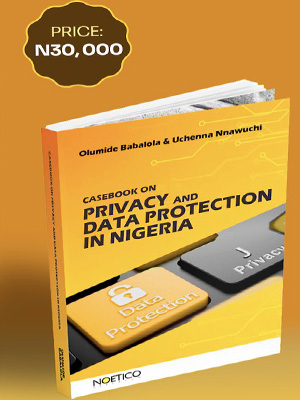 A timely new publication, Casebook on Privacy & Data Protection in Nigeria, co-authored by Olumide Babalola and Uchenna Nnawuchi, 📘Casebook on Privacy & Data Protection in Nigeria is now available on Amazon: https://a.co/d/8TmFZrd
______________________________________________________________________
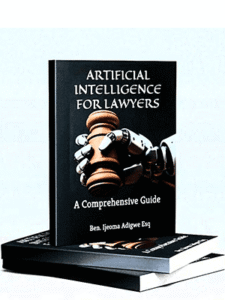
“Artificial Intelligence for Lawyers: A Comprehensive Guide”, authored by Ben Ijeoma Adigwe Esq., ACiarb (UK), LL.M, Dip. in Artificial Intelligence, Director at the Delta State Ministry of Justice, Asaba, Nigeria.
A timely new publication, Casebook on Privacy & Data Protection in Nigeria, co-authored by Olumide Babalola and Uchenna Nnawuchi, 📘Casebook on Privacy & Data Protection in Nigeria is now available on Amazon: https://a.co/d/8TmFZrd
______________________________________________________________________
“Artificial Intelligence for Lawyers: A Comprehensive Guide”, authored by Ben Ijeoma Adigwe Esq., ACiarb (UK), LL.M, Dip. in Artificial Intelligence, Director at the Delta State Ministry of Justice, Asaba, Nigeria.
 How to Order:
📞 Call, Text, or WhatsApp: 08034917063 | 07055285878
📧 Email: benadigwe1@gmail.com
🌎 Website: www.benadigwe.com
Ebook Version: Access it directly online at https://selar.com/prv626
________________________________________________________________________
[A MUST HAVE] Evidence Act Demystified With Recent And Contemporary Cases And Materials
How to Order:
📞 Call, Text, or WhatsApp: 08034917063 | 07055285878
📧 Email: benadigwe1@gmail.com
🌎 Website: www.benadigwe.com
Ebook Version: Access it directly online at https://selar.com/prv626
________________________________________________________________________
[A MUST HAVE] Evidence Act Demystified With Recent And Contemporary Cases And Materials