*Investigative And Adjudicatory Powers Of LPDC Under Its 2020 Rules Breaches Principle Of Natural Justice, Should Be Reviewed – Okutepa SAN

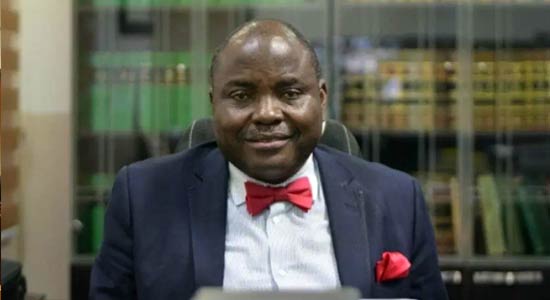
By Jibrin Samuel Okutepa SAN
Before the Legal Practitioners Disciplinary Committee Rules 2020, was issued by the Hon the Chief Justice of Nigeria, there was the Legal Practitioners Disciplinary Committee Rules of 2006. Under the 2006 Rules, of the LPDC, preliminary investigations against legal practitioners for alleged professional misconduct were carried out by the Nigerian Bar Association.
The NBA then after its committees had done preliminary investigations, made a report of its finding that a prima facie had been made against the erring legal practitioner or practitioners as the case may be. The NBA will then on behalf of the legal profession file complaints before the LPDC against the legal practitioners concerned. The NBA was the one prosecuting on behalf of the the legal profession then.
The statutory arrangement whereof the NBA prosecute its erring members who engage in acts of professional misconduct was sadly under the very eyes of NBA, thrown away with the issuance of the LPDC 2020 Rules issued by the then the Hon the Chief Justice of Nigeria. As at the time material to this write up, the current Rules under which Legal Practitioners who misconduct themselves are being proceeded against is the 2020 LPDC Rules. As to whether NBA or the Hon the Chief Justice of Nigeria had inputs of well experienced prosecutors at LPDC or even lawyers who defended their colleagues before the LPDC Rules 2020 was issued is a question outside the purview of this write up.
Be that as it may, under the 2020 Rules, anybody can bring an originating application before LPDC to prosecute Nigerian lawyers accused of professional misconduct.Rule 5 of the Legal Practitioners Disciplinary Committee Rules 2020, permits LPDC, which by operation of law is an adjudicatory body, to filter/investigate the originating applications within a view to determining whether there is a prima facie case of professional misconduct against the legal practitioner against whom the said originating application was filed. Once the LPDC through its panels find that there was a prima facie case, it proceeds to try the originating application which by the LPDC Rules 2020, is to be supported by verifying affidavits and other necessary documents if any.
This article seeks to interrogate the constitutionality of this arrangement in which LPDC assumes the roles of investigatory and adjudicatory roles and in my humble view, the 2020 LPDC Rules is not only inconsistent with and contrary to section 11 (2) (e) of the Legal Practitioners Act and section 36 of the 1999 Constitution as amended, it has unwittingly turned LPDC into investigator and adjudicator at the same time contrary to the well established principle of law of considerable antiquity that investigations are not parts of adjudicating authorities. That LPDC is a Tribunal and performs the role of adjudication is beyond arguments.
As I said earlier I shall attempt to examine the legality and or the constitutionality of the Legal Practitioners Disciplinary Committee Rules 2020, referred to as the LPDC Rules, which vests in the LPDC, the duties and responsibilities of investigating complaints of professional misconduct against legal practitioners and at the same time try legal practitioners who in the view of the panel or panels of LPDC are prima facie liable or guilty of professional misconduct or infamous conduct in professional respects.
There is no dispute that the LPDC is a creation of statute. Section 11 of the Legal Practitioners Act, creates LPDC and sets out therein the duties of LPDC and its compositions thereof. That section provides that: There shall be a committee of the Body of Benchers to be known as the Legal Practitioners Disciplinary Committee (in this Act referred to as “the Disciplinary Committee”) which shall be charged with the duty of considering and determining any case where it is alleged that a person who is a member of the legal profession has misbehaved in his capacity as such or should for any other reason be the subject of proceedings under this Act.
(2) The Disciplinary Committee shall consist of—(a) a Chairman who shall not be either the Chief Justice of Nigeria or a Justice of the Supreme Court;(b) two Justices of the Court of Appeal one of whom shall be President of the Court of Appeal;(c) two Chief Judges;
(d) two Attorneys-General. who shall be either the Attorney-General of the Federation and the Attorney-General of a State or two State Attorneys- General; and(e) four members of the Association who are not connected with either the investigation of a complaint or the decision by the association to present a complaint against a legal practitioner for determination by the Disciplinary Committee. (Underlining mine for emphasis)
Before proceeding further, it is necessary to concede from the onset that section 10(7) of the Legal Practitioners Act vests in the Hon the Chief Justice of Nigeria the powers to make Rules for the Body of Benchers, for the Body of Benchers to exercise the powers vested in it by section 10 of the Legal Practitioners Act. Section 10 (7) of the Legal Practitioners Act provides that: The disciplinary powers conferred on the Body of Benchers under subsection (l) of this section shall be exercised in such manner as may be prescribed by rules made by the Chief Justice of Nigeria in that behalf.
As seen earlier, the LPDC is a committee of the Body of Benchers that was created to exercise quasi-judicial disciplinary powers over legal practitioners who misconducted themselves in professional respect. In the exercise of the power donated to the Chief Justice of Nigeria, the LPDC Rules, was issued. Rule 4 of LPDC Rules set out how disciplinary proceedings should be commenced against legal practitioners before the LPDC and the procedures to be followed by those who may have complaints against legal practitioners that engage in acts of professional misconduct. Rule 5 of the LPDC Rules then sets out what should be done with the originating processes filed before LPDC against legal practitioners.
It is submitted that from the procedures set out under Rule 5 of the LPDC Rules, the LPDC Rules, has decided to vest in LPDC the powers to investigate and the duty of considering and determining any case where it is alleged that a person who is a member of the legal profession has misbehaved in his capacity as such or should for any other reason be the subject of proceedings under the Legal Practitioners Act.
This particular Rule 5, it is submitted is illegal and contrary to section 11(2) (e) of the Legal Practitioners Act, which expressly permits four members of the Association who are not connected with either the investigation of a complaint or the decision by the association to present a complaint against a legal practitioner for determination by the Disciplinary Committee, to be member of LPDC. The intention of the draftsman of the Legal Practitioners Act is very clear. Those who took parts in the preliminary investigations of lawyers and have formed the opinion that there is a prima facie case are to be excluded from the membership of LPDC. The reasons for this will be made clear anon.
1.0. It is submitted that Rule 5 of the LPDC Rules which vests powers of investigation and determination of a prima facie case on the LPDC through its members who sit in panel of either one or three to form an opinion of there be a case to answer, and which opinion shall be the basis of a prima facie case before LPDC can exercise its duty of considering and determining any case where it is alleged that a person who is a member of the legal profession has misbehaved in his capacity as such or should for any other reason be the subject of proceedings under this Act is not only contrary to section 11 of the Legal Practitioners Act, but it fatally offends the rules of natural justice and the right to fair hearing enshrined in section 36(1) of the 1999 Constitution as amended.
The intention of the draftsman of the Legal Practitioners Act is that those who took part in the investigations of complaints against legal practitioners are not to sit as members of the LPDC to decide the said complaints against the legal practitioners concerned. That is why the Legal Practitioners Act expressly said that those who are to sit to adjudicate over complaints in the LPDC shall be those who are not connected with either the investigation of a complaint or the decision by the association to present a complaint against a legal practitioner for determination by the Disciplinary Committee.
There is no doubt that Rule 4 of the LPDC Rules grants direct access to persons who have complaints of professional misconduct against lawyers to file such complaints of professional misconduct before LPDC.
LPDC it is submitted was created by law to try complaints of professional misconduct against lawyers. It was not created as an investigatory organ. But LPDC panel or panels now filter originating processes as filed through one man or three-man panel of the members of LPDC to form an opinion that there is a prima facie case for the lawyers concerned to answer before LPDC. The LPDC then tries the erring lawyers upon the basis of the opinions formed or investigations conducted by members its members, made up of either the one man Panel or three-man panel of LPDC based on the filtering stages conducted by LPDC members that there is a prima facie case to answer.
The procedures set out in Rule 5 of the LPDC Rules, it is humbly submitted has unwittingly turned LPDC into investigator of the Originating process and adjudicating authority over the cases it investigated. There are inherent dangers herein. In a similar situation such as we have in Rule 5 of the LPDC Rules, the Supreme Court per his lordship, Aniangolu JSC as he then was, was firm when his lordship put the points I am struggling to make in this admirable fashion as shown here under.
This is what his lordship said: I shall return to this later. With much respect to Chief Williams, listening to him presenting his view point about the duties of the Legal Practitioners Disciplinary Committee viz-a-viz the offending legal practitioner, one is left with the cold impression of an Administrative Committee listlessly gathering materials, and administratively preparing the ground, for the real court or tribunal to later come forward and sit in judgment, thus presenting that committee’s job as almost inconsequential for the purpose of the fate of the legal practitioner. That is far from being so. By the “direction” of the Legal Practitioners Disciplinary Committee (the choice of that word is regrettable for the word is a misnomer and is misleading) a legal practitioner against whom that “direction” has been given may well have taken his first step towards his jeopardy and his ruin, and may well be advised, in his own interest, to take immediate action at that stage to ward off the avalanche before it gathers momentum. Better still, where the option exists, for him to make his moves ever before the “direction” is given. Permit this digression my Lords, for which I plead for indulgence, but I am merely emphasising the importance of a decision of the Disciplinary Committee, as a decision (otherwise called “direction”) and, therefore, how necessary it is for the processes by which that decision was arrived at, to be correct. The decision may well be the beginning of an event which would be worse than death for him since disbarring him would affect his livelihood, his reputation and his profession. See the case of Legal Practitioners Disciplinary Committee vs. Chief Gani Fawehinmi(1985) LPELR-1776(SC)at 31-32.
Rule 5 of the LPDC Rules as presently constituted, has made the LPDC to become the investigator of the question of prima facie case of petitions before it in the form of originating applications. It then forms an opinion whether there is or there are prima facie case or cases before proceeding to try the case. Although these petitions and or originating summons are to be filters and or considered by the panels constituted by the chairman, the members of these panels are still members of LPDC. They are not independent of LPDC. The members of LPDC in these panels are those who give the opinions of there be a prima facie case which is the first step towards the jeopardy and ruin of the lawyers involved. The lawyers involved are not heard at this stage and there is nothing they can do to take immediate action at that stage to ward off the avalanche of what goes on in the minds of the members of LPDC before it gathers momentum for their jeopardy and ruin.
It is safe to submit that possibility of biases exist when the real trials or hearing of the originating application commences before LPDC of which those who took parts in the initial flirtations or investigations are still parts and parcel of the membership of LPDC. As his lordship, Aniangolu JSC as he then was put it inLPDC vs Chief Gani Fawehinmi (supra), at 38-40,It is the accepted law that basic procedural and other requirements of the rules of natural justice have to be observed by every tribunal or authority which is under a duty to act judicially. In MARAN DANA MOSQUE (BOARD OF TRUSTEES v. BADI-UD-DIN MAHMUD & Anr. (1966) 1 ALL E.R. 545 at 550 P.C. a Minister was said by the Privy Council to be acting in a judicial or quasi-judicial capacity in satisfying himself whether there had been a contravention in respect of an Islamic College and must therefore observe the rules of natural justice. The same Court in ATTORNEY- GENERAL v. RYAN (1980) 2 W.L.R. 143 held that a Minister in Bahamas who, under Section 7 of the Bahaman Nationality Act 1973, had power to refuse an application for registration, was a person having legal authority to determine a question affecting the rights of individuals and, therefore, was bound to observe the principles of natural justice when exercising that authority.” “The term “Real Likelihood” may not be capable of exact definition since circumstances giving rise to it may vary from case to case but it must mean at least. “a substantial possibility of bias”. This may arise because of personal attitudes and relationships such as: personal hostility; personal friendship; family relationship; professional and vocational relationship; employer and employee relationship; partisanship in relation to the issue at stake, and a whole host of other circumstances from which the inference of a real likelihood of bias may be drawn.
The Legal Practitioners Act under section 11 did not contemplate investigations as parts of the duties of LPDC. No, it did not, and LPDC is within the meaning and definition, a Court or Tribunal. It is not its duty to investigate to come to the opinion that a prima facie case has been made as it has been saddled with under Rule 5 of the LPDC Rules. The duty of the Court is to not investigative, but to decide between the parties based on the evidence presented. It was held in the case of Ohida vs. Military Administrator Kogi State (2000) 12 NWLR Part 680 Page 24 at 42 Para G per Musdapher JCA, as he then was, that a trial is not an investigation and investigation is not the function of the Court.
The function of the Court is to decide between the parties only on the basis of what has been presented, tested and demonstrated. See Nteogwuile vs. Otuo (2001) 16 NWLR (Pt.738) 58 where the Supreme Court cautioned that the tendering of an exhibit was no licence for the trial Judge to comb through the document and use any material that came his way as if they were facts pleaded and evidence adduced at the trial. Given the role LPDC has been given to play under the LPDC Rules aforesaid, it is submitted that these roles are in direct conflicts with the adjudicatory duties of LPDC under section 11 of the Legal Practitioners Act and the requirements of independence of adjudicatory Tribunal or Committee under section 36 of the 1999 Constitution. It is submitted that a committee that engages in investigation of complaints/petitions, and forms an opinion that there is a prima facie case, before proceeding to hearing the same petition/complaint, cannot be expected to exhibit the attributes of impartiality and neutrality expected of adjudicatory Tribunal. Those members who participated in the one man or three-man panel for purposes of filtering are members of the LPDC.
The problems created by Rule 5 of the LPDC Rules, were the kind of problems that the 2006 Legal Practitioners Disciplinary Committee Rules had solved. LPDC had no role to play in investigations or filtering of petitions as Rule 5 has now introduced. NBA was the one that was investigating petitions against lawyers and after the investigations, if prima facie case was established, NBA initiates complaints before LPDC. That way LPDC and its members will not filter or investigate originating applications to determine prima facie case, before proceeding to the hearing of the complaints filed against lawyers as it is being done now by LPDC. This is a serious issue that must be urgently addressed if we are to make serious headways in our disciplinary processes.
Prior to now the problems created by Rule 5 of the LPDC Rules, in which LPDC is being saddled with filtering or investigations of originating applications by a panel constituted by the Hon Chairman of LPDC were the same problems, the Supreme Court identified in LPDC vs Gani Fawehinmi (supra). In that case the Supreme Court pointed out that:- The problem highlighted in this appeal might not have arisen had the neat arrangement provided for, by the 1962 Legal Practitioners Act, No. 33 of1962 been left intact, or been re-enacted in the Legal Practitioners Act. 1975. Under the 1962 Act, there were two distinct bodies created. (i) the Legal Practitioners Investigating Panel established under Section 6(3) of the Act; charged with the duty of conducting preliminary investigation into any case of professional misconduct alleged against a legal practitioner and consisting of the Attorney-General of the Federation and of the Regions and ten legal practitioners “of not less than 5 years standing;ii) the Legal Practitioners Disciplinary Tribunal established by Section 6(1) of the Act with a Judge of the High Court presiding (S.6(2)) whose duty was the considering and determining of any case of professional misconduct investigated by the Legal Practitioners Investigating Panel and referred to it by the Panel. By this arrangement there was no question of overlapping of duties to bring about the situation created in the present proceedings in which the complaint is that the same people are the accusers and the judges all rolled into one. But the Legal Practitioners Investigating Panel was abolished under the 1975 Act leaving the I.P.D.C. with the task of considering and determining the case.
It is necessary to draw attention to the points that the problems identified by the Supreme Court in the case of LPDC vs Gani Fawehinmi (supra), was corrected with the promulgation of Decree No 21 of 1994, which removed the LPDC from having anything to do with filtering or investigations of petitions against legal practitioners. Indeed, those who have been appointed members of LPDC must not have anything to do with investigations or filtering of petitions. See Obiajulu Nwalutu vs. Nigerian Bar Association & Anor(2019) LPELR-46916(SC)
In Obiajulu Nwalutu vs. Nigerian Bar Association & Anor(supra), the Supreme Court said:Before the decision of this Court in Legal Practitioners Disciplinary Committee v. Chief Gani Fawehinmi (1985) 2 NWLR (Pt. 7) 300 ; (1985) 2 NSCC Vol. 16 page 998, the Legal Practitioners Act No. 15 of 1975 provided in Section 10 the establishment of a Disciplinary Committee and the composition of its membership. Section 10(1) and (2) provided as follows:-
“10(1) There shall be a committee to be known as the Legal Practitioners’ Disciplinary Committee (in this Act referred to as “the Disciplinary Committee”) which shall be charged with the duty of considering and determining any case where it is alleged that a person whose name is on the roll has misbehaved in his capacity as a legal practitioner or should for any other reason be the subject of proceedings under this Act.
(2) The Disciplinary Committee shall consist of
(a) the Attorney-General of the Federation, who shall be chairman;
(b) the Attorneys-General of the States in the Federation;
(c) twelve legal practitioners of not less than ten years’ standing appointed by the Benchers on the nomination of the Association”.
The composition of the Legal Practitioners Disciplinary Committee was later amended by the Legal Practitioners (Amendment) Decree No. 21 of 1994which was published as Supplementary to the Laws of the Federation of Nigeria 2004. Section 11 (1) & (2)provides as follows: –
“11-(1) There shall be a Committee of the Body of Benchers to be known as the Legal Practitioners Disciplinary Committee (in this Act referred to as “the Disciplinary Committee”) which shall be charged with the duty of considering and determining any case where it is alleged that a person who is a member of the legal profession has misbehaved in his capacity as such or should for any other reason be the subject of proceedings under this Act.
(2) The Disciplinary Committee shall consist of:-
(a) a Chairman who shall not be either the Chief Justice of Nigeria or a Justice of the Supreme Court;
(b) two Justices of the Court of Appeal one of whom shall be the President of the Court of Appeal.
(c) two Chief Judges;
(d) two Attorneys-General who shall be either the Attorney-General of the Federation and the Attorney- General of the State or two State Attorneys-General; and
(e) four members of the Association who are not connected with either the investigation of a complaint against a legal practitioner for determination by the Disciplinary Committee”.
The amendment addressed the problem which arose in L.P.D.C v. Fawehinmi supra where the Attorney-General of the Federation was the Chairman of the Disciplinary Committee and also initiated disciplinary proceedings against the respondent. The respondent applied to Court for an order prohibiting the Disciplinary Committee as constituted from hearing the charges of professional misconduct preferred against him having regard to the principles of natural justice embedded in the principle of nemo judex in causa sua (no one can be judge in his own cause). In seeking the order, the respondent based his application on Section 42 (3) of the 1979 Constitution and sought for the enforcement of his fundamental right to fair hearing under Section 33 of the Constitution. He predicated his complaint on the likelihood of bias since the Attorney-General and 3 other members of the Committee had actively participated in investigating the matter and had in an earlier occasion expressed strong opinions against the respondent. The trial Judge found for the respondent and the Court of Appeal dismissed the appeal filed by the Committee. On a further appeal to the Supreme Court, the appeal was dismissed. The Court held that in the exercise of its disciplinary authority over erring legal practitioners, the Legal Practitioners Disciplinary Committee must observe the rules of natural justice and in that context, it must not only avoid bias but also the likelihood of bias. Thus the Attorney-General of the Federation has ceased to bethe Chairman of the Disciplinary Committee. Any direction given by the Disciplinary Committee against a legal practitioner invariably is challenged at the Supreme Court and this is the rationale for excluding the Chief Justice and Justices of the Supreme Court from being members of the Disciplinary Committee. Where any of the members listed in Section 11 (2) (b)-(e) is a complainant he cannot take part in the disciplinary proceedings as such a member.
I have quoted these decisions in extenso to demonstrate one thing. Justice is rooted in confidence. It is submitted that in this write up, I am not insinuating anything other than the observation of purity of justice. Those who participated in the filtering processes may not sit when the results of their investigations or filtering processes become object of adjudication before the LPDC of which they are still members. They stay in the same office and the same chambers with those who will decide and give directions. This is not correct. It is unacceptable.
The principle that those who have the duty to decide must not give appearance of bias is of considerable antiquity. R vs Sussex Justices, Ex parte McCarthy([1924] 1 KB 256, is a leading English case on the impartiality and recusal of judges. It is famous for its precedence in establishing the principle that the mere appearance of bias is sufficient to overturn a decision. It also brought into common parlance the often quoted aphorism “not only must Justice be done; it must also be seen to be done.” This authority is notorious for the principle that in any setting where an impartial decision is expected those saddled with the duty to produce the result must not give appearance of bias. Justice demands that they live above board. Any appearance of bias destroys the confidence of the people.
There is a need to state the facts of this case for us to appreciate the importance of the points I am making here. In 1923 McCarthy, a motorcyclist, was involved in a road accident which resulted in his prosecution before a magistrate’s court for dangerous driving. Unknown to the defendant and his solicitor, the clerk to the justices was a member of the firm of solicitors acting in a civil claim against the defendant arising out of the accident that had given rise to the prosecution. The clerk retired with the justices, who returned to convict the defendant. On learning of the clerk’s provenance, the defendant applied to have the conviction quashed. The justices swore affidavits stating that they had reached their decision to convict the defendant without consulting their clerk.
The appeal was essentially one of judicial review and was heard at the King’s Bench division by Lord Chief Justice Hewart. In a landmark and far-reaching judgement, Lord Hewart CJ said: It is said, and, no doubt, truly, that when that gentleman retired in the usual way with the justices, taking with him the notes of the evidence in case the justices might desire to consult him, the justices came to a conclusion without consulting him, and that he scrupulously abstained from referring to the case in any way. But while that is so, a long line of cases shows that it is not merely of some importance but is of fundamental importance that justice should not only be done, but should manifestly and undoubtedly be seen to be done. The question therefore is not whether in this case the deputy clerk made any observation or offered any criticism which he might not properly have made or offered; the question is whether he was so related to the case in its civil aspect as to be unfit to act as clerk to the justices in the criminal matter. The answer to that question depends not upon what actually was done but upon what might appear to be done. Nothing is to be done which creates even a suspicion that there has been an improper interference with the course of justice. Speaking for myself, I accept the statements contained in the justices’ affidavit, but they show very clearly that the deputy clerk was connected with the case in a capacity which made it right that he should scrupulously abstain from referring to the matter in any way, although he retired with the justices; in other words, his one position was such that he could not, if he had been required to do so, discharge the duties which his other position involved. His twofold position was a manifest contradiction. In those circumstances I am satisfied that this conviction must be quashed, unless it can be shown that the applicant or his solicitor was aware of the point that might be taken, refrained from taking it, and took his chance of an acquittal on the facts, and then, on a conviction being recorded, decided to take the point. On the facts I am satisfied that there has been no waiver of the irregularity, and, that being so, the rule must be made absolute and the conviction quashed.
The ruling is derived from the principle of natural justice and has been followed throughout the world in countries that use the English legal system. It has been applied in many diverse situations, including immigration cases, professional disciplinary cases, domestic tribunals such as members’ clubs, and perhaps most famously in the Pinochet case where the House of Lords overturned its own decision on the grounds of Lord Hoffman’s conflict of interest. See Re: Pinochet case delivered by the House of Lords on the 17th December 1998 and reasons delivered on the 15th January 1999.
It is submitted that let the right thing be done and heaven will not fall.The right thing to do is for LPDC not to be involved in investigations or filtering of originating applications. The jurisdiction of LPDC to decide impartially with undiluted purity of justice devoid of biases will be in grave jeopardy if members of LPDC will be doing investigations of originating applications and then form the opinions of prima facie case before hearing the case against legal practitioners. That will be tantamount to LPDC engaging in investigations contrary to section 11 of the Legal Practitioners Act and section 36 of the 1999 constitution as amended, for as the Supreme Court said in LPDC vs Gani Fawehinmi (supra), it goes without saying that in the exercise of its disciplinary authority over erring legal practitioners, the Legal Practitioners Disciplinary Committee, must observe the rules of natural justice. In that context, not only must it not be biased against a legal practitioner whose conduct is being questioned, but also it must not place itself in a position in which it may appear that there is a real likelihood of bias.
Discipline of lawyers is a serious matter. We as lawyers must do everything to ensure that nobody is left in doubt that in our disciplinary adjudicatory processes all is done properly and in accordance with the dictates of purity of justice. We must respect the law of the land and do all to ensure that no lawyer is subjected to trials before LPDC in violation of the law of the land. The Supreme Court made the points I am struggling to convey in the case of Gabriel Gbenoba, Esq vs Legal Practitioners Disciplinary Committee & Anor, (2021) LPELR-53064(SC).
His lordship, Ogunwumiju, JSC was clear on the points. The learned jurist in his characteristics clarity and erudition in the lead judgment of the Supreme Court said: My Lords, the issue of the weight to be attached to the documents tendered by P.W.1, a secretariat staff of the 1st Respondent has been settled by this Court in Nwalutu v. NBA supra. In that case, Chief A.A. Aribisala SAN had sworn to a written statement which was tendered/adopted by one Zibai Blessed Katung. This Court held emphatically following the decision of this Court in LPDC v. Gani Fawehinmi (1985) 2 NWLR Pt.7 Pg.300 at Pg.383-384 that the LPDC which exercises the important function of considering and determining cases of misconduct alleged against legal practitioners must only consider valid and credible evidence adduced before it upon which to base its decision to disbar the legal practitioner. This Court in Nwalutu v. NBA held emphatically that the two persons who wrote the petitions against the Appellant remain “proposed witnesses” since they did not appear to give oral evidence or tender the documents on which their complaints were based. I have read the record thoroughly. This is a case in which the facts are highly contentious. The petitions on one hand and the assertions of the Appellant regarding the totality of his work and circumstances justifying his professional fees etc., on the other hand. The facts are not as cut and dried as learned Respondents’ counsel would have us believe. If the amended notice of appeal had complained against the factual basis of the findings of the Committee, I would have had no hesitation in making a finding of fact in favour of the Appellant and allowing this appeal on that ground. The Appellant had raised an objection to the admissibility of the documents through P.W.1 but his objection was overruled on 9/9/2013. It is incorrect to say he never objected. During the course of the LPDC proceedings, the Appellant had raised an objection to the tendering of the petitions and exhibits attached to them through a staff of the 1st Respondent. The LPDC held on this point as follows on Pg. 228 of the record. “A review of the foregoing shows quite distinctly that a disciplinary proceeding before the LPDC is in a different evidential genre of its own. Firstly, the LPDC accepts a case on the basis that a prima face case has been made against the legal practitioner, secondly, all the documents considered by the NBA in reaching this decision and a copy of the complaint must be forwarded to the Secretary of the LPDC. Now, the said Secretary has tendered these documents and they have been admitted as exhibit P1-P83. It seems to us strange that the Respondent will be objecting to documents which have come from a forum i.e. the NBA to which he has submitted responses to the petition and upon which a finding of prima facie case has been reached by the same NBA. Before the LPDC, the role of the Respondent is principally to rebut the prima facie finding against him. To do so, we must be seized of those documents that the investigating panel was privileged to utilize in coming to its conclusion. PW1 is the only witness that could have conveniently tendered them in evidence being their custodian. The documents are clearly not hearsay evidence so is the evidence of PW1 as he has not stated any of the facts contained therein as if he was a participant.
All he has done is to produce documents reposed in his custody. The objection is without merit and we overrule it. The evidence of PW1 is therefore relevant and admissible”. I have never read the Law so clearly misconceived and put on its head as indicated above. The LPDC Rules 10(2) states clearly that the Evidence Act shall apply as in civil proceedings. The documents tendered by the staff of the 1st Respondent have no probative value to prove the truth of their contents. It can only prove that indeed a petition was written to the NBA. Without a witness adopting and speaking to the petition to prove the truth of its contents, it is documentary hearsay and inadmissible as credible evidence of its contents. The petition tendered by PW1 and admitted by the 1st Respondent had absolutely no probative value in the circumstances of this case. I cannot agree that the purport of Rule 4 of the LPDC Rules is that S. 11 (1) of the Legal Practitioners Act allows the bare petitions and answers without more used to decide that a prima facie case had been made against the Legal Practitioner will also be used to form or ground the basis of the determination of the case against the Legal Practitioner during this trial by the LPDC. That is the height of Star Chamber reasoning. My Lords, I understand the need to enforce discipline at the Bar and everyone would be on board to ensure that we have a credible Bar that has the confidence of litigants. However, throwing away all basic rules of evidence to achieve this end cannot augur well for the Legal profession. It is tantamount to throwing the baby away with the bath water. In the absence of an opportunity for the Appellant to cross examine the petitioner, how did the LPDC arrive at the conclusion of who was telling the truth? A determination of the credibility of a witness is almost sacred as my Lord Eko JSC aptly puts it. How do you ascribe probative value to documents in the absence of an opportunity to judge its cogency, consistency with other evidence, or the credibility of an absent witness whose demeanor, personality had not been subjected under the fire of cross examination to the Court’s scrutiny. Rule 5 states that a complainant (petitioner) is a party to the proceedings who can be represented personally or through counsel of his choice. In this case, the petitioner abstained from both choices. The interest of justice has not been served in the circumstances of this case wherein the documents of an abandoned petition were used to consider the facts and the merits of the case to arrive at the Directions of the LPDC. Per Ogunwumiju, JSC PP. 35-40, paras. C-B
It is my suggestion in conclusion that all stakeholders in the legal profession must come together to fashion out proper rules of discipline in the legal profession. As my lord Ogunwumiju,JSC aptly put it I understand the need to enforce discipline at the Bar and everyone would be on board to ensure that we have a credible Bar that has the confidence of litigants. However, throwing away all basic rules of impartiality of adjudicatory process and then combine investigations and adjudication in one body, the LPDC to achieve this end cannot augur well for the Legal profession. It is tantamount to throwing the baby away with the bath water.
 Reimagine your practice with the power of AI “...this is the only Nigerian book I know of on the topic.” — Ohio Books Ltd
Authored by Ben Ijeoma Adigwe, Esq., ACIArb (UK), LL.M, Dip. in Artificial Intelligence, Director, Delta State Ministry of Justice, Asaba, Nigeria.
Bonus:
Get a FREE eBook titled “How to Use the AI in Legalpedia and Law Pavilion” with every purchase.
Reimagine your practice with the power of AI “...this is the only Nigerian book I know of on the topic.” — Ohio Books Ltd
Authored by Ben Ijeoma Adigwe, Esq., ACIArb (UK), LL.M, Dip. in Artificial Intelligence, Director, Delta State Ministry of Justice, Asaba, Nigeria.
Bonus:
Get a FREE eBook titled “How to Use the AI in Legalpedia and Law Pavilion” with every purchase.
How to Order: 📞 Call, Text, or WhatsApp: 08034917063 | 07055285878 📧 Email: benadigwe1@gmail.com 🌐 Website: www.benadigwe.com
Ebook Version: Access directly online at: https://selar.com/prv626
_______________________________________________________________________ [A MUST HAVE] Evidence Act Demystified With Recent And Contemporary Cases And Materials
 _______________________________________________________________________