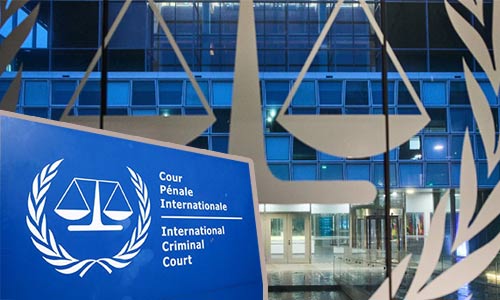
Foreign ministers from eight countries have rejected the United States’ latest sanctions against the International Criminal Court, warning that the measures could undermine the tribunal’s work, affect its staff and weaken international efforts to hold perpetrators of grave crimes accountable.

Canada, Denmark, France, Germany, Italy, Japan, the Netherlands and the United Kingdom issued a joint statement on October 9 reaffirming what they described as their “continued and unwavering support” for the independence, impartiality and integrity of the ICC.
All eight countries are States Parties to the Rome Statute, the treaty that established the Court.
“As committed supporters of the ICC, we regret and strongly disagree with the announcement of sanctions to be imposed upon the Court by the United States,” the ministers said.
Their intervention followed the Trump administration’s decision on Friday to impose sanctions directly on the ICC, escalating a long-running confrontation between Washington and the Hague-based tribunal.
U.S. Secretary of State Marco Rubio said the sanctions were intended to prevent the Court from exercising jurisdiction over Americans, maintaining that President Donald Trump would not permit the ICC to prosecute U.S. citizens.
“President Trump will never allow the International Criminal Court to prosecute Americans,” Rubio said.
He added that Washington would restrict transactions involving the Court and cut off resources available to it, describing the ICC as a “rogue court.” The measures include an initial six-month grace period and certain exemptions while the administration presses its demands.
The United States is not a party to the Rome Statute. Washington has objected to the ICC’s efforts involving nationals of countries that have not accepted the Court’s jurisdiction, particularly investigations concerning U.S. personnel and proceedings involving Israeli officials.
The eight governments, however, warned that the impact of the sanctions could extend beyond the institutional dispute between Washington and the ICC and affect the Court’s day-to-day ability to investigate and prosecute international crimes.
“Nevertheless, if put into effect, these sanctions will have a significant impact on the Court’s work, its dedicated staff and their families,” the ministers said.
They noted that ICC personnel work to bring persons accused of the most serious international crimes to justice while supporting victims of those crimes.
The governments also welcomed steps already taken by the ICC to prepare for possible sanctions, saying those measures could help the Court continue carrying out its responsibilities under the Rome Statute.
Reuters said ICC officials had been preparing for months for broader U.S. restrictions, including by reducing dependence on American technology and making alternative arrangements in areas such as banking and health insurance.
The ICC itself condemned the American action, describing it as an assault on the rule of law and the foundations of the international legal order.
“The Court cannot stand alone. Its fate now rests also in the hands of the states that created it,” the ICC said, calling on its member countries to help preserve its ability to operate.
The latest U.S. action goes beyond earlier sanctions imposed on individual ICC judges and prosecutors because it targets the Court as an institution. Under ordinary U.S. sanctions rules, companies within the American financial and commercial system can face restrictions on providing services to a sanctioned organisation.
The U.S. Treasury, however, included a six-month initial grace period and exemptions for some services, including telecommunications and certain software-related transactions. Rubio said the structure was intended to give the Court and its member states an opportunity to address Washington’s concerns.
The eight foreign ministers made clear that they intend to continue supporting the tribunal while also maintaining dialogue with countries outside the Rome Statute system.
“We remain both united in our support for the ICC and committed to engaging in constructive and inclusive dialogue with non-States Parties as we prepare for the Assembly of States Parties in December 2026,” they said.
They pledged to continue working collectively to support the Court, uphold what they described as the rules-based international system and advance accountability for serious international crimes.
The confrontation comes at a notable moment for international criminal justice. The U.S. sanctions were announced only hours after South African jurist Navi Pillay, who served on the ICC’s Appeals Chamber from 2003 to 2008, was awarded the 2026 Nobel Peace Prize.
The Nobel Committee said the award was intended in part to underscore the importance of international legal institutions at a time when judges and international courts were facing political pressure.
[A MUST HAVE] Evidence Act Demystified With Recent And Contemporary Cases And Materials

Available now for NGN 40,000 at ASC Publications, 10, Boyle Street, Onikan, Lagos. Beside High Court, TBS. Email publications@ayindesanni.com or WhatsApp +2347056667384. Purchase Link: https://paystack.com/buy/evidence-act-complete-annotation
______________________________________________________________________ “Enhance Legal Practice With Authoritative Reports” — Alexander Payne Offers Comprehensive Law Reports, Spanning Over A Century Of Nigerian Jurisprudence Interested buyers are encouraged to place their orders and enquiries via:
0704 444 4777, 0704 444 4999, 0818 199 9888
Website: www.alexandernigeria.com
Interested buyers are encouraged to place their orders and enquiries via:
0704 444 4777, 0704 444 4999, 0818 199 9888
Website: www.alexandernigeria.com