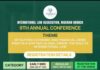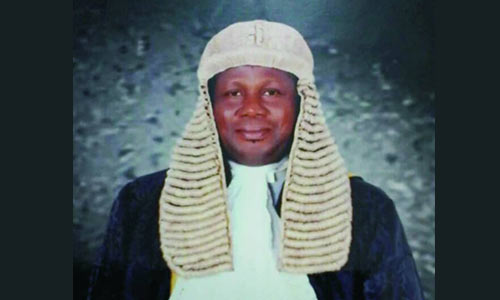
A PRESENTATION BY PROF. ABIODUN AMUDA-KANNIKE SAN, FCArb, FCE, LFWLS, FCIAP, FIIHP, ACTI, JP, AG, DIRECTOR, DEPARTMENT OF LEGISLATIVE SUPPORT SERVICES (DLSS), NATIONAL INSTITUTE FOR LEGISLATIVE AND DEMOCRATIC STUDIES NILDS ,ABUJA, AND THE PIONEER DEAN, FACULTY OF LAW, KWARA STATE UNIVERSITY MALETE Via ILORIN,KWARA STATE, AT THE INTERNATIONAL CONFERENCE OF JUDGES, ORGANIZED BY CIVIC ENLIGHTENMENT ORGANIZATION OF NIGERIA (CEON) ON BEHALF OF NATIONAL JUDICIAL INSTITUTE (NJI) OF NIGERIA WHICH TOOK PLACE AT ATLANTA – GEORGIA IN THE UNITED STATES OF AMERICA (USA) ON THE 16TH DAY OF DECEMBER, 2025 .

Email: amudakannikeabiodun@gmail.com
Abstract
The independence of the judiciary is a cornerstone of democracy, but it faces significant challenges in third-world countries, particularly in Nigeria. Executive interference, financial constraints, corruption, lack of institutional independence, and security of tenure are major obstacles that undermine the judiciary’s ability to dispense justice impartially. This abstract highlights the complexities of judicial independence in Nigeria, where the executive arm of government often exerts influence over the judiciary, compromising its independence. The abstract also explores the impact of these challenges on the rule of law, human rights, and the overall development of the country. It concludes that comprehensive reforms are necessary to promote institutional independence, financial autonomy, and accountability within the judiciary.
Keywords: Independence, judiciary, rule of law, challenges, third World, Nigeria judiciary
1.1 INTRODUCTION
The independence of the judiciary is a fundamental principle of democracy, essential for ensuring the rule of law, protecting human rights, and promoting good governance.[1] It is a cornerstone of modern constitutionalism, enabling the judiciary to perform its role as a check on the other branches of government.[2] However, in many third-world countries, including Nigeria, the independence of the judiciary is facing significant challenges, undermining its ability to dispense justice impartially and effectively.[3]
The judiciary plays a crucial role in ensuring that the government acts in accordance with the law and respects the rights of citizens.[4] Nevertheless, the Nigerian judiciary has faced numerous challenges, including executive interference, financial constraints, corruption, and lack of institutional independence.[5] These challenges have resulted in a loss of public trust and confidence in the judiciary, with far-reaching consequences for the rule of law, human rights, and development.[6]
This paper aims to examine the challenges facing the independence of the judiciary in Nigeria, with a view to identifying possible solutions to these problems. It will explore the concept of judicial independence, its importance in a democratic society, and the challenges facing the Nigerian judiciary. The paper will also examine the impact of these challenges on the rule of law, human rights, and development, and propose recommendations for strengthening the independence of the judiciary in Nigeria.
1.2 BACKGROUND OF THE STUDY
1.2.1 Independence of the Judiciary in Nigeria
The independence of the judiciary is a cornerstone of democracy, ensuring the rule of law and protecting human rights. In Nigeria, the judiciary has faced numerous challenges that threaten its independence, including undue political interference, corruption, inadequate funding, and lack of fiscal autonomy.
1.2.2 Historical Context
Nigeria’s judiciary has its roots in the pre-colonial era, with distinct methods of dispute resolution. The British colonial era introduced the Foreign Jurisdiction Act of 1843 and the Supreme Court of Lagos in 1863. After independence, the Nigerian Constitution has undergone various changes, with the 1999 Constitution guaranteeing judicial independence.[7]
1.2.3 Challenges to Judicial Independence
Despite constitutional guarantees, the Nigerian judiciary has struggled to assert its autonomy. The executive arm of government has been accused of interfering with the judiciary, including the suspension and removal of judges. The appointment process for judicial officers is also a contentious issue, with the National Judicial Council playing a key role in recommending candidates.[8]
1.2.4 Key Issues
- Inadequate Funding: The judiciary has faced significant funding challenges, compromising its independence and effectiveness.
- Corruption: Judicial corruption is a major issue, undermining the integrity of the judiciary and eroding public trust.
- Executive Interference: The executive arm of government has been accused of exerting undue influence over the judiciary, compromising its independence
1.3 STATEMENT OF WORK
1.3.1 Promoting Judicial Independence
This work aims to assess and promote the independence of the judiciary in [specific country/region]. The goal is to ensure that the judiciary can function without undue influence or interference, upholding the rule of law and protecting human rights.
1.3.2 Scope of Work[9]
- Conduct a comprehensive review of the current state of judicial independence in [specific country/region].
- Identify key challenges to judicial independence, including political interference, corruption, and inadequate funding.
- Develop recommendations for promoting judicial independence, including constitutional reforms, institutional strengthening, and capacity building.
1.3.3 Methodology
- Desk research: Review of existing literature, reports, and studies on judicial independence.
- Stakeholder consultations: Interviews and focus groups with judges, lawyers, civil society organizations, and government officials.
- Comparative analysis: Examination of best practices in other countries/regions.
1.4 THE OBJECTIVES
1.4.1 Main Objective[10]
- To examine the challenges facing the independence of the judiciary in third-world countries, with specific reference to Nigeria.
1.4.2 Specific Objectives
- To assess the impact of executive interference on the independence of the judiciary in Nigeria.
- To investigate the effects of corruption on the impartiality and effectiveness of the judiciary in Nigeria.
- To evaluate the role of financial autonomy in promoting the independence of the judiciary in Nigeria.
- To identify the challenges and opportunities for promoting judicial independence in Nigeria and other third-world countries.
- To provide recommendations for strengthening the independence and effectiveness of the judiciary in Nigeria and other similar contexts.
1.4.3 Research Questions
- What are the main challenges facing the independence of the judiciary in Nigeria?
- How does executive interference impact the independence of the judiciary in Nigeria?
- What role does corruption play in undermining the impartiality and effectiveness of the judiciary in Nigeria?
- How can financial autonomy promote the independence of the judiciary in Nigeria?
- What reforms can be implemented to strengthen the independence and effectiveness of the judiciary in Nigeria and other third-world countries?
1.5 SCOPE OF THE STUDY[11]
This study focuses on the independence of the judiciary in third-world countries, with a specific emphasis on Nigeria. The scope includes:
- Geographical scope: The study will concentrate on Nigeria as a case study, with potential implications for other third-world countries.
- Thematic scope: The study will examine the challenges facing judicial independence, including executive interference, corruption, financial constraints, and other relevant issues.
- Institutional scope: The study will explore the roles of the judiciary, executive, and legislative branches of government in promoting or undermining judicial independence.
1.5.1 Limitations of the Study
- Geographical limitation: The study’s focus on Nigeria may limit the generalizability of findings to other third-world countries.
- Methodological limitations: The study may rely on qualitative or quantitative methods, which have their own limitations.
- Access to information: The study’s reliance on publicly available data and information may limit its depth and accuracy.
- Timeframe: The study may be limited to a specific timeframe, which may not capture long-term trends or changes.
- Subjective perspectives: The study may be influenced by the researcher’s subjective perspectives or biases.
1.5.2 Delimitations
- Focus on judicial independence: The study will concentrate on judicial independence and related issues, rather than broader topics like human rights or economic development.
- Nigerian context: The study will prioritize the Nigerian experience, with potential implications for other third-world countries.
2.1 CONCEPTUAL FRAMEWORK[12]
The conceptual framework for this study on the independence of the judiciary in third-world countries, with a focus on Nigeria, is built around the following key concepts:
- Judicial Independence: The ability of the judiciary to perform its constitutional role without interference or influence from the executive, legislative, or other external actors.
- Rule of Law: The principle that all individuals, institutions, and government officials are subject to the law and accountable to it.
- Separation of Powers: The division of power among the three branches of government (executive, legislature and judiciary)
2.1.1 Definition of Key Terms
- Judicial Independence: “The institutional independence of the judiciary refers to the independence of the judicial branch from the executive and legislative branches of government.”[13]
- Rule of Law: “The rule of law is a system in which all individuals and institutions are subject to the law and accountable to it.”[14]
- Separation of Powers: “The separation of powers is a system of government where power is divided among the three branches of government to ensure checks and balances.”[15]
- Judiciary: “The branch of government responsible for the administration of justice through the interpretation and application of the law.”[16]
2.2 THEORETICAL FRAMEWORK
The theoretical framework for this study on the independence of the judiciary in third-world countries, with a focus on Nigeria, draws on several key theories:
- Separation of Powers Theory: This theory posits that the independence of the judiciary is essential to the rule of law and the protection of individual rights.[17]
- Judicial Independence Theory: This theory emphasizes the importance of judicial independence in ensuring that the judiciary can perform its constitutional role without fear or favor.[18]
- Institutional Theory: This theory highlights the importance of institutional design and governance in shaping the independence and effectiveness of the judiciary.[19]
2.2.1 Theoretical Perspectives
- Liberal Constitutionalism: This perspective emphasizes the importance of constitutional limits on government power and the protection of individual rights.[20]
- New Institutionalism: This perspective highlights the role of institutions in shaping the behavior and outcomes of political and economic systems.[21]
2.2.2 Theoretical Framework for Analysis
The theoretical framework for this study will draw on these theories and perspectives to analyze the challenges facing the independence of the judiciary in Nigeria. Specifically, it will examine:
- The impact of executive interference on judicial independence
- The role of institutional design and governance in promoting judicial independence
- The relationship between judicial independence and the rule of law
3.0 HISTORICAL OVERVIEW OF JUDICIAL INDEPENDENCE IN NIGERIA
3.1 PRE-COLONIAL ERA
In pre-colonial Nigeria, traditional justice systems varied across different kingdoms and empires. Some notable features include:
- Customary law: Traditional rulers and community leaders administered justice based on customary laws and norms.[22]
- Decentralized power: Power was often decentralized, with various levels of authority and dispute resolution mechanisms.[23]
- Community-based justice: Justice was often community-based, with emphasis on reconciliation and restorative justice.[24]
Examples of Pre-Colonial Justice Systems
- Hausa Kingdoms: The Hausa Kingdoms had a well-structured system of justice, with Islamic law (Sharia) playing a significant role.[25]
- Oyo Empire: The Oyo Empire had a complex system of justice, with the Alaafin (king) serving as the highest authority.[26]
3.2 COLONIAL ERA
The colonial era in Nigeria, which began in the late 19th century and ended in 1960, had a profound impact on the country’s judicial system. Some key features include:
- Imposition of British law: The British imposed their own system of law and justice on Nigeria, which was often alien to the local population.[27]
- Establishment of colonial courts: The British established colonial courts, which were often staffed by British judges and magistrates.[28]
- Suppression of traditional justice systems: The British colonial authorities often suppressed traditional justice systems, viewing them as inferior to British law.[29]
- Limited access to justice: Access to justice was limited for many Nigerians, particularly in rural areas.[30]
Legacy of Colonialism
- Inheritance of colonial laws: Nigeria inherited many colonial laws and institutions after independence, which continued to shape the country’s judicial system.[31]
- Impact on traditional justice systems: The suppression of traditional justice systems during the colonial era had a lasting impact on the country’s judicial landscape.[32]
3.3 POST-COLONIAL ERA
The post-colonial era in Nigeria’s judicial history has been marked by significant challenges to the independence of the judiciary. Despite the country’s transition to independence in 1960, the judiciary has continued to face interference from the executive and legislative branches of government.The Willinkins report was incorporated in to the 1960 constitution
Key Features of the Post-Colonial Era
- Executive Interference: The executive branch has consistently sought to influence the judiciary, often through the appointment and removal of judges.
- Lack of Financial Autonomy: The judiciary has struggled with inadequate funding, which has compromised its ability to function effectively.
- Judicial Subservience: The judiciary has often been accused of being subservient to the executive branch, undermining its independence and impartiality.[33]
Notable Cases and Events
- The Treasonable Felony Trial of Obafemi Awolowo (1962): This case highlighted the willingness of the executive branch to interfere with the judiciary, as the government sought to secure a conviction.
- The Removal of Chief Justice Walter Onnoghen (2019): This incident raised concerns about the independence of the judiciary and the rule of law, as the President’s actions were seen as an attempt to undermine the judiciary.[34]
Challenges and Implications
- Undermining Judicial Independence: The lack of financial autonomy and executive interference have compromised the independence of the judiciary, undermining its ability to deliver impartial justice.
- Eroding Public Trust: The perceived lack of independence and impartiality has eroded public trust in the judiciary, undermining the rule of law and the administration of justice.[35]
3.4 THE EVOLUTION OF JUDICIAL INDEPENDENCE IN NIGERIA
The evolution of judicial independence in Nigeria has been a challenging and complex process.
Historical Background
Nigeria’s judicial system was established during the colonial era, with the British imposing their legal system on the country. After independence in 1960, the judiciary faced numerous challenges, including political interference and manipulation. The military rule further eroded judicial independence, with decrees that ousted the jurisdiction of courts and criminalized litigation.[36]
Key Factors Affecting Judicial Independence
- Mode of Appointment and Removal of Judges: The appointment process is often influenced by the executive branch, and the removal of judges can be politicized.
- Security of Tenure and Remuneration: Judges’ salaries and benefits have improved over time, but the executive still has significant control over the judiciary’s budget.
- Freedom from Political Interference: The judiciary has faced interference from the executive and legislative branches, compromising its impartiality.[37]
Challenges to Judicial Independence
- Political Interference: Politicians often attempt to manipulate the judiciary for their own ends.
- Corruption: Bribery and other forms of corruption have compromised the integrity of judges and court proceedings.
- Resource Constraints: Limited funding and resources have hindered the effectiveness of the judiciary.
- Security Concerns: Security challenges in some regions have posed a threat to judicial independence.[38][39]
Efforts to Enhance Judicial Independence
- Constitutional Provisions: The 1999 Constitution of Nigeria establishes the judiciary as a separate arm of government and guarantees judges’ security of tenure.
- Judicial Autonomy: Some states have granted financial autonomy to the judiciary, reducing the influence of the executive branch.
- Anti-Corruption Measures: Bodies like the National Judicial Council (NJC) and the Economic and Financial Crimes Commission (EFCC) have been involved in investigating and prosecuting corrupt judges.[40]
4.0 CHALLENGES TO JUDICIAL INDEPENDENCE IN NIGERIA
4.1 EXECUTIVE INTERFERENCE
Executive interference in Nigeria’s judiciary manifests in various ways, undermining the independence of the judiciary. Some key areas of concern include:[41]
- Appointment and Removal of Judges: The executive arm of government has significant influence over the appointment and removal of judges, which can lead to manipulation and compromise the impartiality of the judiciary. For instance, the President or Governor appoints judicial officers based on recommendations from the National Judicial Council (NJC), but can exploit weaknesses in the enabling law to thwart the appointment of undesired candidates.
- Financial Control: The executive controls the judiciary’s budget, which can limit the judiciary’s ability to function effectively. Although the Constitution guarantees financial autonomy for the judiciary, the executive has been known to underfund the judiciary or use funding as a tool for leverage.
- Disregard for Court Orders: The executive has been accused of disobeying court orders, which erodes the authority of the judiciary and undermines the rule of law. Examples include the refusal to obey bail orders granted to certain individuals, such as Dasuki and Elzakzaki.
- Provision of Benefits: The executive provides benefits like buildings, residences, and vehicles to judges, which can create a sense of obligation and compromise judicial independence. For example, the Lagos State Government’s flagging-off of construction of houses for judges raised concerns about the potential impact on judicial independence.
These forms of executive interference can have far-reaching consequences for the independence and impartiality of the judiciary, ultimately affecting the delivery of justice in Nigeria.[42][43]
4.2 FINANCIAL CONSTRAINTS DIRECTLY
Financial constraints in Nigeria’s judiciary stem from inadequate budgetary allocation, delayed disbursement of funds, and lack of fiscal autonomy. Here are some key points:
- Inadequate Budgetary Allocation: The judiciary has been underfunded, with the executive withholding up to 60-70% of its budget, leading to significant operational shortfalls.[44]
- Lack of Fiscal Autonomy: The judiciary’s financial dependence on the executive undermines its independence, making it vulnerable to political pressure. The Nigerian Bar Association (NBA) has emphasized that financial autonomy is non-negotiable.[45][46]
- Delayed Disbursement of Funds: Bureaucratic delays hinder the timely disbursement of funds, further exacerbating the judiciary’s financial woes.
- Impact on Judicial Independence: The lack of financial autonomy and inadequate funding compromise the judiciary’s ability to function impartially and effectively, eroding public confidence in the rule of law.[47]
- Proposed Solutions: To address these issues, experts recommend implementing fiscal autonomy, increasing funding, and ensuring transparency in budget spending. Some suggest a formula-based minimum allocation for the judiciary to prevent arbitrary cuts.
4.3 CORRUPTION AND BRIBERY IN NIGERIA’S JUDICIARY
Corruption and bribery are significant challenges facing Nigeria’s judiciary, undermining the rule of law and eroding public trust in the justice system.[48] Here are some key points:
- Prevalence of Bribery: According to a survey by the United Nations Office on Drugs and Crime (UNODC) and the National Bureau of Statistics (NBS), judges received the largest average bribe amount, with N31,000 per bribe in 2023.[49]
- Judicial Corruption: Corruption in the judiciary is particularly concerning, as it can lead to biased judgments and undermine the integrity of the justice system. About 61% of respondents in a Chatham House survey believed that judges in Nigeria are likely to accept bribes to influence their rulings.[50]
- Election Petitions and Corruption: Election petitions are often linked to bribery and corruption in the judiciary. A report by the Independent Corrupt Practices and Other Related Offences Commission (ICPC) revealed that N9.45 billion was offered and paid as bribes to judicial officials between 2018 and 2020, with a significant portion related to election litigation.[51]
- Consequences: Corruption in the judiciary has severe consequences, including wrongful convictions, miscarriages of justice, and impunity for offenders. It also perpetuates inequality by providing advantages to those who can afford to bribe judges.[52]
- Reform Efforts: To combat corruption, experts recommend strengthening institutional structures, enhancing judicial independence, and improving accountability mechanisms. Some suggest implementing socially embedded public pledges for judges and establishing social accountability to the communities they serve.[53]
4.4 LACK OF INSTITUTIONAL INDEPENDENCE IN NIGERIA’S JUDICIARY
The lack of institutional independence in Nigeria’s judiciary is a significant challenge that affects the country’s democracy and rule of law.[54] Here are some key points:
- Executive Interference: The executive arm of government frequently interferes with the judiciary’s independence, undermining its ability to function effectively.[55]
- Financial Control: The judiciary’s dependence on the executive for funding compromises its independence.[56]
- Appointment and Removal of Judges: The executive’s role in appointing and removing judges raises concerns about the impartiality of the judiciary.[57]
- Consequences: The lack of institutional independence erodes public trust in the judiciary and undermines the rule of law.[58]
- Solutions: Granting the judiciary financial autonomy, implementing reforms in the appointment process, and strengthening judicial accountability mechanisms can help strengthen judicial independence.[59]
4.5 LACK OF SECURITY OF TENURE OF OFFICE
The lack of security of tenure for judges in Nigeria’s judiciary is a significant challenge that affects the independence and impartiality of the judiciary. Here are some key points:
Key Issues
- Executive Interference: The executive arm of government frequently interferes with the judiciary’s independence, undermining its ability to function effectively.
- Removal of Judges: Judges can be removed from office without due process, which compromises their security of tenure. According to Section 292 of the Nigerian Constitution, a judicial officer can be removed from office before retirement age only in specific circumstances, such as inability to discharge their functions or misconduct.[60]
- Financial Control: The judiciary’s dependence on the executive for funding compromises its independence and security of tenure.[61][62]
- Proposed Reforms: Some lawmakers have proposed bills to amend the Constitution and grant the National Judicial Council (NJC) more power to recommend the removal of judges, which could help strengthen judicial independence.[63]
Constitutional Provisions
The Nigerian Constitution provides some safeguards for judges’ security of tenure. For example:
- Section 292: A judicial officer can only be removed from office before retirement age in specific circumstances, such as inability to discharge their functions or misconduct.
- National Judicial Council (NJC): The NJC plays a crucial role in recommending the appointment and removal of judges, which helps to ensure some level of accountability and independence.[64]
Challenges and Concerns
Despite these constitutional provisions, concerns about judicial independence and security of tenure persist. Some of the challenges include:
- Executive interference: The executive arm of government has been known to interfere with judicial proceedings and appointments, which undermines judicial independence.
- Corruption: Corruption within the judiciary is a significant challenge that affects the independence and impartiality of judges.
- Delayed justice: The slow pace of justice delivery in Nigeria’s courts erodes public trust and confidence in the judiciary.[65][66]
The lack of security of tenure for judges in Nigeria’s judiciary is a complex issue that requires careful consideration and reform. Strengthening the independence of the judiciary and improving the accountability mechanisms for judges could help address these challenges.
4.6 PUBLIC PERCEPTION AND TRUST IN NIGERIA’S JUDICIARY
Public perception and trust in Nigeria’s judiciary are concerningly low. According to recent surveys, about 79% of Nigerians have little to no trust in the judiciary, citing corruption, delays, and limited access to justice as primary concerns. This mistrust is fueled by:
- Corruption Allegations: Judges and judicial officers are perceived to be corrupt, with 88% of Nigerians considering corruption prevalent in the judicial system. A UNODC survey found that judges received the highest average bribe amount, around ₦31,000.[67]
- Delayed Justice: Over 243,000 cases are pending in superior courts, leading to prolonged delays and perceptions of inefficiency.[68]
- Lack of Transparency: The judiciary’s budget remains shrouded in secrecy, with no public breakdown provided, fueling suspicions of corruption and mismanagement.[69]
- Executive Interference: The executive’s influence over the judiciary, including providing amenities like cars and houses for judges, has compromised the judiciary’s independence and impartiality.[70]
These issues have led to widespread disillusionment with the judiciary, with many Nigerians believing that:
- Justice is for Sale: The wealthy and influential have an unfair advantage in court proceedings.[71]
- Courts are Complicit: The judiciary is seen as enabling police abuse and imposing unfair bail conditions.[72]
- Reforms are Needed: There is a strong call for judicial autonomy, transparency, and accountability to restore public trust.[73]
To address these concerns, stakeholders recommend:
- Judicial Autonomy: Full financial autonomy for the judiciary to reduce executive influence.[74]
- Transparency and Accountability: Regular audits, livestreamed court proceedings, and body-worn cameras for judges and court officials.[75]
- Merit-Based Appointments: Ensuring judicial appointments are based on merit and capability, rather than nepotism or political affiliations.[76]
5.0 IMPACT OF JUDICIAL INDEPENDENCE ON RULE OF LAW AND HUMAN RIGHTS
5.1 EFFECT ON RULE OF LAW
The independence of the judiciary is crucial for upholding the rule of law and protecting human rights in Nigeria. However, the Nigerian judiciary faces significant challenges that undermine its independence and effectiveness.
Challenges to Judicial Independence
- Political Interference: The executive and legislative branches often exert influence over the judiciary, compromising its independence and impartiality. For instance, the removal of Chief Justice Walter Onnoghen in 2019 raised concerns about due process and the separation of powers, with some viewing it as a politically motivated decision.[77]
- Inadequate Funding: The judiciary is underfunded, which affects its ability to function effectively. Despite being granted fiscal autonomy by the court in 2014, the judiciary continues to rely heavily on the executive for funding, which can compromise its independence.[78]
- Corruption: Judicial corruption is a significant issue, with unethical practices such as bribery, extortion, and favoritism undermining the rule of law and eroding public trust in the judiciary.[79]
Impact on Rule of Law and Human Rights
- Weakened Rule of Law: The lack of judicial independence and impartiality undermines the rule of law, leading to delayed justice, corruption, and erosion of public trust in the judiciary.
- Human Rights Violations: The judiciary’s inability to protect human rights effectively has led to widespread human rights abuses, particularly for marginalized groups.[80]
Reforms Needed:
- Fiscal Autonomy: Implementing fiscal autonomy for the judiciary would ensure that it receives adequate funding, reducing its reliance on the executive and promoting independence.
- Merit-Based Appointments: Ensuring that judicial appointments are based on merit and not influenced by politics or corruption would help to promote impartiality and independence.
- Accountability and Transparency: Strengthening accountability and transparency mechanisms within the judiciary would help to prevent corruption and promote public trust.[81]
Some notable cases that highlight the importance of judicial independence in Nigeria include:
- Abacha v. Fawehinmi (2000): The court ruled that the detention of human rights lawyer Gani Fawehinmi by the military government was unconstitutional.
- Rotimi Amechi v. Independent National Electoral Commission (2008): The Supreme Court ruled in favor of Rotimi Amechi as the rightful governor of Rivers State, demonstrating the judiciary’s role in upholding democratic principles.
5.2 IMPACT ON HUMAN RIGHTS
The impact of judicial independence on human rights in Nigeria is significant. When the judiciary is independent, it can effectively protect human rights and ensure that the government is held accountable for its actions. Here are some key points to consider:
Protection of Human Rights
- An independent judiciary can safeguard human rights by ensuring that laws and government actions align with the constitution. For instance, in the case of Abacha v. Fawehinmi (2000), the court ruled that the detention of human rights lawyer Gani Fawehinmi by the military government was unconstitutional.
- Judicial independence allows the judiciary to check the powers of the executive and legislative branches, preventing abuse of authority and ensuring that the rule of law is upheld.[82]
Challenges to Judicial Independence
- Political Interference: The executive and legislative branches often exert influence over the judiciary, undermining its independence and impartiality. The removal of Chief Justice Walter Onnoghen in 2019 exemplifies concerns about due process and the separation of powers.
- Corruption: Judicial corruption is a significant issue, with unethical practices such as bribery, extortion, and favoritism undermining the rule of law and eroding public trust in the judiciary.
- Inadequate Funding: The judiciary is underfunded, which affects its ability to function effectively and independently.[83]
Impact on Human Rights
- Human Rights Violations: The judiciary’s inability to protect human rights effectively has led to widespread human rights abuses, particularly for marginalized groups.
- Lack of Access to Justice: Corruption and inefficiency in the judiciary limit access to justice for marginalized communities, exacerbating social and economic inequalities.
Some notable cases that highlight the importance of judicial independence in Nigeria include:
- Abacha v. Fawehinmi (2000) 4 SCNJ 401, 2000 6 NWLR (pt 660)228: The court ruled that the detention of human rights lawyer Gani Fawehinmi by the military government was unconstitutional.
- Removal of Chief Justice Walter Onnoghen (2019) LPELR – 47524 (CA): The removal process raised questions about due process and the separation of powers, highlighting the need for a robust system to protect the judiciary from political interference.
5.3 CONSEQUENCES OF LACK OF JUDICIAL INDEPENDENCE ON DEVELOPMENT
The lack of judicial independence in Nigeria has severe consequences on the country’s development. Some of the key consequences include:
- Undermining the Rule of Law: Judicial independence is crucial for upholding the rule of law and ensuring that the government is held accountable for its actions. Without an independent judiciary, the rule of law is compromised, and this can lead to a breakdown in law and order.[84]
- Eroding Public Trust: When the judiciary is not independent, public trust in the institution is eroded. This can lead to a loss of confidence in the government’s ability to deliver justice and promote development.[85]
- Discouraging Foreign Investment: Foreign investors are wary of environments where the judiciary cannot be trusted to enforce contracts and protect investments. Corruption in the judiciary can delay or distort the outcomes of commercial disputes, making it risky for companies to do business in Nigeria.[86]
- Undermining Economic Growth: Corruption in the judiciary can also undermine economic growth by diverting funds away from developmental sectors such as health, education, and infrastructure. This can lead to poverty, inequality, and poor service delivery.[87]
- Limiting Access to Justice: The lack of judicial independence can limit access to justice for marginalized communities and vulnerable groups. This can perpetuate social and economic inequalities and undermine human rights.[88]
Some notable cases that highlight the consequences of lack of judicial independence in Nigeria include:
- Malabu Oil Scandal: This case illustrates judicial involvement in complex transnational disputes over oil bloc OPL 245, implicating both Nigerian officials and foreign corporations.[89]
- FRN v Diezani Alison-Madueke: This case examined extensive allegations of financial impropriety by a former Minister of Petroleum Resources, asserting judicial authority amid political sensitivity.[90]
- Removal of Chief Justice Walter Onnoghen: The removal process raised questions about due process and the separation of powers, highlighting concerns about judicial independence.[91]
6.0 COMPARATIVE ANALYSIS WITH OTHER THIRD WORLD COUNTRIES
6.1 SIMILARITIES AND DIFFERENCES
Comparative analysis of third-world countries reveals similarities and differences in their judicial systems, corruption levels, and economic growth. Let’s break it down:
6.1.1 Similarities
- Corruption: Many third-world countries struggle with corruption, which hinders economic growth and undermines trust in institutions. For instance, countries like Uganda and Nigeria face significant challenges in combating corruption.[92]
- Limited Access to Justice: Inadequate judicial infrastructure, lack of trained legal professionals, and limited access to legal aid are common issues in many third-world countries, including those in Africa and Latin America.[93]
- Political Interference: Executive interference in the judiciary is a widespread issue, compromising judicial independence and accountability.[94]
6.1.2 Differences
- Economic Performance: Some third-world countries, have successfully reduced corruption and improved economic growth. In contrast, others, like those in sub-Saharan Africa, continue to struggle with poverty and economic instability.[95]
- Judicial Reforms: Countries like South Africa, Kenya, and Ghana have implemented constitutional reforms to strengthen judicial independence and promote transparency. However, the pace and effectiveness of these reforms vary significantly across countries.[96]
- Regional Initiatives: Regional organizations like the African Union (AU) and the European Union (EU) have launched initiatives to promote transitional justice and human rights in Africa.[97]
6.1.3 Comparative Analysis:
- Latin America vs. Africa: While both regions face similar challenges, Latin American countries have made significant progress in reducing corruption and promoting judicial independence. In contrast, many African countries continue to grapple with corruption and limited access to justice.[98]
- Success Stories: Countries like Singapore and Costa Rica, former third World countries, have successfully reduced corruption and improved judicial efficiency. These examples offer valuable lessons. .[99]
6.2 LESSONS FROM OTHER JURISDICTIONS
Other jurisdictions offer valuable lessons in promoting judicial independence, reducing corruption, and improving access to justice. Let’s explore some examples:
- Singapore, a former third World country,Anti-Corruption Model: Singapore’s Corrupt Practices Investigation Bureau (CPIB) is a model for effective anti-corruption agencies. The CPIB’s independence, transparency, and accountability have contributed to Singapore’s reputation as one of the least corrupt countries in the world.[100]
- South Africa’s Judicial Oversight: South Africa’s Judicial Service Commission (JSC) is a robust mechanism for judicial oversight and accountability. The JSC’s role in investigating complaints against judges and recommending disciplinary action has helped to promote judicial accountability and transparency.[101]
- Canada’s Judicial Appointments Process: Canada’s judicial appointments process is widely regarded as a model for transparency and merit-based selection. The Independent Advisory Board for Supreme Court of Canada Judicial Appointments provides a transparent and merit-based process for selecting judges.[102]
- India’s Right to Information Act: India’s Right to Information Act has been instrumental in promoting transparency and accountability in government. The Act has been used to access information about government decisions, including those related to the judiciary.[103]
- Chile’s Judicial Reform: Chile’s judicial reform process has been successful in promoting judicial independence and accountability. The reform process included the establishment of an independent judicial council, which has helped to improve the transparency and accountability of the judiciary.[104]
These examples offer valuable lessons for promoting judicial independence, reducing corruption, and improving access to justice. By studying the experiences of other jurisdictions, countries can learn from their successes and challenges and develop effective strategies for improving their own judicial systems.
6.3 APPLICABILITY TO NIGERIA
The applicability of lessons from other jurisdictions in Nigeria depends on various factors, including the country’s unique context, institutional framework, and cultural nuances. However, some key takeaways can be applied:
- Contextualizing Reforms: Nigeria can learn from other jurisdictions’ experiences in promoting judicial independence, reducing corruption, and improving access to justice. However, it’s essential to contextualize these reforms to Nigeria’s specific needs and challenges.[105]
- Institutional Framework: Strengthening institutions like the National Judicial Council (NJC) and the Federal Judicial Service Commission (FJSC) can help promote judicial independence and accountability in Nigeria.[106]
- Technology-Driven Solutions: Leveraging technology can improve access to justice, reduce delays, and enhance transparency in Nigeria’s judicial system.[107]
- Stakeholder Engagement: Engaging stakeholders, including civil society organizations, lawyers, and the media, can help promote judicial reforms and accountability in Nigeria.[108]
- Capacity Building: Building the capacity of judges, lawyers, and court officials can help improve the efficiency and effectiveness of Nigeria’s judicial system.[109]
Some potential challenges to consider
- Corruption: Corruption is a significant challenge in Nigeria’s judicial system, and addressing it will require a comprehensive approach.[110]
- Limited Resources: Nigeria’s judicial system faces significant resource constraints, which can limit the effectiveness of reforms.[111]
- Cultural Nuances: Nigeria’s diverse cultural landscape requires careful consideration when implementing reforms.[112]
By understanding the applicability of lessons from other jurisdictions and considering Nigeria’s unique context, it’s possible to develop effective strategies for promoting judicial independence, reducing corruption, and improving access to justice.
7.1 RECOMMENDATIONS
It is accordingly recommended as follows;
- Strengthen Judicial Independence: Ensure the judiciary has fiscal autonomy and implement merit-based appointments to promote independence and accountability.
- Improve Access to Justice: Increase access to justice for marginalized communities and vulnerable groups through legal aid, simplified procedures, and technology-driven solutions.
- Enhance Transparency and Accountability: Implement robust accountability mechanisms, including asset disclosure, and ensure prompt investigation and prosecution of corruption cases.
- Promote Capacity Building: Provide ongoing training and capacity-building programs for judges, lawyers, and court officials to enhance their skills and knowledge.
- Foster Stakeholder Engagement: Encourage collaboration between the judiciary, civil society, and the media to promote transparency, accountability, and public trust.
- Leverage Technology: Implement technology-driven solutions to improve court efficiency, reduce delays, and enhance access to justice.
- Review and Reform Laws: Review and reform laws to ensure they align with international best practices and promote judicial independence, transparency, and accountability.
- There should be “true Judicial Independence” even within the Judiciary itself just like people all over the world are demanding for true federalism[113]
7.2 CONCLUSION
The independence of the judiciary remains the backbone of any society that truly aspires to uphold the rule of law, promote democratic governance, and protect fundamental rights. In third-world countries, and particularly in Nigeria, this independence has been persistently strained by a combination of entrenched political interference, chronic underfunding, systemic corruption, weak institutional structures, and an eroding culture of public trust. These challenges have not only undermined the ability of the courts to function impartially but have also weakened the credibility of the justice system and its capacity to safeguard constitutionalism.
The historical evolution of the Nigerian judiciary from the pre-colonial customary systems through the colonial disruption to the post-independence constitutional framework reveals a long-standing struggle between judicial autonomy and executive dominance. Although the 1999 Constitution provides formal guarantees of judicial independence, the persistent manipulation of appointment processes, disregard for court orders, financial dependence on the executive, and insecurity of judicial tenure continue to dilute these constitutional safeguards. The consequences are profound: weakened rule of law, deepening human rights violations, reduced investor confidence, and stalled socio-economic development.
Comparative insights from other jurisdictions demonstrate that genuine judicial independence is attainable when reforms are anchored in transparency, strong institutions, predictable funding structures, and credible accountability mechanisms. Countries that have successfully strengthened their judiciaries have done so by insulating judicial appointments from politics, guaranteeing fiscal autonomy, enforcing strict anti-corruption standards, and promoting public-centered judicial accountability lessons that remain fully applicable to Nigeria.
Ultimately, the path forward requires a deliberate commitment to structural reforms that not only protect judges from external pressure but also address internal weaknesses within the judiciary itself. Financial autonomy must be operationalized, merit-based appointments institutionalized, and corruption confronted with unwavering resolve. Equally important is rebuilding public trust through transparency, technological modernization, and improved access to justice.
Judicial independence is not merely a legal ideal it is an operational necessity for national stability, democratic consolidation, and sustainable development. For Nigeria and other third-world countries, strengthening the judiciary is not optional; it is the indispensable foundation upon which all other governance reforms must rest. Only through unwavering commitment to these reforms can the judiciary truly function as the guardian of justice, the defender of rights, and the stabilizing force of a democratic society.[114]
BIBLIOGRAPHY
- BOOKS/INTERNET MATERIALS
- V. Dicey, Introduction to the Study of the Law of the Constitution (10th ed., 1959).
- African Union, “Transitional Justice”, https://au.int; Accessed on 29/11/2025 at 3:05am
- Chidi Anselm Odinkalu on judicial independence in Nigeria, https://www.premiumtimesng.com; Accessed on 20/11/2025 at 1:05am Dubai time
- Civil Society Organizations, “Judicial Reform”, https://nannews.ng; Accessed on 29/11/2025 at 9:07am
- Court Judgments in Nigeria and the Independence of the Judiciary, https://www.monday.com; Accessed on 27/11/2025 at 22:45am
- Ediagbonuvie, S. G. (2024): Rethinking the Applicability of Judicial Precedents and the Sustainability of the Independence of the Judiciary in Nigeria, https://eajournals.org; Accessed on 20/11/2025 at 1:15am Dubai time
- Financial dependence undermines judges’ independence – NBA, https://www.vanguardngr.com; Accessed on 21/11/2025 at 2”:15pm Dubai time
- Government of Canada, “Independent Advisory Board for Supreme Court of Canada Judicial Appointments”, https://www.fja.ge.co; Accessed on 29/11/2025 at 5:30am
- Government of India, “Right to Information Act”, https://www.pmindia.gov.in; Accessed o 29/11/2025 at 7:01am
- Harvard University, “Judicial Reform in Chile”; https://his.harvard.edu; Accessed on 29/11/2025 at 8:05am
- Harvard University, “Success Stories in Judicial Reform”; https://clp.law.harvard.edu; Accessed on 29/11/2025 at 4:55am
- Human Rights Watch, “Nigeria: Justice in Jeopardy”, https://www.hrw.org; 27/11/2025 at 9:05pm
- Human Rights Watch, “Nigeria: The Judiciary in Crisis” see https://www.hrw.org; Accessed on 18/11/2025 at 11pm (Dubai time).
- ICPC, “Report on Bribery and Corruption in the Judiciary”, https://icpc.gov.ng; Accessed on 22/11/2025 at 1:05am Dubai time
- International Bar Association, “Judicial Independence and Corruption” (2024); https://ibanet.org; Accessed on 22/11/2025 at 2:11am Dubai time
- Ishmael Gwunireama, “The Executive and Independence of the Judiciary in Nigeria,” PINISI JOURNAL OF ART, HUMANITY AND SOCIAL STUDIES, 2022.
- Judicial Independence and the Rule of Law by the International Bar Association, https://www.ibanet.org; Accessed on 29/11/2025 at 1:10am
- Judicial Reform: Nigeria’s Legislative Move towards Financial Independence, https://naltf.gov.ng; Accessed on 27/11/2025 at 4:05pm
- Justice Ademola Oyewole, “The Role of the Judiciary in Promoting Democracy and Good Governance” (2019) 1 Nigerian Journal of Administrative Law 1.
- Legal Implications of Judicial Independence on Implementation of Provisions of the African Commission on Human and Peoples’ Rights in Nigeria – Global Journal of Politics and Law Research, https://eajournals.org; 28/11/2025 at
- Malabu Oil Scandal by the Premium Times, https://www.premiumtines.ng.com; Accessed on 29/11/2025 at 1:15am
- Montesquieu’s “The Spirit of the Laws”, https://www.britanica.com; Accessed on 19/11/2025 at 6pm Dubai time.
- National Bureau of Statistics, “Justice Sector Report”, https://www.nigeriastat.gov.ng; Accessed on 27/11/2025 at 8:15pm
- Nigerian Judiciary, “Information Technology”, https://nji.gov.ng; Accessed on 29/11/2025 at 8:30am
- Abiodun Amuda-Kannike SAN; Judiciary and Crisis of Speedy Justice Delivery in a Society with Multiple Security Challenges – TheNigeriaLawyer, https://share.google/u6eZ6OFNxk5dmUrFC; Accessed via the internet on 21/11/2025 at 3:12pm Dubai time
- Abiodun Amuda-Kannike SAN; Examining the Mutual Concepts of Judicial Fiscal Autonomy and Administration of Justice Redeemer’s University Journal of Jurisprudence and International Law; https://share.google/LpVSrOUrVAyQi0NtP; Accessed via the internet on 21/11/2025 at 1:31pm Dubai time
- Abiodun Amuda-Kannike SAN; SAN calls for reforms in legal processes – Tribune Online https://share.google/k0GWEtxpx8Uh6aimc; Accessed via the internet on 27/11/2025 at 3:20pm
- Rotimi Suberu, “Reforming the Judiciary: Challenges and Prospects” in Nigerian Politics and Governance (2017).
- South African Judicial Service Commission, “Annual Report”, https://www.judiciary.org; 29/11/2025 at 6am
- The discussion of traditional justice systems in Nigeria by scholar, Rotimi Suberu (2001), https://www.jstor.org; Accessed on 19/11/2025 at 8:15pm Dubai time
- The Fragile Balance: The Nigerian Judiciary’s Fight for Independence, https://intpolicydigest.org; Accessed on 20/11/25 at 4am Dubai time
- The history of the Oyo Empire by historian, Samuel Johnson, https://archive.org; Accessed on 19/11/25 at 10pm Dubai time
- The Role Of The Judiciary In Nigerian Democracy; The Critical Role Of The Nigerian Judiciary In Safeguarding Democracy: Hope, Challenges, And The Way Forward, https://chamanlawfirm.com; Accessed on 28/11/25 at 1:06am
- The Rule of Law and Economic Development by the World Bank, https://journals.law.harvard.edu; Accessed on 28/11/2025 at 4:05am
- The study of colonial courts in Nigeria by scholar, Bonny Ibhawoh, https://www.jstor.com; Accessed on 19/11/25 at 11:15pm Dubai time
- The United Nations Basic Principles on the Independence of the Judiciary (1985), https://www.digitallibrary.un.org; Accessed on 19/11/2025 at 5pm Dubai time
- The work of Nigerian historian, Toyin Falola; https://www.researchgate.net; Accessed on 19/11/2025 at 6:15pm Dubai time
- THISDAYLIVE: Securing Judicial Independence: The Way Forward, https://www.thisdaylive.com; Accessed on 20/11/2025 at 2:05am Dubai time
- Threats to Independence of Judiciary, THISDAYLIVE, 2024, https://www.thisdaylive.com; Accessed on 20/11/2025 at 2:05am Dubai time
- Transparency International, “Corruption Perceptions Index 2022” (2022), see https://www.transparency.org; Accessed on 18/11/2025 at 11:15pm Dubai time.
- Transparency International, “Singapore’s Corrupt Practices Investigation Bureau”, https://www.cpib.gov.sy; Accessed on 29/11/2025 at 5:02am
- UNODC, “Corruption in Nigeria: Bribery Survey”, https://dataunodc.un.org; Accessed on 27/11/2025 at 6:03pm
- World Bank, “Nigeria Overview”, https://www.worldbank.org; Accessed on 29/11/2025 at 8:18am
- CASE LAWS
- Abacha v. Fawehinmi (2000) 4 SCNJ 401, 2000 6 NWLR (pt 660)228
- Elelu Habeeb v A.G. Federation, where the Supreme Court ruled on the removal of a Chief Judge, (2012) LPELR SC 281/2012
- FRN v Diezani Alison-Madueke by the Nigerian Tribune, https://tribuneonlineng.com; Accessed on 29/11/2025 at 2:45am
- Marbury v. Madison, 5 U.S. 137 (1803).
- Chief Justice Walter Onnoghen Case (2019) LPELR – 47524 (CA
- STATUTES
- Section 292 of the Constitution – Removal of other judicial officers from office
- Section 6 of the constitution
- The Nigerian Constitution (1999) as amended; Section 14
4 The Nigerian Constitution (1999) as amended; Section 17
CONFERENCE PAPERS PRESENTED AT INTERNATIONAL JUDICIAL RETREATS / CONFERENCES
| 1. | 12/11/2024
Kigali, Republic of Rwanda |
Balancing caseload efficiency and judicial well-being: Strategies for effective time and stress management in the Judiciary |
| 2. | 19/11/2024
Kigali, Republic of Rwanda |
Streamlining Judicial Processes through Technology: A key to combating Cybercrime |
| 3. | 6/12/2024
United States (US), Atlanta |
Demands of Justice and Challenges of Progressive interpretation of the Laws |
| 4. | 17/12/2024
Kigali, Republic of Rwanda |
E-Courts and Digital Justice: The future of the Nigerian Judiciary |
| 5. | 23/09/2025
Kigali, Republic of Rwanda |
Judiciary and Crises of Speed Justice delivery in a Society with multiple Security Challenges |
| 6. | 17/11/2025
Dubai, U.A.E |
Judicial Officers and Life after Retirement |
| 7. | 18/11/2025
Dubai, U.A.E |
Role of Judicial Officers in accelerated Digitalization of the Judiciary |
| 8. | 16/12/2025
Atlanta-Georgia United States of America (USA) |
The Challenges of the Independence of the Judiciary in the Third World Countries and the Nigerian Example. |
[1] A. V. Dicey, Introduction to the Study of the Law of the Constitution (10th ed., 1959).
[2] Marbury v. Madison, 5 U.S. 137 (1803).
[3] Rotimi Suberu, “Reforming the Judiciary: Challenges and Prospects” in Nigerian Politics and Governance (2017).
[4] Justice Ademola Oyewole, “The Role of the Judiciary in Promoting Democracy and Good Governance” (2019) 1 Nigerian Journal of Administrative Law 1.
[5] Human Rights Watch, “Nigeria: The Judiciary in Crisis” see https://www.hrw.org; Accessed on 18/11/2025 at 11pm (Dubai time).
[6] Transparency International, “Corruption Perceptions Index 2022” (2022), see https://www.transparency.org; Accessed on 18/11/2025 at 11:15pm Dubai time.
[7] The historical facts here in is good in order to provide a good background for this study
[8] The roles of National Judicial Council and subsequently National Judicial Institute cannot be overemphasized
[9] The scope of the work is able to show the extent of the work done.
[10] In this type of work it is important to indicate the main objective also.
[11] The areas covered by the work has also been carefully identified.
[12] There is the need in this work which is controversial in nature to provide conceptual framework
[13] The United Nations Basic Principles on the Independence of the Judiciary (1985), https://www.digitallibrary.un.org; Accessed on 19/11/2025 at 5pm Dubai time
[14] Ibid
[15] Ibid
[16] The Nigerian Constitution (1999) as amended; Section 17
[17] Montesquieu’s “The Spirit of the Laws”, https://www.britanica.com; Accessed on 19/11/2025 at 6pm Dubai time.
[18] Ibid
[19] Ibid
[20] Ibid
[21] Ibid
[22] The work of Nigerian historian, Toyin Falola; https://www.researchgate.net; Accessed on 19/11/2025 at 6:15pm Dubai time
[23] Ibid
[24] The discussion of traditional justice systems in Nigeria by scholar, Rotimi Suberu (2001), https://www.jstor.org; Accessed on 19/11/2025 at 8:15pm Dubai time
[25] Ibid
[26] The history of the Oyo Empire by historian, Samuel Johnson, https://archive.org; Accessed on 19/11/25 at 10pm Dubai time
[27] Ibid
[28] The study of colonial courts in Nigeria by scholar, Bonny Ibhawoh, https://www.jstor.com; Accessed on 19/11/25 at 11:15pm Dubai time
[29] The discussion of the impact of colonialism on traditional justice systems in Nigeria.
[30] Ibid
[31] Ibid
[32] Ibid
[33] Chidi Anselm Odinkalu on judicial independence in Nigeria, https://www.premiumtimesng.com; Accessed on 20/11/2025 at 1:05am Dubai time
[34] Elelu Habeet v A.G. Federation, where the Supreme Court ruled on the removal of a Chief Judge, (2012) LPELR SC 281/2012
[35] Ibid
[36] Ibid
[37] Ibid
[38] Ediagbonuvie, S. G. (2024): Rethinking the Applicability of Judicial Precedents and the Sustainability of the Independence of the Judiciary in Nigeria, https://eajournals.org; Accessed on 20/11/2025 at 1:15am Dubai time
[39] Ibid
[40] THISDAYLIVE: Securing Judicial Independence: The Way Forward, https://www.thisdaylive.com; Accessed on 20/11/2025 at 2:05am Dubai time
[41] Ishmael Gwunireama, “The Executive and Independence of the Judiciary in Nigeria,” PINISI JOURNAL OF ART, HUMANITY AND SOCIAL STUDIES, 2022.
[42] The Fragile Balance: The Nigerian Judiciary’s Fight for Independence, https://intpolicydigest.org; Accessed on 20/11/25 at 4am Dubai time
[43] Threats to Independence of Judiciary, THISDAYLIVE, 2024, https://www.thisdaylive.com; Accessed on 20/11/2025 at 2:05am Dubai time
[44] Ibid
[45] Prof. Abiodun Amuda-Kannike SAN; Examining the Mutual Concepts of Judicial Fiscal Autonomy and Administration of Justice Redeemer’s University Journal of Jurisprudence and International Law; https://share.google/LpVSrOUrVAyQi0NtP; Accessed via the internet on 21/11/2025 at 1:31pm Dubai time
[46] Financial dependence undermines judges’ independence – NBA, https://www.vanguardngr.com; Accessed on 21/11/2025 at 2”:15pm Dubai time
[47] Ibid
[48] Prof. Abiodun Amuda-Kannike SAN; Judiciary and Crisis of Speedy Justice Delivery in a Society with Multiple Security Challenges – TheNigeriaLawyer, https://share.google/u6eZ6OFNxk5dmUrFC; Accessed via the internet on 21/11/2025 at 3:12pm Dubai time
[49] Ibid
[50] Ibid
[51] ICPC, “Report on Bribery and Corruption in the Judiciary”, https://icpc.gov.ng; Accessed on 22/11/2025 at 1:05am Dubai time
[52] Ibid
[53] International Bar Association, “Judicial Independence and Corruption” (2024); https://ibanet.org; Accessed on 22/11/2025 at 2:11am Dubai time
[54] Prof. Abiodun Amuda-Kannike SAN; SAN calls for reforms in legal processes – Tribune Online https://share.google/k0GWEtxpx8Uh6aimc; Accessed via the internet on 27/11/2025 at 3:20pm
[55] Ibid
[56] Ibid
[57] Ibid
[58] Ibid
[59] Ibid
[60] Chapter 7, Section 292 of the Constitution – Removal of other judicial officers from office
[61] Ibid
[62] Judicial Reform: Nigeria’s Legislative Move towards Financial Independence, https://naltf.gov.ng; Accessed on 27/11/2025 at 4:05pm
[63] Ibid
[64] Ibid
[65] Ibid
[66] Ibid
[67] UNODC, “Corruption in Nigeria: Bribery Survey”, https://dataunodc.un.org; Accessed on 27/11/2025 at 6:03pm
[68] National Bureau of Statistics, “Justice Sector Report”, https://www.nigeriastat.gov.ng; Accessed on 27/11/2025 at 8:15pm
[69] Ibid
[70] Ibid
[71] Human Rights Watch, “Nigeria: Justice in Jeopardy”, https://www.hrw.org; 27/11/2025 at 9:05pm
[72] Ibid
[73] Ibid
[74] Ibid
[75] Ibid
[76] Ibid
[77] Ibid
[78] Court Judgments in Nigeria and the Independence of the Judiciary, https://www.monday.com; Accessed on 27/11/2025 at 22:45am
[79] Ibid
[80] Ibid
[81] The Role Of The Judiciary In Nigerian Democracy; The Critical Role Of The Nigerian Judiciary In Safeguarding Democracy: Hope, Challenges, And The Way Forward, https://chamanlawfirm.com; Accessed on 28/11/25 at 1:06am
[82] Legal Implications of Judicial Independence on Implementation of Provisions of the African Commission on Human and Peoples’ Rights in Nigeria – Global Journal of Politics and Law Research, https://eajournals.org; 28/11/2025 at
[83] Ibid
[84] The Rule of Law and Economic Development by the World Bank, https://journals.law.harvard.edu; Accessed on 28/11/2025 at 4:05am
[85] Judicial Independence and the Rule of Law by the International Bar Association, https://www.ibanet.org; Accessed on 29/11/2025 at 1:10am
[86] Ibid
[87] Ibid
[88] Ibid
[89] Malabu Oil Scandal by the Premium Times, https://www.premiumtines.ng.com; Accessed on 29/11/2025 at 1:15am
[90] FRN v Diezani Alison-Madueke by the Nigerian Tribune, https://tribuneonlineng.com; Accessed on 29/11/2025 at 2:45am
[91] Ibid
[92] Ibid
[93] Ibid
[94] Ibid
[95]Ibid
[96] Ibid
[97] African Union, “Transitional Justice”, https://au.int; Accessed on 29/11/2025 at 3:05am
[98] Ibid
[99] Harvard University, “Success Stories in Judicial Reform”; https://clp.law.harvard.edu; Accessed on 29/11/2025 at 4:55am
[100] Transparency International, “Singapore’s Corrupt Practices Investigation Bureau”, https://www.cpib.gov.sy; Accessed on 29/11/2025 at 5:02am
[101] South African Judicial Service Commission, “Annual Report”, https://www.judiciary.org; 29/11/2025 at 6am
[102] Government of Canada, “Independent Advisory Board for Supreme Court of Canada Judicial Appointments”, https://www.fja.ge.co; Accessed on 29/11/2025 at 5:30am
[103] Government of India, “Right to Information Act”, https://www.pmindia.gov.in; Accessed o 29/11/2025 at 7:01am
[104] Harvard University, “Judicial Reform in Chile”; https://his.harvard.edu; Accessed on 29/11/2025 at 8:05am
[105] World Bank, “Nigeria Overview”, https://www.worldbank.org; Accessed on 29/11/2025 at 8:18am
[106] Ibid
[107] Nigerian Judiciary, “Information Technology”, https://nji.gov.ng; Accessed on 29/11/2025 at 8:30am
[108] Civil Society Organizations, “Judicial Reform”, https://nannews.ng; Accessed on 29/11/2025 at 9:07am
[109] Ibid
[110] Ibid
[111] Ibid
[112] Ibid
[113] The recommendation here including other recommendations should be taken seriously. The question again is; “What is the relationship between the CJN and the “Chief Justice of the US””?
[114] The judiciary in Nigeria and third World Countries must also be ready to give themselves “true – independence”.

Get your copy today and take the first step toward financial growth:👉 https://selar.co/4f16676016
_______________________________________________________________________ The Law And Practice Of Redundancy In Nigeria: A Practitioner’s Guide, Authored By A Labour & Employment Law Expert Bimbo Atilola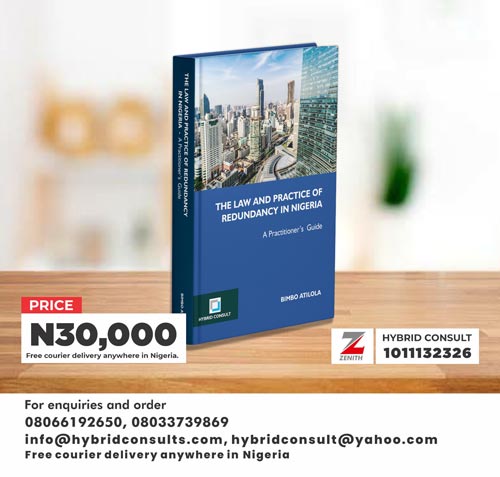 _______________________________________________________________________
[A MUST HAVE] Evidence Act Demystified With Recent And Contemporary Cases And Materials

Available now for NGN 40,000 at ASC Publications, 10, Boyle Street, Onikan, Lagos. Beside High Court, TBS. Email publications@ayindesanni.com or WhatsApp +2347056667384. Purchase Link: https://paystack.com/buy/evidence-act-complete-annotation
______________________________________________________________________ ARTIFICIAL INTELLIGENCE FOR LAWYERS: A COMPREHENSIVE GUIDE
Reimagine your practice with the power of AI “...this is the only Nigerian book I know of on the topic.” — Ohio Books Ltd
Authored by Ben Ijeoma Adigwe, Esq., ACIArb (UK), LL.M, Dip. in Artificial Intelligence, Director, Delta State Ministry of Justice, Asaba, Nigeria.
Bonus:
Get a FREE eBook titled “How to Use the AI in Legalpedia and Law Pavilion” with every purchase.
ARTIFICIAL INTELLIGENCE FOR LAWYERS: A COMPREHENSIVE GUIDE
Reimagine your practice with the power of AI “...this is the only Nigerian book I know of on the topic.” — Ohio Books Ltd
Authored by Ben Ijeoma Adigwe, Esq., ACIArb (UK), LL.M, Dip. in Artificial Intelligence, Director, Delta State Ministry of Justice, Asaba, Nigeria.
Bonus:
Get a FREE eBook titled “How to Use the AI in Legalpedia and Law Pavilion” with every purchase.
How to Order: 📞 Call, Text, or WhatsApp: 08034917063 | 07055285878 📧 Email: benadigwe1@gmail.com 🌐 Website: www.benadigwe.com
Ebook Version: Access directly online at: https://selar.com/prv626