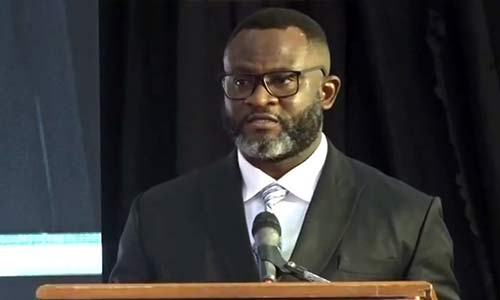
A Nigerian lawyer and human rights activist, Chinedu Agu, has alleged a plan to mobilise the six chairmen of the Nigerian Bar Association branches in Imo State to write the National Judicial Council over the appointment of a substantive Chief Judge, warning that any such letter must not be issued in the name of lawyers in the state.

Agu, a former Secretary of the NBA Owerri branch, set out the allegation in a statement dated 16 August 2026.
He opened with a warning to the profession in the state.
“Something is brewing in the Imo Judiciary, and lawyers should be paying attention,” he wrote.
He then set out what he described as the report reaching him. “Rumour has it that the State Government is mobilising the six NBA Branch Chairmen in Imo in a move that could spell trouble for the Imo Judiciary, allegedly dangling ₦350m dressed up as AGC support to make it happen: ₦100m for the Branch that leads the charge, and ₦50m each for the other five.”
Agu described the object of the alleged arrangement.
“The reported plan is for all six Chairmen to sign a letter to the NJC, supposedly on behalf of lawyers across Imo, urging the Council to hasten the appointment of a substantive Chief Judge and end the acting regime,” he wrote.
He anticipated the obvious response. “Sounds harmless, right? Not quite.”
The activist set out what he said such a letter would convey.
“Such a letter risks creating two false impressions,” he wrote. “First, that the NJC is responsible for the delay, rather than the Imo JSC, whose process is skewed to exclude the most senior Judge; and second, that the Acting regime is itself undesirable, effectively contradicting the NJC’s clear position that, until the process for appointing a substantive CJ is concluded, the most senior Judge shall continue to act.”
He was categorical on the question of authority to speak for lawyers in the state.
“This letter must not be signed in the name of Imo Lawyers. This letter must not also be sent in our name. It is not the position of NBA Owerri. I doubt if it is also the position of other branches in Imo,” he wrote.
Agu closed with a warning and a proverb.
“Imo lawyers are watching. The legal community is awake. Oke anaghị eri ihe onye mụ anya,” he wrote.
He addressed his final words to the six branch chairmen, quoting Chinua Achebe: “One of the truest tests of integrity is blunt refusal to be compromised.”
The substance of the objection is constitutional rather than political, and it turns on where responsibility for the appointment actually sits.
Under paragraph 21 of the Third Schedule to the Constitution, the National Judicial Council recommends persons for appointment as Chief Judge of a State to the Governor, acting on the nomination of the State Judicial Service Commission. The sequence matters: the Council cannot recommend a candidate the State Commission has not put forward. Where a nomination has not been transmitted, or has been transmitted in a form the Council will not act on, the delay originates at the state level. That is the misattribution Agu says the proposed letter would create.
The second point is equally specific. The Council’s settled position, expressed in successive circulars and in its handling of similar disputes in other states, is that where a vacancy arises the most senior judge of the court acts until a substantive appointment is concluded. A letter from the Bar urging an end to the acting regime, without a completed nomination process, would therefore be asking the Council to depart from its own practice rather than to expedite it. That is why he describes the request as less harmless than it appears.
The allegation about money is untested and is presented in his own words as rumour. It is nonetheless serious in a specific way. Annual General Conference support from state governments to Bar branches is a common and lawful practice, but the distinction between institutional support and inducement lies in whether anything is expected in return. If sums were offered on condition that chairmen sign a particular letter, the arrangement would engage the Rules of Professional Conduct and, potentially, the anti-corruption statutes.
For now the practical question is narrower and answerable within days. Six named offices either have or have not been approached, and either will or will not sign. The branches themselves are in a position to settle the matter by saying so.
Editorial notes: Agu expressly labels the core allegation as rumour, and that framing must survive into the headline and the body. The six branch chairmen are identifiable by office even though unnamed in the statement, and each should be contacted for response before publication, along with the Imo State Government and the Attorney-General. Confirm the composition and status of the Imo State Judicial Service Commission and the identity of the most senior judge of the High Court, since the claim that the process is “skewed to exclude” that judge is central and should not be reported without particulars. The Igbo proverb is best rendered with a translation for readers outside the region.
[A MUST HAVE] Evidence Act Demystified With Recent And Contemporary Cases And Materials

Available now for NGN 40,000 at ASC Publications, 10, Boyle Street, Onikan, Lagos. Beside High Court, TBS. Email publications@ayindesanni.com or WhatsApp +2347056667384. Purchase Link: https://paystack.com/buy/evidence-act-complete-annotation
______________________________________________________________________ “Enhance Legal Practice With Authoritative Reports” — Alexander Payne Offers Comprehensive Law Reports, Spanning Over A Century Of Nigerian Jurisprudence Interested buyers are encouraged to place their orders and enquiries via:
0704 444 4777, 0704 444 4999, 0818 199 9888
Website: www.alexandernigeria.com
Interested buyers are encouraged to place their orders and enquiries via:
0704 444 4777, 0704 444 4999, 0818 199 9888
Website: www.alexandernigeria.com