In recent weeks, Nigeria’s political landscape has witnessed rising tensions within major opposition parties, following landmark Supreme Court judgments that ruled courts lack jurisdiction to interfere in the internal affairs of political parties. The rulings have generated confusion and intensified leadership disputes, particularly in the Peoples Democratic Party (PDP) and the Labour Party (LP).

While the PDP remains embroiled in a dispute over who holds the office of National Secretary, the Labour Party is divided between two factions, each claiming legitimacy over the party’s leadership.
The apex court’s firm position—that political parties must resolve internal matters without court intervention—has drawn mixed reactions. Critics argue the judgments have emboldened autocratic tendencies in party leaderships, while others see it as a necessary step to reduce judicial overload and election-related chaos.
To provide clarity, Saturday Sun spoke with top legal minds, who weighed in on the implications of the court rulings and proposed the way forward.
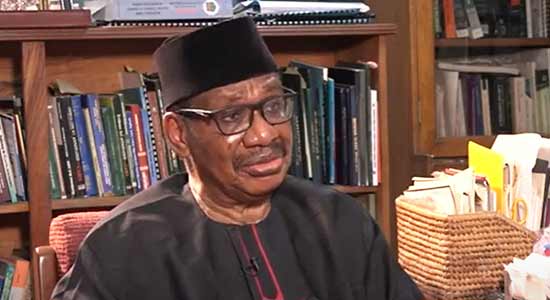
No Law Can Override Fair Hearing – Prof. Itse Sagay, SAN
Constitutional law expert, Prof. Itse Sagay (SAN), argued that the Supreme Court’s stance should not be interpreted as absolute. He warned that political parties cannot operate outside the boundaries of constitutional rights such as fair hearing.
“I don’t quite agree with the Supreme Court,” Sagay said. “The views were expressed without control, but party officers cannot act in a wild and uncontrolled manner.”
He noted that constitutional rights cannot be eroded under the guise of party autonomy, suggesting that the judiciary must intervene when fundamental rights are breached.
Parties Must Adhere to Internal Processes – Dave Ajetomobi, Ex-NBA Chairman
Former NBA Ikeja Branch Chairman, Dave Ajetomobi, stressed that while internal democracy is essential, once a party follows due process in making decisions, such actions should not be contested in court.
He advocated for clarity from the Supreme Court to eliminate the growing ambiguity in interpretation. “I’ve seen confusion, especially in the Labour Party. They should go back to the Supreme Court for clarification,” he added.
Ruling Creating More Injustice Than Justice – Prof. Mike Ozekhome, SAN
Human rights advocate and senior lawyer, Prof. Mike Ozekhome (SAN), called for a review of the political question doctrine. He argued that in a system like Nigeria’s, where political godfatherism thrives, judicial exclusion from party disputes only fuels injustice.
“Many political parties are owned by oligarchies,” he said. “If a party member’s mandate is stolen and courts refuse to intervene, what hope remains?”
Ozekhome suggested using originating summons to seek judicial interpretation of controversial rulings without violating the Supreme Court’s jurisdiction.
Supreme Court Should Deliver Clear Judgments – Chijioke Ifenkwe
Legal practitioner Chijioke Ifenkwe criticized the Supreme Court for shying away from decisive pronouncements in politically sensitive cases. “The court’s failure to clearly rule on party disputes reflects a worrying state of judicial independence,” he said, calling for stronger institutions and transparency.
No Ambiguity in Rulings – Maduka Onwukeme
In contrast, Maduka Onwukeme, a lawyer and rights activist, insisted the Supreme Court rulings were clear. He accused losing factions of twisting the court’s decisions for personal gain.
“The court was explicit in rejecting judicial interference in internal party leadership,” he said, adding that the lingering controversy is being artificially prolonged.
Supreme Court Is Right – Gideon Okebu
Lawyer Gideon Okebu supported the Supreme Court’s position, stating that internal disputes that don’t violate national laws should not burden the courts. He emphasized that parties must follow their own constitutions, and members unhappy with party policies can switch platforms.
“The Supreme Court is simply urging political parties to self-regulate, which aligns with democratic principles,” Okebu said.
Courts Can Still Intervene When Rights Are Violated – Kabir Akingbolu
Lawyer Kabir Akingbolu added a nuanced perspective, noting that while courts should not entertain non-justiciable claims, they still have a role in enforcing constitutional compliance within parties.
He pointed to past rulings like Amaechi v. INEC to argue that the courts can and should intervene when party constitutions are violated during candidate selection processes.
[A MUST HAVE] Evidence Act Demystified With Recent And Contemporary Cases And Materials

Available now for NGN 40,000 at ASC Publications, 10, Boyle Street, Onikan, Lagos. Beside High Court, TBS. Email publications@ayindesanni.com or WhatsApp +2347056667384. Purchase Link: https://paystack.com/buy/evidence-act-complete-annotation
______________________________________________________________________ “Enhance Legal Practice With Authoritative Reports” — Alexander Payne Offers Comprehensive Law Reports, Spanning Over A Century Of Nigerian Jurisprudence Interested buyers are encouraged to place their orders and enquiries via:
0704 444 4777, 0704 444 4999, 0818 199 9888
Website: www.alexandernigeria.com
Interested buyers are encouraged to place their orders and enquiries via:
0704 444 4777, 0704 444 4999, 0818 199 9888
Website: www.alexandernigeria.com