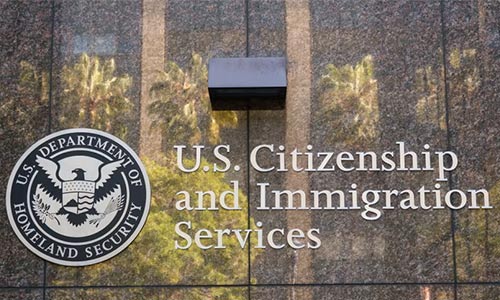
A new rule of the Trump administration that is expected to make it considerably harder for many lawful immigrants to obtain permanent residency if they receive, or are deemed likely to need, public assistance takes effect today, even as lawsuits seeking to halt it proceed through the federal courts.

The measure is among the administration’s latest steps to reduce the number of immigrants in the United States, including residents already living there lawfully. Beyond its direct operation, the rule is expected to prompt many green card applicants and their families to forgo federal aid they are entitled to, in order to avoid being considered public charges and damaging their prospects of approval.
What A Public Charge Is
Federal immigration officers have long assessed whether green card applicants have the financial means to support themselves, among other considerations, before permanent residency is granted.
The Immigration Act of 1882 permitted the United States government to deny entry to applicants considered unlikely to be able to care for themselves and liable to become dependent on government assistance, that is, to become public charges.
In 1999, the Clinton administration defined a public charge as a person primarily dependent on government benefits, and took into account only cash aid such as Temporary Assistance for Needy Families and Supplemental Security Income, together with Medicaid for long term institutional care.
The first Trump administration sought to widen that definition to take in non-cash benefits including food stamps, Medicaid and housing subsidies. It announced the broader rule in 2019 and brought it into effect in 2020. In March of the following year a federal court nullified that rule, and the Biden administration rescinded it, issuing a fresh rule in 2022 that limited consideration to cash benefits alone and made clear that family members’ use of federal benefit programmes had no bearing on an applicant’s assessment.
What The New Rule Does
The new rule resembles the one implemented during the first Trump administration but reaches further. Published in July, it permits immigration officers to take into account a far wider range of public assistance programmes in determining whether a green card applicant is likely to become a public charge, and it rescinds the 2022 rule.
“Under President Trump, DHS is restoring the basic principle that immigrants must be able to support themselves,” the Department of Homeland Security said when the rule was announced. “We are reaffirming the requirement of self-reliance, protecting public resources, and ending policies that encouraged dependency on hard-working American taxpayers.”
The rule does not itemise the safety net programmes to be considered, stating only that the department “will consider the receipt of any means tested public benefits.”
According to Ms. Maddie Geschu, director of policy and advocacy at the Protecting Immigrant Families Coalition, that formulation could take in a broad range of income based assistance, including food stamps, Medicaid, childcare subsidies, housing vouchers and Head Start, as well as certain tax reliefs such as the child tax credit.
Critically, the rule also allows officers to consider benefits applied for on behalf of family members, including children who are United States citizens.
A Shift From The Affidavit Of Support
Practitioners say the change alters the basis on which these decisions have historically been made.
“The main thing for this regulation is to essentially give officers unbridled discretion to take into consideration pretty much any factor that they decide is relevant in determining public charge,” said Ms. Jeannie Kane, an immigration attorney who works with green card applicants.
Until now, she said, officers have relied heavily on the affidavit of support signed by the person petitioning for the immigrant, ordinarily a close family member, who demonstrates that they are working and have sufficient income to support the applicant. Under the new regulation, the government will additionally consider past and current use of public benefits, and the use of public benefits by other people living in the household, including United States citizens.
Advocates and attorneys say those most affected will be immigrants lawfully present on family based petitions, whose relative is a permanent resident or citizen, and who are applying for green cards. Exemptions exist for asylees, refugees, victims of human trafficking and others.
“When you really take a deep dive into who’s affected, we’re really looking at mixed-status immigrant households,” said Ms. Tania Martinez, chair of the American Immigration Lawyers Association New England Chapter.
She said clients have begun asking pre-emptively about the consequences of having participated in the Women, Infants and Children nutrition programme.
“They say, I had WIC for my child. I had to give them food. I had to give them milk. Does that mean now I can’t provide for my child? Does that mean now if they need healthcare that I can’t necessarily take a state benefit so that my child can be seen and get the care that they need?”
The Government’s Position
The United States Citizenship and Immigration Services defended the measure and rejected the suggestion that outcomes will turn on individual discretion.
“The Trump administration is upholding the rule of law and protecting American taxpayers from subsidizing aliens who may become dependent on public benefits. USCIS is committed to safeguarding the safety, security, and financial well-being of Americans,” said the agency’s spokesman, Mr. Zach Kahler.
He said officers are “empowered to assess all pertinent facts on a case-by-case basis,” and that a determination is not made on “a single factor or an officer’s personal opinion.”
According to the agency, officers will consider the five statutory factors in assessing whether a person is likely to become a public charge, together with the individual’s receipt of means tested public benefits such as cash assistance for income maintenance, housing assistance, food stamps, financial aid for college, or any other similar benefit.
Where an officer believes that a person applying from outside the United States could become a public charge, the applicant will be required to post a public charge bond, which the agency describes as a financial guarantee under which individuals or companies pay a cash bond or post a surety bond with the agency as an assurance that the person will not become a public charge. The amount of such bonds has not been stated.
Immigrants applying for visas abroad will separately face closer scrutiny as to whether they might use public benefits if admitted. Attorneys representing applicants overseas are awaiting word on whether the State Department, which handles immigrant visa applications at United States consulates, will issue its own regulations. The department is expected to follow suit but did not respond to a request for comment.
Who Is Affected, And The Chilling Effect
About 588,000 applicants are subject to public charge reviews each year on average, according to the Department of Homeland Security.
The wider consequence, however, lies in what advocates call the chilling effect, as applicants and their families withdraw from safety net programmes for fear of being denied permanent residency. The department itself estimates that about 950,000 people may leave or decline to enrol in six public benefit programmes it examined, including Medicaid, food stamps, the Children’s Health Insurance Program and federal rental assistance.
Undocumented immigrants are not directly affected, since they do not qualify for public aid in the first place.
“We’ve already been hearing sort of anecdotally about people who are pulling out of programs they are eligible for, or that their family members are eligible for,” said Mr. Sarang Sekhavat, chief of staff at the Massachusetts Immigrant and Refugee Advocacy Coalition. “People are really worried about what this could mean for their future.”
Several attorneys, and Mr. Sekhavat, said the prospect of past and current benefit use being weighed against applicants is causing some immigrants to reconsider filing a green card application at all.
“No Parent Should Ever Have To Choose”
Advocates fear the rule will deter eligible family members from applying for or remaining enrolled in programmes including school meals and the WIC scheme, which provides nutrition assistance and counselling to pregnant women, new mothers and young children.
“No parent should ever have to choose between feeding their children and keeping their family together,” said Ms. Clarissa Hayes, deputy director of child nutrition programs and policy at the Food Research & Action Center. “We cannot allow fear and confusion to determine whether or not a child will have enough to eat.”
Ms. Geschu said the revised rule “really opens the green card process to abuse based on partisan politics or personal bias.”
Research on the earlier Trump administration rule found that participation among immigrant families and citizen children declined in 2019 and 2020, even among those not then subject to it.
A George Washington University study published in December, analysing the proposed rule, projected that some 3.7 million members of immigrant households could lose Medicaid, food stamps, housing benefits and other assistance, that state economies could lose 27.4 billion dollars as healthcare providers, grocery stores and other businesses lose revenue, and that up to 212,000 jobs could be lost.
The Litigation
A coalition of 22 states and the District of Columbia, led by New York, is suing to block the rule, and a group of cities led by the Mayor of New York City, Mr. Zohran Mamdani, has filed a similar action. Both suits were filed on Monday in the Southern District of New York.
The states argue that they stand to lose billions of dollars in federal funding if immigrants, and particularly mixed status families, disenrol from safety net programmes out of fear of immigration consequences. They contend that the rule confers “unfettered discretion for immigration officials to determine who can be excluded on public charge grounds,” and that the resulting determinations could “fundamentally depart from the core meaning of the term” public charge.
The cities argue that the rule will harm their public health and economic interests, including by shifting the costs of healthcare, food and housing onto them and damaging their labour forces.
The Attorney General of Massachusetts, Ms. Andrea Campbell, who joined the multistate action, said the rule punishes immigrants for lawfully accessing public benefits.
“Access to basic necessities like food, healthcare, and housing should never be used as a weapon against immigrants. And immigrants should never be forced to choose between getting the help they need while seeking permanent status in this country,” she said.
Federal District Court Judge Ronnie Abrams of the Southern District of New York, an appointee of President Obama, has set an initial conference for 9 October in the action brought by the states. The rule takes effect unless it is blocked in court. The administration first announced the proposed changes in November.
[A MUST HAVE] Evidence Act Demystified With Recent And Contemporary Cases And Materials

Available now for NGN 40,000 at ASC Publications, 10, Boyle Street, Onikan, Lagos. Beside High Court, TBS. Email publications@ayindesanni.com or WhatsApp +2347056667384. Purchase Link: https://paystack.com/buy/evidence-act-complete-annotation
______________________________________________________________________ “Enhance Legal Practice With Authoritative Reports” — Alexander Payne Offers Comprehensive Law Reports, Spanning Over A Century Of Nigerian Jurisprudence Interested buyers are encouraged to place their orders and enquiries via:
0704 444 4777, 0704 444 4999, 0818 199 9888
Website: www.alexandernigeria.com
Interested buyers are encouraged to place their orders and enquiries via:
0704 444 4777, 0704 444 4999, 0818 199 9888
Website: www.alexandernigeria.com