ABSTRACT

The power of the Nigeria Police to prosecute criminal cases in Nigerian Courts is derived from the Police Act which is a law enacted by the National Assembly. And the Nigeria Police power to prosecute as provided under the Police Act has been judicially endorsed by the Nigerian Supreme Court. Despite clear statutory provisions and elaborate judicial decisions on Police prosecutorial power, controversy however exists about the nature and extent of that power. The enactment of the Administration of Criminal Justice Act 2015 (ACJA) exacerbates the controversy with its provision that appears to exclude Police officers who are not qualified lawyers from prosecuting criminal cases in Nigerian courts. The controversy is further deepened by subsequent Administration of Criminal Justice Laws of States which expressly wrest prosecutorial power from Police officers who are not qualified lawyers. In light of extant Nigerian laws and jurisprudence this paper critically examines the core legal issues in this controversy. In particular, the paper analyses the legal import of section 106 of the ACJA which appears to confine prosecutorial power to only Police officers who are qualified lawyers, including similar provisions in States criminal law procedure which expressly divests police officers of prosecutorial power unless they are qualified lawyers. From a qualitative methodological analysis of the relevant statutes and case law, the paper finds that Police officers in Nigeria are legally permitted to prosecute criminal cases in Nigerian courts, irrespective of whether a Police prosecutor is a qualified lawyer or not. The paper further identifies problems in Police prosecutorial power and offers recommendations towards ensuring that this power is effectively and efficiently exercised in the overall interest of administration of criminal justice in Nigeria.
*DSW, LLB, (BENIN); LL,M (IBADAN); BL. Legal Officer, Legal Section, Nigeria Police Force, Zone 2 Police Command Headquarters, Lagos, Nigeria. Email: ekpiku@yahoo.com, GSM: 08030699275
- INTRODUCTION
Prosecution of criminal cases by the Nigeria Police dates back to the Colonial days when the Nigeria Police Force, upon its establishment in 1861, was solely responsible for the enforcement of all laws, prevention of crime, arrest, investigation and prosecution of offenders[1]. The Nigeria Police Force, as presently constituted, is established for Nigeria by the Constitution of Nigeria[2]. Under the Constitution police officers are conferred with such powers and duties as are provided under any law[3]. By virtue of Section 214 (2) (b) of the Constitution, the National Assembly enacted the Police Act[4] for the administration of the Nigeria Police Force. Section 4 of the Police Act provides for the general duties of the Police to include investigation of offences, prosecution of offenders, amongst others. Section 23 of the Police Act specifically provides that any Police officer may conduct in person all prosecutions before any Court, whether or not the information or complaint is laid in his name.
The power of Police officers to prosecute criminal cases in Nigerian courts is therefore derived from the powers conferred on the Police by the Police Act, a law enacted by the National Assembly pursuant to Section 214 (2) (b) of the Constitution. The prosecutorial power of the Police as statutorily defined by the Police Act has been judicially endorsed by the Nigeria Courts[5]. The locus classicus in the jurisprudence of courts’ interpretation of the statutory prosecutorial power of the Police is the Supreme Court landmark decision in FRN v. Osahon & Ors[6]. Despite the clear, elaborate and unambiguous decision of the Supreme Court in this case, there is however controversy over the powers of the Police to prosecute criminal cases in Nigerian courts.
The controversy as to whether Police officers who are not qualified lawyers should be allowed to prosecute criminal case in courts persists, however, it is now settled and agreed by many stakeholders in the Nigerian criminal justice system that Police officers who are qualified lawyers are eminently qualified to prosecute criminal cases in Nigerian superior courts of record. In a plethora of cases the courts have affirmed that Police officers who are called to the Nigerian Bar can initiate and prosecute criminal cases in Nigeria courts, subject only to the powers conferred on the Attorney General of the Federation and that of States of Nigeria under sections 174 and 211 respectively of the Constitution of Nigeria[7]. Therefore, what is in dispute is whether Police officers who are not qualified lawyers are legally empowered to prosecute criminal cases in Nigeria.
Amidst this controversy, the Federal Government took steps to regulate the prosecution of criminal cases in courts within its jurisdiction by enacting the Administration of Criminal Justice Act[8] (ACJA). Under the ACJA, criminal prosecution of all offences in any court shall only be undertaken by (a) the Attorney General of Federal or a Law Officer in his Ministry or Department, (b) a legal practitioner authorized by the Attorney-General of the Federation and (c) a legal practitioner authorized to prosecute by this Act or any other Act of the National Assembly[9]. Although the Nigeria Police was not specifically mentioned in section 106 of the ACJA as among those to undertake criminal prosecution in courts where the ACJA is applicable, the provision of sub-section (c) thereof is wide enough to accommodate Police officers who are qualified lawyers.
However, relying on section 106 of the ACJA, Police officers who are not lawyers have been excluded from the prosecution of criminal cases in all courts in the Federal Capital Territory, Abuja and in all courts which the ACJA is applicable. Expectedly, the bandwagon effect of the provisions of section 106 of the ACJA has led many States of the Nigerian Federation to enact new Administration of Criminal Justice Law provisions that divest Police officers of prosecutorial power. For instance, under the recently enacted Administration of Criminal Justice Laws of Cross River and Ebonyi States[10], Police officers who are not qualified lawyers cannot initiate and prosecute criminal cases in courts within their respective jurisdictions.
Deliberate attempt to prevent the Nigeria Police from prosecuting criminal cases in Nigeria is clearly exemplified by the public statement of the Attorney General and Commissioner of Justice of Kano State, Ibrahim Mukhtar, who declared in a press briefing that under the newly enacted Administration of the Criminal Justice Law of Kano State 2019, Police officers in Kano State would no longer handle criminal prosecution in the State’s Magistrates Courts of the State[11].
This papers critically appraises the validity of the laws that purportedly deprive Nigeria Police of criminal prosecutorial power in Nigeria courts. In particular, the paper examines: the powers of the Nigeria Police to prosecute criminal cases; the legal effect of section 106 of the Administration of Criminal Justice Act 2015, including similar laws of the States in Nigeria; issues and problems in the prosecution of criminal cases by the Nigeria Police; and prospects of the power of the Nigeria Police to prosecute criminal cases in Nigeria courts.
- THE LAW ON POLICE POWER TO PROSECUTE CRIMINAL CASES IN NIGERIAN COURTS
The Nigeria Police power to prosecute criminal cases in Nigerian courts is conterminous with the duties of the Police as provided under Section 4 of the Police Act, to wit; the prevention of crime, investigation of offences and prosecution of offenders. Section 23 of the Police Act specifically provides that any Police officer may conduct in person all prosecutions before any court, whether or not the information or complaint is laid in his name. Flowing from the provision of the section, the Nigeria Police have since been responsible for the prosecution of most criminal cases in Nigerian courts. The Police power to prosecute criminal cases has been held to be subject only to the prosecutorial powers of the Attorney General of the Federation and the Attorney Generals of the States, as stipulated under Section 174 and 211 of the Constitution respectively. Based on the Supreme Court decision in FRN v. Osahon & Ors and other line of cases, the power of the Nigeria Police to prosecute criminal cases in Nigerian courts has been settled in favour of Police[12].
However, while there is a continuing controversy over Police prosecutorial power, and the various statutory attempts that have been made to exclude the Police from the prosecution of criminal cases, it is submitted that the position of the law, as it is today, is that Police officers in Nigeria are permitted to prosecute criminal cases in Nigeria courts, irrespective of whether a Police prosecutor is a qualified lawyer or not[13]. Before a discourse on the legal basis for this submission, the next section highlights the prevailing issues and problems in Police prosecutorial power in Nigeria.
- ISSUES AND PROBLEMS IN POLICE POWER TO PROSECUTE CRIMINAL CASES IN NIGERIAN COURTS
Like every other human undertaking, criminal prosecution by the Nigeria Police is bedeviled by numerous issues and problems which hinder successful prosecution. The major issues and problems in Police criminal prosecutorial power in Nigeria court are as follows:
(a) Inadequate Police Prosecutors: Police prosecutors are made up of Police officers who are qualified lawyers and Police officers who are not. Currently, there are only two hundred and seventy five Police officers who are qualified lawyers assigned to the Legal Section of the Nigeria Police Force[14]. This number is grossly inadequate for the Nigeria Police to prosecute its criminal cases pending in courts throughout the 36 States of the Federation and the Federal Capital Territory, Abuja, including fresh cases to be initiated for prosecution. Even the Police officers who are not lawyers but nevertheless posted to the Magistrate and other inferior courts of the different states of the federation as lay prosecutors (where they are still allowed) are also grossly inadequate. This inadequacy is responsible for non-availability of Police Prosecutors in most Nigerian courts to prosecute criminal cases. Consequently, most criminal cases initiated in courts by the Police are struck out for lack of diligent prosecution.
(b) Poor Funding of Police Prosecution: At present, there is no record from the Nigeria Police to show that money is released to the Legal Section of the Nigeria Police for logistics and expenses in the prosecution of criminal cases. Lack of fund for Police prosecutors to fund their logistics to and from Court and other sundry expenses in the prosecution of criminal cases leads to abandonment of criminal cases pending prosecution in the various Courts throughout Nigeria, and such cases are eventually struck out for lack of diligent prosecution.
(c) Lack of Office Accommodation for Police Prosecutors: There is lack of office accommodation for both Police prosecutors who are qualified lawyers and other lay Police prosecutors who initiate and prosecute criminal cases in courts. Generally, the unavailability of suitable office accommodation for Police prosecutors negatively affects their efficiency and effectiveness in the prosecution of criminal cases to conclusion.
(d) Lack of Reference Libraries for Police Prosecutors: Apart from the Legal Section Head Office at the Police Force Headquarters in Abuja, there are no functional reference libraries for the Nigeria Police Legal Sections in the Police Commands across the 36 states and Federal Capital Territory. The non-existence of reference libraries for Police prosecutors hinder their ability to adequately research criminal law and prosecution, and the result is poor prosecution of cases.
(e) Lack of Adequate Training for Police Prosecutors: The Nigeria Police do not organize training programs for their two categories of prosecutors: those who are qualified lawyers and the lay prosecutors. Even when trainings are organized for Police prosecutors by other stakeholders in the criminal justice system, the Police do not provide fund and logistics for the prosecutors to attend. Lack of training program negatively affects the Police prosecutors in gaining up to date knowledge and acquiring modern skills in criminal prosecution.
(f) Refusal of Investigating Police Officers to Attend Court as Witnesses for the Prosecution: Most of the times, investigating Police officers fail to attend courts to give evidence and tender documents for the prosecution of criminal prosecution. This seriously affects criminal prosecution by the Police and leads to dismissal of cases that would otherwise have ended in convictions.
(g) Poor Investigation of Criminal Cases by Police Investigators: Most criminal cases for prosecution by the Police are poorly investigated such that the necessary evidence to prove the case beyond reasonable doubt is not often gathered during investigation. This hinder the Police prosecutors in presenting their meritorious cases before the courts.
(h) Inordinate Delay in Criminal Trial by the Courts: Inordinate delay in criminal trial which is caused by frequent and unreasonable adjournments of criminal trials negatively affects criminal prosecution by Police prosecutors because the more a criminal trial is delayed, the more the likelihood of prosecution witnesses not being available, case files and documents missing, etc. In these circumstances, Police prosecutors are unable to successfully present their cases against the defendants. In some cases, the delay in trial may also cause the defendants to jump bail and avoid prosecution.
(i) Corrupt and other Unethical Practices by Police Prosecutors: Some Police prosecutors indulge in corrupt and unethical practices that compromise criminal prosecution of cases assigned to them. This may be in the form of outright collection of bribe from defendants or failure to tender vital documents in evidence during trial, thereby creating loopholes that give rise to reasonable doubt in the mind of the Court. In other cases, a prosecutor may manufacture evidence against a defendant in order to gain conviction by all means. All these practices negatively affect successful criminal prosecution of cases by the Police.
(j) Enactment of Laws that Restrict Police Prosecutorial Power. The Administrative of Criminal Justice laws of the Federal and State governments restrict Police prosecutorial power to only Police officers who are qualified lawyers. This has created a big problem in the prosecution of criminal cases by the Police due to the gross inadequacy of police prosecutors who are qualified lawyers. As stated in paragraph (a) above, the Nigeria Police only have about two hundred and seventy five officers who are qualified lawyers and this numbers cannot handle all the criminal cases the Police take to Courts for prosecution, most especially at the Magistrate and other inferior courts. It follows therefore that due to these laws most criminal cases of the Police pending trial are now abandoned in courts because there are no sufficient officers who are qualified lawyers to take over prosecution of the cases.
These issues and problems identified in the foregoing have a cumulative negative effects on Police prosecution of criminal cases in Nigeria. Until they are successfully addressed, Police criminal prosecutorial power will continue to suffer major setbacks, and stakeholders will continue to advocate for the removal of criminal prosecution of cases from the Nigeria Police.
- THE POLICE PROSECUTORIAL POWER AND THE LEGAL EFFECT OF SECTION 106 OF THE ADMINISTRATION OF CRIMINAL JUSTICE ACT 2015
In a bid to regulate criminal justice system in Nigeria the Federal Government enacted the Administration of Criminal Justice Act (ACJA) in 2015[15]. While the ACJA made several reforms in different aspects of Nigerian criminal justice system, the focus of this paper is the legal effect of section 106 which provides for the prosecution of criminal cases in courts where the ACJA is applicable. Section 106 of the ACJA provides thus:
Subject to the provisions of the Constitution, relating to the powers of prosecution by the Attorney-General of the Federation, prosecution of all offences in any court shall be undertaken by:
- the Attorney General of Federal or a Law Officer in his Ministry or Department;
- a legal practitioner authorized by the Attorney-General of the Federation;
- a legal practitioner authorized to prosecute by this Act or any other Act of the National Assembly.
A careful perusal of the above provisions shows beyond contradiction that Police prosecution of criminal cases in courts where the ACJA is applicable is not expressly mentioned. The section merely refers to prosecution of offences in any court where the ACJA is applicable. The provision of this section is similar to section 56 of the Federal High Court Act 2004 which was interpreted vis-à-vis section 23 of the Police Act in the case of FRN v. Osahon & Ors (supra). However, while section 56 of the Federal High Court Act deals only with prosecution of cases at the Federal High on behalf of the Federal Government of Nigeria, section 106 of the ACJA covers the prosecution of offences generally in courts where the law is applicable. It is germane to point out here that the ACJA is only applicable to courts at the Federal Capital Territory, Abuja, the Federal High Courts and the National Industrial Courts across Nigeria, hence the similarity in the application of both laws.
Relying on the Supreme Court decision in FRN v. Osahon & Ors (supra), we opine that section 106 of the ACJA does not oust the power of prosecution of criminal cases by Police officers who are not qualified lawyers in any courts where the ACJA is applicable, particularly in Magistrate and other inferior courts in the FCT, Abuja. This is because as decided by the Supreme Court in FRN v. Osahon & Ors (supra), when section 106 of the ACJA is read together with section 23 of the Police Act and section 174(1)(b) of the 1999 Constitution, it becomes clear that a police officer has the power to initiate criminal proceedings in respect of any offence in which the ACJA is applicable. The fact that such a police officer is a lawyer is only a mere added advantage. This position is in line with the reasoning of the Supreme Court in the FRN v. Osahon case[16]. While interpreting section 56 of the Federal High Court Act 2004, which is similar to the current section 106 of the ACJA, the Supreme Court held thus:
“…Finally, I hold the view that when Section 56(1) of the Federal High Court Act is read together with Section 23 of the Police Act and Section 174(1)(b) of the 1999 Constitution, it becomes very clear that a police officer has the power to initiate criminal proceedings before the Federal High Court without first and foremost obtaining the Attorney-General of the Federation’s fiat. The fact that such a police officer is a lawyer is a bonus or excess luggage.”[17]
Instructively, section 106 of the ACJA deals with powers of prosecution of the Attorney General of the Federation and its officers while section 23 of the Police Act deals with the power of the Police to prosecute, and both laws are enactments of the National Assembly providing for the prosecution of criminal cases in courts by different agencies of government. Therefore, in the interpretation of the provisions of both laws recourse must be had to the Constitution of Nigeria which is the ground norm on the power of prosecution of criminal cases in Nigerian courts. This is because where the provisions of two federal legislations on the same subject matter are in conflict, in this context the question of right to prosecute criminal cases in courts, the resolution of such conflict cannot be confined to the two legislative provisions so long there are constitutional provisions on the same matter. In such a situation, the provisions of the Constitution are to govern the interpretation of the conflicting legislations. This was the position of the Supreme Court in the case of FRN v. Osahon (supra) while stating the law on how to resolve the conflict in provisions of statutes on the same subject matter. The Nigerian apex court held thus:
Where two provisions, one each from an Act of National Assembly conflict in relation to the same subject-matter, as in this instance, question of right to prosecute criminal matter in Federal High Court, the conflict cannot be isolated to the two provisions only insofar as there are constitutional provisions on the same matter. In such a situation, the provisions of the Constitution shall govern the interpretation[18].
Section 174 of the Constitution gives room to other persons, including the Nigeria Police[19], to prosecute criminal cases in courts, hence it is correct to state here that despite the provision of section 106 of the ACJA, Police officers (whether or not they are qualified lawyers) are legally empowered to prosecute criminal cases in Nigerian courts[20]. It follows therefore that the present practice in Magistrate and other inferior courts in the FCT, Abuja where Police officers who are not lawyers are prevented from prosecution of criminal cases is an aberration and assault on the true intent and purport of section 23 of the Police Act. And the Police Act remains an extant and valid law of the National Assembly which empowers Police officers, whether or not they are lawyers, to prosecute criminal cases. The legal effect of section 106 of the ACJA on Police power to prosecute criminal cases in Nigeria is that by virtue of the Supreme Court decision in FRN v. Osahon (supra) the provision does not take away Police prosecutorial power in courts where the ACJA applies, whether or not the Police prosecutors are lawyers. This is so because until the Police Act is repealed or amended in order to expunge section 23, no other law enacted by the National Assembly can validly disempowered the Nigeria Police prosecution of criminal cases in Nigerian courts.
Similarly, the legal effect of provisions in the Administration of Criminal Justice Laws of States in Nigeria which purportedly oust the power of Police officers to prosecute criminal cases in courts is that by virtue of section of 23 of the Police Act such provisions are void and of no effect[21]. This is because the law is now well settled that by virtue of the principle of covering the field and the inconsistency rule, where two laws, i.e. a federal and a state laws, are inconsistently applicable to the same subject matter the federal law will prevail while the state law will be void to the extent of its inconsistency with the federal law[22]. In the context of this paper, since section 23 of Police Act already empowers the Nigeria Police to prosecute criminal cases in Nigerian Courts, no States’ laws can provide otherwise or make contrary provisions. From the foregoing analysis of the extant laws and jurisprudence, we submit that the provision of section 106 of the ACJA and other similar statutory provisions of some States in Nigeria which attempt to restrict prosecution of criminal cases by the Police to only officers who are qualified lawyers are inconsistent with the provision of section 23 of the Police Act and therefore void to the extent of such inconsistency with the Police Act.
- PROSPECTS OF POLICE PROSECUTION OF CRIMINAL CASES IN NIGERIA COURTS
Although Police prosecution of criminal cases in Nigeria is currently bedeviled by numerous issues and problems as highlighted in section 3 above, prospects for efficient and effective Police prosecutorial power are high if genuine effort is made to resolve the identified issues and problems. Towards that effort, we recommend that the Nigeria Police authority needs to do the following:
- More lawyers who are in the Nigeria Police, but not presently in Legal Sections, should be posted to Police Legal Sections to prosecute criminal cases, and more lawyers should be recruited into the Nigeria Police Force solely to work for Legal Section for criminal prosecution and civil litigation. More lay prosecutors should be posted to the Magistrate and other inferior courts to handle the high numbers of criminal cases that are initiated in those courts on daily basis.
- The Legal Section of the Nigeria Police should be made a full Department of the Nigeria Police independent of the Investigation Department, and it should be made a specialized Department like that of Medical Department, and others. And Police lawyers should be promoted in accordance and conformity with the grades of promotion of lawyers in the Ministry of Justice. This will encourage Police officers who are lawyers to prefer to work in the Legal Department for more productive outcomes.
- The Legal Section of the Nigeria Police should be adequately funded to enable them meet the logistics challenge of prosecution of criminal cases.
- Police prosecutors in Legal Section should be provided with decent and convenient office accommodation at the Police offices and in the respective courts so as to enable them have the needed comfort to successfully undertake prosecution of cases.
- The Police Legal Section should be provided with modern Reference Libraries for Police prosecutors to research and update their knowledge of new developments in prosecution of criminal cases. This library should have law reports, precedent books, complete laws of the federation, and law of the respective States, computers and other electronic devices that are necessary for criminal prosecution in this twenty-first century.
- Police Prosecutors should undergo continuous training in criminal prosecution techniques and modern development in criminal prosecution. Training programs should be both local and international to give them comparative knowledge in criminal prosecution techniques in other jurisdictions which have similar system of criminal justice like Nigeria. More emphasis should be on forensic criminal law, which deals on how to use scientific knowledge in the presentation of evidence during criminal trial.
- The Police authority should take deliberate action to mandate Investigating Police Officers to attend courts to give evidence and produce relevant documents during prosecution of cases they investigated so that Police prosecutors can effectively perform their duty.
- The Police authority should enhance and improve on the investigation of criminal cases according to best standards and practices, and ensure that necessary evidence that will help in the successful prosecution of criminal cases are successfully gathered and preserve during investigation and for the purposes of effective criminal prosecution. This will go a long way to helping the Police prosecutors in the effective prosecution of criminal cases.
- The authority of the various courts should help ameliorate the present delay in criminal trial: a situation where a criminal trial lasts five years or more at the court of first instant poses a serious problem to prosecution of criminal cases by the Police because such delay may lead to the unavailability of witnesses, loss of case files, amongst others.
- The Police authority should put mechanism in place to identify and deal with corrupt and other unethical practices by Police prosecutors. Those that are caught in the act should be decisively sanctioned to serve as warning to others.
- The Police authority should as a matter of urgency challenge the validity of States’ laws that purportedly restrict Police prosecutorial power. This will help to settle the present controversy on whether or not Police officers who are not lawyers can prosecute criminal cases, or whether the Police should be totally excluded from criminal prosecution.
- CONCLUSION
The Police authority should endeavour to implement these recommendations in order to address the current issues and problems in Police prosecution of criminal cases in Nigeria. Considering the persistent clamour for the ousting of Police prosecutorial power, the Nigeria Police may eventually lose this power in the near future if the Police Act is repealed or its section 23 is expunged. But unless and until that is successfully done, the Nigeria Police authority needs to jealously protect this power which is necessarily to its overall duties and responsibilities under the law. How long the Nigeria Police will continue to retain this power will be dependent on the steps taken by the Police authority to tackle the identified problems in the exercise of this power, and boost the confidence of all stakeholders in the ability of the Police to continue exercising this power in the interest of effective administration of criminal justice in Nigeria.
[1] Eke Udonsy (ACP), 1976. Nigeria Police Training Manual. Police College Enugu
[2] Constitution of the Federal Republic of Nigeria, 1999, Section 214
[3] Ibid, Section 214 (2) (b)
[4] Police Act and Regulations, Cap P19, LFN, 2004.
[5] See the case of Olusemo v. COP (1998) 11 NWLR (Pt. 575) 547 at 558, the Court of Appeal per Kalgo. JCA (as he them was) held that by virtue of Section 23 of the Police Act, the Police is entitle to prosecute criminal cases subject to the powers conferred on the Attorney General.
[6] (2006) LPELR-3174(SC)
[7] See the following cases on powers of Police Officers who are legal practitioners to initiate and prosecute criminal cases up to appeal: COP V. ALI & ORS (2002) LPELR-11889(CA) PP. 11-21. PARAS D-E; AJAKAIYE V FRN (2010) LPELR-4884(CA) PP.24-26, PARA A; TONGA V STATE (2017) LPELR-43327(CA), PP. 9-10, PARAS B-A, OLUSEMO V COP (SUPRA)
[8] Administration of Criminal Justice Act, 2015/
[9] Ibid, Section 106 thereof
[11] Mr Ibrahim Mukhtar further declared that the State government had put machinery in place to gradually takeover the entire criminal prosecution from the Police in the state. Reported by the Nation online news with the caption:- Kano Stops Police from prosecuting cases. Information accessed@https://thenationonlineng.net/kano-stops-police-from-prosecuting-cases/ on 14th January, 2020. All effort by this writer to get a copy of the said Administration of Criminal Justice Law of Kano State, 2019, to be able to see the nature and scope of the specific provisions of the law that deals with Police prosecution of criminal cases in Kano State was unsuccessful.
[12] See cases of Olusemo v. COP (supra), FRN v. Osahon (supra), etc.
[13] Section 4 below provides a discourse on the legal basis for this submission
[14] This is the information given by the present Commissioner of Police in-charge of Legal Section, Force Headquarters, Abuja, CP Augustine Sanomi at the recent meeting between the Inspector General of Police, IGP Mohammed Adamu, PSC, Mni,and Police Lawyers held on 9th January, 2020 at Force Headquarters, Abuja. Information accessed@thenigerianlawyer.com/we-have-only-275-lawyers-in-police-legal-department-cp-laments/ on 14th January, 2020
[15] Most provisions of this law reflect the novel Administration of Criminal Justice (Repeal and Re-enactment) Law of Lagos State 2014.
[16] See Pp. 74-75, paras. F-A, where section 56 of the Federal High Court Act, which is similar to the present section 106 of ACJA, was interpreted by the apex court.
[17] per ONNOGHEN, J.S.C
[18] Per Belgore, J.S.C at page 23, Paras C-E
[19] Pursuant to section 23 of the Police Act and the Supreme Court decision in FRN v. Osahon
[20] Note however that the technical procedure governing the prosecution of criminal cases in superior courts may make it impossible for a Police officer that is not a qualified lawyer to prosecute cases in such courts in Nigeria
[21] The Police Act is a Federal statute, and read together with the provision of section 211 of the 1999 Constitution, States’ administration of criminal justice laws cannot validly oust under Police prosecutorial power
[22] See the cases of AG Abia State & Ors v AG Federation (2002) LPELR-611(SC), AG Ogun State v. AG Federal (Con) (1982) LPELR-11(SC) and AG Lagos State v. Eko Hotel Ltd & Anor (2017) LPELR-43713(SC).
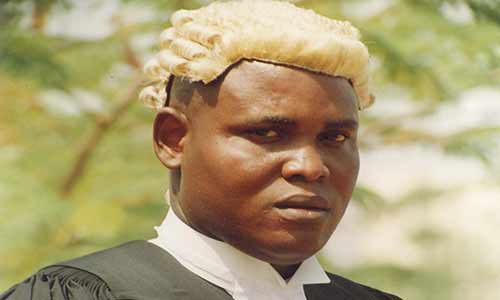
Written By Zebedee Arekhandia, Esq a Lawyer at Legal Section, Zone 2 Police Command, Onikan, Lagos.
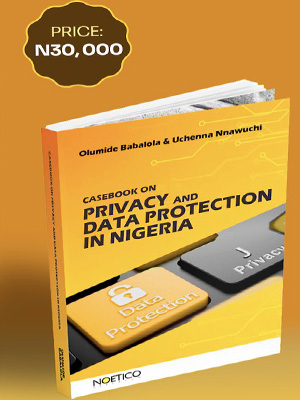 A timely new publication, Casebook on Privacy & Data Protection in Nigeria, co-authored by Olumide Babalola and Uchenna Nnawuchi, 📘Casebook on Privacy & Data Protection in Nigeria is now available on Amazon: https://a.co/d/8TmFZrd
______________________________________________________________________
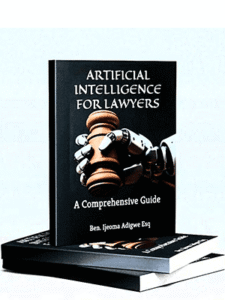
“Artificial Intelligence for Lawyers: A Comprehensive Guide”, authored by Ben Ijeoma Adigwe Esq., ACiarb (UK), LL.M, Dip. in Artificial Intelligence, Director at the Delta State Ministry of Justice, Asaba, Nigeria.
A timely new publication, Casebook on Privacy & Data Protection in Nigeria, co-authored by Olumide Babalola and Uchenna Nnawuchi, 📘Casebook on Privacy & Data Protection in Nigeria is now available on Amazon: https://a.co/d/8TmFZrd
______________________________________________________________________
“Artificial Intelligence for Lawyers: A Comprehensive Guide”, authored by Ben Ijeoma Adigwe Esq., ACiarb (UK), LL.M, Dip. in Artificial Intelligence, Director at the Delta State Ministry of Justice, Asaba, Nigeria.
 How to Order:
📞 Call, Text, or WhatsApp: 08034917063 | 07055285878
📧 Email: benadigwe1@gmail.com
🌎 Website: www.benadigwe.com
Ebook Version: Access it directly online at https://selar.com/prv626
________________________________________________________________________
[A MUST HAVE] Evidence Act Demystified With Recent And Contemporary Cases And Materials
How to Order:
📞 Call, Text, or WhatsApp: 08034917063 | 07055285878
📧 Email: benadigwe1@gmail.com
🌎 Website: www.benadigwe.com
Ebook Version: Access it directly online at https://selar.com/prv626
________________________________________________________________________
[A MUST HAVE] Evidence Act Demystified With Recent And Contemporary Cases And Materials