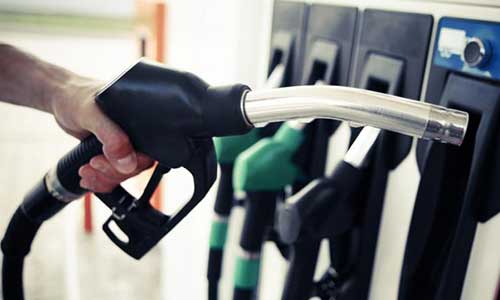
Petrol prices have risen to as high as ₦1,430 per litre in parts of Abuja as escalating tensions in the Middle East and concerns over oil shipments through the Strait of Hormuz continue to drive up global crude prices and increase the cost of petroleum products in Nigeria.

Checks across the Federal Capital Territory on Sunday showed that several filling stations had adjusted the pump price of Premium Motor Spirit, popularly known as petrol, following an ₦85 increase in the gantry price of the Dangote Petroleum Refinery.
The refinery raised its wholesale price from ₦1,265 to ₦1,350 per litre, representing an increase of about 6.7 per cent and taking the price above the estimated petrol landing cost of ₦1,311 per litre.
Brent crude, the international benchmark against which Nigeria’s crude is priced, was trading at about $108 per barrel amid heightened geopolitical tensions and uncertainty over energy supplies.
The higher crude and wholesale prices have intensified pressure on downstream operators, with retailers reviewing their pump prices to reflect the increased cost of replacing stock.
Checks by the News Agency of Nigeria in Abuja showed that NIPCO outlets increased petrol prices from ₦1,350 to ₦1,430 per litre, while Mobil stations raised their prices from ₦1,350 to ₦1,400.
MRS outlets, meanwhile, increased the pump price from ₦1,350 to ₦1,395 per litre.
An attendant at an MRS filling station, who spoke anonymously, warned that the price could rise further when fresh supplies arrive.
“We are currently selling our old stock at ₦1,395 per litre, but from tomorrow, once the new stock arrives, the price will be higher,” she said.
The latest increase has raised concerns that Nigerians could face another round of higher transportation fares, production costs and household expenses if the upward movement in petrol prices persists.
Economist and development expert, Dr Aliyu Ilias, warned that the increase could worsen inflation and further deepen economic hardship.
He said transportation costs affect virtually every sector of the economy, particularly food production and distribution.
“I think there should be a way of absorbing these costs. If you do not absorb them, they will show up in our next inflation figures and economic analysis,” Ilias said.
“The more prices increase, the more the cost of producing goods, especially food, will rise because everything is affected by transportation costs.
“This kind of change is not good for the economy at all, and people are going to face more hardship as a result.”
Former Secretary-General of the Organisation of African Trade Union Unity, Owei Lakemfa, also called on the Federal Government to put mechanisms in place to shield Nigerians from sudden changes in international oil prices.
According to him, Nigeria, as a crude oil-producing country with a large domestic market, should have a stronger economic and regulatory framework capable of reducing the direct impact of international geopolitical crises on consumers.
“The ongoing geopolitical tensions involving major oil-producing and consuming countries, as well as attacks in the Middle East, are factors that can affect global oil prices and should not come as a surprise to policymakers,” he said.
“We have known that the conflict between the U.S. and Iran will affect the shipping of oil products. We know that.”
Lakemfa argued that Nigeria should derive greater advantages from producing and refining crude oil locally rather than allowing domestic prices to respond almost automatically to the cost of imported products.
“In basic economics, when you are close to the source of your products, you have advantages. If we produce oil in Nigeria, refining in Nigeria cannot be the same as importing fuel. It cannot be,” he said.
He noted that imported refined products attract additional costs, including shipping, insurance, labour and other expenses incurred in the exporting country.
Lakemfa therefore called for stronger planning, insisting that domestic petrol prices should not automatically increase whenever fresh geopolitical tensions emerge abroad.
“It cannot just be that any time Iran attacks the U.S. or there is another conflict, the price goes up. We have to plan. And that is the only sense of governance,” he said.
He also raised concerns about the structure of Nigeria’s downstream petroleum sector, arguing that elements of monopoly or oligopoly could give major operators excessive influence over the pricing of a critical commodity.
“You cannot allow any individual or group to dictate to the country. That is why you have regulatory agencies. The government is there to protect the state and the people,” Lakemfa said.
He urged the Federal Government, petroleum regulators and consumer protection agencies to take stronger action against arbitrary increases and ensure that changes in international oil prices do not automatically translate into equivalent increases at Nigerian filling stations.
The National Publicity Secretary of the Independent Petroleum Marketers Association of Nigeria, Chinedu Ukadike, said marketers had been forced to review their pump prices following successive adjustments by the Dangote refinery.
According to him, frequent changes in the refinery’s prices have created uncertainty for both marketers and consumers because dealers must consider the cost at which they will replace products after selling their existing stock.
[A MUST HAVE] Evidence Act Demystified With Recent And Contemporary Cases And Materials

Available now for NGN 40,000 at ASC Publications, 10, Boyle Street, Onikan, Lagos. Beside High Court, TBS. Email publications@ayindesanni.com or WhatsApp +2347056667384. Purchase Link: https://paystack.com/buy/evidence-act-complete-annotation
______________________________________________________________________ “Enhance Legal Practice With Authoritative Reports” — Alexander Payne Offers Comprehensive Law Reports, Spanning Over A Century Of Nigerian Jurisprudence Interested buyers are encouraged to place their orders and enquiries via:
0704 444 4777, 0704 444 4999, 0818 199 9888
Website: www.alexandernigeria.com
Interested buyers are encouraged to place their orders and enquiries via:
0704 444 4777, 0704 444 4999, 0818 199 9888
Website: www.alexandernigeria.com