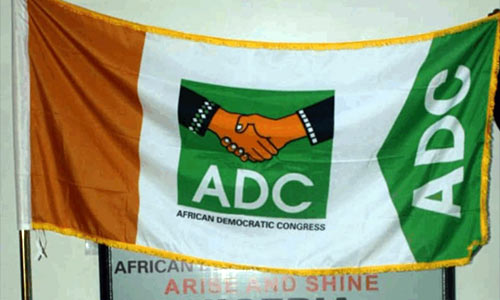
The Court of Appeal in Abuja has set aside the Federal High Court judgment that ordered the Independent National Electoral Commission to deregister the African Democratic Congress and four other political parties, holding that the order was founded on an incompetent suit and therefore amounted to a nullity.

The other parties affected by the judgment are the Action Peoples Party, Action Alliance, Accord Party and Zenith Labour Party.
A three-member panel of the appellate court unanimously allowed the separate appeals filed by the affected political parties and declared that they remain duly registered and legally entitled to operate and participate in elections.
In the lead judgment delivered by Justice Abba Mohammed, the Court of Appeal held that the Federal High Court wrongly assumed jurisdiction over the action instituted by the National Forum of Former Legislators, which the appellate court described as a non-juristic entity incapable of commencing a valid suit.
The panel held that since the originating party lacked the legal capacity to sue, there was no competent action before the trial court upon which the order directing INEC to deregister the political parties could have been made.
According to the court, the proper step for the Federal High Court was to dismiss the substantive suit for want of jurisdiction and lack of merit rather than proceed to grant consequential orders affecting the legal existence of the parties.
The appellate court also faulted the trial court for failing to properly evaluate the evidence placed before it, particularly documents showing that the affected parties had won elective positions in previous elections.
It held that the evidence was relevant to determining whether the parties had satisfied the electoral performance thresholds prescribed by Section 225A of the 1999 Constitution.
The Court of Appeal further found that the trial court proceeded with the case and delivered judgment despite a subsisting appellate order directing it to stay further proceedings pending the determination of an interlocutory appeal.
Justice Peter Lifu of the Federal High Court had, on June 15, 2026, ordered INEC to deregister the ADC, APP, AA, Accord and ZLP after holding that they failed to satisfy the constitutional requirements for their continued registration.
The trial court also restrained INEC from recognising the five parties, receiving nominations of candidates sponsored by them or permitting them to participate in the 2027 general elections and other future polls.
Justice Lifu further ordered the affected organisations to stop presenting themselves as registered political parties in Nigeria.
The judgment arose from suit number FHC/ABJ/CS/2637/2026, instituted by the National Forum of Former Legislators against INEC and the five political parties.
The former legislators asked the Federal High Court to determine whether INEC was constitutionally obligated to deregister political parties that failed to meet the minimum electoral performance requirements set out in Section 225A of the Constitution, the Electoral Act 2022 and applicable INEC regulations.
They argued that a political party must secure at least 25 per cent of the votes cast in one state during a presidential election or win at least one elective seat at the federal, state or local government level to retain its registration.
The group maintained that the ADC and the four other parties performed poorly during the 2023 general elections and subsequent by-elections and had failed to secure the number of votes or elective seats required under the Constitution.
It consequently argued that INEC’s continued recognition of the parties was unlawful and capable of undermining the integrity of Nigeria’s electoral system.
The Attorney-General of the Federation and Minister of Justice, Lateef Fagbemi, SAN, who was joined in the proceedings, had supported the position of the former legislators at the Federal High Court.
Dissatisfied with the deregistration order, INEC and the affected political parties approached the Court of Appeal, challenging both the jurisdiction of the trial court and the legal basis of its decision.
Before determining the substantive appeals, the Court of Appeal had on June 16 stayed the execution of Justice Lifu’s judgment, thereby suspending its enforcement and temporarily restoring the legal status of the political parties.
The appellate court had also criticised the trial judge for proceeding with the case despite its May 22 directive that further proceedings should be suspended.
The panel described the conduct as “a form of judicial impertinence” and referred to Supreme Court decisions characterising deliberate disobedience of an order from a superior court as “judicial rascality.”
After hearing the substantive appeals and reserving judgment on July 14, the Court of Appeal held that the proceedings before the Federal High Court were fundamentally defective because they were initiated by an entity without legal capacity.
It consequently set aside the entire judgment, including the orders restraining INEC from recognising the parties or accepting their candidates for future elections.
The Court of Appeal also awarded costs against the National Forum of Former Legislators, which instituted the unsuccessful action.
With the appellate court’s decision, the ADC, Accord Party, Action Alliance, Action Peoples Party and Zenith Labour Party remain registered political parties entitled to present candidates and participate in the 2027 general elections and other polls conducted by INEC.
[A MUST HAVE] Evidence Act Demystified With Recent And Contemporary Cases And Materials

Available now for NGN 40,000 at ASC Publications, 10, Boyle Street, Onikan, Lagos. Beside High Court, TBS. Email publications@ayindesanni.com or WhatsApp +2347056667384. Purchase Link: https://paystack.com/buy/evidence-act-complete-annotation
______________________________________________________________________ “Enhance Legal Practice With Authoritative Reports” — Alexander Payne Offers Comprehensive Law Reports, Spanning Over A Century Of Nigerian Jurisprudence Interested buyers are encouraged to place their orders and enquiries via:
0704 444 4777, 0704 444 4999, 0818 199 9888
Website: www.alexandernigeria.com
Interested buyers are encouraged to place their orders and enquiries via:
0704 444 4777, 0704 444 4999, 0818 199 9888
Website: www.alexandernigeria.com