*Says Over 80 Airlines Collapsed Due To Unsustainable Margins, 65-70% Of Ticket Price Goes To Taxes, Levies

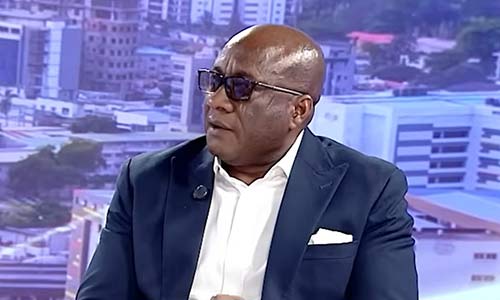
Chairman and Chief Executive Officer of Air Peace, Allen Onyema, has declared that Nigerians are paying the cheapest domestic air fares in the world, even as airlines face intense scrutiny from the Federal Competition and Consumer Protection Commission (FCCPC) over alleged exploitative and coordinated price hikes during the festive season.
Speaking in an interview with ARISE NEWS on Sunday, Onyema defended the airline industry against accusations of price gouging, insisting that domestic fares in Nigeria remain far below global standards despite recent increases.
“Nigerians are flying the cheapest fares in the world, domestically. Generally, even this season, Nigerians are paying the cheapest. And I’ll prove it to you now,” the airline boss declared.
To buttress his claim, Onyema provided specific comparisons with American domestic routes. He cited Delta Air Lines’ Atlanta–Charleston route, a flight of under 50 minutes, priced at approximately $399 one-way for mid-January 2026.
“Atlanta to Charleston is about less than 50 minutes by flight. It’s like going to Owerri or thereabouts. Today, it’s selling, in two weeks’ time, for about 400 and something dollars,” he explained.
“One-hour flight costs over $400 out there. For a main cabin, it’s $459. One way is $399 for two weeks’ time. Then maybe in the morning, in the afternoon, it’s about $400 and something. But the basics, $399, when you multiply that by N1,500, you’ll be getting over N600,000.”
In contrast, Onyema noted that Nigerian airlines still offer tickets for as low as N115,000 to N125,000, which translates to less than $60 at current exchange rates.
“In Nigeria, we still have tickets for N125,000. We have tickets for N115,000 in Nigeria, which is less than $60,” he stated.
The Air Peace CEO expressed frustration at what he described as unfair treatment of Nigerian airlines by government agencies, particularly the FCCPC’s characterization of fare increases as “exploitative” and “coordinated price fixing.”
“We in AON, that is, the Airline Operators of Nigeria, have come out to say that enough is enough. The bashing of Nigerian airlines has got to stop,” Onyema said.
“It’s very painful when it’s coming from government agencies that are supposed to know better. Using the word exploitative and coordinated price fixing that is very, very unfair to these airlines. How did they get to that conclusion? What are the parameters they used?”
Onyema explained the peculiar economics of flying to the South-East during the Christmas period, noting that while aircraft fly full to destinations like Enugu, Owerri, and Asaba, they return to Lagos almost empty.
“When you fly to the South-East at this period in time, you’re coming back almost empty. Who pays for the cost of that aircraft coming back? We’re not running charter operations. When you charter a jet, you’re paying for that jet going to drop you off and for that jet coming back empty,” he explained.
“Sometimes zero is the word. We have them, sometimes zero passengers returning. For example, if you take a wet lease aircraft and you’re paying about $6,000 per hour, when you multiply that by N1,500, you’re already getting N8 million just for flight time.”
The airline boss revealed that airlines only receive about 30-35% of ticket prices, with the majority going to taxes, levies, and other charges.
“People are just shouting about the airlines. How much of this money is actually coming to the airline? When you look at it, almost 70 or 65 percent of that money is not coming to the airlines. They’re going somewhere else: levies and taxes and some other charges. But we are the sacrificial lamb,” Onyema lamented.
Onyema highlighted several operational challenges that make running airlines in Nigeria significantly more expensive than in developed countries.
“Aviation is the same aviation worldwide. We buy our spares from the same market. You buy your aircraft from the same market. In fact, they’re even in a better state than us,” he said.
“What’s the financing? They borrow money at 2 percent. Nigerian airlines borrow at 35 percent. The next shop, they could get their spare parts or engines from the next shop. In fact, the same airport where they operate from, the MRO might be there.”
He added: “For the Nigerian airline to do any maintenance that requires base maintenance, you have to ferry your aircraft, spending about $400,000 just on ferrying alone. If you want to bring back your engine, you can pay as much as $1.5 million.”
Onyema disclosed that Air Peace currently has about 14 aircraft stuck abroad awaiting maintenance, some for over six months, because foreign MROs prioritize their own airlines.
“I have about 14 aircraft abroad now. Some of them have been there for six months—not because we don’t have money—waiting for slots. They give preference to their own airlines first,” he revealed.
To address this challenge, Onyema announced that Air Peace is building one of the largest MRO facilities in Africa, expected to be completed in 15 months in Lagos.
The Air Peace CEO attributed the collapse of over 80 Nigerian airlines to unsustainable margins, warning that continued low pricing amid rising costs could further worsen the industry’s mortality rate.
“Why don’t you understand why the mortality rate of airlines in Nigeria is so high—the worst worldwide? Over 80 airlines have come and gone,” he stated.
Onyema also disclosed that a foreign aircraft lessor, Smart Links, defrauded Air Peace by collecting upfront payments knowing they were going bankrupt.
“They were collecting money upfront. When you’re doing wet lease, you pay upfront. They collected money for the month of November already. Got their money today, two days later, absconded,” he recounted.
“If that was done by a Nigerian airline, the whole world will hear it. We are stigmatized in this country.”
The interview comes against the backdrop of rising domestic fares, with major airlines announcing fare increases effective from December 1, 2025, through January 2026.
Air Peace has set fares at N350,500 for key routes such as Lagos–Abuja and flights to the South-East and South-South during the period. United Nigeria Airlines has similarly pegged its fares at N350,500, while other carriers, including Ibom Air, have raised prices from N125,500 to N335,500 for flights to Enugu, Owerri, and Asaba starting December 11.
A one-way Lagos–Asaba ticket on United Nigeria Airlines is listed at N399,999 for December 24, marking a sharp increase from pre-festive levels.
Onyema revealed that airline operators have been engaging with the government over proposed taxes that could cripple the industry.
“I know, come January first, we may be exempted, but the ultimate is the National Assembly has to expunge these things from our laws so that it becomes permanent,” he said.
“If not, Nigerian airlines will go down in less than three months. Within one month, some will go down. Then some big ones might go down in three months. And the banks in Nigeria will take a hit because of what they had invested.”
Onyema also announced that from January 2026, the Airline Operators of Nigeria will adopt a zero-tolerance policy for unruly passenger behavior.
“We in AON have started to do from January first: we are no longer going to condone unruly passenger behavior because we believe that they are being supported by the system unnecessarily,” he declared.
“Things they cannot do outside the country any unruly behavior, if you hit someone, somebody has a right to defend himself. That is from January. And we have to start going to court.”
[A MUST HAVE] Evidence Act Demystified With Recent And Contemporary Cases And Materials

Available now for NGN 40,000 at ASC Publications, 10, Boyle Street, Onikan, Lagos. Beside High Court, TBS. Email publications@ayindesanni.com or WhatsApp +2347056667384. Purchase Link: https://paystack.com/buy/evidence-act-complete-annotation
______________________________________________________________________ “Enhance Legal Practice With Authoritative Reports” — Alexander Payne Offers Comprehensive Law Reports, Spanning Over A Century Of Nigerian Jurisprudence Interested buyers are encouraged to place their orders and enquiries via:
0704 444 4777, 0704 444 4999, 0818 199 9888
Website: www.alexandernigeria.com
Interested buyers are encouraged to place their orders and enquiries via:
0704 444 4777, 0704 444 4999, 0818 199 9888
Website: www.alexandernigeria.com