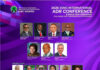
Mfon Ekong Usoro, a prominent figure in the Nigerian legal community, recently shared her insights on the importance of including the Nigerian Bar Association (NBA) in trade negotiations that impact the legal services sector.

Speaking at the Bar Leaders’ Conference held in Bucharest, Bulgaria from May 22-23, 2024, Mfon drew from her extensive experience as a past Chair of the NBA Committee on AfCFTA and a current member of the NBA Working Group on AfCFTA.
During a roundtable discussion on developments in international trade in legal services, Mfon highlighted the positive engagement between the NBA and the Federal Ministry of Industry, Trade and Investment (FMITI) during the tenure of former Minister H.E. Niyi Adebayo. She attributed this successful collaboration to Adebayo’s understanding of the legal sector’s dynamics and the crucial role of lawyers in negotiations.
However, Mfon emphasized that the NBA’s involvement in trade negotiations should not be contingent on individual advocacy efforts or the personal experience of serving ministers. Instead, she called for the formal consultation and inclusion of the NBA to be entrenched as a standard process followed by the Federal Ministry of Trade.
Read the full takeaways from the roundtable on developments in international trade in legal services at the Bar Leaders’ Conference in Bucharest, Bulgaria, held on 22-23 May 2024, by Mfon Ekong Usoro.
Discussions at the Roundtable revealed that national Bars in several countries are routinely consulted and invited by their governments to participate in trade negotiations that directly or indirectly affect the legal sector. In some jurisdictions, national bars are regularly consulted by their parliaments for comments on bills, particularly trade related bills and bills that may impact the judiciary and legal services generally.
The Nigerian Bar Association (NBA) experienced a robust relationship with the Federal Ministry of Industry, Trade and Investment (FMITI), the lead ministry for multilateral or bilateral trade deals negotiations at the time H.E. Niyi Adebayo served as the Hon Minister. The positive development could be attributed to the former Minister’s appreciation of the way the legal sector works and the crucial role of lawyers in negotiations generally (H.E. Adebayo is a distinguished lawyer) and the successful dialogue of the then President of the Nigerian Bar, Paul Usoro, SAN with the Minister on involvement of the Bar in trade negotiations was of tremendous help. In 2020, the FMITI formally invited the NBA to serve on the AfCFTA (African Continental Free Trade Area) National Action Committee and on occasions forwarded documents to the NBA for the Bar’s opinion on trade related issues impacting legal services. All the agencies under the Ministry of Trade followed suit. The leadership of the Nigerian Office for Trade Negotiation (NOTN) in 2019 officially invited the NBA to participate in the meetings on Nigeria’s Draft Schedule of Specific Commitments for AfCFTA. The NBA participated actively and made presentations that assisted NOTN to appreciate the peculiarities of the legal sector that guided them in the AfCFTA negotiations undertaken by the Committee for Trade in Services at the time. Same was the case with the National Action Committee which set up workstreams for professional services including legal services with active participation of the NBA in the workstreams. NBA had a nominee of the Federal Ministry of Justice at the level of the Solicitor General as a member of the NBA Committee on AfCFTA.
Formal consultations with and inclusion of the NBA in trade negotiations should not depend on the strong advocacy of a Paul Usoro, or George Etomi or Yakubu Maikyau, SAN the current NBA President with a Minister of Trade or the personal experience of a serving Minister. It should be the norm and entrenched in the rulebook of processes that should be observed by the Federal Ministry of Trade. The involvement of the Federal Ministry of Justice or the legal adviser in the Ministry of Trade does not equate to and should not be mistaken for the involvement of the NBA though it is excusable for a non-lawyer to have that impression. Ministry of Justice is a critical stakeholder in trade negotiations and often a key participant representing the government. The legal advisers in various Federal Ministries are themselves employees of the Ministry of Justice and represent the Justice Ministry in the respective MDAs and therefore do not sit in the negotiation team as representatives of the legal profession. The Justice Ministry itself is an organ of the government albeit, involved in justice administration. The General Council of the Bar, the Body of Benchers, the Council of Legal Education, the judiciary, and the NBA all perform critical functions in the legal sector. It is the NBA that represents the various sub-sectors in the legal services ecosystem and is empowered to be the voice of the legal profession in Nigeria while the Body of Benchers is the primary authority for the regulation of the profession.
It is not in contention that trade negotiations are essentially government-to-government business. However, the WTO realising the critical role of the legal industry, requires that State parties engage in consultations with professional bodies like the NBA at the domestic level for the legal services sub-sector in the same manner the IBA is recognized as the global voice of the legal profession at the WTO level. The Ministry of Justice is a government department and represents government in trade negotiations. The NBA represents both the private and public bar and has a bounden duty to protect and enhance the interest of the judiciary as well. Trade deals concluded by governments either expand or shrink the domestic legal services market and therefore has direct impact on legal practitioners who are the parties that will implement or be bound by what the government has committed to. Legal practitioners in active legal practice are best placed and equipped to advice trade negotiators on what is permissible within the existing legal framework and approach to grant of market access to the sector. Armed with knowledge of what obtains in other jurisdictions including the jurisdiction of the trade partners, they would immediately identify areas of practice that are regulated and reserved and should be excluded from negotiations for market access or marked for future dialogue as well as areas that require legislative reforms prior to our making commitments.
The NBA has trade law experts who are equipped to advice government on generally accepted terminologies as negotiated and adopted by the IBA and used by parties globally in negotiations for market access in legal services. Being in practice equips the NBA experts to readily advice on acceptable limitations on market access and national treatment so that dialogues and negotiations are properly guided and steered towards anticipated outcomes that would be beneficial to both parties. Issues like the definition of legal services that some may consider simple are in reality not simple because of the danger that inexperienced negotiators may work into where the definition fails to clearly dimension the understanding of everyone taking into account what is permissible under the operating statutes and is beneficial to the industry. Bilateral negotiations have many advantages particularly speed in making progress but is full of landmines for the less sophisticated trading partner. Often, widely accepted terminologies and underlying principles that have been carefully and painstakingly negotiated in multilateral settings to guide discussions are jettisoned in favour of new broad definitions that may read okay but muddle up issues and make operationalization of commitments difficult if not impossible.
Governments traditionally fortify their negotiation teams with subject-matter experts and practitioners from the public and private sectors to secure the best deal for their country. The composition of Nigeria’s negotiation team should at the very least mirror the component interests present in the teams we negotiate with. Doing so not only legitimizes the process, but it also facilitates acceptance and compliance with outcomes of negotiations. NBA’s involvement prevents mistakes from happening, as happened in the recent embarrassment caused to the Federal Government of Nigeria and the present Minister of Trade who had to walk back the press release that announced a purported trade deal that grants access to UK licensed lawyers to practice in Nigeria. The NBA team would have improved the text of the annexure on legal services and would have advised the Ministry on the content of communication to the public. The undesirable saga would have been avoided if the established structure for dialogue or negotiations on legal services was not jettisoned i.e., the composition of a Nigerian team comprised of Ministry of Trade, Ministry of Justice and the NBA led by George Etomi which was in place prior to the changes in the leadership of the Ministry of Trade. It is not the intention of the NBA to usurp the role of the functionaries of government. Consultation with and involvement of professional bodies as partners in trade negotiations is the correct approach; it enhances the quality of dialogue, attracts respect from our trade partners and yields positive outcomes.
Mfon Ekong Usoro is the Secretary, Bar Issues Commission, International Trade in Legal Services of the International Bar Association, a past Chair of the NBA Committee of AfCFTA and a serving member of the NBA Working Group on AfCFTA.
[A MUST HAVE] Evidence Act Demystified With Recent And Contemporary Cases And Materials

Available now for NGN 40,000 at ASC Publications, 10, Boyle Street, Onikan, Lagos. Beside High Court, TBS. Email publications@ayindesanni.com or WhatsApp +2347056667384. Purchase Link: https://paystack.com/buy/evidence-act-complete-annotation
______________________________________________________________________ “Enhance Legal Practice With Authoritative Reports” — Alexander Payne Offers Comprehensive Law Reports, Spanning Over A Century Of Nigerian Jurisprudence Interested buyers are encouraged to place their orders and enquiries via:
0704 444 4777, 0704 444 4999, 0818 199 9888
Website: www.alexandernigeria.com
Interested buyers are encouraged to place their orders and enquiries via:
0704 444 4777, 0704 444 4999, 0818 199 9888
Website: www.alexandernigeria.com