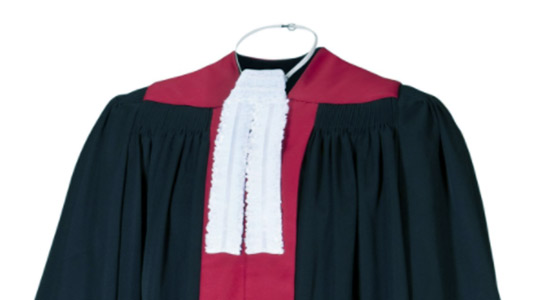
Magistrates in several states across Nigeria are grappling with poor salaries, substandard welfare packages and tough working conditions, Sunday PUNCH investigations have revealed. The judicial officers described their current situation as demoralizing and detrimental to the effective administration of justice in the country.

Findings showed that magistrates earn as low as N120,000 in some states, with the pay varying based on grade level and qualifications. Even the highest-earning magistrates in most states do not take home more than N300,000 monthly, an amount they termed “grossly inadequate” considering the crucial role they play.
Apart from the meager salaries, many also decried the poor state of infrastructure in magistrate courts, citing issues such as lack of adequate security, unstable power supply, decrepit courtrooms and absence of essential facilities needed for their day-to-day operations. Some don’t even have official vehicles and have to rely on public transportation to get to work and perform their duties.
In Cross River, magistrates embarked on a strike in December 2024 over unpaid allowances and poor working conditions. Their counterparts in Kano, Kwara, Benue, Plateau, Osun, Anambra, Imo, Yobe and Bauchi shared similar tales of neglect by their state governments.
A retired Chief Magistrate in Kano, Aminu Fagge, expressed concerns over the wide disparity between the responsibilities placed on magistrates and the salaries they receive in return. “You will be surprised if I tell you that I retired in November 2024 after 35 years of service as chief magistrate, but my salary was just N325,000,” Fagge, immediate past chairman of the Kano chapter of the Magistrates Association of Nigeria, lamented.
In Kwara, investigations revealed that fresh magistrates earn between N120,000 and N125,000, while their senior colleagues take home between N135,000 and N145,000 per month. One magistrate said he’s left with only N37,000 after loan deductions, lamenting that “we are surviving on loans.”
Their Imo counterparts spoke of receiving no official vehicles from the state, no promotion allowances since 2015 and having to hire cyber cafes to type official documents using personal funds. In Kaduna, even the highest-paid magistrates do not earn more than N300,000 monthly. “We are expected to maintain a certain level of integrity and professionalism, but it’s difficult when you are struggling to pay your bills,” one stated.
This dire situation has forced several magistrates to resign in search of greener pastures within and outside the country. Those who remain have to combine their official duties with farming, business and other side hustles to make ends meet.
However, in Bayelsa, sources said the salary scale is well structured, with the lowest-earning magistrate taking home over N300,000 monthly – although they didn’t provide details on working conditions.
Worried by the development, the Nigerian Bar Association (NBA) and the Centre for Anti-Corruption and Open Leadership (CACOL) warned that the poor pay could make magistrates susceptible to corruption. The NBA President, Afam Osigwe (SAN), criticized state governments for resisting efforts to improve magistrates’ remuneration.
“Magistrates in many states are not well paid, and several state governments resist efforts to improve their pay. This underpayment makes them vulnerable to bribery, which compromises the justice system,” Osigwe said. On his part, CACOL Executive Director, Debo Adeniran, condemned the ill-treatment of magistrates, saying they are often regarded as inferior in the judicial hierarchy.
The National President of the Magistrates Association of Nigeria, Saidu Umar, said his members were pushing for a bill to have them recognized as judicial officers, a move he believes would significantly address their welfare challenges.
“We want to have a definite status; that’s why we proposed the bill to the National Assembly. If we’re not going to have the same salary as judges, it should be something meaningful for us,” Umar stated.

 ARTIFICIAL INTELLIGENCE FOR LAWYERS: A COMPREHENSIVE GUIDE
Reimagine your practice with the power of AI “...this is the only Nigerian book I know of on the topic.” — Ohio Books Ltd
Authored by Ben Ijeoma Adigwe, Esq., ACIArb (UK), LL.M, Dip. in Artificial Intelligence, Director, Delta State Ministry of Justice, Asaba, Nigeria.
Bonus:
Get a FREE eBook titled “How to Use the AI in Legalpedia and Law Pavilion” with every purchase.
ARTIFICIAL INTELLIGENCE FOR LAWYERS: A COMPREHENSIVE GUIDE
Reimagine your practice with the power of AI “...this is the only Nigerian book I know of on the topic.” — Ohio Books Ltd
Authored by Ben Ijeoma Adigwe, Esq., ACIArb (UK), LL.M, Dip. in Artificial Intelligence, Director, Delta State Ministry of Justice, Asaba, Nigeria.
Bonus:
Get a FREE eBook titled “How to Use the AI in Legalpedia and Law Pavilion” with every purchase.
How to Order: 📞 Call, Text, or WhatsApp: 08034917063 | 07055285878 📧 Email: benadigwe1@gmail.com 🌐 Website: www.benadigwe.com
Ebook Version: Access directly online at: https://selar.com/prv626
________________________________________________________________________ The Law And Practice Of Redundancy In Nigeria: A Practitioner’s Guide, Authored By A Labour & Employment Law Expert Bimbo Atilola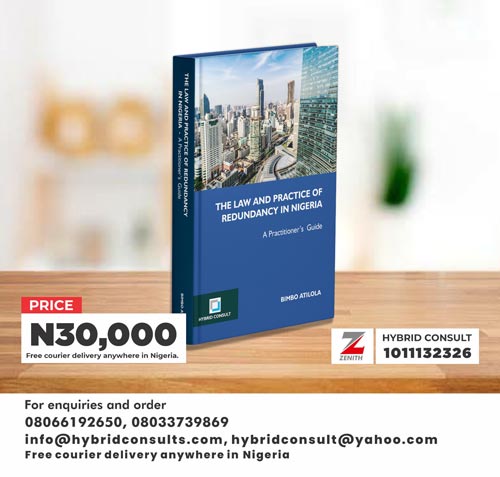 _______________________________________________________________________
"You Don't Need To Be Rich, You Just Need To Start" — Victoria Ezeigwe, Esq Launches Investment Handbook For Nigerians Starting With ₦5,000
_______________________________________________________________________
"You Don't Need To Be Rich, You Just Need To Start" — Victoria Ezeigwe, Esq Launches Investment Handbook For Nigerians Starting With ₦5,000
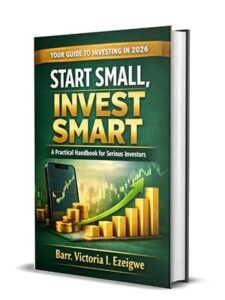
Get your copy today and take the first step toward financial growth:👉 https://selar.co/4f16676016
_______________________________________________________________________